

PaintingProGuide is reader-supported. When you buy through links on this page we may earn an affiliate commission at no extra cost to you.
“Paint” in resin art means two different things. The first is colorant mixed into epoxy before it is poured: pastes, liquid dyes, mica powders and alcohol inks that tint the resin itself. The second is paint applied to a surface that resin will cover, such as an acrylic painting sealed under a glossy pour, or details painted onto cured resin. The best paint for resin art depends on which you are doing. For coloring resin, purpose-made resin pigments and alcohol inks give predictable results; for painting under or on resin, a quality acrylic set does the job.
Quick answer: For solid, controllable color in epoxy, LET’S RESIN 8-color pigment paste is our top pick: highly concentrated and able to go from translucent to opaque. For shimmer, Luckymica 24-color mica powder is the classic. For cells, petri dishes and lacing effects, the LET’S RESIN 26-color alcohol ink set is the one to get.
We compare seven colorants and paints below, explain what each type does in resin, how much to use, and how to paint artwork that will be sealed under epoxy.
Our Top Picks at a Glance
- LET’S RESIN 8-Color Resin Pigment Paste — Best overall resin colorant
- SigWong 24 Colors Liquid Epoxy Pigment with 6 Glitters — Best liquid dye set for jewelry and coasters
- Luckymica Mica Powder, 24 Colors — Best for pearlescent shimmer
- LET’S RESIN Concentrated Alcohol Ink Set, 26 Colors — Best alcohol ink for cells and petri dishes
- DecorRom Alcohol Ink Set, 24 Colors — Best value alcohol ink set
- Shuttle Art Acrylic Paint Set, 30 x 12 ml Tubes — Best for painting details on cured resin
- Artkey Acrylic Paint Set, 24 Colors — Best for paintings sealed under resin
| Product | Best For | Key Spec | Key Strength | Price Tier |
|---|---|---|---|---|
| LET’S RESIN Paste | Opaque and translucent tints | 8 colors, 14.27 oz total, gel | Highly concentrated | $$ |
| SigWong Liquid | Jewelry, coasters, tumblers | 24 x 6 ml plus 6 glitters | Epoxy, UV and casting resin | $ |
| Luckymica | Shimmer and metallic | 24 x 10 g powders | Pearlescent effects | $ |
| LET’S RESIN Alcohol Ink | Cells and petri dishes | 26 colors, 0.35 oz each | Super concentrated, transparent | $$ |
| DecorRom Alcohol Ink | Budget inks | 24 colors, 0.35 oz each | Precision nozzles | $ |
| Shuttle Art 30 tubes | Detail on cured resin | 30 x 12 ml acrylic, gloss | Low cost, many colors | $ |
| Artkey 24 | Art sealed under resin | 24 x 2 oz acrylic, semi-gloss | Good coverage | $$ |
How We Chose
These picks are based on the Amazon listing details and specifications checked in October 2026, how well each product fits epoxy and craft resin workflows, and how widely each product is reviewed by Amazon buyers. We have not poured resin with these products, so we report listing claims and established resin practice, and recommend testing any colorant with your specific resin brand.
- Resin compatibility: listed for epoxy, UV or casting resin.
- Concentration: strong color from small amounts, so resin chemistry is not upset.
- Effect: opaque, translucent, shimmer or cells.
- Control: dropper or squeeze bottles for measured dosing.
- Range: enough colors to mix custom shades.
Best Paint for Resin Art Reviewed
1. LET’S RESIN 8-Color Resin Pigment Paste — Best for overall resin coloring

Pigment paste is the most predictable way to color epoxy because it disperses evenly and lets you dial opacity up or down. LET’S RESIN includes eight essentials: black, white, red, orange, green, yellow, blue and more, in a highly concentrated paste where the listing says a drop or two achieves color. You can go from sheer tints to solid opaque finishes by adjusting the amount.
Fine-tip squeeze bottles allow drop-by-drop control, and the paste is listed as compatible with epoxy resin. Eight colors is a compact palette, but primaries plus black and white can mix almost anything.
Best suited for: Coasters, trays, river tables and any piece that needs solid or tinted color.
Key features:
- 8 colors, 14.27 oz total
- Gel paste form
- Translucent to opaque by amount
- Fine-tip leak-proof bottles
- For epoxy resin
Pros:
- Very concentrated
- Even dispersion
- Precise dosing
Cons and limitations:
- Only eight colors
- Paste can be messy to mix in small batches
Buying consideration: Add color after mixing resin and hardener, a drop at a time, stirring slowly to avoid bubbles.
2. SigWong 24 Colors Liquid Epoxy Pigment with 6 Glitters — Best for jewelry and coasters
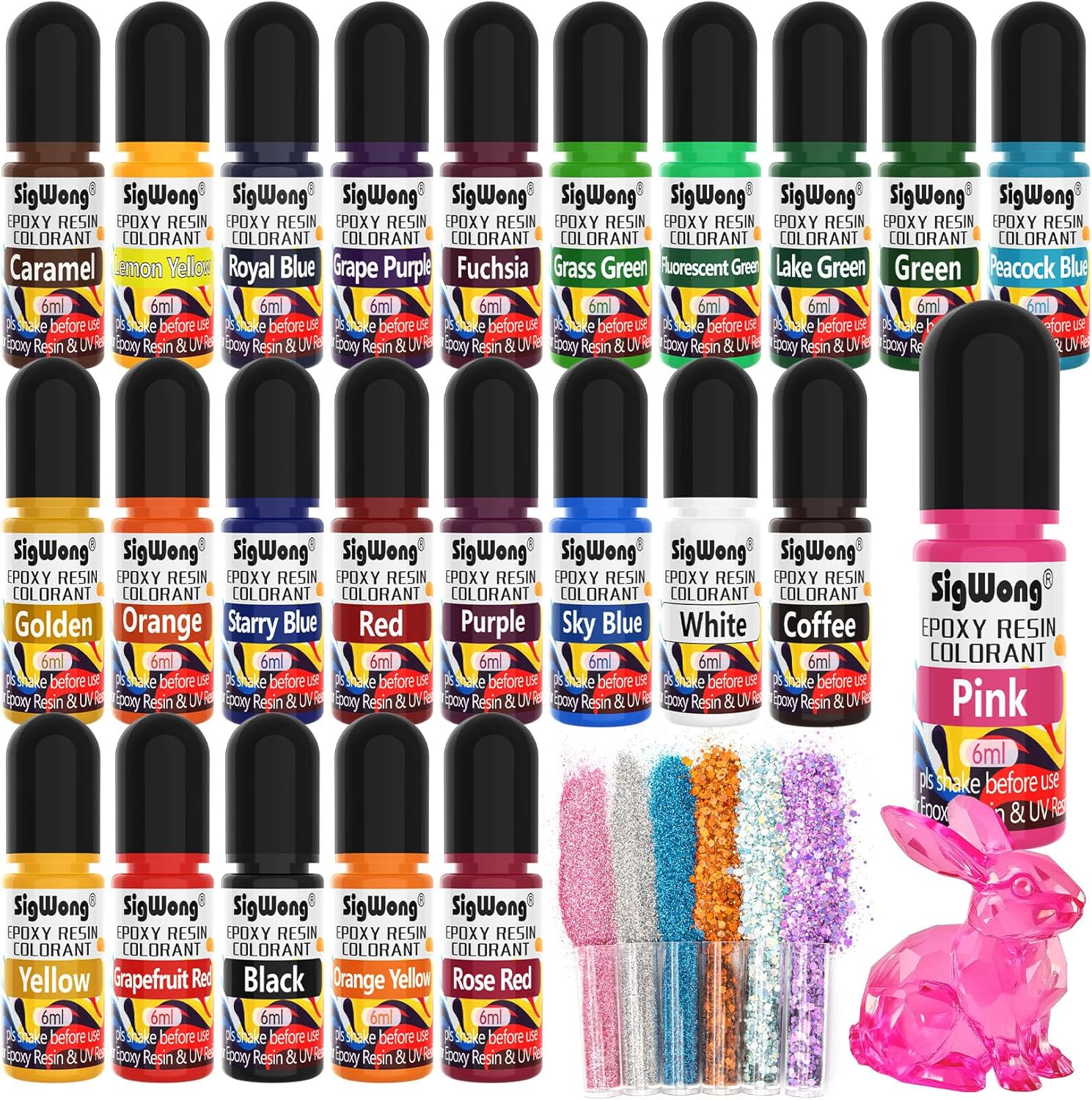
SigWong provides 24 liquid epoxy pigments in 6 ml squeeze bottles plus six glitters. The listing says the pigments work with epoxy, UV and casting resin for jewelry, tumblers, coasters and resin art, and describes them as odorless, highly concentrated and non-toxic.
Liquid dyes are easy to stir into small batches, which suits jewelry and UV resin projects.
Best suited for: Jewelry, small molds and UV resin projects.
Key features:
- 24 liquid pigments, 6 ml each
- 6 glitters included
- For epoxy, UV and casting resin
- Squeeze bottles
Pros:
- Many colors
- Works with UV resin
- Glitter included
Cons and limitations:
- Small bottles
- Liquids can affect cure if overused
Buying consideration: With UV resin, keep color light; heavy pigment can block curing light.
3. Luckymica Mica Powder, 24 Colors — Best for pearlescent shimmer
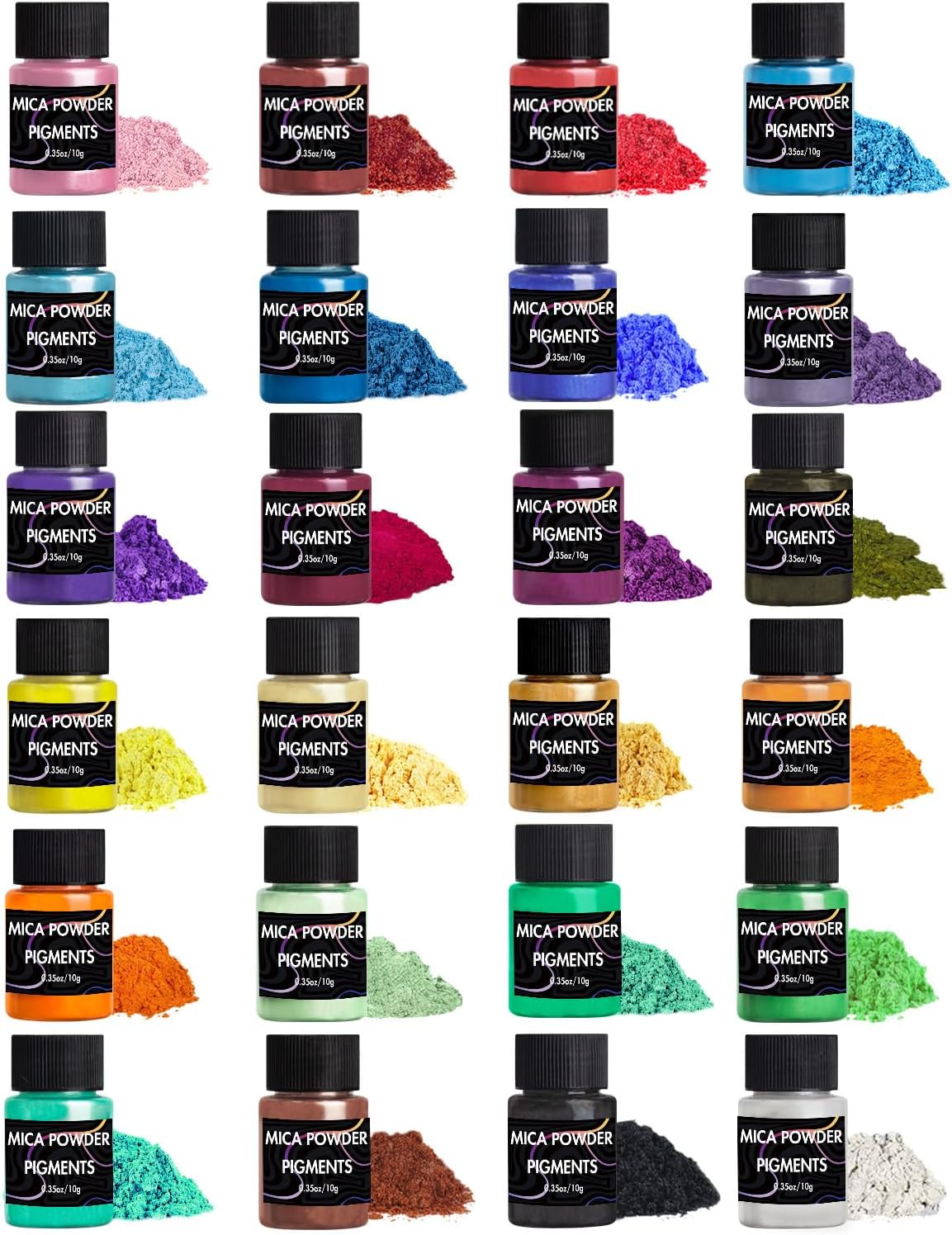
Mica powder gives resin that swirling, pearlescent shimmer seen in geode art and ocean pours. Luckymica includes 24 colors in 10 g reusable containers, 240 g in total. The listing describes natural mica pigment that mixes easily and is suitable for tinting resin, as well as soap and candle making.
Mica is not a dye; it suspends shiny particles in the resin, so swirling while the resin is still workable creates beautiful movement.
Best suited for: Geodes, ocean pours, tumblers and shimmering coasters.
Key features:
- 24 colors, 10 g each
- Pearlescent powder
- For epoxy resin and other crafts
- Reusable containers
Pros:
- Classic shimmer effect
- Good quantity
- Versatile across crafts
Cons and limitations:
- Powder can clump if not mixed well
- Fine dust; avoid inhaling
Buying consideration: Mix mica into a small amount of resin first, then fold into the batch.
4. LET’S RESIN Concentrated Alcohol Ink Set, 26 Colors — Best for cells and petri dishes

Alcohol inks are transparent and react with resin to create cells, lacing and blooms. LET’S RESIN offers 26 highly saturated colors in 0.35 oz bottles, with the listing naming resin petri dishes, tumblers, epoxy coloring and resin painting. It notes the inks can be blended or used with a blending solution to adjust saturation.
For petri dish art, alcohol inks dropped into clear resin, often with white ink on top, sink and spread into dramatic patterns.
Best suited for: Petri dishes, cells and transparent color effects.
Key features:
- 26 colors, 0.35 oz each
- Alcohol-based, transparent
- Highly concentrated
- For resin and mixed media
Pros:
- Signature cell effects
- Wide color range
- Works on Yupo and tiles too
Cons and limitations:
- Transparent only
- Too much ink can affect resin cure
Buying consideration: Use alcohol inks sparingly and in thin layers.
5. DecorRom Alcohol Ink Set, 24 Colors — Best for value alcohol inks

DecorRom offers 24 alcohol inks in 0.35 oz bottles with precision nozzles for drop-by-drop control. The listing describes highly concentrated resin pigment and dye that does not spread excessively, plus uses on Yupo paper, ceramic tiles and mixed media.
It is a good value set for experimenting with alcohol ink in resin and on paper.
Best suited for: Trying alcohol ink effects without a big spend.
Key features:
- 24 colors, 0.35 oz each
- Alcohol-based
- Precision nozzles
- Resin, Yupo, tiles
Pros:
- Good value
- Controlled dosing
- Multi-purpose
Cons and limitations:
- Transparent only
- Fewer colors than the 26-color set
Buying consideration: Test colors on a small batch first.
6. Shuttle Art Acrylic Paint Set, 30 x 12 ml Tubes — Best for detail on cured resin

Sometimes you want to paint onto cured resin: outlining a design, adding names to a keychain, or painting backs of clear pieces. Acrylic paint does this well on a lightly scuffed surface. Shuttle Art offers 30 colors in 12 ml tubes with three brushes, described as creamy, permanent and waterproof, with a gloss finish.
Small tubes suit small resin projects.
Best suited for: Painting details on cured resin pieces.
Key features:
- 30 colors, 12 ml tubes
- Gloss finish
- 3 brushes
- Waterproof per listing
Pros:
- Low cost
- Many colors
- Easy cleanup
Cons and limitations:
- Not a resin colorant
- Needs a topcoat for durability on handled items
Buying consideration: Scuff the cured resin lightly and seal painted details with a thin resin or clear coat.
7. Artkey Acrylic Paint Set, 24 Colors — Best for artwork sealed under resin
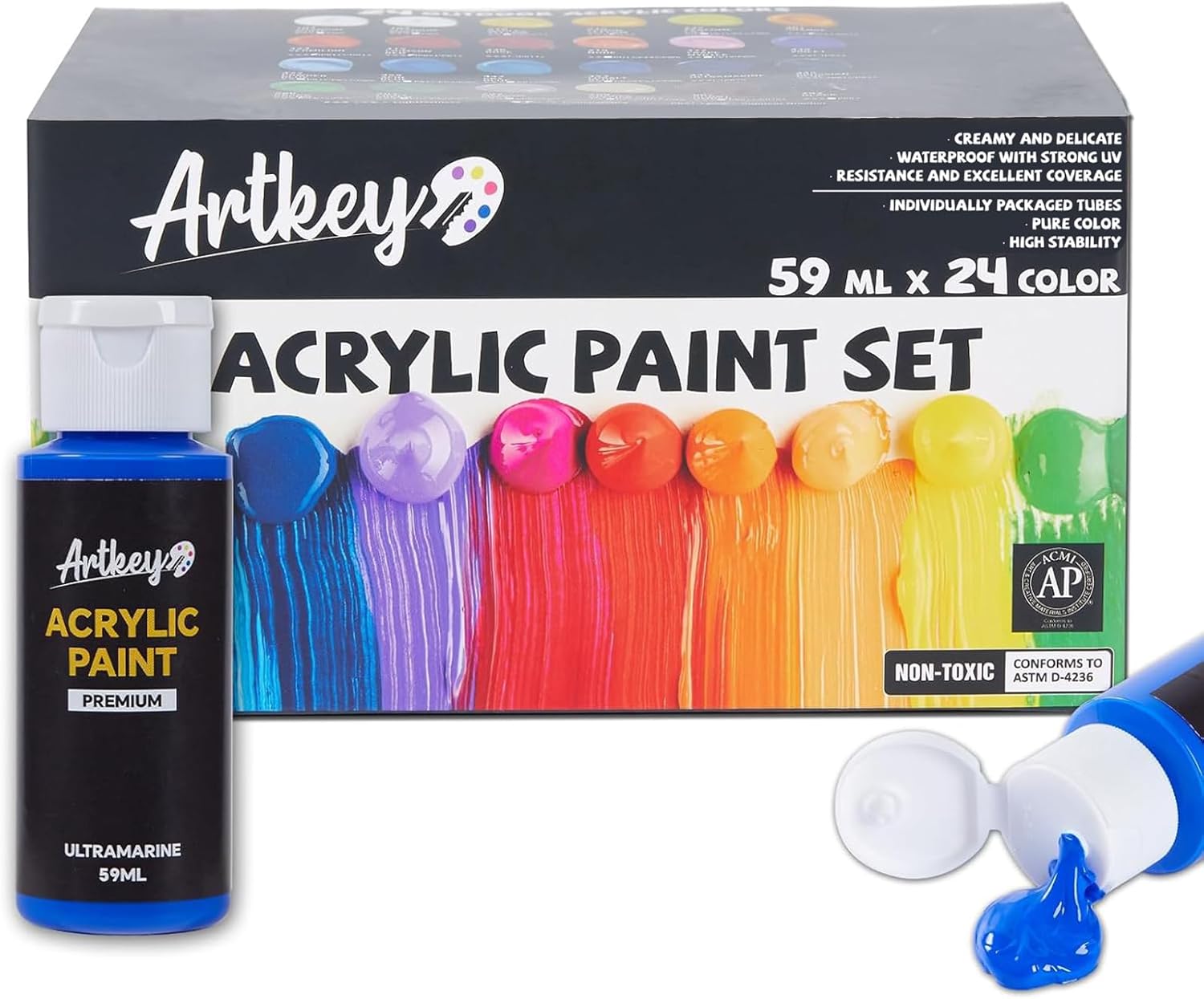
A popular technique is to paint a design on wood or canvas board, then pour clear resin over it for a deep, glass-like finish. Artkey’s 24 colors in 2 oz bottles give good coverage on wood and canvas, with a semi-gloss finish.
Once the paint is fully dry, a clear resin pour turns it into a glossy, durable piece like a tray or wall panel.
Best suited for: Paintings and designs to be sealed under resin.
Key features:
- 24 colors, 2 oz each
- Semi-gloss
- Wood, canvas, many surfaces
- Non-toxic
Pros:
- Good coverage
- Generous bottles
- Versatile
Cons and limitations:
- Not for mixing into resin
- Must be fully dry before pouring
Buying consideration: Seal the painting first with a thin coat of resin or sealer to prevent bubbles from porous surfaces.
Types of Resin Colorants Explained
Pigment pastes are thick and concentrated. They give opaque or tinted color and disperse evenly. Best for solid colors.
Liquid dyes mix in easily and produce transparent to semi-opaque color. Good for small batches and jewelry.
Mica powders add shimmer and pearlescence. They sit in suspension and create swirls.
Alcohol inks are transparent and interact with resin to form cells and lacing. Best for petri dishes and abstract effects.
Acrylic paint is mainly for painting surfaces under or on resin. Some crafters mix tiny amounts into resin, but water-based paint can affect cure and clarity, so purpose-made colorants are more reliable.
How Much Colorant to Add
Less is more. Concentrated pastes and dyes need only drops. Too much colorant can interfere with curing, leaving soft or tacky resin. Many resin makers state a maximum colorant ratio, often a small percentage of the total weight, so check your resin’s instructions and add color gradually until you reach the shade you want.
Matching Colorants to Popular Resin Projects
Coasters and trays. Pigment paste for solid backgrounds, mica for shimmer veins, and a little alcohol ink for accents. Work in layers so colors stay distinct.
Geode art. Mica powders in several related shades, poured in rings, with white pigment paste for the crystal edges and metallic leaf or paint along the borders once cured.
Ocean pours. Blues and teals from pigment paste, white paste for the waves, and a heat tool to push the white into lacing. Mica adds the sparkle of sunlit water.
Petri dishes. Clear resin with drops of alcohol ink, topped with white ink. Small molds and a low pour depth help cells form.
Jewelry and keychains. Liquid dyes and glitter in UV or epoxy resin. Keep color light in UV resin so it cures fully.
River tables and large pours. Pigment paste or mica in deep-pour casting resin. Large projects need a resin rated for thick pours, and color should be tested on a sample block first.
Troubleshooting Color in Resin
If resin stays tacky, the usual causes are inaccurate mixing ratios, too much colorant, or a cold room. If colors look muddy, too many colors were mixed while wet or the resin was overworked. Cloudiness can come from moisture, such as water-based paint or humid air. Streaks usually mean the colorant was not fully mixed in. Keep notes on how many drops you used per ounce of resin so you can repeat colors you like.
Painting Artwork to Seal Under Resin
- Prepare the surface. Use a sanded wood panel or canvas board. Seal porous wood to reduce bubbles.
- Paint your design with acrylic and let it dry completely, ideally overnight.
- Seal the paint. A thin seal coat of resin or compatible sealer helps prevent bleeding and bubbles.
- Tape the edges or build a dam if you want a clean edge.
- Pour the flood coat. Spread evenly and pop bubbles with a heat tool or torch as directed.
- Cover and cure. Protect from dust while it cures.
Buying Guide: How to Choose Paint for Resin Art
Decide on the effect first
Opaque color, shimmer, transparency or cells each call for a different colorant.
Check resin compatibility
Look for listings naming epoxy, UV or casting resin. UV resin is sensitive to heavy pigment.
Favor concentration
Concentrated colorants use less product, reducing the risk of cure problems.
Look for dosing control
Dropper or squeeze bottles help you measure and repeat colors.
Build a versatile palette
Primaries, black and white mix most colors; add specialty shimmers and inks over time.
Test with your resin
Different resins behave differently. Always test a small batch.
Safety When Working with Resin
Work in a well-ventilated area, wear nitrile gloves and eye protection, and avoid breathing mica dust. Follow the resin manufacturer’s safety data and mixing ratios. Keep resin away from children and pets during work and curing.
Resin pairs well with other mixed media crafts; try embedding painted feathers using techniques from our feather wall art guide, or add resin accents to DIY painted string art.
Common Mistakes to Avoid
- Adding too much color. It can stop resin curing properly.
- Using water-based paint as a colorant. It can cloud resin and affect cure.
- Pouring over wet paint. Paint must be fully dry.
- Stirring too fast. It traps bubbles.
- Skipping gloves. Resin can irritate skin.
- Ignoring temperature. Cold rooms slow cure; follow the resin’s temperature range.
FAQs
Can I use acrylic paint to color resin?
Small amounts are sometimes used, but water-based paint can affect cure and clarity. Purpose-made resin pigments and dyes are more reliable.
What is the difference between mica powder and resin pigment?
Mica powder adds shimmer through suspended particles; pigment paste and liquid dyes add solid or transparent color.
How do you make cells in resin?
Alcohol inks dropped into resin, often combined with white ink, create cells as the inks spread and sink.
Can I paint on cured resin?
Yes. Lightly scuff the surface, paint with acrylic, and seal with a thin clear coat for durability.
How much pigment should I add to epoxy?
Start with a drop or two and add gradually. Follow your resin maker’s maximum colorant ratio.
Do resin colorants work with UV resin?
Many do, as listed. Keep color light so UV light can reach and cure the resin.
Final Recommendation
For most resin artists, LET’S RESIN pigment paste is the best starting colorant for solid and tinted pours. Add Luckymica mica for shimmer and the LET’S RESIN alcohol inks for cells and petri dishes. SigWong’s liquid set suits jewelry and UV resin, and DecorRom is a value alcohol ink option.
For painting rather than tinting, Artkey suits artwork sealed under resin and Shuttle Art’s tubes handle small details on cured pieces.




