PaintingProGuide is reader-supported. When you buy through links on this page we may earn an affiliate commission at no extra cost to you.
Skin is not one color. A single cheek can move from a warm ochre in the light, through a rosy midtone, to a cool violet-brown in shadow. That is why the best acrylic paint sets for portrait art are judged less by how many colors they hold and more by whether they contain the earth pigments, a warm red, a reliable white and something cool to shade with. A 48-color craft box full of neons is a poor portrait palette; six well-chosen tubes can paint almost any complexion.
This guide compares six options currently on Amazon, starting with a dedicated portrait set and moving through full kits, budget tubes and a set of portrait-toned paint markers for sketching. You will also find a starter skin-mixing chart so you can judge any set you already own.
Quick answer: The Amsterdam Standard Series Portrait Set is the clear starting point: its six 20 ml tubes (Titanium White, Naples Yellow Red, Caput Mortuum Violet, Yellow Ochre, Raw Umber and Burnt Umber) are chosen specifically for mixing skin tones. Add a primary set such as the Caliart 36-color bottles if you need clothing and background colors. If you want everything, including canvases and an easel, the Chalkola 95-piece kit is the complete-studio option.
Our Top Picks at a Glance
- Amsterdam Standard Series Portrait Set (6 x 20 ml) — Best overall for mixing skin tones
- Chalkola 95-Piece Acrylic Painting Kit — Best complete kit with easel and canvases
- Caliart 36-Color Acrylic Set with 12 Brushes — Best companion set for backgrounds and clothing
- Shuttle Art 15 x 12 ml Tube Set — Best low-cost matte tubes for practice studies
- KOLOR KINGDOM 24-Color Tube Set — Best budget variety for small portraits
- KINGART Acrylic Brush Markers, 12 Portrait Colors — Best for portrait sketches and mixed media
| Product | Best For | Key Spec | Key Strength | Price Tier |
|---|---|---|---|---|
| Amsterdam Portrait Set | Skin tone mixing | 6 x 20 ml tubes; satin | Curated earth palette incl. Caput Mortuum | $$ |
| Chalkola 95-Piece Kit | Starting from zero | 64 paints, easel, 10 canvases | Everything in one box | $$$ |
| Caliart 36 Colors | Clothing, hair accents, backgrounds | 36 x 2 oz bottles; matte | Large volume per color | $$ |
| Shuttle Art 15 Tubes | Practice heads and studies | 15 x 12 ml; matte | Very low cost per study | $ |
| KOLOR KINGDOM 24 | Small portraits on paper or board | 24 x 12 ml; gloss | 24 hues plus 3 brushes | $ |
| KINGART Portrait Markers | Line-led portrait sketches | 12 brush-tip markers | Skin palette without mixing | $ |
How We Chose
Our selections are based on Amazon listing details and specifications checked in October 2026, how well each set’s colors, finish and format suit portrait painting, and how widely each product is reviewed by Amazon buyers. We have not painted portraits with these specific products. Where we explain color mixing, we are describing established acrylic practice rather than results from a particular set.
- Skin-tone building blocks — Yellow Ochre, a red-brown, a dark umber and a strong white score highest.
- A cool shadow color — violet-browns, blues or greens to neutralize warm flesh mixes.
- Finish — satin or matte paint avoids glare on faces when photographed or hung.
- Tube size — portraits use far more white and ochre than anything else.
- Format — tubes for blending on canvas, markers for line-led sketches.
A Quick Skin-Tone Mixing Chart
Use this as a reference for checking whether a set can handle portraits. Start with these base mixes, then adjust with tiny additions.
| Target | Starting mix | Adjust with |
|---|---|---|
| Light, warm skin | White + Yellow Ochre + a touch of red | Naples yellow for warmth, more white for highlights |
| Medium, olive skin | Yellow Ochre + Raw Umber + white | A speck of green or blue to cool the midtones |
| Deep, warm skin | Burnt Umber + Burnt Sienna or a red-brown | Ochre in the lights, violet in the shadows |
| Deep, cool skin | Burnt Umber + a violet-brown such as Caput Mortuum | Blue in the shadows, warm white highlights |
| Shadows on any skin | The midtone mix + its complement (green or violet) | Never pure black, which deadens the face |
| Lips and cheeks | Midtone + a warm red | Keep it subtle; skin reds are low-chroma |
Best Acrylic Paint Sets for Portrait Art Reviewed
1. Amsterdam Standard Series Portrait Set — Best for mixing realistic skin tones

This is the only set in this guide built for portraiture from the start. Royal Talens’ Amsterdam line lists the six colors: 105 Titanium White, 224 Naples Yellow Red, 344 Caput Mortuum Violet, 227 Yellow Ochre, 408 Raw Umber and 409 Burnt Umber. Between them you get a warm light, a warm midtone, a cool dark, two browns of different temperature and a strong white.
Caput Mortuum Violet is the clever inclusion. It is a muted purple-brown that cools and darkens flesh mixes without the muddy, dead look that black creates. The paint is medium viscosity with a satin finish and lightfast pigments according to the listing, and the Standard Series spans 102 colors if you want to add a red or blue later.
Best suited for: Anyone painting faces in acrylic, from first self-portrait to commissioned work, who already has or will add a few primaries for backgrounds.
Key features:
- Six 20 ml tubes named for portrait work
- Includes Caput Mortuum Violet for cool shadows
- Medium viscosity, satin finish
- Lightfast pigments per the listing
Pros:
- Purpose-built palette removes guesswork
- Restrained colors make harmonious skin tones easier
- Satin finish suits faces and photography
Cons and limitations:
- Only six colors; no bright red or blue for lips, eyes or clothing
- 20 ml tubes, so white will run out first
- Not a complete kit; brushes and surfaces sold separately
Buying consideration: Pair it with one cool blue and one clean red from any brand and you have a classic portrait palette. Buy a larger tube of Titanium White up front.
2. Chalkola 95-Piece Acrylic Painting Kit — Best for starting a portrait practice from scratch

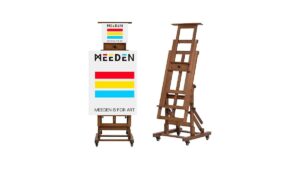
If you own nothing, this kit gives you a studio in a box: 64 acrylic paints (32 of them metallic), a wooden tabletop easel that holds canvases up to 11 x 14 inches, 10 brushes, 5 palette knives, a palette and ten canvases in white and black, ranging from 5 x 7 to 11 x 14 inches. The canvases are listed as 100% cotton primed with acid-free titanium gesso.
The metallics will not help with skin, but the remaining 32 standard colors give you room to mix, and the canvas sizes are right for head-and-shoulders studies. An easel at eye level also matters in portraiture, because painting flat on a table distorts facial proportions.
Best suited for: Adults and teens beginning portraiture who need surfaces, brushes and an easel along with paint.
Key features:
- 64 acrylic paints including 32 metallics
- Adjustable wooden tabletop easel (holds up to 11 x 14 in.)
- 10 canvases: stretched and panel, white and black
- 10 brushes, 5 palette knives, palette
Pros:
- Complete setup in one purchase
- Easel keeps your canvas upright to avoid distortion
- Canvas sizes suit portrait studies
Cons and limitations:
- Half the paints are metallic and of limited use for skin
- Highest price tier in this list
- Earth tones are not specified in the listing
Buying consideration: Think of this as a starter studio. Many portrait painters later add a dedicated earth palette, such as the Amsterdam set above, while keeping the easel and canvases.
3. Caliart 36-Color Acrylic Set with 12 Brushes — Best for backgrounds, hair and clothing

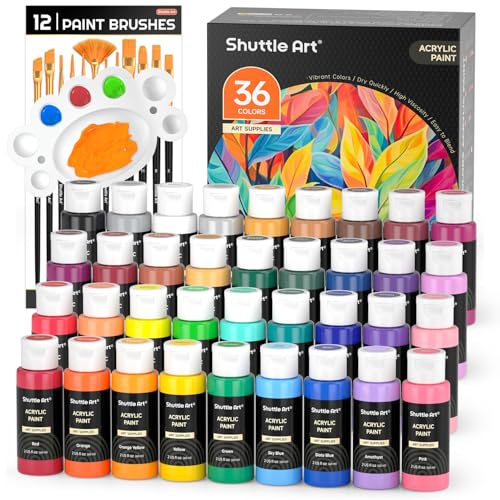
Portraits are more than faces. Shirts, hair highlights and background washes all need color, and the Caliart set supplies 36 colors in 2 oz bottles plus 12 brushes. The listing describes the paint as creamy with good coverage for both large areas and fine details, and the finish is matte for the standard colors.
The 2 oz bottles are the important number. A portrait with a solid painted background can use a surprising amount of a single color, and these bottles carry far more per color than small tube sets.
Best suited for: Painters who own a skin palette and need a broad, inexpensive range for everything around the face.
Key features:
- 36 colors in 2 oz bottles, including metallic gold and silver
- 12 brushes included
- Matte finish on standard colors
- ASTM D4236 conformance
Pros:
- Big volume for backgrounds
- Matte finish photographs well
- Mid price tier for the quantity
Cons and limitations:
- Craft-style bottled paint has a thinner body than tube acrylic
- No dedicated earth-tone grouping
- Included brushes are general purpose
Buying consideration: Use it alongside a portrait-specific palette. On its own, test whether its browns and ochres mix the complexions you paint most.
4. Shuttle Art 15 x 12 ml Tube Set — Best for cheap, matte practice studies

Portrait skill comes from volume of practice: dozens of small head studies, each focused on one lesson such as lighting or the planes of the face. This 15-tube set is one of the least expensive ways to keep that practice going. Each tube is 12 ml, the finish is matte, and three brushes are included.
The listing emphasizes thick pigment for coverage, which helps when building opaque light planes over darker underpaintings.
Best suited for: Beginners doing daily studies, students, and anyone testing acrylic before committing to better paint.
Key features:
- 15 colors in 12 ml tubes
- Matte finish
- Three bonus brushes
- Described as thick, rich pigment
Pros:
- Lowest price tier
- Matte surface is easy to paint over
- Tubes are compact for a sketchbook kit
Cons and limitations:
- Small tubes
- Limited earth-tone range for nuanced skin
- Student-quality pigment
Buying consideration: Treat it as study paint. When a particular study works, repaint it later with better pigments.
5. KOLOR KINGDOM 24-Color Tube Set — Best for small portraits on paper and board

KOLOR KINGDOM supplies 24 colors in 12 ml (0.41 oz) tubes plus three brushes, and describes the paint as having a buttery consistency suited to blending and layering. It is certified to ASTM D4236 and EN71-3 according to the listing.
Twenty-four colors give you more starting points for complexions than the 15-tube set, which shortens mixing time on small pieces. The gloss finish deepens darks, but expect some shine on finished faces unless you varnish matte.
Best suited for: Hobbyists painting small portraits, pet portraits and character studies on paper, board or small canvas.
Key features:
- 24 colors in 12 ml tubes
- Three brushes
- Gloss finish; fade resistant per the listing
- ASTM D4236 and EN71-3 certified
Pros:
- Low price tier
- More hues than most budget tube sets
- Works on paper, wood, canvas and MDF
Cons and limitations:
- Gloss finish can glare on faces
- Tiny tubes for large pieces
- Colors are not listed by pigment name
Buying consideration: For very small portraits under 8 x 10 inches, the 12 ml tubes go further than you might expect. For anything larger, budget for extra white.
6. KINGART Acrylic Brush Markers, 12 Portrait Colors — Best for portrait sketches and mixed media
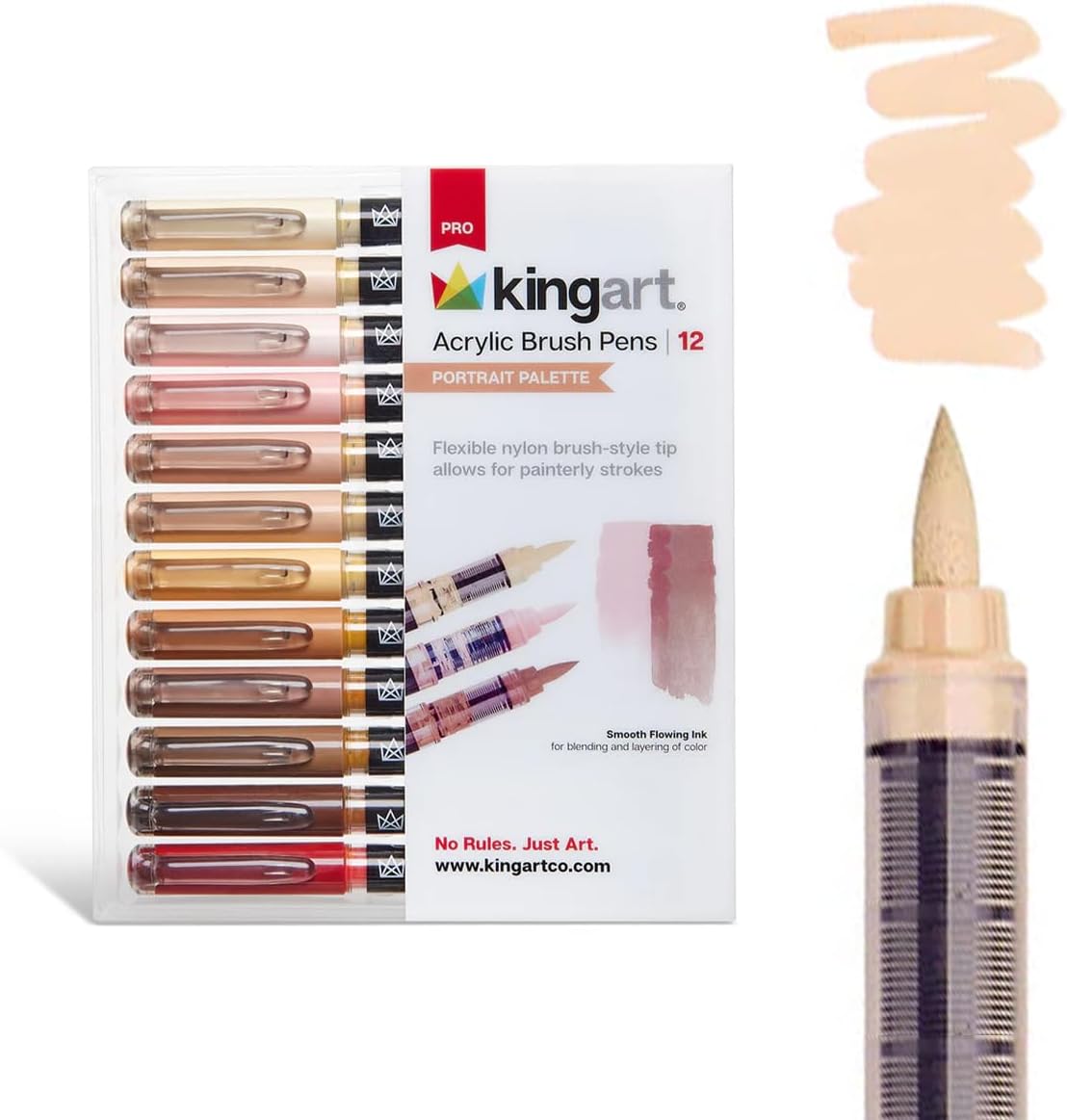
These are not tubes, but they solve a specific portrait problem: you want skin-toned color on the go without carrying a palette. KINGART fills 12 brush-tip markers with opaque, water-based acrylic ink in a portrait palette, and the listing notes they work on both light and dark surfaces.
The flexible nylon brush tip gives varied line weight, which is useful for gesture sketches, urban sketching of people and adding color over ink drawings. Once dry the ink is permanent, so you can layer with markers or paint over it.
Best suited for: Sketchbook artists, illustrators and mixed media painters who want fast skin tones without mixing.
Key features:
- 12 portrait-toned brush-tip markers
- Water-based, opaque acrylic ink
- Works on paper, canvas, wood and more
- ASTM D4236 conformance; low odor
Pros:
- No palette, water cup or cleanup
- Opaque on dark paper
- Portable for life drawing sessions
Cons and limitations:
- No true blending like wet paint
- Fixed skin palette cannot match every complexion
- Brush tips wear with heavy pressure
Buying consideration: Use these to block in light and shadow shapes, then refine with paint if you want a finished portrait. They are a sketching tool rather than a replacement for tube acrylic.
Buying Guide: How to Choose Acrylic Paint for Portraits
Earth colors matter more than color count
Yellow Ochre, Raw Umber, Burnt Umber and Burnt Sienna are the workhorses of portrait painting. A small set that contains them will outperform a large set that does not. Read the listing for named colors rather than trusting a number on the box.
You need a cool, not just a dark
Shadows on skin are cooler than lights. A violet-brown, a blue or a muted green lets you shift temperature. Black alone makes faces look gray and lifeless, which is why the Amsterdam set uses Caput Mortuum Violet instead.
Opacity and glazing
Opaque paints cover mistakes and build solid light planes; transparent paints let you glaze color over dried layers for glowing skin. A good portrait setup includes both. Thin any acrylic with a glazing medium rather than lots of water to keep the film strong.
Finish affects how faces read
Glossy passages on a face catch light and break up the form when viewed from an angle. Satin and matte paints keep transitions readable. Mixed finishes can be unified with varnish at the end.
Plan for open time
Acrylic dries fast, which makes soft blending across cheeks and jaws tricky. A stay-wet palette, a light mist of water, or a slow-drying medium buys more time. Some painters prefer to build skin with many thin, overlapping layers instead of wet blending.
Buy white separately
Every skin mix uses white. In any set with 12 to 20 ml tubes, the white will empty well before the other colors, so buy a large tube of Titanium White at the start.
Keep Learning
If you are new to acrylic in general, start with our simple acrylic painting ideas for beginners to get comfortable with brush control before tackling faces. When you are ready to frame and display your work, our guide to making DIY wall art with acrylic covers sizing and finishing.
Common Mistakes to Avoid
- Mixing skin from red and white only. That produces a pink doll-like tone. Start with ochre and an umber.
- Shading with black. It grays the face. Shade with the complement of your midtone or a violet-brown.
- Painting flat on a table. Looking down at an angle distorts proportions; use an easel or tilt the board.
- Overblending. Faces need some crisp edges, around the eyelids, nostrils and lips, to read as solid form.
- Matching the photo too literally. Camera shadows are often too dark and too cool; lighten and warm them slightly.
- Using metallic colors on skin. Save shimmer for jewelry or backgrounds.
FAQs
What acrylic colors do I need to paint skin tones?
A solid portrait palette is Titanium White, Yellow Ochre, a warm red or red-brown, Burnt Sienna, Raw or Burnt Umber, and a cool such as Ultramarine Blue or a violet-brown. The Amsterdam Portrait Set covers most of these in one box.
Can I paint realistic portraits with cheap acrylic paint?
Yes, you can learn proportions, values and edges with any acrylic. Budget paints usually have lower pigment loads, so colors may shift as they dry and need more layers. Upgrade the colors you use most first: white and the earths.
Why do my acrylic portraits look muddy?
Muddiness usually comes from mixing too many pigments together or blending wet layers too long. Keep each mix to two or three colors and let layers dry before glazing over them.
How do I keep acrylic wet long enough to blend skin?
Use a stay-wet palette, mist your paint lightly, and add a retarder or slow-drying medium. Working in thin layers and building gradually also avoids the need for long wet blends.
Are paint markers good for portraits?
They are good for sketches, color studies and mixed media, especially on toned paper. For smooth, fully rendered skin, tube acrylic gives more control over subtle transitions.
What size canvas should I use for a first portrait?
An 8 x 10 or 9 x 12 inch canvas board is a comfortable size for a head and shoulders. It is large enough to fit features without fiddly detail and small enough to finish in a session or two.
Final Recommendation
For portraits, buy the palette before the box. The Amsterdam Standard Series Portrait Set gives you the earth colors and cool shadow that make skin look alive, and it is the best single purchase on this list for faces. If you are starting from nothing, the Chalkola 95-piece kit supplies the easel and canvases too. Add the Caliart 36-color bottles for backgrounds, choose the Shuttle Art or KOLOR KINGDOM tubes for low-cost practice studies, and reach for the KINGART portrait markers when you want to sketch people away from your easel.