PaintingProGuide is reader-supported. When you buy through links on this page we may earn an affiliate commission at no extra cost to you.
Fluid acrylics and acrylic pours put a lot of liquid on a surface at once. Paint thinned with pouring medium flows across the canvas, runs off the edges and can take a day or more to dry. That changes what a good canvas needs to do. It must stay flat and level while wet so paint does not pool, resist warping as moisture soaks in, and be well primed so the paint sits on top and keeps its color and cells. The best canvas for fluid acrylics is a well-primed, rigid support: canvas boards with a sturdy core for small and medium pours, or stretched canvas that you support underneath. In our product data, the canvas options were boards and a pouring kit with canvases included, so we focus on those and on the supplies that make fluid painting work.
Quick answer: For most fluid acrylic and pouring projects, the KEFF 24-pack of triple-primed cotton canvas boards is the best canvas choice: four sizes from 5×7 to 11×14, smooth triple-primed surfaces, and enough boards to practice. If you are starting from scratch, the Nicpro acrylic pouring kit bundles 19 colors, pouring medium, silicone oil, canvases and tools. To thin your own paints, add Mont Marte Premium Acrylic Flow Medium.
What Fluid Acrylics Need From a Canvas
Flat and level
Fluid paint flows to the lowest point. Any warp, sag or tilt shifts the composition while it dries. Rigid boards stay flat; stretched canvas should be supported underneath with a board or cups at the corners and a prop in the middle.
Moisture resistance
Heavy pours soak the support. Paper-core panels can bow; sturdier cores hold up better. Sealing the back of a board with a coat of acrylic or gesso reduces warping.
Good priming
Triple-primed surfaces are less absorbent, so paint stays fluid long enough to spread and form cells, and colors stay bright.
Edges
Pours run over the edges. Stretched canvas lets paint drape and coat the sides for a finished look. Boards have thin edges that can be taped for a clean border or left to drip.
Drying space
Fluid paintings must dry flat, level and dust-free, often for 24 to 72 hours. Smaller boards are easier to dry in limited space.
Fluid Acrylic Techniques
- Flip cup: layer colors in a cup, flip it onto the canvas and lift.
- Dirty pour: pour layered paint from a cup in a stream or pattern.
- Puddle and swipe: pour puddles of color, then drag a contrasting color across with a palette knife or paper towel.
- Tree ring and string pulls: rotate the cup while pouring, or drag a paint-soaked string.
- Fluid painting with brushes: fluid acrylics are also used undiluted with brushes for glazing and smooth color fields.
Our Top Picks at a Glance
- KEFF 24-Pack Canvas Boards, 4 Sizes — Best canvas for fluid acrylics
- Nicpro Acrylic Pouring Kit, 19 Colors — Best all-in-one starter kit
- Mont Marte Premium Acrylic Flow Medium, 250 ml — Best medium for thinning paint
- Nicpro 14-Color Bulk Acrylic Paint Set, 500 ml — Best large bottles for regular pouring
- Artkey 24-Color Acrylic Paint Set, 2 oz — Best color range for small pours
- ESRICH 5 Pack 8×10 Canvas Boards — Best budget practice boards
| Product | Best For | Key Spec | Key Strength | Price Tier |
|---|---|---|---|---|
| KEFF 24-Pack Boards | Pours in several sizes | 6 each 5×7, 8×10, 9×12, 11×14; triple primed cotton | Size variety, smooth primer | $$ |
| Nicpro Pouring Kit | Beginners | 19 colors, pouring medium, silicone oil, canvases, tools | Everything in one | $$ |
| Mont Marte Flow Medium | Thinning paint | 250 ml acrylic flow medium, gloss | Improves flow without losing color | $ |
| Nicpro 14 x 500 ml | Frequent pouring | 14 colors, 16.9 oz each, gloss | Large volume | $$ |
| Artkey 24 x 2 oz | Small pours, many colors | 24 colors, 2 oz bottles, non-leaking caps | Wide palette | $$ |
| ESRICH 5 Pack | Practice | 5 x 8×10, cotton, board core, pouring listed | Low cost | $ |
How We Chose
We chose these products from the Amazon listing details and specifications checked in October 2026, by how well each canvas’s priming and rigidity or each supply’s format suit fluid acrylic and pouring techniques, and by how widely each product is reviewed by Amazon buyers. We have not poured with these products. We included paints and medium because they determine how well any canvas performs with fluid acrylics.
- Priming: triple-primed or well-sealed surfaces.
- Rigidity to stay flat while wet.
- Size range for practice and finished pieces.
- Pouring-ready supplies: medium, paints and kits that fit the technique.
Best Canvas for Fluid Acrylics Reviewed
1. KEFF 24-Pack Canvas Boards, 4 Sizes — Best for pours in several sizes

KEFF’s set includes six each of 5×7, 8×10, 9×12 and 11×14 canvas boards in 100 percent cotton with smooth, triple-primed surfaces, according to the listing, which names acrylic, oil and mixed media.
For fluid acrylics, the triple priming matters: a sealed surface lets paint flow and form cells rather than soaking in. Four sizes let you practice techniques small and then scale up, and boards stay flatter than unsupported stretched canvas.
Seal the back of each board with a coat of acrylic or gesso before heavy pours to reduce any chance of warping.
Best suited for: Fluid artists who want many smooth, primed boards in different sizes.
Key features:
- 24 boards
- 5×7, 8×10, 9×12, 11×14
- 100% cotton
- Triple primed
Pros:
- Smooth primed surface
- Several sizes
- Flat support
Cons and limitations:
- Core not stated
- Thin edges do not drape like stretched canvas
Buying consideration: Raise each board on cups so excess paint can run off freely.
2. Nicpro Acrylic Pouring Kit, 19 Colors — Best for beginners

Nicpro’s starter kit contains 19 acrylic colors, pouring medium, silicone oil, canvases, gloves, strainers, mixing sticks and instructions. The listing describes cell and tool effects with cups, pipettes, brushes, combs, strainers, palette knives and dotting pens, and names canvas, glass, wood, tile and stone as surfaces.
For a first attempt at fluid art, a kit removes the guesswork of mixing ratios and buying a dozen separate items. Silicone oil is what produces the cells many pour artists want.
Best suited for: First-time pour artists who want everything at once.
Key features:
- 19 acrylic colors
- Pouring medium
- Silicone oil
- Canvases included
- Gloves, strainers, sticks, instructions
Pros:
- Complete kit
- Cell-making silicone included
- Instructions
Cons and limitations:
- Included canvas count and sizes are limited
- Higher price tier
Buying consideration: Follow the kit’s mixing ratios first, then adjust consistency as you learn.
3. Mont Marte Premium Acrylic Flow Medium, 250 ml — Best for thinning paint

Mont Marte’s flow medium thins acrylic paints and mediums, increases translucency without affecting color intensity, and enhances flow, according to the listing, which names fluid art specifically.
Thinning acrylic with water alone weakens the binder and can lead to cracking and dull colors. A flow or pouring medium keeps the paint film strong while making it fluid enough to pour.
Best suited for: Artists mixing their own pouring paints.
Key features:
- 250 ml
- Acrylic flow medium
- Gloss finish
Pros:
- Keeps paint film strong
- Improves flow
- Low price tier
Cons and limitations:
- Small bottle for heavy pourers
Buying consideration: Mix medium and paint thoroughly and let bubbles rise before pouring.
4. Nicpro 14-Color Bulk Acrylic Paint Set, 500 ml — Best for frequent pouring

Nicpro’s bulk set includes 14 essential colors, including white, black, primaries, green and burnt umber, in 500 ml (16.9 oz) bottles. The listing describes creamy, blendable paint that is fast-drying, fade-resistant and non-toxic.
Pouring uses a lot of paint, especially white and black. Large bottles keep cost per pour down.
Best suited for: Regular pour artists and classrooms.
Key features:
- 14 colors
- 500 ml each
- Gloss finish
- Non-toxic
Pros:
- Large volume
- Essential palette
Cons and limitations:
- Fewer colors
- Highest price tier upfront
Buying consideration: Mix with flow medium rather than water for pouring.
5. Artkey 24-Color Acrylic Paint Set, 2 oz — Best for small pours with many colors
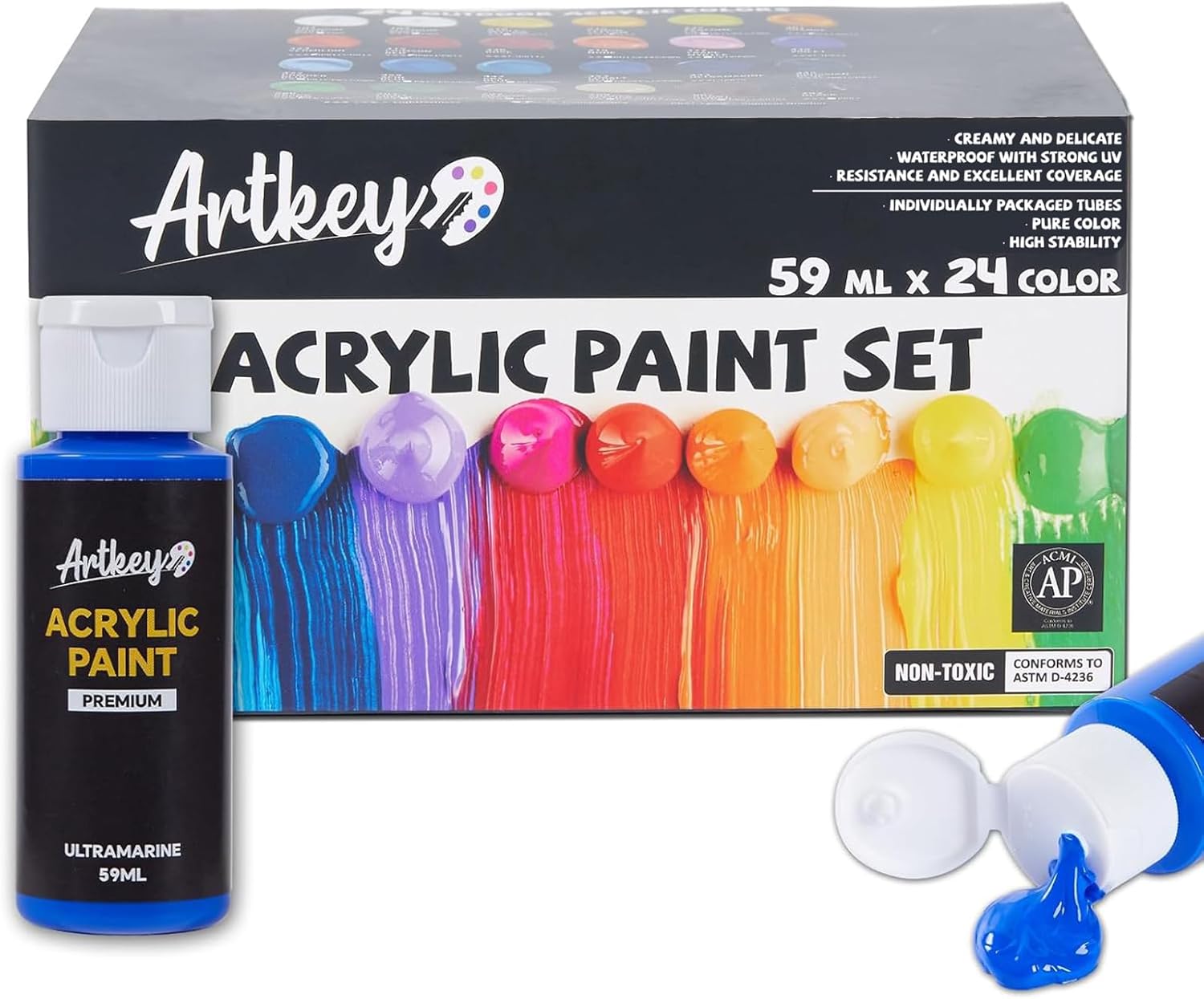
Artkey’s set contains 24 colors in 2 oz bottles with tightly sealed caps to prevent leaks and drying. The listing describes strong coverage and names canvas, wood, fabric, ceramic, rock and metal among surfaces.
Many colors in small bottles suit experimenting with color combinations on small pours.
Best suited for: Artists exploring color palettes on small boards.
Key features:
- 24 colors
- 2 oz bottles
- Non-leaking caps
- Non-toxic
Pros:
- Wide palette
- Good for small pours
Cons and limitations:
- Small bottles run out quickly on large pours
Buying consideration: Save favorite combinations in a notebook with a swatch.
6. ESRICH 5 Pack 8×10 Canvas Boards — Best for budget practice

ESRICH’s boards are pure cotton with a non-toxic, acid-free primer over a sturdy board core, and the listing names pouring among uses.
Five boards is a low-cost way to test a pour technique before committing to larger supports.
Best suited for: Beginners practicing pours.
Key features:
- 5 boards, 8×10
- Pure cotton
- Acid-free primer
- Pouring listed
Pros:
- Low cost
- Pouring named
Cons and limitations:
- Small pack
- Priming coats not specified
Buying consideration: Add a coat of gesso for a smoother, less absorbent surface.
How to Prepare a Canvas for a Pour
- Cover the work area with plastic and set up a level surface; check with a spirit level.
- Seal the back of boards with gesso or acrylic to limit warping.
- Apply an extra coat of gesso or a thin layer of white acrylic to the front for a smoother, less absorbent surface.
- Tape the back edges if you want to peel away drips later.
- Raise the canvas on cups so paint runs off the edges.
- Mix paint with pouring medium to a consistency like warm honey, and let bubbles rise.
- Pour, tilt gently to spread paint, then leave the piece flat and covered from dust to dry.
Getting the Paint Consistency Right
Consistency matters more than any other variable in fluid acrylics. Too thick and the paint will not spread or form cells; too thin and colors muddy together, the surface may crack as it dries and the canvas texture shows through. A common starting point is to mix paint and pouring medium until the mixture flows off a stirring stick in a steady ribbon that briefly mounds on the surface before leveling. Heavier-bodied paints need more medium than fluid craft paints. Mix each color in its own cup, stir slowly to avoid bubbles, and let the cups rest for a few minutes before pouring. Keep notes of ratios that work so you can repeat them.
Canvas Boards vs Stretched Canvas for Pours
Boards are flat, rigid and cheap, and they do not sag under the weight of wet paint, which makes them forgiving for beginners and ideal for practice. Their thin edges can be taped for a clean border or left to drip and trimmed. Stretched canvas is popular for finished pours because paint drapes over the deep sides and the piece hangs without a frame. The trade-off is sag: support stretched canvas from underneath with a snug piece of cardboard or a book inside the back of the frame while the pour dries. Whichever you choose, keep it level until fully dry.
Finishing a Fluid Acrylic Painting
Once a pour has fully cured, which can take several days for thick layers, many artists varnish it to deepen colors and protect the surface. If you used silicone oil, wipe the dried surface gently with a mild soapy cloth or a little rubbing alcohol first, since leftover oil can make varnish bead. Apply a gloss acrylic varnish or a resin topcoat according to the product instructions, and paint or tape the edges for a neat finish.
Buying Guide: How to Choose Canvas for Fluid Acrylics
Rigidity
Choose boards or support stretched canvas underneath so it stays flat. Even a slight dip in the middle pulls paint toward the center and changes your design while it dries.
Priming
Triple-primed surfaces let paint flow and keep colors bright. Absorbent surfaces pull water out of the paint too quickly and can cause crazing.
Size
Start with small boards; large pours need much more paint and drying space. A 12×12 pour can use several times as much paint as an 8×10, so budget accordingly.
Edges
Stretched canvas lets paint drape over the sides; boards suit framed or taped borders. Decide before you pour, since the edges are hard to change afterward.
Medium and paint
A dedicated pouring or flow medium matters as much as the canvas. It keeps the paint film flexible and strong as it dries, which helps prevent cracking on any support.
Quantity
Pours take practice; buy enough boards to experiment. Results vary a lot with consistency, temperature and technique, and many artists only find their favorite approach after a few dozen pours.
Related Guides
Fluid acrylics are also used for smooth blending with brushes; see how to wet blend acrylics on canvas. If a canvas gets damaged during a pour, our guide on fixing a ripped canvas can help, and multi-canvas wall art sets are a great format for pours.
Common Mistakes to Avoid
- Pouring on a surface that is not level.
- Thinning paint with only water, which weakens the paint film.
- Pouring on unsupported stretched canvas that sags.
- Moving a pour before it is dry.
- Skipping a back seal on boards and getting warping.
- Using too much silicone oil, which can cause adhesion problems for varnish.
- Pouring in a cold or very dry room, where paint skins over too quickly and cracks.
- Leaving a wet pour uncovered, so dust and pet hair settle on the surface.
FAQs
What canvas is best for acrylic pouring?
A well-primed rigid canvas board or supported stretched canvas.
Do I need to prime canvas before pouring?
Pre-primed canvas works, but an extra coat of gesso or white acrylic gives a smoother, less absorbent surface.
Can I pour on canvas boards?
Yes. Seal the back to reduce warping and raise the board so paint can run off.
How long do acrylic pours take to dry?
Often 24 to 72 hours depending on thickness, temperature and humidity.
What is the best medium for fluid acrylics?
A dedicated pouring or flow medium, which keeps the paint film strong while improving flow.
Why does my pour crack?
Paint may be too thick, too much water used, or the piece dried too fast; adjust consistency and drying conditions.
Final Recommendation
For fluid acrylics, the KEFF 24-pack offers well-primed boards in four sizes, ideal for practice and finished pours. Beginners should start with the Nicpro pouring kit, and anyone mixing their own paint should add Mont Marte flow medium. Nicpro’s 500 ml bulk paints suit frequent pourers, Artkey’s 24 colors suit small experiments, and the ESRICH five-pack is the cheapest way to practice.