PaintingProGuide is reader-supported. When you buy through links on this page we may earn an affiliate commission at no extra cost to you.
An Ampersand wood painting panel is a different purchase from a pack of canvas boards. Ampersand Art Supply makes a family of rigid panels, some raw wood, some primed with gesso, some coated for encaustic, and the right one depends entirely on your medium and technique. Buy the wrong surface and you will be sanding, sealing and priming before you can start, or fighting a ground that does not suit your paint.
This review covers six Ampersand panels from their listing details, from the raw birch value pack to Gessobord and Encausticbord, explains which painters each suits, and compares them with a budget unfinished birch panel kit from Falling in Art.
Quick answer: For most oil and acrylic painters, Ampersand Gessobord is the easiest place to start: a hardboard panel primed with a thicker-than-usual acrylic gesso, ready for brushwork, palette knife, glazing and layering. If you paint fine detail or smooth fluid lines, choose Ampersand Primed Smooth. For pouring, collage and resin, the Ampersand Birch cradled value pack is the better fit, and encaustic painters need Encausticbord.
Our Top Picks at a Glance
- Ampersand Gessobord, 11×14, 1/8″ Flat — Best all-round primed wood panel for oil and acrylic
- Ampersand Primed Smooth, 11×14, 1/8″ Cradled — Best for fine detail and smooth lines
- Ampersand Birch Wood Panels, 6×6, 7/8″ Cradled, 4-Pack — Best for pouring, collage and mixed media
- Ampersand Encausticbord, 18×24, 1.5″ Cradled — Best for encaustic and drawing media
- Ampersand Artist Panel Unprimed Basswood, 8×8, 1.5″ — Best for custom grounds and mounting
- Ampersand Museum Series Hardbord, 12×16, 1/8″ — Best for building your own ground or mounting paper
- Falling in Art 11×14 Unfinished Birch Panels, 4-Pack — Best budget cradled birch alternative
| Product | Best For | Key Spec | Key Strength | Price Tier |
|---|---|---|---|---|
| Ampersand Gessobord | Oil and acrylic | 11×14; 1/8″ flat; thick acrylic gesso | Bright white, even absorbency | $$ |
| Ampersand Primed Smooth | Fine detail | 11×14; 1/8″ cradled; smooth gesso on top and sides | Accepts watercolor, acrylic, oil, pencil | $ |
| Ampersand Birch 4-Pack | Pouring and collage | 6×6; 7/8″ cradle; birch plywood | No seams, knots or patches | $$ |
| Ampersand Encausticbord | Encaustic and drawing | 18×24; 1.5″ cradle; encaustic ground | Heat-resistant, velvety surface | $$$ |
| Ampersand Basswood | Custom grounds | 8×8; 1.5″ depth; unprimed | Smooth basswood top | $$ |
| Ampersand Hardbord | Build your own ground | 12×16; 1/8″; unprimed | Archival, formaldehyde-free | $ |
| Falling in Art Birch 4-Pack | Budget birch | 11×14; 5/8″ cradle; unfinished | Larger size at low cost | $$ |
How We Chose
We have not painted on these panels. The picks are based on the Amazon listing details and specifications checked in October 2026, on how well each panel’s ground, profile and size fit the techniques people buy Ampersand wood painting panels for, and on how widely each product is reviewed by Amazon buyers. Claims about absorbency, archival quality and heat resistance are Ampersand’s descriptions.
Our criteria:
- Ground: unprimed, gesso-primed, smooth gesso or encaustic.
- Substrate: hardboard, birch plywood or basswood.
- Profile: flat 1/8-inch boards for framing, or cradled panels for hanging unframed.
- Media fit: oil, acrylic, watercolor, encaustic, pouring and drawing.
- Size and value: single panels versus multi-packs.
Ampersand Wood Painting Panel Reviewed
Ampersand’s range is easiest to understand by the surface on top. The first two panels are ready to paint; the next four are specialist or unprimed surfaces.
1. Ampersand Gessobord, 11×14, 1/8″ Flat Profile — Best All-Round Primed Panel

Gessobord is Ampersand’s canvas panel alternative. The listing describes a wood hardboard panel primed with an acrylic gesso thicker than most brands, with a consistently even bright white finish and absorbency that will not dull colors. It is named for oils, acrylics and mixed media, and for fine brushwork, palette knife painting, glazing and layering.
At 1/8 inch, the flat profile fits standard frames and stacks easily. A rigid hardboard support also means no flexing under a palette knife, a common complaint with canvas boards.
Best suited for: oil and acrylic painters who want a ready-to-paint rigid panel that frames like a canvas board.
Key features:
- 11 x 14 inches, 1/8″ flat profile
- Wood hardboard support
- Thick acrylic gesso ground, bright white
- For oils, acrylics and mixed media
Pros:
- Ready to paint out of the package
- Rigid support for knife work
- Fits standard frames
Cons and limitations:
- Flat profile needs a frame to hang
- Single panel per package
Buying consideration: If you are moving up from canvas boards, Gessobord is the most natural first Ampersand panel.
2. Ampersand Primed Smooth, 11×14, 1/8″ Cradled — Best for Fine Detail

Primed Smooth is fully primed on top and sides with a super smooth acrylic gesso, according to the listing. The ground is semi-absorbent and acid-free and accepts watercolor, acrylic, oil and pencil. The support is medium-density fiberboard, described as ideal for palette knife painting, and the surface is called perfect for fine detail and smooth fluid lines.
That smooth, semi-absorbent surface suits realist painting, portraits, botanical work and drawing combined with paint. Note that the title calls it 1/8-inch cradled.
Best suited for: realist and detail painters, and artists combining pencil and paint.
Key features:
- 11 x 14 inches, 1/8″ depth
- Super smooth acrylic gesso on top and sides
- Semi-absorbent, acid-free ground
- Accepts watercolor, acrylic, oil and pencil
Pros:
- Very smooth surface for detail
- Accepts watercolor as well as oil and acrylic
- Low price tier for a single panel
Cons and limitations:
- Smooth surface shows every brushmark
- Less tooth for heavy impasto
Buying consideration: Choose this over Gessobord when detail and smooth lines matter more than texture.
3. Ampersand Birch Wood Art Painting Panels, 6×6, 7/8″ Cradled, 4-Pack — Best for Pouring and Mixed Media

This value pack holds four 6 x 6 birch panels with 7/8-inch high-density solid wood cradles that help prevent warping. Ampersand says its birch panels have no seams, distinct knots or football patches, and names pouring, collage, impasto and encaustic painting as uses for the rigid plywood surface.
Small cradled panels are ideal for pour paintings, resin, collage and series of small works that can hang unframed. Raw birch should be sealed or primed for most paints.
Best suited for: fluid artists, collage and mixed media makers and painters of small series.
Key features:
- Four 6 x 6 birch panels
- 7/8″ solid wood cradles
- No seams, distinct knots or football patches
- For pouring, collage, impasto and encaustic
Pros:
- Cradles allow unframed display
- Clean birch surface
- Multi-pack value
Cons and limitations:
- Unprimed; needs sealing or gesso for most paints
- Small size
Buying consideration: Seal raw wood before acrylic pouring to reduce support-induced discoloration and absorption.
4. Ampersand Encausticbord, 18×24, 1.5″ Cradled — Best for Encaustic and Drawing Media

Encausticbord is coated with a heat-resistant encaustic ground that Ampersand describes as bright, velvety and highly absorbent, letting molten wax bond into the coating through repeated heating and heavy layering without cracking or separation. It sits on Ampersand’s warp-resistant Hardbord core with Archiva-Seal and handcrafted 13-ply wood cradles.
The listing also highlights the surface for drawing, charcoal, graphite, colored pencil and PanPastel, and for ink, markers and collage.
Best suited for: encaustic painters and artists working in pastel, charcoal and colored pencil who want a gallery-ready cradled panel.
Key features:
- 18 x 24 inches, 1.5″ cradle
- Heat-resistant encaustic ground
- Hardbord core with Archiva-Seal; 13-ply cradles
- Acid-free, archival
Pros:
- Built for repeated heating and wax layering
- Velvety surface for dry drawing media
- Large, gallery-ready format
Cons and limitations:
- Highest price tier here
- Absorbent ground is not the right choice for standard oil painting
Buying consideration: Buy it for encaustic or dry media. For oil or acrylic, choose Gessobord.
5. Ampersand Artist Panel Unprimed Basswood, 8×8, 1.5″ Depth — Best for Custom Grounds and Mounting
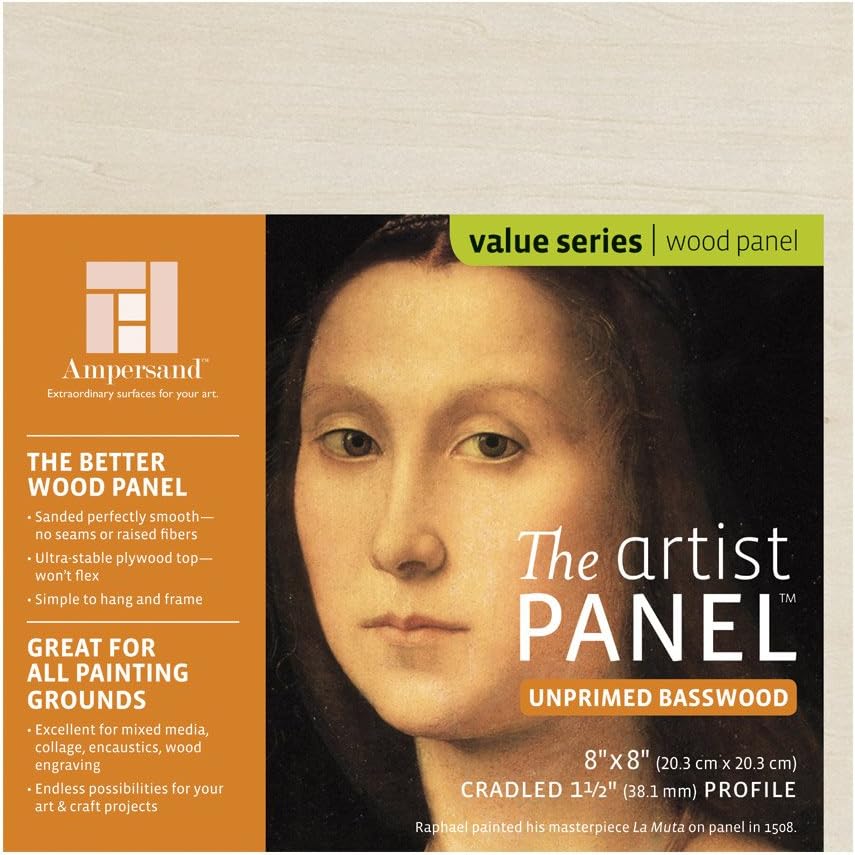
This panel has a premium, non-flexible basswood top supported by pinewood cradles, with a smooth uniform finish free of seams, knots and excess grain. The listing names mounting canvas and giclees, and says it accepts all painting grounds, encaustic, collage, mixed media and wood engraving.
Unprimed basswood lets you choose your own ground, from traditional gesso to clear sealers that show the wood.
Best suited for: artists who prepare their own grounds, wood engravers and those mounting canvas or prints.
Key features:
- 8 x 8 inches, 1.5″ depth
- Basswood top with pinewood cradles
- Unprimed; free of seams and knots
- Accepts all grounds; wood engraving
Pros:
- Smooth basswood surface
- Deep cradle for unframed display
- Very flexible in use
Cons and limitations:
- Requires preparation before painting
- Small size
Buying consideration: Seal and prime as needed for your medium; basswood’s fine grain suits carving and pyrography too.
6. Ampersand Museum Series Hardbord, 12×16, 1/8″ — Best for Building Your Own Ground
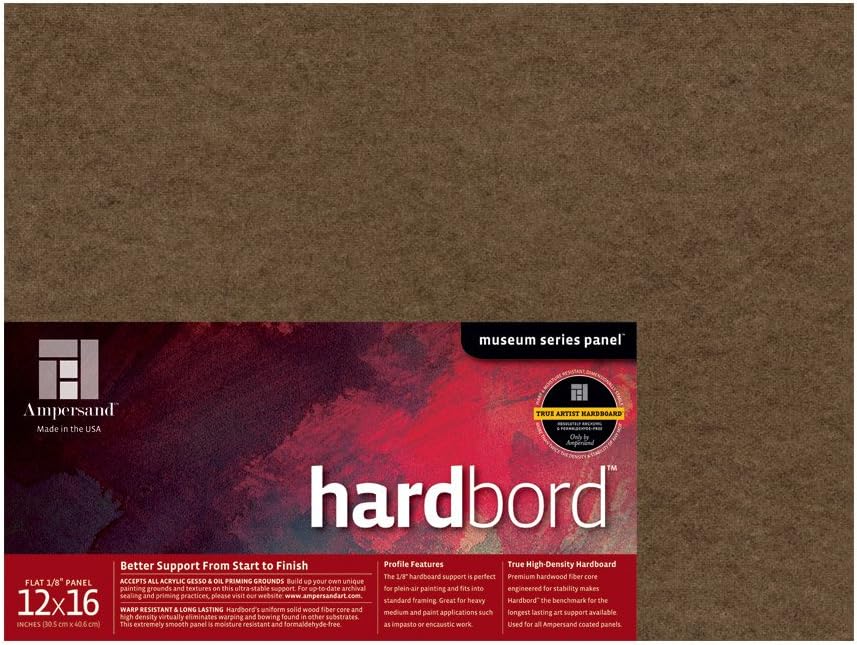
Hardbord is Ampersand’s artist-grade unprimed hardboard, described as moisture resistant, formaldehyde free, archival and eco-friendly. It comes with priming instructions and should be primed before painting. The listing also suggests mounting watercolor papers, photographs, fabrics and prints.
For painters who like to build textured grounds or apply their own gesso, this is a cost-effective rigid support.
Best suited for: painters who build custom grounds and artists who mount paper or fabric.
Key features:
- 12 x 16 inches, 1/8″ flat
- Unprimed artist-grade hardboard
- Moisture resistant, formaldehyde free, archival
- Priming instructions included
Pros:
- Low price tier
- Archival hardboard core
- Good for mounting
Cons and limitations:
- Must be primed before painting
- Flat profile needs a frame
Buying consideration: If you enjoy preparing surfaces, Hardbord plus gesso is the economical route to rigid panels.
Budget Alternative Worth Comparing
7. Falling in Art 11×14 Unfinished Birch Wood Panels, 4-Pack — Best Budget Birch Alternative

Falling in Art’s kit offers four 11 x 14 panels with a 1/8-inch birch face joined to a 5/8-inch cradle with adhesive rather than staples or nails. The listing describes a hard, sanded surface that will not stretch or flex like canvas, with visible natural birch grain, and names painting, dry mounting, pouring, resin, collage, photo transfer, crafts and wood burning.
Compared with Ampersand’s birch pack, you get larger panels for a similar price tier, but without Ampersand’s claims about seams, knots and patches.
Best suited for: budget-conscious painters and crafters who want larger cradled birch panels for pouring, resin or mixed media.
Key features:
- Four 11 x 14 panels
- 1/8″ birch face on 5/8″ cradle
- Adhesive construction, no staples or nails
- Unfinished, visible grain
Pros:
- Larger size per panel
- Multi-pack value
Cons and limitations:
- No quality claims about seams or knots
- Needs sealing and priming for most paints
Buying consideration: A good choice for practice pours and resin. For work you plan to sell, Ampersand’s documented construction offers more assurance.
Which Ampersand Panel for Which Painter?
Oil Painters
Start with Gessobord for general work and Primed Smooth for portraits, still life and detailed realism. Both are ready to paint, and the rigid support means oil films are not subjected to the flexing that stretched canvas undergoes. Keep early layers lean, as you would on any primed surface.
Acrylic Painters
Gessobord is again the default. If you work in thin glazes or airbrush, the smoother surface of Primed Smooth shows fewer texture artifacts. For heavy impasto and gel work, a sealed and gessoed birch panel gives a strong, rigid base that will not bow under the weight of thick paint.
Fluid Artists and Resin Workers
Cradled birch is the natural choice. The cradle gives the pour a defined edge and lets the piece hang without a frame, and the rigid plywood surface stays flat under wet media. Seal the wood first and level the panel carefully before pouring.
Encaustic, Pastel and Drawing Artists
Encausticbord is purpose-built for wax and is also described as an excellent surface for charcoal, graphite, colored pencil and PanPastel. Its absorbent ground is the reason it suits these media and the reason it is a poor fit for ordinary oil painting.
Watercolor and Mixed Water Media
Primed Smooth is the only panel here whose listing names watercolor. Its semi-absorbent ground accepts watercolor alongside pencil and acrylic, which makes it useful for mixed media pieces that combine drawing and paint on a rigid support.
Surface Builders
If you enjoy preparing your own grounds, Museum Series Hardbord and unprimed Basswood are blank slates. You can apply traditional gesso, textured pastes, clear sealers that leave the wood visible, or mount paper and fabric to them.
Buying Guide: How to Choose an Ampersand Wood Painting Panel
Primed or Unprimed
Primed panels, Gessobord and Primed Smooth, are ready to paint. Unprimed panels, birch, basswood and Hardbord, need sealing and gesso for most paints but let you control the ground.
Surface Texture
Gessobord has an even, brushable ground; Primed Smooth is very smooth for detail. Encausticbord is velvety and absorbent. Raw wood shows grain unless primed.
Flat or Cradled
Flat 1/8-inch panels fit frames. Cradled panels, 7/8 to 1.5 inches deep, can hang unframed and look finished from the side.
Match the Medium
Oil and acrylic: Gessobord or Primed Smooth. Watercolor and pencil on a panel: Primed Smooth. Encaustic, pastel and charcoal: Encausticbord. Pouring and resin: sealed birch.
Support Material
Hardboard is dense and stable. Birch plywood is light and strong. Basswood is fine-grained and easy to carve.
Size and Budget
Single Ampersand panels cost more per piece than canvas boards. Multi-packs and unprimed Hardbord reduce cost if you are willing to prepare surfaces.
How to Prepare a Raw Wood Panel
- Lightly sand the surface with fine sandpaper and wipe away dust.
- Apply a sealer or acrylic medium to reduce support-induced discoloration and absorption.
- Apply two to three thin coats of acrylic gesso, sanding lightly between coats for a smoother finish.
- Seal or gesso the cradle sides if you want a clean edge, or tape them off to leave natural wood.
- Let the ground cure fully before painting.
Learn More About Painting on Panels
Painting on rigid panels has a long history; read about an early master of oil painting on panel. Small cradled panels also work beautifully in groups, as in our guide to painting a three-panel set, and if you also use stretched canvas, keep how to fix a ripped canvas painting handy.
Common Mistakes to Avoid
- Painting directly on raw wood. Seal and prime first for most paints.
- Using Encausticbord for oil painting. Its absorbent ground is designed for wax and dry media.
- Skipping sanding between gesso coats. It leaves ridges on smooth work.
- Choosing a flat panel to hang unframed. Use cradled panels for frameless display.
- Storing panels flat under weight. Store upright to avoid scratches and pressure marks.
- Ignoring the sides. Finish cradle edges for a professional look.
FAQs
What is the difference between Ampersand Gessobord and Primed Smooth?
Gessobord has a thick acrylic gesso ground designed for brushwork, knife painting, glazing and layering. Primed Smooth has a super smooth, semi-absorbent gesso ground suited to fine detail, smooth lines and media including watercolor and pencil.
Do I need to prime Ampersand birch panels?
Yes, for most paints. The birch value pack is unprimed; seal and gesso it before oil or acrylic, or seal it for pouring and resin.
Can I use oil paint on Ampersand panels?
Yes. Gessobord is named for oils, and Primed Smooth accepts oil. Unprimed panels need a suitable ground first.
What is Encausticbord used for?
Encaustic wax painting, plus drawing media such as charcoal, graphite, colored pencil and PanPastel, according to the listing.
Are wood panels better than canvas?
Panels are rigid, so paint films are less likely to crack from flexing, and they suit detail and knife work. Canvas is lighter for large sizes and has a springy feel some painters prefer.
Can I hang a cradled panel without a frame?
Yes. Cradled panels have depth and can be wired or hung directly, which is one of their main advantages.
Final Recommendation
For a ready-to-paint Ampersand wood painting panel for oil or acrylic, start with Gessobord. Choose Primed Smooth for detail and mixed water media, Encausticbord for wax and dry drawing media, and the Birch value pack for pouring and collage.
If you prefer to prepare your own surfaces, Ampersand Basswood and Museum Series Hardbord give you a quality substrate to build on. The Falling in Art birch kit is a budget option for practice pours and resin.