
PaintingProGuide is reader-supported. When you buy through links on this page we may earn an affiliate commission at no extra cost to you.
Claessens linen canvas is Belgian linen sold mostly by the roll, either raw or hand-primed, and it sits near the top of what painters can buy as a fabric support. The short version of this Claessens linen canvas review: the oil-primed numbers (#13 and #15) are for oil and alkyd painters only, the universal-primed #109 is the one to choose if you also paint in acrylic, and the unprimed #066 is for painters who want to size and ground their own linen.
Choosing the wrong priming is the most expensive mistake you can make with Claessens, because acrylic paint does not bond reliably to an oil ground. This guide explains each listing in plain terms, what the product numbers indicate, and the ready-to-paint linen panels worth comparing if a roll is more than you need.
Quick answer: Oil painters who want a smooth surface for detail should look at Claessens #13 double oil primed, very fine texture. Painters who switch between oil and acrylic should choose Claessens #109 universal primed. If you want linen without buying a roll, Centurion’s oil-primed linen panels are the practical alternative, and Senso clear-primed linen panels work with acrylic.
Our Top Picks at a Glance
- Claessens #13 Double Oil Primed, Very Fine (54″ x 3 yd) — Best for detailed oil portraits and realism
- Claessens #15 Single Oil Primed, Medium (54″ x 3 yd) — Best for general oil painting with visible weave
- Claessens #109 Universal Primed, Medium (82″ x 6 yd) — Best for acrylic and mixed-media painters
- Old Holland Claessens Oil Primed Belgian Linen, 12×16 — Best way to try Claessens without a roll
- Claessens #066 Unprimed Linen, Medium (84″ x 6 yd) — Best for painters who prepare their own grounds
- Centurion Deluxe Oil Primed Linen Panels, 11×14 (3-Pack) — Best ready-made oil linen panel alternative
- Senso Clear Primed Linen Panels, 8×10 (3-Pack) — Best linen panel for acrylic and drawing media
| Product | Best For | Key Spec | Key Strength | Price Tier |
|---|---|---|---|---|
| Claessens #13 | Detailed oil work | Double oil primed, very fine, 54″ x 3 yd | Smooth, hand-primed surface | $$$ |
| Claessens #15 | General oil painting | Single oil primed, medium, 54″ x 3 yd | Visible weave, lighter ground | $$$ |
| Claessens #109 | Acrylic and mixed media | Universal primed, medium-heavy, 82″ x 6 yd | Works with oil and acrylic | $$$ |
| Old Holland Claessens 12×16 | Trying Claessens | Oil primed Belgian linen, 12×16 | No roll required | $$$ |
| Claessens #066 Unprimed | Custom grounds | Raw linen, medium, 84″ x 6 yd | Full control of priming | $$$ |
| Centurion Oil Primed Panels | Ready-made oil linen | 11 oz oil primed, 3mm MDF, 11×14 | Rigid, travel-friendly | $$ |
| Senso Clear Primed Panels | Acrylic, drawing, collage | Clear acrylic primed, 3mm MDF, 8×10 | Natural linen color shows | $$ |
How We Chose
We did not paint on these surfaces for this review. Picks are based on the Amazon listing details and specifications checked in October 2026, on how well each product’s priming, texture and format suit the reasons people look at Claessens linen, and on how widely each product is reviewed by Amazon buyers. Where a listing contradicts itself, we point it out so you can confirm with the seller.
- Priming type: oil primed, universal (acrylic) primed, clear primed or raw.
- Texture: very fine and fine for detail; medium for general work; heavier for expressive painting.
- Format: roll width and length versus ready-made sizes.
- Construction details: hand priming, sanding, glue layers and backing boards.
- Medium compatibility: the single most important filter.
Claessens Linen Explained
Claessens sells linen under product numbers rather than descriptive names. In the listings we checked, the number appears alongside the priming and texture: #13 is double oil primed with a very fine texture, #15 is single oil primed with a medium texture, #109 is universal primed with a medium, heavier texture, and #066 is unprimed medium-texture linen. When you reorder, the number is the quickest way to get the same surface again.
Linen differs from cotton in a few well-known ways. Linen fibers are longer and stronger, the weave is usually less uniform, and the fabric responds less to humidity once primed. Painters choose it for durability and for the character of its weave, which shows through thin paint. Cotton is cheaper and more uniform.
The oil-primed Claessens listings describe each layer being sanded and dried for 10 days in a warm-air oven, with hand inspection at each production step. The universal-primed listing describes a glue layer applied before priming and acrylic primer troweled on by hand with a large knife. That hand work is a large part of why Claessens costs what it does.
Claessens Linen Canvas Reviewed
1. Claessens #13 Double Oil Primed, Very Fine — Best for Detailed Oil Work

The #13 is double oil primed with a very fine texture, sold as a roll 54 inches wide by 3 yards long. Two layers of oil priming fill more of the weave than one, so the surface is smoother, which suits portrait, still life and realist painters who build thin, controlled layers.
The listing states it is hand primed for oil and alkyd painting, with each layer sanded and oven-dried for 10 days. It also describes the linen as archival. This is not a surface for acrylic; the priming is oil-based.
Best suited for: oil and alkyd painters doing portraits, realism and fine detail.
Key features:
- Double oil primed, very fine texture
- 54″ x 3 yard roll
- Hand primed, each layer sanded and oven-dried
- For oil and alkyd only
Pros:
- Smooth surface for thin, detailed layers
- Roll lets you cut any size you need
Cons/limitations:
- Not compatible with acrylic paint
- Must be stretched or mounted yourself
- Highest-tier investment
Buying consideration: A 54″ x 3 yd roll yields many standard sizes. Plan your cuts on paper first to reduce waste.
2. Claessens #15 Single Oil Primed, Medium — Best General Oil Linen

The #15 is single oil primed with a medium texture, also 54 inches by 3 yards and sold cut by the yard. With only one layer of priming, more of the linen weave shows through, giving more tooth for brushwork and a livelier surface for alla prima painting.
The listing shares its construction description with the #13: hand priming for oil and alkyd, sanding and oven drying between layers, and archival quality.
Best suited for: oil painters working landscapes, still life and direct painting who like to see the weave.
Key features:
- Single oil primed, medium texture
- 54″ x 3 yard roll, cut by the yard
- For oil and alkyd
Pros:
- More tooth for visible brushwork
- Same hand-primed process as #13
Cons/limitations:
- Not for acrylic
- Single priming may feel absorbent to some painters
Buying consideration: If you prefer a more textured surface for expressive oil work, #15 is the more natural fit than #13.
3. Claessens #109 Universal Primed, Medium — Best for Acrylic and Mixed Media

The #109 is the Claessens choice for painters who use acrylic. It is universal primed, meaning the ground is acrylic-based and accepts acrylics, alkyds, oils and mixed media. The listing describes a pronounced, heavier texture, a glue layer applied before priming, and primer troweled on by hand. It also states the priming allows about 50% absorbency.
There is a contradiction in the listing worth noting: one line says “double universal primed,” another says a single layer of universal acrylic primer, and another says the canvas is coated twice. Ask the seller if the number of coats matters to you. The roll is 82 inches wide by 6 yards, so this is a large purchase suited to big work or many paintings.
Best suited for: acrylic painters and artists who switch between acrylic and oil on the same type of surface.
Key features:
- Universal acrylic priming, hand troweled
- Medium, heavier texture
- 82″ x 6 yard roll
- Glue layer before priming
Pros:
- The only Claessens roll here suitable for acrylic
- Very wide for large-format paintings
Cons/limitations:
- Conflicting priming details in the listing
- Heavy roll; needs storage space
- Texture too pronounced for very fine detail
Buying consideration: If you are an acrylic painter, this is the Claessens to choose. Everything oil-primed is off the table.
4. Old Holland Claessens Oil Primed Belgian Linen, 12×16 — Best Single-Size Trial

This listing sells Claessens oil-primed Belgian linen at a fixed 12×16 inch size under the Old Holland name. The listing text is brief and does not describe the construction, so check the photos to confirm whether it arrives stretched or as a panel.
For a painter curious about Claessens but not ready to buy and stretch a roll, a single ready-sized piece is the low-commitment way in.
Best suited for: oil painters who want to try Claessens linen on one painting.
Key features:
- Oil primed Belgian linen
- 12×16 inch format
Pros:
- No stretching skills required
- Small commitment
Cons/limitations:
- Minimal listing detail
- Oil only; not for acrylic
- High cost per square inch versus a roll
Buying consideration: Use it to decide whether Claessens oil priming suits you before committing to yardage.
5. Claessens #066 Unprimed Linen, Medium — Best for Custom Grounds

The #066 is raw, natural linen with a medium texture, 84 inches wide by 6 yards. The listing gives almost no detail beyond material, color and texture. Unprimed linen must be sized and primed before painting; you choose the ground, whether that is acrylic gesso, a traditional oil ground or a clear primer that leaves the natural linen color visible.
Best suited for: experienced painters who stretch and prime their own supports, and those who want to paint on raw-looking linen with a clear ground.
Key features:
- Unprimed natural linen
- Medium texture
- 84″ x 6 yard roll
Pros:
- Total control over the ground
- Widest roll in the roundup
Cons/limitations:
- Sparse listing information
- Requires sizing and priming before use
Buying consideration: Never apply oil paint directly to raw linen; oil damages the fibers over time without a proper size and ground.
Alternatives Worth Comparing
Rolls are a commitment in money, storage and stretching skill. These linen panels deliver linen’s surface in ready-to-paint sizes.
6. Centurion Deluxe Oil Primed Linen Panels, 11×14 — Best Ready-Made Oil Linen
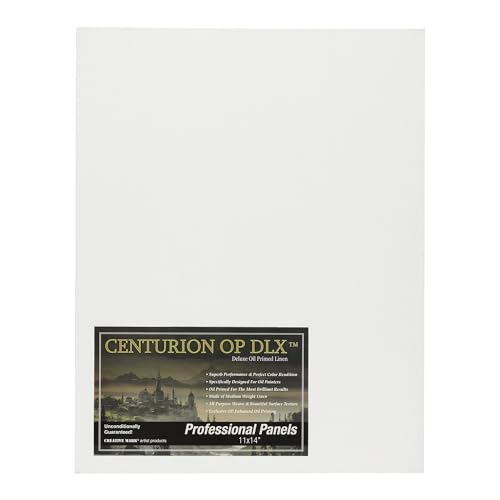
Centurion’s panels use medium-weight linen with 11 oz oil priming mounted on 3mm (1/8 inch) MDF. The listing describes them as acid-free, archival and non-warping, with an enhanced oil priming for color retention. They take about a quarter of the space of a 3/4 inch stretched canvas, which makes them easy to store and carry for plein air work.
Best suited for: oil painters who want linen without stretching, including plein air painters.
Key features:
- 11 oz oil primed medium-weight linen
- 3mm MDF backing, non-warping
- 3 x 11×14 panels; many other sizes offered
Pros:
- Ready to paint, rigid and compact
- Far lower commitment than a roll
Cons/limitations:
- Oil and alkyd only
- Not Claessens linen
Buying consideration: A strong everyday linen surface for oil painters who do not need custom sizes.
7. Senso Clear Primed Linen Panels, 8×10 — Best for Acrylic and Drawing

Senso panels use clear acrylic priming over natural linen, so the warm linen color remains visible. The listing names acrylic gouache, acrylics, egg tempera, casein, oil, pastel, graphite, charcoal and technical pens as compatible. The medium-tooth linen is mounted on 3mm archival MDF with acid-free glue and is described as stiff enough for heavy paint and collage.
Best suited for: acrylic painters, mixed-media artists and anyone who wants the raw linen look as part of the composition.
Key features:
- Clear acrylic primed natural linen
- Medium tooth, 3mm MDF backing
- 3 x 8×10 panels; sizes from 3×3 to 16×20
Pros:
- Works with acrylic and oil
- Natural linen color as a design element
Cons/limitations:
- Smaller sizes than a roll can provide
- Clear ground does not brighten colors like white gesso
Buying consideration: Paint a test patch first; colors read differently over a tan linen ground than over white.
Buying Guide: How to Choose Claessens Linen Canvas
Start With Your Medium
Oil and alkyd painters can use oil-primed, universal-primed or clear-primed linen. Acrylic painters must use universal or clear acrylic priming. This one rule eliminates half the options immediately.
Choose Texture for Your Style
Very fine textures suit portraits and realism. Medium textures suit most landscape and still life work. Heavier textures suit expressive, thick painting and larger formats where weave reads as part of the surface.
Single or Double Priming
Double priming fills more of the weave and creates a smoother, less absorbent surface. Single priming keeps more texture and tooth. Neither is better; they suit different styles.
Roll Size and Yield
A 54-inch-wide, 3-yard roll is about 54 by 108 inches of linen. Remember to allow extra on every side to wrap around stretcher bars. Sketch your cuts before you open the roll.
Stretching or Mounting Skills
Rolls require stretcher bars, canvas pliers and a staple gun, or panels and adhesive if you mount linen. If that sounds like a chore, ready-made linen panels are the better buy.
Storage
Primed linen should stay rolled, primed side out, and never be folded. A roll 82 or 84 inches wide needs a long, dry storage space.
Related Guides
If you are comparing roll formats in detail, see our Claessens canvas roll review, which focuses on cutting, stretching and yield. Planning a large composition on fresh linen? Our guide on how to grid a canvas for painting helps you transfer a drawing accurately. And if a stretched canvas gets damaged, read how to fix a ripped canvas painting.
Common Mistakes to Avoid
- Using acrylic on oil-primed linen. Adhesion can fail. Use universal or clear-primed linen for acrylic.
- Folding primed linen. Creases can crack the ground permanently.
- Cutting without allowance. Leave enough extra fabric to wrap and staple around stretcher bars.
- Painting oil straight onto raw linen. Size and prime unprimed linen first.
- Buying very fine texture for loose, thick painting. It can feel slick; medium texture gives more grip.
- Storing rolls primed side in. Roll primed side out to reduce stress on the ground.
FAQs
Can I use acrylic paint on Claessens linen?
Only on universal-primed or unprimed linen that you prime with acrylic gesso. Claessens #109 is universal primed. The oil-primed #13 and #15 are for oil and alkyd.
What do Claessens numbers like #13 and #15 mean?
They are product numbers that identify a specific linen, priming and texture. In the listings we checked, #13 is double oil primed very fine, #15 is single oil primed medium, #109 is universal primed medium and #066 is unprimed medium.
Is Claessens linen worth it compared with cotton canvas?
For painters who want archival linen with hand-applied priming, many consider it worth it. For practice, cotton canvas or panels are far more economical.
Is Claessens linen sold pre-stretched?
Mostly it is sold as rolls. The Old Holland Claessens listing offers a 12×16 size, and other makers such as Centurion and Senso sell linen mounted on panels.
How should I store a linen roll?
Keep it rolled with the primed side out, off the floor, in a dry place, and never fold it.
Should I choose very fine or medium texture?
Very fine suits detailed, smooth painting. Medium suits general painting and visible brushwork.
Final Recommendation
- Detailed oil painting: Claessens #13 double oil primed, very fine.
- General oil painting with texture: Claessens #15 single oil primed, medium.
- Acrylic or mixed media: Claessens #109 universal primed.
- Trying Claessens on one painting: Old Holland Claessens 12×16.
- Preparing your own ground: Claessens #066 unprimed.
- Linen without stretching (oil): Centurion oil-primed panels.
- Linen without stretching (acrylic or drawing): Senso clear-primed panels.
Get the priming right first, then choose texture. With Claessens, those two decisions determine whether the investment pays off.




One Comment