

PaintingProGuide is reader-supported. When you buy through links on this page we may earn an affiliate commission at no extra cost to you.
For a professional artist, canvas is not a commodity. It is the physical foundation of work that will be sold, exhibited, shipped and, ideally, last for generations. That shifts the priorities: fabric weight and quality, priming that is consistent and archival, stretcher bars that stay straight and square, tight, even tension, clean back-stapled edges that can be shown unframed, and dependable supply in the sizes you paint repeatedly. The best canvas for professional artists is a heavyweight, triple-primed cotton or linen on kiln-dried or solid pine bars, with a profile that matches how the work will be presented, used alongside cheaper surfaces for studies.
Quick answer: For large finished work, the milo 36×48 Stretched Canvas (15 oz, 1.5 inch profile) offers heavy-duty cotton and a deep gallery profile. For tall formats, the U.S. Art Supply 24×48 Canvas 3-Pack (12 oz, kiln-dried bars, back stapled) is a strong professional value, and for studies and small commissions, the FIXSMITH 11×14 8-Pack covers everyday needs.
This guide is for working painters, art students heading into professional practice and serious hobbyists who sell. It compares six canvases across finished work and studies, and covers weight, priming, profile, stretching your own and how to present and hang finished pieces.
Our Top Picks at a Glance
- milo Stretched Artist Canvas, 36×48, 2 Pack, 1.5 Inch Profile — Best for large gallery-ready work
- U.S. Art Supply 24×48 Stretched Canvas, 3 Pack — Best professional value in tall formats
- ESRICH 24×36 Stretched Canvas, 3 Pack — Best braced mid-large canvas
- FIXSMITH 11×14 Stretched Canvas, 8 Pack — Best for studies and small commissions
- Artist’s Loft 18×24 Canvas, 3 Count — Best budget surface for practice pieces
- KEFF 24-Pack Canvas Boards, 4 Sizes — Best boards for plein air and color studies
| Product | Best For | Key Spec | Key Strength | Price Tier |
|---|---|---|---|---|
| milo 36×48 | Large finished work | 15 oz cotton, triple primed, 1.5 in pine | Heavy fabric, gallery depth | $$$ |
| U.S. Art Supply 24×48 | Tall formats | 12 oz, triple titanium gesso, kiln-dried pine, back stapled | Clean edges, stable bars | $$$ |
| ESRICH 24×36 | Mid-large work | 8 oz gesso, 5/8 in pine, extra cross bar | Braced | $$$ |
| FIXSMITH 11×14 | Studies, small commissions | 8 pack, triple primed 8 oz, 5/8 in | Reliable small format | $$ |
| Artist’s Loft 18×24 | Practice | 3 canvases, lightweight cotton duck, acrylic gesso | Low cost | $$ |
| KEFF 24 Boards | Plein air, color studies | 6 each of 5×7, 8×10, 9×12, 11×14; triple primed | Rigid and portable | $$ |
How We Chose
We did not paint on these canvases. Picks are based on the Amazon listing details and specifications checked in October 2026, how well each canvas’s weight, priming, stretcher construction and profile meet professional needs, and how widely each product is reviewed by Amazon buyers. A multi-size stretched pack was left out because its small sizes duplicate the FIXSMITH and KEFF roles.
Professional criteria:
- Fabric weight: heavier cotton (12 to 15 oz finished) is more durable and less prone to sagging.
- Priming: triple primed, acid-free acrylic or titanium gesso for a consistent, archival ground.
- Stretcher bars: kiln-dried or solid pine that resists warping; braces on large sizes.
- Profile and finish: 3/4 to 1.5 inch profiles, back stapled for clean, frameless edges.
- Consistency: uniform surfaces across a pack for a series.
- Tiered use: premium canvas for finished work, economical surfaces for studies.
Best Canvas for Professional Artists Reviewed
1. milo Stretched Artist Canvas, 36×48, 2 Pack, 1.5 Inch Profile — Best for large gallery-ready work

milo lists 100% cotton canvas triple primed with gesso for a medium texture, described as 15 oz heavy-duty canvas that holds paint well for acrylic, oil, wet media and pouring. It is stretched over a 1.5 inch high-quality pine frame that the listing says gives a deep 3D effect and is easy to hang, with tight stretching.
At 36×48 inches and 15 oz, this is a canvas built for finished, large-scale professional work. The weight resists sagging over a wide span; the 1.5 inch profile presents well on gallery walls without a frame; and the medium texture suits a wide range of painting styles.
Two canvases in a pack is practical for a diptych or a pair of commissions.
Best suited for: Professional painters producing large exhibition and commission pieces.
Key features:
- 36×48 inch, 2 pack
- 15 oz heavy-duty 100% cotton
- Triple primed, medium texture
- 1.5 inch pine frame
Pros:
- Heavy fabric for large spans
- Gallery depth
- Suitable for many media incl. pours
Cons and limitations:
- Highest price tier
- Large format requires space and a strong easel
Buying consideration: Store large canvases upright with a protective sheet over the face, never stacked flat with weight on top.
2. U.S. Art Supply 24×48 Stretched Canvas, 3 Pack — Best for professional value in tall formats

U.S. Art Supply lists three 24×48 inch, 12 oz finished-weight canvases, triple primed with acid-free acrylic titanium gesso, 100% cotton with a medium grain that holds paint without absorbing it. They are hand-stretched tightly onto kiln-dried pinewood stretcher bars, back stapled for clean edges, at a 3/4 inch profile.
Kiln-dried bars are a professional detail: drying the wood reduces moisture and the risk of warping later. Back stapling leaves clean sides for frameless presentation. The tall 1:2 format suits figures, botanicals, vertical landscapes and long horizontal panoramas.
Best suited for: Professionals who work in elongated formats and want consistent quality across a series.
Key features:
- 24×48 inch, 3 pack
- 12 oz finished weight
- Triple primed, titanium gesso
- Kiln-dried pine, back stapled, 3/4 inch
Pros:
- Stable kiln-dried bars
- Clean back-stapled edges
- Good value for professional specs
Cons and limitations:
- 3/4 inch profile is shallower than gallery depth
- Large box to store
Buying consideration: For frameless display at this depth, paint the edges or tape them for a clean white border.
3. ESRICH 24×36 Stretched Canvas, 3 Pack — Best for a braced mid-large canvas
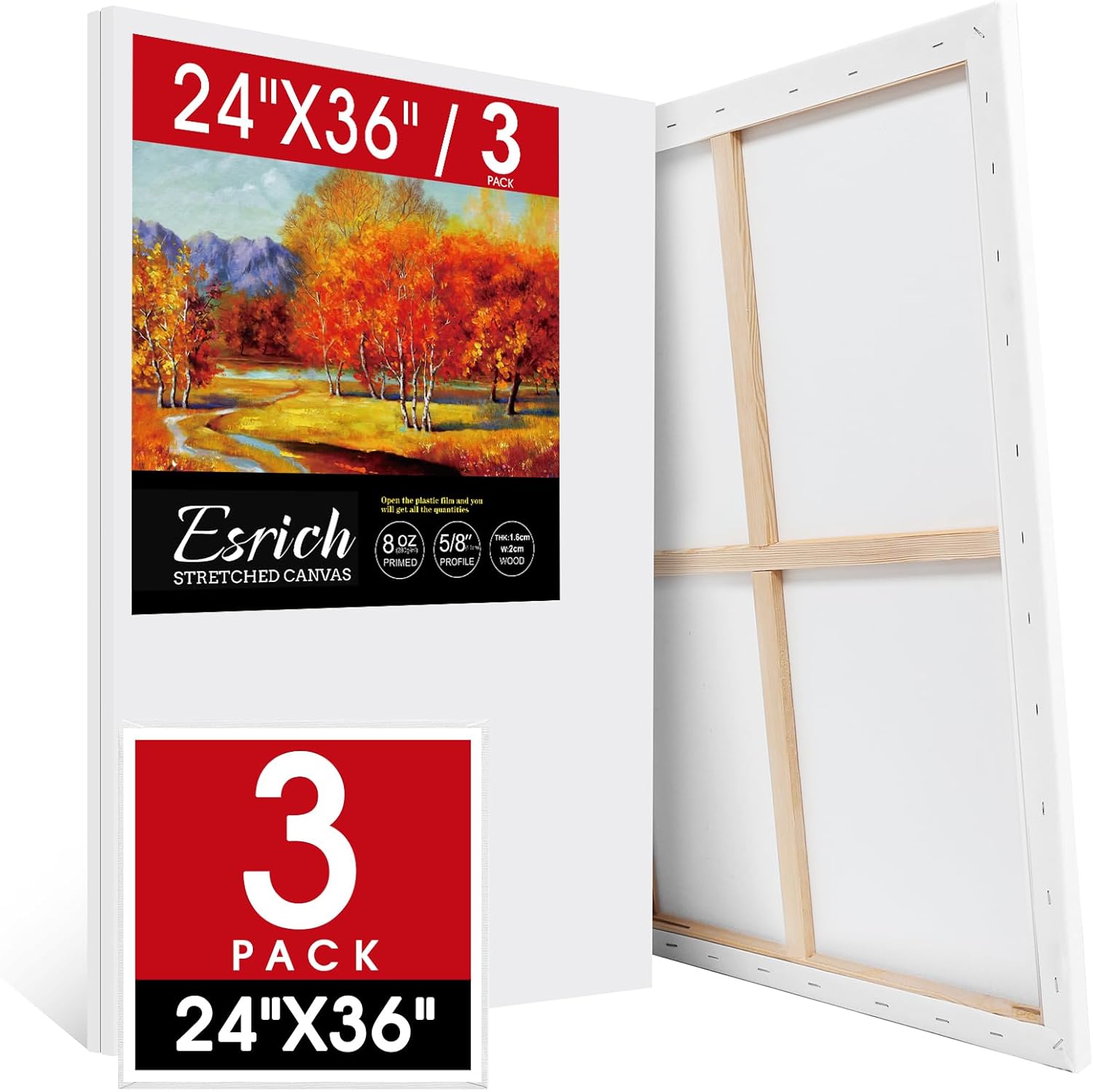
ESRICH lists three 24×36 inch cotton canvases pre-coated with 8 oz acid-free acrylic gesso, nailed to pinewood frames with a 5/8 inch structure and an extra cross bar for steadiness.
A center brace at 36 inches is an important stability feature for heavy paint and pours, and three matching canvases support a series. Priming is lighter than the milo and U.S. Art Supply options, so many professionals would add a coat of gesso.
Best suited for: Professionals producing mid-size work and series who want braced frames.
Key features:
- 24×36 inch, 3 pack
- 8 oz acid-free gesso
- 5/8 inch pine frame
- Extra cross bar
Pros:
- Braced for stability
- Three for a series
- Accessible price
Cons and limitations:
- Lighter priming
- Nailed frame construction
Buying consideration: Add one or two coats of quality gesso, sanded lightly, to bring the surface closer to professional-grade priming.
4. FIXSMITH 11×14 Stretched Canvas, 8 Pack — Best for studies and small commissions

FIXSMITH lists 100% cotton canvas, not rinsed with alkaline chemicals, stretched and stapled onto pinewood bars, triple primed with 8 oz acid-free acrylic gesso, at a 5/8 inch profile. It names professionals among intended users.
Professionals still need small canvases for studies, color tests, small sales and commissions. A reliable eight-pack at 11×14 is a sensible studio staple.
Best suited for: Studies, small commissions and series of small works.
Key features:
- 11×14 inch, 8 pack
- 100% cotton
- Triple primed, 8 oz gesso
- 5/8 inch pine bars
Pros:
- Reliable small format
- Triple primed
- Good studio stock
Cons and limitations:
- Standard profile
- Not heavyweight fabric
Buying consideration: Use the same brand for a series of small works so surfaces and edges match when displayed together.
5. Artist’s Loft 18×24 Canvas, 3 Count — Best for budget practice pieces
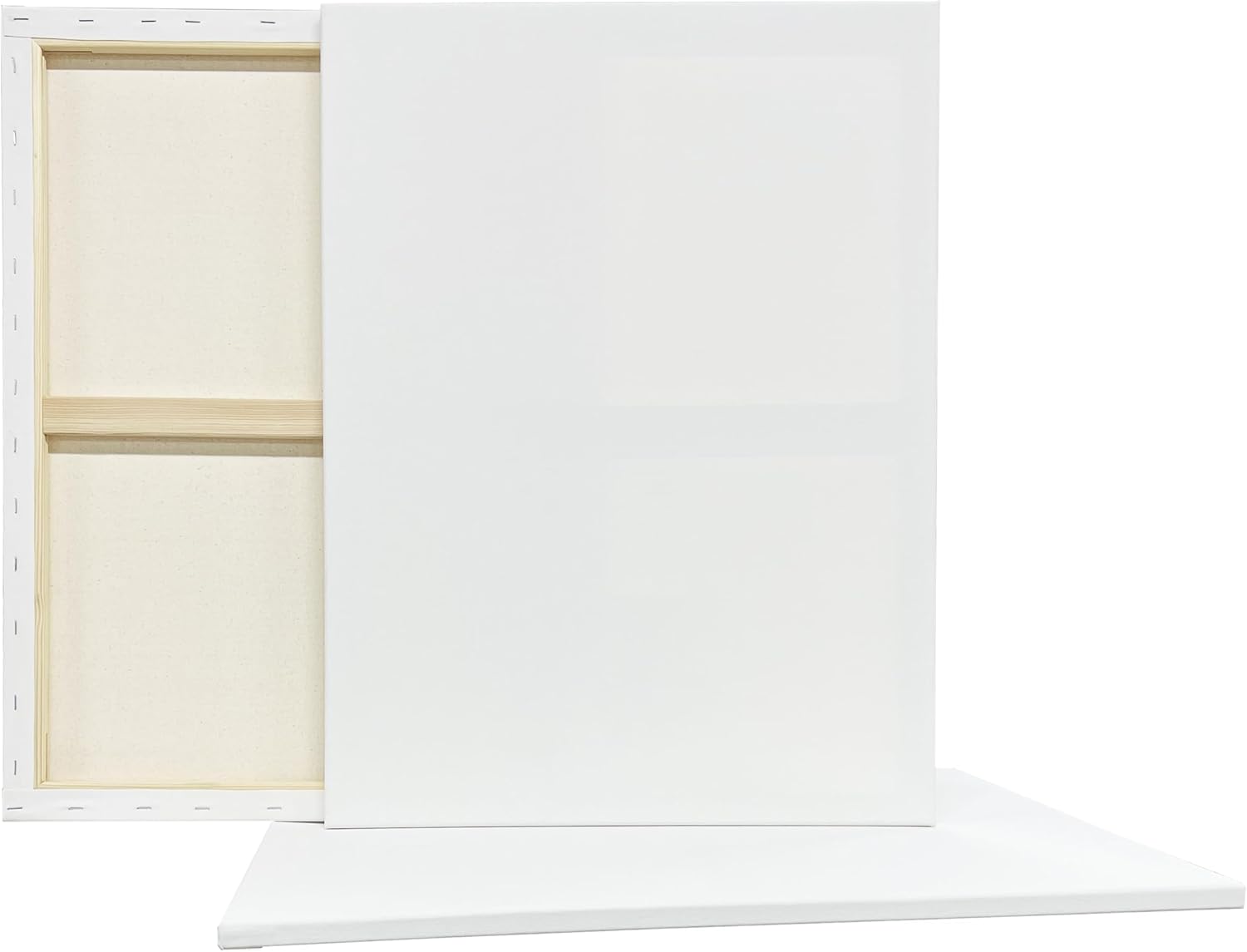
Artist’s Loft lists three 18×24 inch canvases, archival and acid free, acrylic gesso primed, in lightweight cotton duck, for acrylic or oil.
Lightweight cotton is not what most professionals choose for finished work, but it is useful for practice, compositional trials, underpainting tests and teaching demos at a mid size.
Best suited for: Practice paintings, demos and compositional trials.
Key features:
- 18×24 inch, 3 canvases
- Lightweight cotton duck
- Acrylic gesso primed
- Archival, acid free
Pros:
- Low cost per canvas
- Archival per listing
- Useful mid size
Cons and limitations:
- Lightweight fabric
- Not ideal for important finished work
Buying consideration: Treat these as sketchbooks on canvas: test a composition here before committing to heavyweight canvas.
6. KEFF 24-Pack Canvas Boards, 4 Sizes — Best for plein air and color studies

KEFF packs six each of 5×7, 8×10, 9×12 and 11×14 canvas boards, 100% cotton and triple primed, with smooth surfaces for a range of media.
Many professionals rely on rigid panels for plein air studies, color notes and small sales, because they are light, stack well and frame easily. A multi-size pack covers several study formats.
Best suited for: Plein air painters and professionals doing frequent color studies.
Key features:
- 24 boards in 4 sizes
- 100% cotton
- Triple primed
- Smooth surface
Pros:
- Rigid for outdoor work
- Multiple sizes
- Economical
Cons and limitations:
- Panels need frames for display
- Core material not detailed
Buying consideration: Date and label studies on the back; they become valuable references for studio paintings.
Buying Guide: How to Choose Canvas as a Professional Artist
Fabric weight
Finished weights of 12 to 15 oz are typical for professional cotton canvas. Heavier fabric holds tension better over large spans and stands up to vigorous work. Lightweight cotton is fine for studies.
Cotton or linen
Cotton is affordable, flexible and widely used by professionals, especially for acrylic and large work. Linen is stiffer, more stable in changing humidity and available in finer weaves, and is preferred by many oil painters for important pieces.
Priming and ground
Triple-primed acrylic or titanium gesso gives a consistent, bright, archival ground. Many professionals add their own coats to tune absorbency and texture, or apply an oil ground for traditional oil painting.
Stretcher bars
Kiln-dried or quality pine bars resist warping. Cross braces are important above about 30 inches. Some professionals prefer keyable stretchers so tension can be adjusted later.
Profile and edges
Standard 5/8 to 3/4 inch profiles suit framing. Deep 1.5 inch gallery profiles suit frameless presentation. Back stapling leaves clean edges.
Consistency across a series
Exhibitions and collections look more professional when surfaces, sizes and depths match. Buy multi-packs from the same line for a series.
Ready-made or self-stretched
Pre-stretched canvas saves time. Stretching your own gives total control over fabric, priming and tension, and allows custom sizes. Learn the process in our guide to stretching canvas over a frame.
Archival Considerations for Professional Work
Collectors expect professional work to last. Choose acid-free grounds, follow the fat-over-lean rule for oil, allow proper drying before varnishing, and use a removable varnish suitable for your medium. Keep the back of the canvas protected with a dust cover or backing board for shipped and stored work. Document materials used for each piece; it helps conservators and buyers.
Presenting and Hanging Finished Work
Gallery-depth canvases often hang without frames. Paint or neatly finish the edges, add hanging wire or D-rings rated for the weight, and include a dust cover on the back for a professional finish. For clients who rent or want damage-free hanging, our guide on using Command large canvas hangers explains weight limits and placement. If you experiment with specialty media, such as glow-in-the-dark paint on canvas, test on a study panel first and note the materials for buyers.
Building a Professional Canvas Workflow
Tier your surfaces. Use economical boards and lightweight canvas for studies, and heavyweight canvas or linen for finished work.
Standardize sizes. Choosing a few standard sizes makes framing, shipping and pricing simpler.
Buy in multiples. Packs of the same canvas line give consistency across a series.
Prepare surfaces in batches. Tone or add gesso to several canvases at once so they are ready when inspiration strikes.
Store carefully. Keep canvases upright, dry and protected from impacts.
Preparing Pre-Primed Canvas for Professional Work
Even good pre-primed canvas is a starting point, not the finished ground. A short preparation routine brings it closer to what you would make yourself.
- Check tension. Press lightly near the center; the canvas should spring back evenly. Tighten if needed.
- Inspect the surface. Look across it at a low angle for lumps, fibers or thin spots in the priming.
- Add gesso if needed. One or two thin coats, sanded lightly between, give a more uniform, less absorbent surface.
- Tone the ground. A thin, even imprimatura in a neutral or warm mid-tone simplifies value judgments.
- Label the back. Note the canvas line, ground and date for your records.
Batching these steps across several canvases at once saves time and keeps a series consistent.
Related Guides
For multi-panel commissions, our guide to planning a multi-canvas wall art set helps with layout and proportions. Transferring a composition accurately is easier with a canvas grid, and if a finished piece is damaged in transit, the ripped canvas repair guide explains first steps before professional conservation.
Common Mistakes to Avoid
- Using lightweight practice canvas for important finished work.
- Skipping braces on large canvases.
- Mixing canvas depths within a series, which looks inconsistent on the wall.
- Varnishing oil paintings before they are fully dry.
- Storing canvases flat with objects on top.
- Not documenting materials for collectors and conservators.
FAQs
What canvas do professional artists use?
Typically heavyweight, triple-primed cotton or linen on quality stretcher bars, in standard or gallery profiles depending on presentation.
Is linen better than cotton for professional painting?
Linen is more stable and available in finer weaves, and many oil painters prefer it. Heavyweight cotton is widely used and more affordable.
What canvas weight is professional quality?
Finished weights around 12 to 15 oz are common for professional cotton canvas.
Should I stretch my own canvas?
If you want control over fabric, priming, tension and custom sizes, yes. Pre-stretched canvas saves time.
What profile depth is best for selling paintings?
Gallery profiles around 1.5 inches look finished without frames. Standard profiles suit framed work.
Do professionals add extra gesso to pre-primed canvas?
Many do, to adjust absorbency, texture or smoothness for their technique.
Final Recommendation
For large, gallery-ready work, the milo 36×48 canvas with 15 oz cotton and a 1.5 inch profile is the most professional option here. The U.S. Art Supply 24×48 three-pack offers kiln-dried bars and back-stapled edges at strong value, and the braced ESRICH 24×36 pack suits mid-size series with an extra gesso coat. Keep FIXSMITH 11×14 canvases for studies and small commissions, Artist’s Loft 18×24 for practice pieces, and KEFF boards for plein air and color studies.
The right canvas is the one that disappears behind your work: tight, stable, consistently primed and presented the way your collectors expect. Choose a few lines you trust, standardize your sizes, and spend the savings from economical study surfaces on heavyweight canvas for the pieces that matter most.



2 Comments