
PaintingProGuide is reader-supported. When you buy through links on this page we may earn an affiliate commission at no extra cost to you.
The best fan brush for acrylic painting depends on what you want the fan to do. A soft synthetic fan lays down gentle foliage, feathers clouds and blends edges in fluid or soft-body acrylic. A stiff hog-hair fan pushes heavy-body paint around for grass, bark and textured skies. A split-bristle fan grainer drags out dozens of fine lines at once for fur and wood grain. Most acrylic painters eventually own one of each.
Fan brushes are inexpensive, which is why buying a set with several sizes usually beats buying one premium brush. The picks below cover synthetic sets, a natural bristle option for heavy paint, a specialty texture brush and a bulk pack for classrooms.
Quick answer: The Nicpro 10-piece fan brush set is the best all-round choice for acrylic, with dense synthetic bristles in sizes from 3/0 to 16 that cover tiny grasses through broad skies. If you paint with heavy-body acrylic and want crisp texture, the DUGATO stiff hog hair set is the better fit. For fur, hair and wood grain, add the GACDR fan grainer set.
Our Top Picks at a Glance
- Nicpro 10 PCS Fan Brush Set — Best overall fan brush set for acrylic
- DUGATO Stiff Hog Hair Fan Brush Set — Best for heavy-body acrylic texture
- GACDR Fan Grainer Brush Set — Best for fur, hair and wood grain
- Larrel 6 Pieces Fan Brush Set — Best mid-size set with a storage container
- Prasacco 5 Pieces Fan Brush — Best small starter set
- Mozeat Lens 5 Pcs Fan Brushes — Best alternative starter set with gold ferrules
- COMNICO 42 Pcs Fan Paint Brushes — Best bulk pack for classes
| Product | Best For | Key Spec | Key Strength | Price Tier |
|---|---|---|---|---|
| Nicpro 10 PCS | All-round acrylic work | Sizes 3/0 to 16, synthetic | Widest size run | $ |
| DUGATO Hog Hair | Heavy-body acrylic | 7 sizes #2–#14, 12 in handles | Stiff natural bristle | $ |
| GACDR Fan Grainer | Fur, grass, wood grain | 4 split-bristle fans | Multiple lines per stroke | $ |
| Larrel 6 Pieces | Everyday foliage and blending | Sizes 2–12, nylon | Portable container | $ |
| Prasacco 5 Pieces | Trying fan techniques | Sizes 2–10, nylon | Low commitment | $ |
| Mozeat Lens 5 Pcs | Starter set alternative | Sizes 2, 6, 8, 10, 12 | Larger top size | $ |
| COMNICO 42 Pcs | Classrooms and groups | 42 brushes, nylon | Volume per pack | $$ |
How We Chose
These picks are based on the Amazon listing details and specifications for each set as checked in October 2026, how well the bristle type, size range and construction fit acrylic painting, and how widely each set is reviewed by Amazon buyers. We have not painted with these brushes ourselves, so we describe them using what the listings state and what is well established about fan brush behavior.
- Bristle type: soft synthetic for fluid paint and blending, stiff hog for heavy paint and texture.
- Size range: small fans for detail grass, large fans for skies and water.
- Construction: crimped ferrules and handle length for control at an easel.
- Specialty shapes: split or grainer fans for repeated fine lines.
- Value: number of usable sizes relative to price tier.
Best Fan Brushes for Acrylic Painting Reviewed
1. Nicpro 10 PCS Fan Paint Brush Set — Best Overall for Acrylic

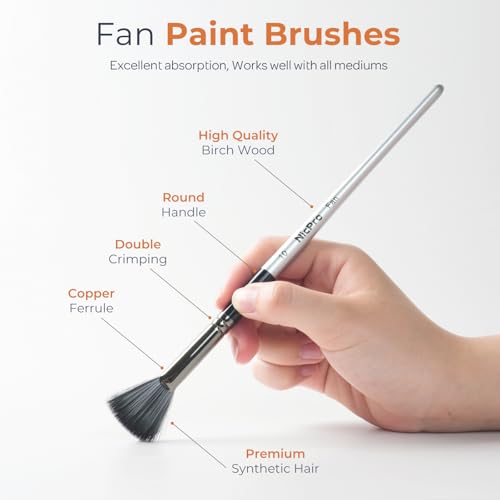
Nicpro’s set covers the widest size range here: 3/0, 0, 2, 4, 6, 8, 10, 12, 14 and 16. That means the same set handles tiny blades of grass, mid-size tree foliage and broad, soft sky blending. The bristles are described as dense synthetic with good paint retention.
Construction details in the listing include round birch handles and double-crimped aluminum ferrules, which help keep bristles from loosening. Synthetic fans clean up easily with water, which matters with fast-drying acrylic.
Best suited for: Acrylic painters who want one set to cover landscape textures, blending and base coating across sizes.
Key features (from the listing):
- 10 sizes from 3/0 to 16
- Dense synthetic bristles
- Birch wood handles
- Double-crimped aluminum ferrules
- Suitable for acrylic, watercolor, gouache and oil
Pros:
- Widest size range in this guide
- Good for both detail and broad work
- Easy water cleanup
Cons and limitations:
- Synthetic is too soft to push very heavy paint
- Smallest sizes can splay if overloaded
- No storage case mentioned
Buying consideration: Synthetic fans hold their shape best if you never leave them standing in water. Rinse often during acrylic sessions so paint does not dry in the ferrule.
2. DUGATO Stiff Hog Hair Fan Brush Set — Best for Heavy-Body Acrylic Texture
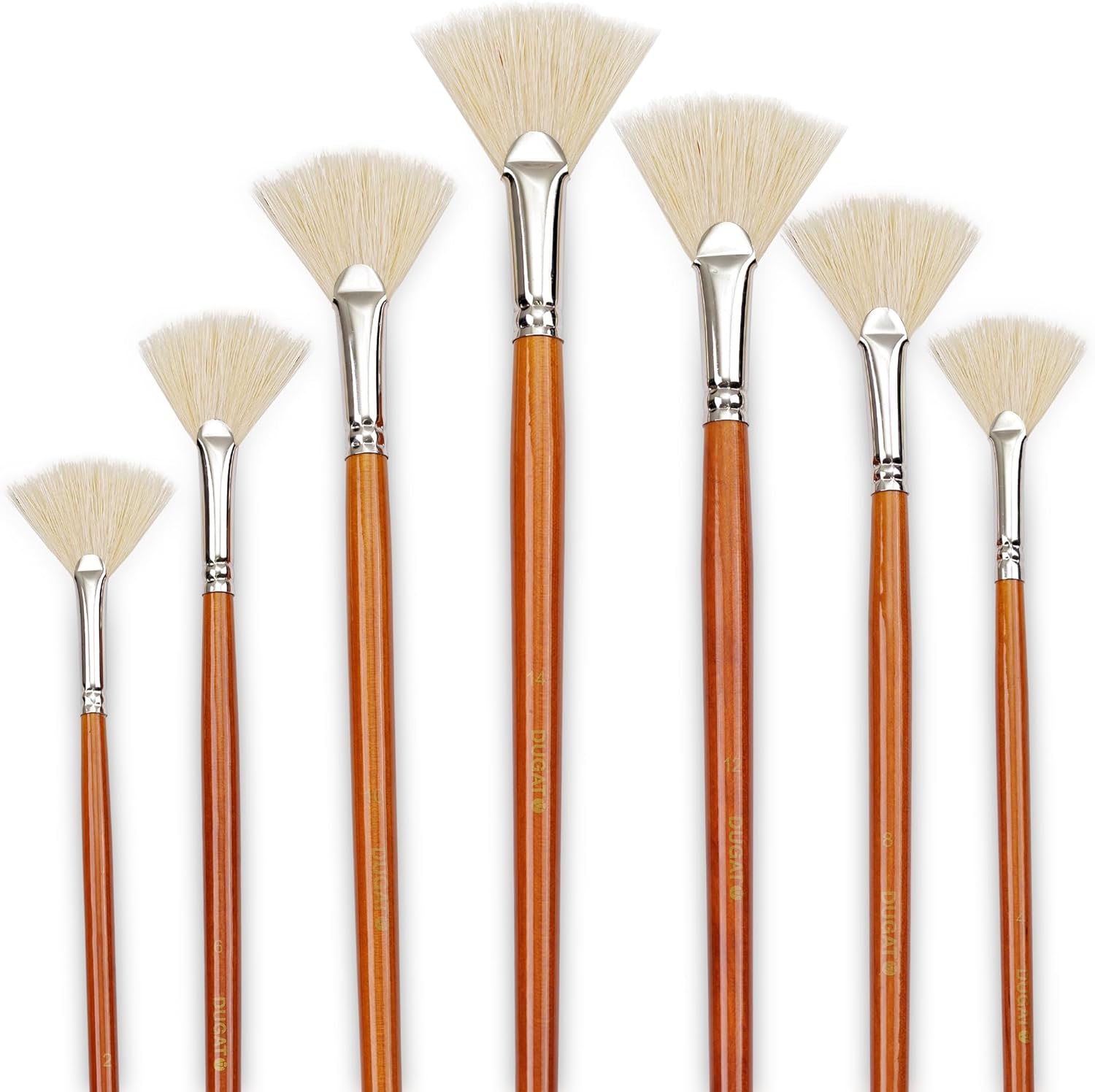
DUGATO uses natural white hog hair, which is stiffer than nylon and holds heavy-body acrylic and oil well. The listing says the flagged tips release color smoothly for blending and dry brushing while still delivering crisp texture, a good match for grass, rough bark and broken-color skies.
The set includes seven sizes, #2 through #14, on 12-inch lacquered birch handles with double-crimped aluminum ferrules. Long handles suit easel painting where you stand back from the canvas. The listing also pitches the set for ceramic glazing, which is outside our scope but shows how sturdy the brushes are intended to be.
Best suited for: Painters using heavy-body acrylics or impasto who want texture that holds its marks.
Key features (from the listing):
- Natural white hog hair
- 7 sizes, #2–#14
- 12-inch birch handles
- Double-crimped ferrules
- Flagged tips for blending and dry brushing
Pros:
- Stiff enough for heavy paint
- Long handles for easel work
- Good dry-brush texture
Cons and limitations:
- Too stiff for soft glazes
- Natural bristle needs careful cleaning with acrylic
- Long handles are awkward at a small desk
Buying consideration: Clean natural bristle thoroughly after acrylic; dried acrylic in hog hair is much harder to rescue than in synthetic.
3. GACDR Fan Grainer Brush Set — Best for Fur, Hair and Wood Grain

A fan grainer has split or comb-like bristles that leave several fine parallel lines in one stroke. The GACDR set contains four of these, which the listing pitches for animal fur, feathers, wood grain, tree bark and grass. It is a specialty tool rather than a general fan.
The bristles are described as imported Korean nylon, with seamless silver ferrules and black birch handles. Works with acrylic, watercolor, gouache and oil according to the listing.
Best suited for: Wildlife and pet portrait painters, realistic texture work and anyone painting wood.
Key features (from the listing):
- 4 fan grainer brushes
- Split nylon bristles for multi-line strokes
- Seamless ferrules
- Black birch handles
Pros:
- Fast, organic fine-line texture
- Great complement to a standard fan
- Synthetic cleans easily
Cons and limitations:
- Not a replacement for a standard fan
- Easy to overuse into a mechanical look
- Small set
Buying consideration: Use slightly thinned acrylic so the split bristles separate cleanly; thick paint clumps them together.
4. Larrel 6 Pieces Fan Brush Set — Best Mid-Size Set with Storage

Larrel’s six sizes, 2 through 12, cover the most-used fan range without the extremes. The nylon bristles are described as soft but resilient, neatly trimmed and anti-shedding, and the listing includes a portable container for storing brushes tip-up.
Long wood handles provide reach at an easel. The listing suggests washing with warm water immediately after use and reshaping the tip, sound advice for acrylic.
Best suited for: Hobby painters who want a tidy, portable set covering everyday foliage and blending.
Key features (from the listing):
- 6 sizes, 2–12
- Nylon bristles
- Long wood handles
- Portable storage container
Pros:
- Storage container included
- Useful size spread
- Resilient synthetic
Cons and limitations:
- No very small or very large sizes
- Fewer brushes than Nicpro
- Limited technical detail
Buying consideration: A container that stores tips upward helps fan brushes keep their spread shape between sessions.
5. Prasacco 5 Pieces Fan Brush — Best Small Starter Set

Prasacco offers five sizes, 2, 4, 6, 8 and 10, in flexible nylon with aluminum crimped ferrules and long wooden handles. It is an easy, low-cost way to learn fan brush techniques without committing to a larger set.
The listing recommends soaking in warm soapy water, not hot water, and reshaping with fingers. That is good practice for synthetic bristles, which can lose their set in very hot water.
Best suited for: Beginners trying fan techniques for the first time and painters who only need a couple of mid sizes.
Key features (from the listing):
- 5 sizes, 2–10
- Flexible nylon hair
- Aluminum crimped ferrules
- Long wooden handles
Pros:
- Low commitment
- Sizes match most beginner tutorials
- Easy cleanup
Cons and limitations:
- No large fan for skies
- Basic construction
- Few details on bristle density
Buying consideration: If you paint big skies or seascapes, pair this with a larger fan from another set.
6. Mozeat Lens 5 Pcs Fan Paint Brushes — Best Alternative Starter Set

Mozeat Lens offers sizes 2, 6, 8, 10 and 12, skipping size 4 but reaching a larger top size than Prasacco. The nylon bristles are described as soft, elastic and non-shedding, with stainless steel ferrules and long solid wood handles.
It is a close alternative to Prasacco. Choose it if you want a slightly larger fan for skies and do not need the small 4.
Best suited for: Beginners who want a starter fan set that includes a size 12 for broader passages.
Key features (from the listing):
- 5 sizes: 2, 6, 8, 10, 12
- Nylon bristles
- Stainless steel ferrules
- Long wood handles
Pros:
- Includes a larger size
- Simple, low-tier set
- Easy to clean
Cons and limitations:
- Gap at size 4
- Few construction details
- No storage included
Buying consideration: Size numbering is not standardized across brands, so compare brush width rather than numbers if you mix sets.
7. COMNICO 42 Pcs Fan Paint Brushes — Best Bulk Pack for Classes

COMNICO packs 42 brushes with soft nylon hair, aluminum ferrules and long wooden handles. The point is quantity: art teachers, paint-party hosts and group workshops need many fans at once, and replacing a lost or ruined brush stops mattering.
The listing details describe the bristle type as round pointed, which conflicts with the fan description elsewhere, so treat sizes and shapes as something to confirm when the pack arrives.
Best suited for: Teachers, studios and event hosts who need many fan brushes for groups.
Key features (from the listing):
- 42 brushes
- Soft nylon hair
- Aluminum ferrules
- Long wood handles
- Bag packaging
Pros:
- Lowest cost per brush
- Enough for whole classes
- Easy replacement
Cons and limitations:
- Listing details conflict on bristle type
- Not aimed at fine control
- Little size information
Buying consideration: For a class, assign each student a brush and a water cup to reduce cross-contamination of colors.
Four Fan Brush Strokes Every Acrylic Painter Uses
Knowing the strokes helps you choose the right brush, because each stroke favors a different bristle type and size.
Tapping for foliage
Load only the tip of the fan with two close greens, hold it vertically and tap lightly. Each tap leaves a cluster of small marks that reads as leaves. A medium synthetic fan works well; rotate the brush between taps so the pattern does not repeat.
Flicking upward for grass
Hold the fan edge-on to the canvas and flick upward from the ground line. Small fans give fine blades, larger ones give clumps. A stiffer hog fan keeps the flick crisp in heavy-body paint.
Sweeping for skies and water
A large, clean, dry fan dragged lightly across wet acrylic softens transitions in skies and makes horizontal water reflections. Work quickly, or add a little retarder, because acrylic sets fast.
Dragging for fur and grain
Drag a slightly thinned color in the direction of growth or grain. A fan grainer separates the paint into fine parallel lines, which looks far more natural than drawing each hair with a liner.
Buying Guide: How to Choose a Fan Brush for Acrylic Painting
Synthetic or natural bristle
Synthetic nylon fans are soft, spring back well and suit fluid, soft-body acrylic. Hog-hair fans are stiffer and hold heavy paint, leaving more pronounced texture. Since acrylic dries fast and can harden in natural bristle, synthetic is the lower-maintenance choice for most acrylic painters.
Size range
Small fans, up to around size 4, are for grass blades, eyelashes and twigs. Mid sizes handle foliage and fur. Large fans, size 10 and above, soften skies and water. A set with at least one of each range covers most landscape needs.
Bristle density and spread
A dense fan holds more paint and makes softer blends; a sparse fan leaves distinct strokes. Specialty grainers split bristles further for multiple lines.
Handle length
Long handles suit easel painting and loose, gestural strokes. Shorter handles give closer control at a desk. Most fan sets on the market use long handles.
Ferrule quality
Double-crimped aluminum ferrules, as Nicpro and DUGATO list, hold bristles more securely. Loose ferrules shed and wobble.
Paint body
Match brush stiffness to paint body. Heavy-body acrylic overwhelms soft nylon fans, while fluid acrylic floods stiff hog fans. If you work in both, own one of each type.
Learn the Techniques
Before you buy multiple sizes, practice the core strokes in our step-by-step guide on how to use a fan brush with acrylic paint. For more ideas, browse our collection of fan brush techniques for painting, from tapping foliage to pulling grasses.
Common Mistakes to Avoid
- Loading the whole fan with paint; tip-loading gives more natural foliage.
- Pressing down hard, which flattens the fan into a solid smear.
- Using the same stroke direction over and over, creating a repetitive pattern.
- Letting acrylic dry in the ferrule, which permanently splays the bristles.
- Using a soft synthetic fan to move heavy-body paint.
- Overusing the fan; a few textured passages read better than a whole canvas of fan marks.
FAQs
What is a fan brush used for in acrylic painting?
Fan brushes are used for foliage, grass, clouds, fur, water texture and soft blending. Tapping, flicking and dragging the fan each give different textures.
Should I use a synthetic or hog hair fan brush for acrylic?
Synthetic fans are easier to clean and suit fluid or soft-body acrylic. Hog hair is better for heavy-body acrylic and pronounced texture but needs careful cleaning so acrylic does not dry in the bristles.
What size fan brush do I need?
A small fan for grass and twigs, a medium fan for foliage and fur, and a large fan for skies and water cover most situations. Sets with five or more sizes handle all three.
How do I clean a fan brush after acrylic?
Rinse frequently while painting, then wash with warm soapy water, reshape the fan and let it dry flat or tip-up. Avoid hot water and never let paint dry in the bristles.
What is the difference between a fan brush and a fan grainer?
A standard fan has evenly spread bristles for soft texture and blending. A fan grainer has split bristles that create several fine lines in one stroke, ideal for fur and wood grain.
Can I use fan brushes for watercolor too?
Yes. Soft synthetic fans work with watercolor for foliage and texture. Stiff hog fans are less suited to watercolor.
Final Recommendation
For most acrylic painters, the Nicpro 10-piece set is the best fan brush purchase because its size range covers detail through broad blending. Choose DUGATO if heavy-body texture is your style, and add the GACDR grainer if you paint animals or wood. Beginners can start with Prasacco or Mozeat Lens, while teachers will get the most mileage from the COMNICO bulk pack.





One Comment