PaintingProGuide is reader-supported. When you buy through links on this page we may earn an affiliate commission at no extra cost to you.
Painters reach for gloves for three different reasons: to keep pigment and solvent off their skin, to keep skin oils off the work, and to protect hands during messy prep and cleanup. No single glove does all three well, which is why the best gloves for painters are usually a small kit rather than one box. A close-fitting disposable nitrile glove handles oil paint, mediums and brush washing. A light knit glove handles sanding, carrying panels and cold-weather plein air sessions. A terry mitt handles the awkward jobs where a brush is the wrong tool.
Quick answer: For most studio painters, a box of 6-mil black nitrile disposables such as TitanFlex Heavy Duty Nitrile Gloves is the glove to keep at the easel: latex-free, snug enough for brush control and thick enough for solvent cleanup. If you want a lower-cost nitrile box, FifthPulse 6 Mil Nitrile Gloves cover the same job. For prep work, framing and handling stretched canvas, a bulk pack of Evridwear cotton-polyester knit gloves is the practical choice.
This guide is written for fine-art and craft painters working with oils, acrylics, resin-adjacent mediums, spray finishes and the cleanup that follows. It does not cover heavy chemical-resistant gloves for industrial stripping. If you strip furniture with aggressive solvents, check the glove maker’s chemical chart rather than relying on a general-purpose glove.
Our Top Picks at a Glance
- TitanFlex Disposable Nitrile Gloves, 6-mil, Black — Best overall for oil and acrylic studio work
- FifthPulse 6 Mil Black Nitrile Gloves — Best value heavy-duty disposable
- PEIPU Powder-Free Nitrile Disposable Gloves — Best for light-duty acrylic and craft sessions
- Wells Lamont Nitrile Work Gloves — Best reusable glove for messy cleanup
- Evridwear Cotton Polyester Knit Gloves, 12 Pairs — Best for handling canvas, framing and cold plein air
- Qugzegx 12 Pairs Knit Gloves with Grip Dots — Best for carrying panels and gear
- QWORK 4 Pack Microfiber Painter’s Mitts — Best for wiping, dusting and mitt application
| Product | Best For | Key Spec | Key Strength | Price Tier |
|---|---|---|---|---|
| TitanFlex Nitrile Gloves | Oil painting, solvent and brush cleanup | 6-mil, black, latex-free, food-safe | Thick but still disposable | $ |
| FifthPulse Nitrile Gloves | Budget heavy-duty disposable | 6-mil, powder-free, latex-free | Same thickness class for less | $ |
| PEIPU Nitrile Gloves | Acrylics, crafts, quick jobs | Powder-free, latex-free disposable | Light and easy to change often | $ |
| Wells Lamont Nitrile Work Gloves | Reusable cleanup and prep | Nitrile work glove | Can be rinsed and reused | $ |
| Evridwear Knit Gloves | Canvas handling, framing, liners | 12 pairs, cotton-polyester, seamless, no dots | Breathable and reversible | $ |
| Qugzegx Knit Gloves | Carrying panels, easels, boxes | 12 pairs, cotton-polyester, anti-slip dots | Extra grip on smooth items | $ |
| QWORK Painter’s Mitts | Wiping, dusting, mitt painting | 4 microfiber terry mitts | Reaches curves a brush misses | $ |
How We Chose
We did not wear or put these gloves through a lab. The picks are based on the Amazon listing details and specifications checked in October 2026, how well each glove’s material and format fit specific painting tasks, and how widely each product is reviewed by Amazon buyers. Where a listing gives little detail, we say so and stick to what the product title states.
The criteria we weighed:
- Material against the task: nitrile for paint, mediums and solvents; knit cotton-polyester for dry handling; microfiber for wiping.
- Thickness: heavier disposables (around 6 mil) tear less during brush washing, while thinner gloves give more feel for detail work.
- Latex-free construction: many artists share studios and classrooms, so latex-free gloves avoid allergy problems.
- Powder-free: glove powder can land on a wet painting or a varnished surface.
- Pack size and cost per use: painters go through disposables quickly, so box size matters.
- Color: black nitrile hides paint smears and makes it easier to see pinholes against light skin.
Best Gloves for Painters Reviewed
1. TitanFlex Disposable Nitrile Gloves, 6-mil — Best for oil and acrylic studio work

TitanFlex lists these as 6-mil, heavy-duty, latex-free nitrile exam gloves that are also food safe. For a painter, the 6-mil rating is the key number. It sits in the heavier range for disposables, which means the glove is less likely to split when you are squeezing turpentine substitute or brush soap through a filbert, yet it is still thin enough to feel the brush handle.
The black color is a small but real advantage at the easel. Cadmium reds and phthalo blues show up immediately on a white glove and tempt you to wipe them on your apron; on black nitrile they are less distracting, and you can still spot a tear when you hold the glove to the light. The listing does not give detailed chemical resistance data, so treat it as splash protection rather than immersion protection.
Best suited for: Oil painters, acrylic painters who mix with retarders and mediums, and anyone who cleans brushes in solvent or brush cleaner after every session.
Key features:
- 6-mil nitrile thickness
- Latex-free
- Black color
- Rated as exam glove and food safe
Pros:
- Thick enough to survive brush cleaning
- Latex-free for shared studios
- Black hides paint smears
- Food-safe rating means no odd coatings
Cons and limitations:
- Heavier feel than thin craft gloves
- Listing offers no detailed chemical chart
- Size must be chosen carefully for brush control
Buying consideration: Order your true size. A baggy nitrile glove folds at the fingertips and makes fine brushwork clumsy; a tight one fatigues the hand during long sessions.
2. FifthPulse 6 Mil Black Nitrile Gloves — Best for value heavy-duty disposables

FifthPulse offers the same headline specification as the TitanFlex box: 6-mil black nitrile, powder-free and latex-free, marketed for mechanic, food and medical exam use. The price tier sits lower, which matters if you burn through several pairs a week.
For painters the practical difference between the two is mostly cost and fit. Both are thick enough for solvent cleanup and both hide pigment well. If you are equipping a classroom or a group paint night, this is the box that keeps the supply budget sane.
Best suited for: Painting teachers, workshop hosts and heavy oil painters who change gloves often.
Key features:
- 6-mil thickness
- Powder-free
- Latex-free
- Black nitrile
Pros:
- Lower price tier for the thickness
- Powder-free keeps dust off wet paint
- Works for oils, acrylics and cleanup
Cons and limitations:
- No detailed bullets on the listing beyond the title
- Thicker gloves reduce fingertip sensitivity
Buying consideration: Buy one box first and check the fit before stocking up. Cuff length and finger length vary between brands even at the same size label.
3. PEIPU Nitrile Disposable Gloves — Best for light-duty acrylic and craft sessions

PEIPU describes this box as powder-free, latex-free nitrile disposable gloves for cleaning and service work. The listing does not state a mil thickness, so assume it is a lighter general-purpose glove rather than a heavy-duty one.
That makes it a good match for water-based work. Acrylic pours, kids’ craft tables, painting rocks and gluing collage elements all create mess without solvents. A lighter glove keeps fingertips sensitive, and because it is cheap to replace, you can change pairs between colors to stop contaminating a white.
Best suited for: Acrylic painters, pour artists, crafters and teachers running water-based projects.
Key features:
- Nitrile
- Powder-free
- Latex-free
- Disposable
Pros:
- Easy to change between colors
- Good fingertip feel
- Suitable for shared tables
Cons and limitations:
- Thickness not stated on the listing
- Not the first choice for solvent cleanup
Buying consideration: If you work with mineral spirits or resin, step up to a 6-mil box. Keep this one for water-based paint.
4. Wells Lamont Nitrile Work Gloves — Best for reusable cleanup and prep

Wells Lamont lists these simply as nitrile work gloves, and the listing gives little more detail. Work gloves of this type are reusable rather than disposable, which changes how you use them: they are for jobs where disposables keep tearing, such as scrubbing palettes, sanding gessoed panels, or wiping down a studio sink.
They are not an easel glove. A work glove is bulkier than an exam glove and will not give the control needed for painting. Think of it as the glove you put on when the painting is finished and the cleanup begins.
Best suited for: Painters who do a lot of palette scraping, panel prep, or studio cleaning and are tired of torn disposables.
Key features:
- Nitrile work glove
- Reusable
- From an established work-glove brand
Pros:
- Reusable, so less waste
- Better abrasion resistance than thin disposables
- Low price tier
Cons and limitations:
- Too bulky for brushwork
- Listing gives few specifications
- Needs drying between uses
Buying consideration: Check the listing images for coating coverage. A palm-coated glove leaves the back of the hand breathable but unprotected from splashes.
5. Evridwear Cotton Polyester Knit Gloves, 12 Pairs — Best for handling canvas, framing and cold plein air
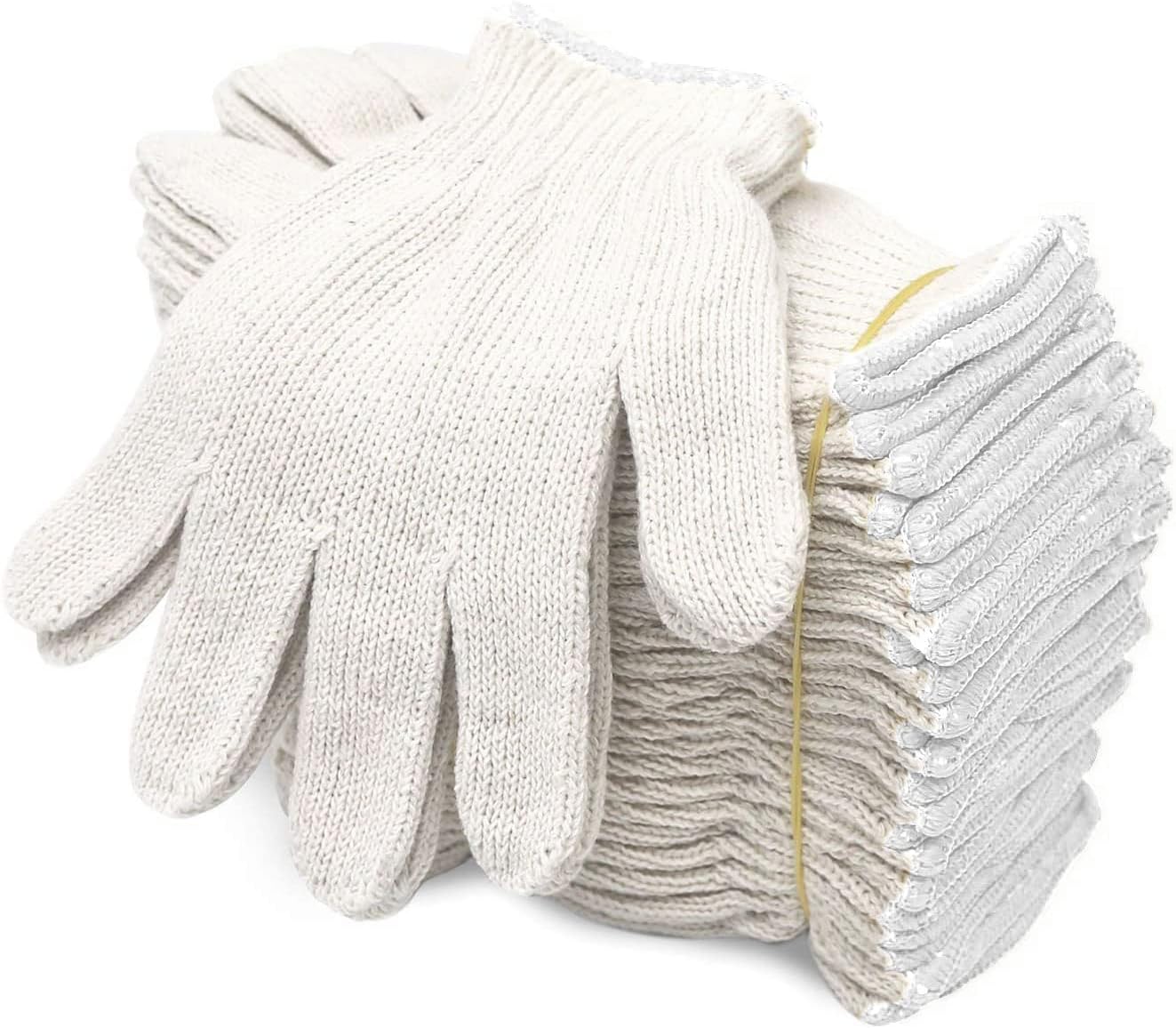
Evridwear sells these as seamless cotton-polyester string knit gloves, in a 12-pair pack, with an overlay seamed wrist that the listing says prevents unraveling. The version without dots is described as working on its own or as a liner under another glove in cold weather. The gloves are reversible.
For painters, knit gloves do something nitrile cannot: they let you handle finished or varnished work without leaving fingerprints, and they let you carry stretched canvas, frames and glass without sweaty palms. Galleries and framers often handle artwork with cotton gloves for that reason. They also double as liners under nitrile on cold outdoor painting days.
Best suited for: Painters who frame, ship or hang their own work, and plein air painters who need a breathable liner.
Key features:
- 12 pairs
- Cotton-polyester knit
- Seamless, reversible
- Overlay seamed wrist
- No dots version for liner use
Pros:
- Keeps skin oils off varnished work
- Breathable for long handling sessions
- Works as a cold-weather liner
- Bulk pack
Cons and limitations:
- No protection from wet paint or solvents
- Smooth surface offers little grip on glass
- Absorbs spills
Buying consideration: Choose the no-dot version for handling artwork and as a liner; dotted gloves can leave marks on soft varnish.
6. Qugzegx 12 Pairs Knit Gloves with Anti-Slip Dots — Best for carrying panels and gear

Qugzegx lists a 12-pair pack of cotton-polyester knitted gloves with anti-slip dots, sold as safety work gloves for painters, mechanics and warehouse work. The dots are the difference from the Evridwear pair: they add grip on smooth items.
That grip helps when you are moving a heavy easel, carrying a stack of gessoed boards to the car, or holding a slick plastic paint bucket during studio cleanup. It is less useful for handling finished paintings, where the dots may press into a soft surface.
Best suited for: Painters who load and unload gear for markets, classes and plein air outings.
Key features:
- 12 pairs
- Cotton-polyester knit
- Anti-slip dots
- Medium size listed
Pros:
- Better grip than plain knit
- Low price tier
- Bulk pack for groups
Cons and limitations:
- Medium size in this listing; check fit
- Not liquid-proof
- Dots can mark soft surfaces
Buying consideration: Confirm the size option before ordering, since this listing is for medium.
7. QWORK 4 Pack Microfiber Terry Painter’s Mitts — Best for wiping, dusting and mitt application

QWORK describes these as soft microfiber terry mitts for cleaning, dusting and painting, sold in a 4-pack. A painter’s mitt lets you apply stain, oil finish or paint to curved and spindled surfaces like chair legs, picture-frame moldings and turned wood where a brush leaves drips.
In a fine-art studio they are also handy for wiping dust off a panel before varnishing and for buffing a wax medium. They are not protective gloves, so wear nitrile underneath if you are using solvent-based stain.
Best suited for: Furniture and frame painters, woodworkers who finish with stains, and anyone who wants a lint-free dusting mitt for the studio.
Key features:
- 4 mitts
- Microfiber terry
- Sold for cleaning, dusting and painting
Pros:
- Covers curves quickly
- Reusable after washing
- Doubles as a dusting tool before varnish
Cons and limitations:
- Not waterproof or solvent-proof
- Absorbs a lot of finish
- Not for fine detail
Buying consideration: Wear a disposable nitrile glove underneath when applying anything solvent-based.
Buying Guide: How to Choose Gloves for Painting
Match the glove to the medium
Water-based paints such as acrylic, gouache and watercolor are low risk for skin but messy, so a light nitrile glove is plenty. Oil painting adds solvents, driers and pigments such as cadmiums and cobalts that many painters prefer to keep off their skin, which is where a 6-mil nitrile disposable earns its place. Resin and epoxy are a separate category; follow the resin maker’s glove guidance.
Thickness and fingertip feel
Disposable gloves are rated in mils. Thinner gloves give more touch for glazing and fine detail but tear more easily when you work bristles against a brush washer. Heavier gloves around 6 mil last through cleanup. Many oil painters keep both: thin for painting, thick for cleaning.
Latex-free and powder-free
Nitrile is the usual latex-free choice and is widely recommended for oil-based materials. Powder-free matters because powder can transfer to a wet surface or a freshly varnished piece and dull the finish.
Fit and size
A glove that is too large wrinkles at the fingertips and catches on the brush ferrule. Too small and your hand tires within an hour. Measure across your palm and use the brand’s size chart; sizes are not consistent between makers.
Knit gloves for dry handling
Cotton or cotton-polyester knit gloves protect finished work from fingerprints and keep hands dry when carrying canvas. Plain knit is better for artwork; dotted knit is better for gear.
Color and visibility
Black nitrile hides stains, which keeps the glove looking usable for longer, and it makes it easier to spot a small tear. Blue or clear gloves show pigment, which some painters prefer as a reminder to change gloves before touching a clean surface.
Pack size and waste
Disposable gloves add up quickly. A reusable work glove for cleanup and a disposable for painting usually cuts total glove use in half.
Related Painting Guides
Gloves matter most on messy projects. If you paint ceramics at home, our walkthrough on how to paint pottery at home covers glazes and handling, and the guide to scratch art painting crafts is a good water-based project where a light nitrile glove keeps black ink off your fingers. For fresh project ideas, browse our hub on artistic inspiration and creative ideas for painters.
Common Mistakes to Avoid
- Using latex gloves in a shared studio or classroom without checking for allergies.
- Wearing the same pair of disposables from oil painting into lunch; pigment transfers to everything you touch.
- Buying gloves a size too large, which makes brush control worse than no glove at all.
- Relying on knit gloves for wet work; cotton soaks up paint and solvent and holds it against the skin.
- Assuming any nitrile glove resists every solvent. Check chemical guidance for strong strippers.
- Handling varnished work with bare hands or dotted grip gloves before the varnish has cured.
FAQs
Should artists wear gloves when oil painting?
Many oil painters do, especially when handling solvents, driers and pigments they prefer to keep off their skin. Nitrile disposables are the common choice because they are latex-free and hold up to oil-based materials during normal studio use.
What gloves are best for acrylic painting?
A light, powder-free nitrile glove is enough for acrylics. Acrylic is water-based, so the main goal is keeping paint off your hands and making cleanup faster rather than chemical protection.
Are nitrile or latex gloves better for painters?
Nitrile is usually the better choice. It avoids latex allergies, which matters in shared spaces, and it generally handles oils and many solvents better than latex.
What thickness of disposable glove should I buy?
For painting with fine control, a thinner glove gives better feel. For brush cleaning and solvent work, a heavier glove around 6 mil tears less. Many painters keep one of each.
Why do galleries use cotton gloves to handle art?
Cotton or knit gloves keep skin oils and fingerprints off varnished surfaces, frames and glass. They are for dry handling only and offer no protection from wet paint.
Can I paint with gloves on and still do fine detail?
Yes, as long as the glove fits snugly. Wrinkled fingertips are what cause problems. Choose your true size and a thinner glove for detail sessions.
Final Recommendation
For oil painters and anyone cleaning brushes in solvent, start with a 6-mil black nitrile box: TitanFlex if you want the more widely reviewed option, FifthPulse if you want the same class for less. Acrylic and craft painters can step down to the lighter PEIPU disposables and change pairs often. Add a pack of plain Evridwear knit gloves if you frame, ship or hang your own work, a dotted Qugzegx pack if you haul gear, and the QWORK mitts if you finish frames or furniture. That small kit covers every glove job a painter actually runs into.