

PaintingProGuide is reader-supported. When you buy through links on this page we may earn an affiliate commission at no extra cost to you.
A matte varnish protects an oil painting from dust, grime and handling while removing the glare that glossy varnishes create under gallery lights. The catch is that matte varnishes are harder to apply well than gloss ones: the matting agents that scatter light can cloud dark passages, streak over heavy impasto or look uneven if brushed out unevenly. The best oil painting varnishes for matte finish are formulated for oil paint, removable for future conservation, and come with clear guidance on drying time before you apply them.
This guide compares the oil-appropriate matte varnishes in the Amazon listings we checked, explains when and how to apply them, and flags the popular acrylic matte varnishes that show up in searches but are designed for acrylic paintings rather than oils.
Quick answer: For most oil painters, Gamblin Gamvar Matte Varnish is the most widely used choice from an oil-focused brand. For pale, smooth paintings, Grumbacher Matte Final Varnish is a traditional wax-based matte finish, though its listing warns it may gray dark or impasto work. If you paint with water-mixable oils, Winsor & Newton Artisan Matt Varnish is designed for that line, is removable and non-yellowing.
Our Top Picks at a Glance
- Gamblin Gamvar Matte Varnish, 8 oz — Best overall matte varnish for oil paintings
- Winsor & Newton Artisan Matt Varnish, 250 ml — Best for water-mixable oils
- Grumbacher Matte Final Varnish, 2.5 oz Jar — Best wax-based matte for pale, smooth paintings
- Liquitex Professional Matte Varnish, 8 oz — For acrylic paintings only (not over oil)
- Liquitex BASICS Matte Varnish, 250 ml — For acrylic paintings only, budget
| Product | Best For | Key Spec | Key Strength | Price Tier |
|---|---|---|---|---|
| Gamblin Gamvar Matte | Oil paintings | 8 oz, matte, from an oil-focused brand | Widely used by oil painters | $$ |
| W&N Artisan Matt | Water-mixable oils | 250 ml, UV-resistant, removable | Non-yellowing | $$ |
| Grumbacher Matte Final | Pale, smooth oil work | 2.5 oz jar, wax, dries transparent matte | Uniform matte surface | $ |
| Liquitex Professional Matte | Acrylic paintings | 8 oz, permanent, non-removable | Archival for acrylic | $$ |
| Liquitex BASICS Matte | Acrylic paintings | 250 ml, permanent, mixable with gloss | Low cost | $ |
How We Chose
We have not applied these varnishes. The selection is based on the Amazon listing details and specifications checked in October 2026, how well each product suits oil paintings specifically, and how widely each product is reviewed by Amazon buyers. The Gamblin listing we checked gave product codes rather than descriptive bullets, so we describe it from its title and well-established information about the brand. We left out two craft sealers in the results, one of which describes its matte product as a high-gloss finish.
- Oil compatibility: made for, or listed for, oil paintings.
- Removability: conservators prefer varnishes that can be removed without disturbing paint.
- Non-yellowing: stated resistance to yellowing over time.
- Clear application guidance: drying time before varnishing and suitable surfaces.
- Honest limitations: warnings about clouding on dark or impasto passages.
Why Varnish an Oil Painting at All?
Oil paint dries to an uneven surface: some colors sink and look dull, others stay glossy. Varnish evens out that sheen, deepens colors and adds a protective layer between the paint and the environment. Dust, smoke and grime settle on the varnish instead of the paint, and a removable varnish can be cleaned off and replaced decades later without touching the original painting.
Matte vs. satin vs. gloss
Gloss varnish makes darks richer and colors more saturated, but it reflects light, which can make paintings hard to view under some lighting. Matte varnish scatters light for a flat, glare-free surface that suits some contemporary styles, works on paper and murals, and pale, delicate work. Satin sits between them. Many painters mix gloss and matte varnishes from the same line to dial in a custom sheen, something the Liquitex BASICS listing mentions for its acrylic varnishes.
The trade-off with matte
Matting agents can lighten or “gray” very dark passages, because they scatter light across the surface. They may also collect in the valleys of impasto and leave whitish streaks. The Grumbacher listing says so directly. Test on a sample board painted with your darkest colors before varnishing a finished painting.
When to Varnish an Oil Painting
Traditional guidance is to wait until an oil painting is thoroughly dry, often six to twelve months, depending on paint thickness. The Winsor & Newton listing states that paintings must be completely dry, six to twelve months, before use. Some modern varnishes from oil-focused brands publish shorter waiting times based on their formulas, so follow the specific manufacturer’s guidance for the varnish you choose.
In the meantime, a retouch varnish (a thin, temporary varnish) can even out sunken areas for photography or exhibition while the painting continues to cure.
Best Oil Painting Varnishes for Matte Finish Reviewed
1. Gamblin Gamvar Matte Varnish, 8 oz — Best for oil paintings

Gamvar is Gamblin’s picture varnish, made by a company that focuses on oil painting materials, and it is one of the best-known varnishes among oil painters. The listing we checked identifies the matte version in an 8 oz size and gives product codes rather than detailed bullets; the details section lists it as acrylic material for interior and exterior use.
Because the listing is thin, read Gamblin’s own instructions for drying time, application and removal before you varnish. Brand guidance on surface preparation, brushing and number of coats matters more for matte than for gloss.
Best suited for: Oil painters who want a matte varnish from an oil-focused brand.
Key features:
- 8 oz bottle
- Matte finish
- From Gamblin, an oil-focused brand
Pros:
- Widely used by oil painters
- Brand publishes detailed instructions
- Mid price tier
Cons and limitations:
- Listing gives little product detail
- Matte varnishes may cloud very dark passages
Buying consideration: Apply thin coats in good light at a low angle so you can see coverage and catch missed areas.
2. Winsor & Newton Artisan Matt Varnish, 250 ml — Best for water-mixable oils

Winsor & Newton’s Artisan Matt Varnish is part of the Artisan water-mixable oil line. The listing says it is UV-resistant, non-yellowing and removable with Artisan varnish remover, that it should be used only as a final varnish, and that the painting must be completely dry, six to twelve months, before application. It also says to shake well before use.
The listing’s paint type field includes acrylic, gouache and oil. Since it is designed for paintings made with Artisan color, check Winsor & Newton’s guidance if you plan to use it over conventional oils.
Best suited for: Painters using Winsor & Newton Artisan water-mixable oils.
Key features:
- 250 ml bottle
- UV-resistant
- Non-yellowing
- Removable with Artisan varnish remover
- Final varnish only
Pros:
- Removable
- UV resistance
- Clear drying-time guidance
- Mid price tier
Cons and limitations:
- Designed around the Artisan line
- Long wait before application
Buying consideration: Shake thoroughly; matting agents settle, and uneven mixing causes patchy sheen.
3. Grumbacher Matte Final Varnish for Oil Paintings, 2.5 oz Jar — Best for pale, smooth oil paintings
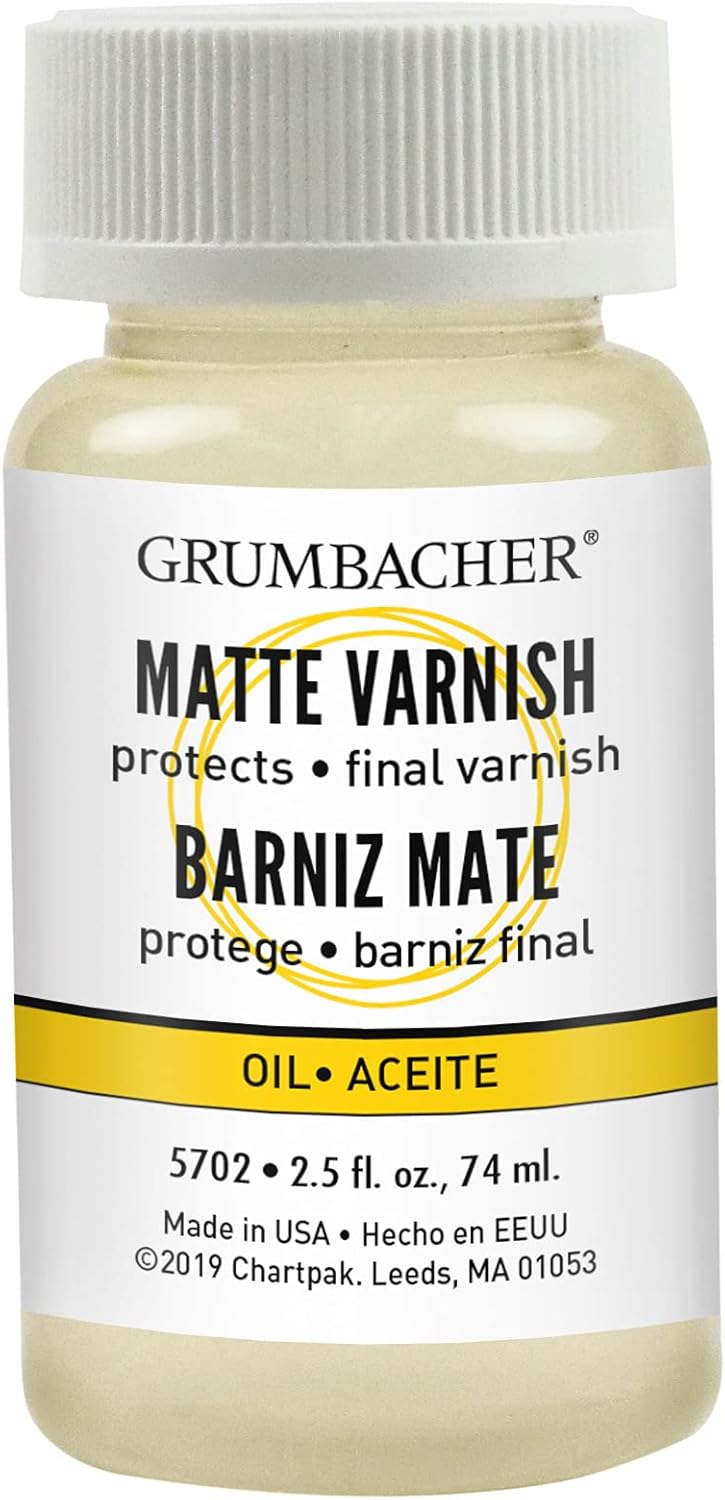
Grumbacher’s Matte Final Varnish is a wax-based product in a jar, made in the USA. The listing describes a protective final varnish against atmospheric impurities that dries transparent with a uniformly matte surface, especially suited for pale, “blond” works and very smooth paintings.
It also warns that it may gray or streak dark-toned or impasto paintings. That honesty is helpful: wax matte finishes are lovely on high-key, thinly painted work, and risky on dark, textured pieces.
Best suited for: Oil painters working in light, high-key palettes with smooth surfaces.
Key features:
- 2.5 oz jar
- Wax-based
- Dries transparent matte
- Made in USA
Pros:
- Uniform matte surface
- Designed for oil paintings
- Low price tier
Cons and limitations:
- May gray or streak dark or impasto paintings
- Small quantity
Buying consideration: Apply very thinly with a soft cloth or brush and buff gently; thick wax looks cloudy.
Matte Varnishes for Acrylic Paintings (Not for Use Over Oil)
The two Liquitex varnishes below appear prominently in matte varnish searches. They are excellent for acrylic paintings, but they are water-based acrylic varnishes. Water-based acrylic products are generally not recommended over oil paint, because adhesion to an oil surface is unreliable and they are not designed to move with oil films. If your painting is acrylic, these are good options; if it is oil, choose one of the varnishes above.
4. Liquitex Professional Matte Varnish, 8 oz — Best for acrylic paintings
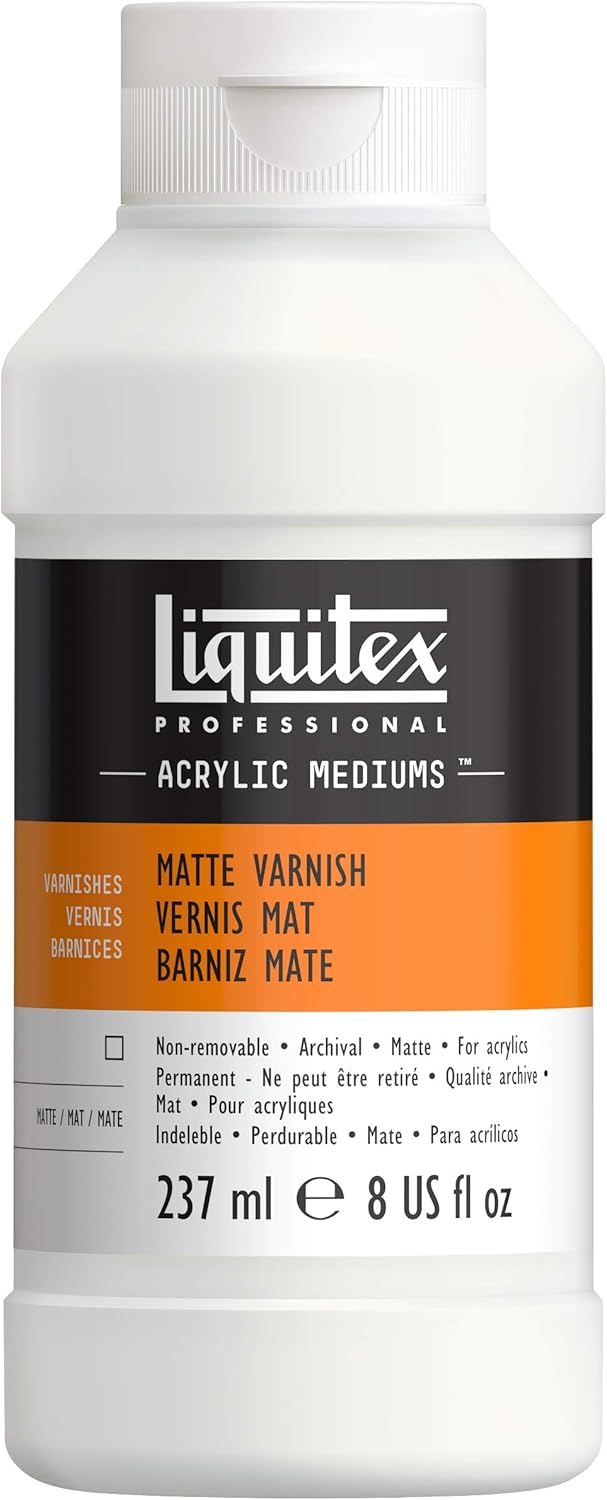
Liquitex Professional Matte Varnish is described as archival, permanent and non-removable, drying to a non-tacky, hard, flexible, non-yellowing and water-resistant surface. It is intermixable with Liquitex Professional acrylic colors and mediums and conforms to ASTM D-4236.
Non-removable means it becomes part of the painting. That is fine for acrylic work, but it is another reason not to use it over oil.
Best suited for: Acrylic painters who want a permanent matte finish.
Key features:
- 8 oz bottle
- Archival, permanent, non-removable
- Non-yellowing, water-resistant when dry
- ASTM D-4236
Pros:
- Durable, flexible film
- From a major acrylic brand
Cons and limitations:
- Not for oil paintings
- Non-removable
Buying consideration: For acrylic paintings, many conservators suggest an isolation coat before a removable varnish; check Liquitex guidance.
5. Liquitex BASICS Matte Varnish, 250 ml — Best for budget acrylic varnishing

Liquitex BASICS Matte Varnish is a permanent matte varnish for protecting finished paintings, drying to a clear, non-yellowing finish. The listing notes it can be mixed with gloss varnish to vary the sheen and is best applied with a large soft brush. It is ACMI certified and conforms to ASTM D-4236.
Best suited for: Students and acrylic painters on a budget.
Key features:
- 250 ml bottle
- Permanent matte
- Mixable with gloss
- ACMI certified
Pros:
- Low price tier
- Custom sheen by mixing
Cons and limitations:
- Not for oil paintings
- Permanent
Buying consideration: Mix one part gloss to two parts matte for a satin look if full matte flattens your colors too much.
Buying Guide: How to Choose a Matte Varnish for Oil Paintings
Confirm it is for oil
Check that the varnish is designed or listed for oil paintings. Water-based acrylic varnishes are a common mistake.
Prefer removable varnishes
Removable varnishes let a painting be cleaned and re-varnished in the future without damaging the paint.
Consider your palette
High-key, smooth paintings suit wax or strong matte finishes. Dark, dramatic paintings may look better in satin or gloss.
Check drying-time guidance
Follow the manufacturer’s waiting time. Traditional advice is six to twelve months; some modern varnishes publish different guidance.
Think about application
Brush-on varnishes give more control; aerosols give even coats on textured surfaces. Matte formulas must be stirred or shaken well.
Buy enough
Small jars suit a few small paintings; larger bottles suit regular varnishing.
How to Apply a Matte Varnish to an Oil Painting
- Make sure the painting is thoroughly dry according to the varnish maker’s guidance.
- Clean dust off the surface with a soft, lint-free cloth or brush.
- Work in a dust-free, well-ventilated room at moderate temperature and humidity.
- Stir or shake the varnish thoroughly so the matting agent is evenly distributed.
- Lay the painting flat if possible to prevent drips.
- Apply a thin, even coat with a wide, soft varnish brush, working in one direction.
- Check from a low angle in good light for missed areas, then let it dry fully.
- Apply a second thin coat if needed, in the opposite direction.
- Let the varnish cure before framing or stacking.
Brush-On or Spray?
All three oil-appropriate varnishes in this guide are brush-on or wipe-on products. Brushing gives you control over coat thickness and lets you work varnish into the texture of a canvas weave. The risk is brush marks and uneven matte areas if you overwork it. A wide, soft, dedicated varnish brush, used only for varnish, helps.
Aerosol varnishes, sold separately by several brands, can give a very even film over heavy impasto, where a brush tends to pool varnish in the valleys. They need excellent ventilation and several light passes rather than one heavy coat. Some painters brush the first coat for full coverage and spray the last coat for an even sheen.
Caring for a Matte-Varnished Painting
Matte surfaces show fingerprints and scuffs more readily than gloss, because any polishing raises the sheen in that spot. Handle varnished paintings by the edges or stretcher bars, and dust them with a soft, dry brush rather than a cloth. Avoid household cleaners entirely. If a matte painting becomes dirty over the years, a removable varnish allows a conservator to clean it off and re-varnish, which is the strongest argument for choosing a removable product in the first place.
Testing Before You Varnish
Keep a test board: a canvas scrap painted with your darkest and lightest colors, a smooth area and a thick impasto stroke. Varnish half of it and compare. This shows whether the matte finish grays your darks, streaks in texture or flattens color more than you like, before you risk a finished painting.
Atmospheric subjects often suit a matte finish, since glare can break the illusion of soft light. Our guide to painting fog in oil is a good example, while a smooth still life like our seashell oil painting tutorial is useful for testing how different sheens affect delicate value shifts.
Common Mistakes to Avoid
- Using acrylic varnish over oil: adhesion and flexibility are not designed for oil films.
- Varnishing too soon: trapping uncured paint can cause cracking or clouding.
- Not mixing the varnish: settled matting agents create patchy sheen.
- Applying thick coats: thick matte varnish looks cloudy.
- Varnishing in dust: particles embed permanently in the finish.
- Skipping a test: matte finishes can gray dark passages unexpectedly.
FAQs
What is the best matte varnish for oil paintings?
Among the products in this guide, Gamblin Gamvar Matte is the most widely used option from an oil-focused brand. Grumbacher Matte Final Varnish suits pale, smooth oil paintings.
Can I use Liquitex matte varnish on oil paintings?
It is not recommended. Liquitex varnishes are water-based acrylic products designed for acrylic paintings. Use a varnish designed for oil instead.
How long should oil paint dry before varnishing?
Traditional guidance is six to twelve months; the Winsor & Newton listing states six to twelve months. Some varnish makers publish different guidance for their products, so follow the label.
Why does matte varnish make my dark colors look gray?
Matting agents scatter light at the surface, which can lighten very dark passages. Thin coats and testing first reduce the risk; for very dark paintings, satin may be a better choice.
Can I mix matte and gloss varnish?
Yes, within the same product line. Mixing lets you create a satin or custom sheen. Follow the manufacturer’s guidance on compatible products.
Is matte varnish removable?
Some are. The Winsor & Newton Artisan varnish is removable with its matching remover. The Liquitex Professional matte varnish is permanent and non-removable.
Final Recommendation
For a matte finish on oil paintings, start with Gamblin Gamvar Matte, a widely used varnish from an oil-focused brand, and follow Gamblin’s instructions closely. Choose Grumbacher Matte Final Varnish for pale, smooth paintings where a wax matte finish looks beautiful, and avoid it on dark or heavily textured work. If you paint with water-mixable oils, Winsor & Newton Artisan Matt Varnish is designed for that line and is removable.
The Liquitex Professional and Liquitex BASICS matte varnishes are good choices for acrylic paintings only. Whatever you choose, test on a sample board, apply thin coats in a dust-free room, and wait until the painting is properly dry.




