
PaintingProGuide is reader-supported. When you buy through links on this page we may earn an affiliate commission at no extra cost to you.
For a working oil painter, the best workshop is not the one with the most famous name on the flyer. It is the one that targets a specific gap in your practice, is taught by an artist whose decisions you want to understand, keeps the group small enough for individual critique, and leaves you with exercises you can repeat for months afterward. The best oil painting workshops for professionals are usually three to five days long, focused on one subject or approach, and built around demonstration followed by guided painting with frequent one-on-one feedback.
This guide explains the main workshop formats, how to evaluate instructors and programs, how to prepare so you get full value, and which books and tools from the Amazon listings we checked help before and after a workshop.
Quick answer: Choose a workshop by the problem you want to solve, not by location or reputation alone: a portrait or figure intensive for edges and skin, a plein air week for speed and color under changing light, a still life or alla prima workshop for value and brushwork. Prepare with Oil Painting: The Workshop Experience, which is built around the workshop format, and pack a reliable set of stainless steel palette knives so you can mix cleanly from day one.
Types of Oil Painting Workshops for Professionals
Subject intensives
Three- to five-day workshops on one subject: portrait, figure, landscape, still life or florals. Expect a morning demonstration and afternoon painting with critique. Intensives suit professionals who want to deepen a genre they already sell or exhibit in.
Approach or technique workshops
Focused on a method rather than a subject: alla prima, indirect painting with grisaille and glazes, palette knife painting, limited palettes or color theory. These are valuable when you want to change how you paint, not just what you paint.
Plein air workshops and painting retreats
Outdoor workshops, often in scenic locations, that train speed, simplification and color perception under changing light. Good retreats balance painting time with critique sessions in the evening.
Atelier-style intensives
Longer, structured programs rooted in academic training: cast drawing, sight-size, value studies and extended poses. They suit realist painters rebuilding fundamentals.
Mentorships and online workshops
Live online workshops with demonstrations and portfolio critique, or one-on-one mentorships spanning several months. They cost less in travel and allow follow-up on your own work over time, though they lack in-person correction at the easel.
How to Choose the Right Workshop
- Name your goal: edges, color temperature, speed, composition, a new genre or a new technique.
- Study the instructor’s work: choose someone whose paintings solve the problems you struggle with.
- Check the format: how much time is demonstration versus your own painting with feedback.
- Ask about group size: 10 to 15 participants allows meaningful individual critique; larger groups often mean less.
- Look for a level statement: “intermediate to advanced” or “professional” keeps the pace appropriate.
- Read the supply list: it reveals the instructor’s palette, surfaces and approach.
- Talk to past participants: ask what they still use from the workshop a year later.
- Weigh total cost: tuition, travel, lodging, model fees and materials.
Matching the Workshop to Your Career Stage
Emerging professionals
If you have started selling or exhibiting but your work still varies in quality, fundamentals intensives are usually the best investment. A week focused on value, edges or color temperature raises the floor of every painting you make afterward. Atelier-style programs can also fill gaps left by self-teaching.
Established painters
Painters with a consistent body of work often benefit most from approach workshops that push them outside habits: a palette knife week for a smooth realist, a slow indirect-painting workshop for an alla prima painter, or a limited-palette workshop for someone who reaches for every tube. The aim is not to switch styles but to bring new tools back into your own work.
Painters changing direction
Moving from landscape into portraiture, or from studio work into plein air, is easier with a subject intensive that covers the specific demands of the new genre: model sessions and anatomy for figure work, field setup and speed for plein air.
Painters who teach
If you teach your own workshops, attending other instructors’ workshops is useful professional development. Watch how they structure demonstrations, pace the days and deliver critique, as well as what they paint.
Questions to Ask Before You Book
- How many students attend, and how often does the instructor visit each easel?
- Is there a demonstration every day, and how long does it last?
- Will there be a group critique? Can I bring work from my own practice for review?
- For figure or portrait workshops, how many model hours are included?
- What happens in bad weather for plein air workshops?
- Is there a refund or transfer policy?
How to Get Professional-Level Value From a Workshop
Before
Prepare your materials to match the supply list exactly; time spent hunting for the right color is time not painting. Pre-tone a few panels. Bring photos of your recent work so the instructor can see where you are. Write down two or three specific questions you want answered.
During
Watch demonstrations for decisions, not just steps: when does the instructor switch brushes, soften an edge, or stop working an area? Paint small to complete more studies. Ask for critique often, and do not defend your choices; try the suggestion.
After
Within a week, write up the key lessons and repeat the main exercise at least three times. Most of a workshop’s value appears in the months afterward, when you apply what you learned to your own subjects.
Many workshops use small, focused exercises that are easy to repeat at home. Atmospheric landscapes are a common example; our guides to painting fog in oil and painting grass in oil work well as follow-up studies, and our seashell still life tutorial is a compact indoor exercise.
Supplies That Help: Our Top Picks at a Glance
- Oil Painting: The Workshop Experience (Ted Goerschner and Lewis Barrett Lehrman) — Best book built around the workshop format
- New Lessons in Landscape Painting (Mitchell Albala) — Best exercises for after a landscape or plein air workshop
- The Encyclopedia of Oil Painting Techniques (Jeremy Galton) — Best quick reference for techniques taught in workshops
- Oil Painting Techniques (David Lewis, editor) — Best budget technique anthology
- LIGHTWISH 5-Piece Stainless Steel Palette Knife Set — Best low-cost knife set for a workshop kit
| Product | Best For | Key Spec | Key Strength | Price Tier |
|---|---|---|---|---|
| Oil Painting: The Workshop Experience | Workshop preparation | Hardcover | Workshop-style instruction | $$ |
| New Lessons in Landscape Painting | Post-workshop exercises | Paperback; color and composition | Exercise-based | $$ |
| Encyclopedia of Oil Painting Techniques | Technique reference | Paperback; visual directory | Broad coverage | $$ |
| Oil Painting Techniques (Lewis, ed.) | Technique anthology | Paperback; Artist’s Painting Library | Low price tier | $ |
| LIGHTWISH Palette Knives | Workshop kit | 5 stainless steel knives, wood handles | Cheap and durable | $ |
How We Chose
We have not attended specific workshops for this guide or used these products. The supply picks are based on the Amazon listing details checked in October 2026, how well each item supports a professional before and after a workshop, and how widely each product is reviewed by Amazon buyers. For books, listings give titles, authors and formats, which is what we describe. We left out a beginner-only guide from the results.
Best Supplies for Oil Painting Workshops Reviewed
1. Oil Painting: The Workshop Experience by Ted Goerschner and Lewis Barrett Lehrman — Best for preparing for the workshop format

As its title suggests, this hardcover is built around the experience of an oil painting workshop. Reading a workshop-format book before attending helps you understand how demonstrations and critique are typically structured, so you arrive knowing how to learn from them.
It is also a useful substitute when travel or cost makes an in-person workshop impractical for a season.
Best suited for: Painters preparing for a workshop or wanting a workshop-style learning experience at home.
Key features:
- Hardcover
- Workshop-format instruction
Pros:
- Directly relevant format
- Useful before and after attending
- Mid price tier
Cons and limitations:
- Listing gives limited contents detail
- No live feedback, by nature
Buying consideration: Pick one chapter that matches your upcoming workshop subject and paint its exercise the week before you go.
2. New Lessons in Landscape Painting by Mitchell Albala — Best for exercises after a landscape or plein air workshop
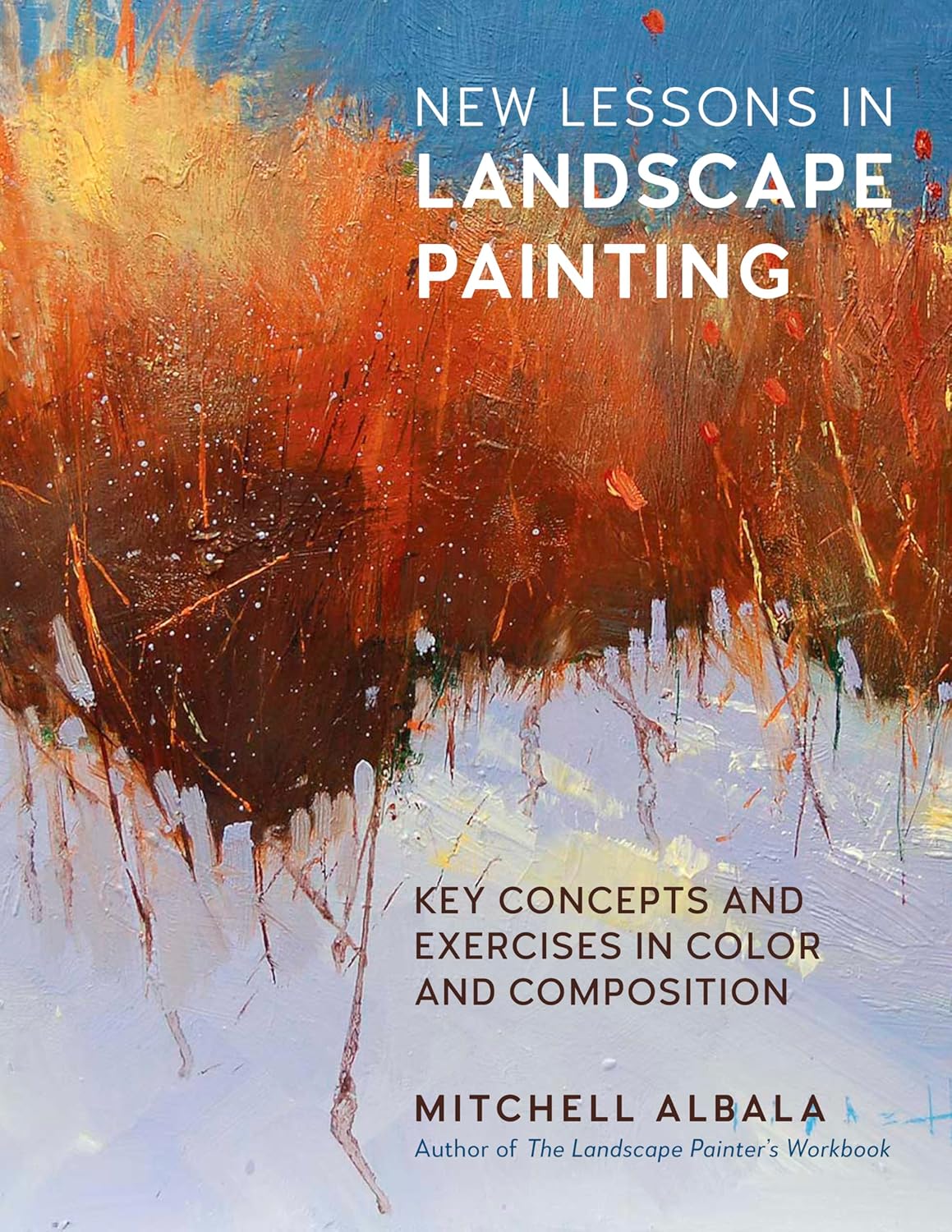
The subtitle describes key concepts and exercises in color and composition, by the author of The Landscape Painter’s Workbook. Exercise-based books are ideal after a workshop, when the challenge is continuing practice without an instructor.
Best suited for: Landscape painters keeping momentum after a workshop.
Key features:
- Paperback
- Concepts and exercises
- Color and composition
Pros:
- Structured continuation
- Contemporary approach
- Mid price tier
Cons and limitations:
- Landscape-specific
- Not oil-only
Buying consideration: Schedule one exercise per week for two months after your workshop.
3. The Encyclopedia of Oil Painting Techniques by Jeremy Galton — Best for a quick technique reference
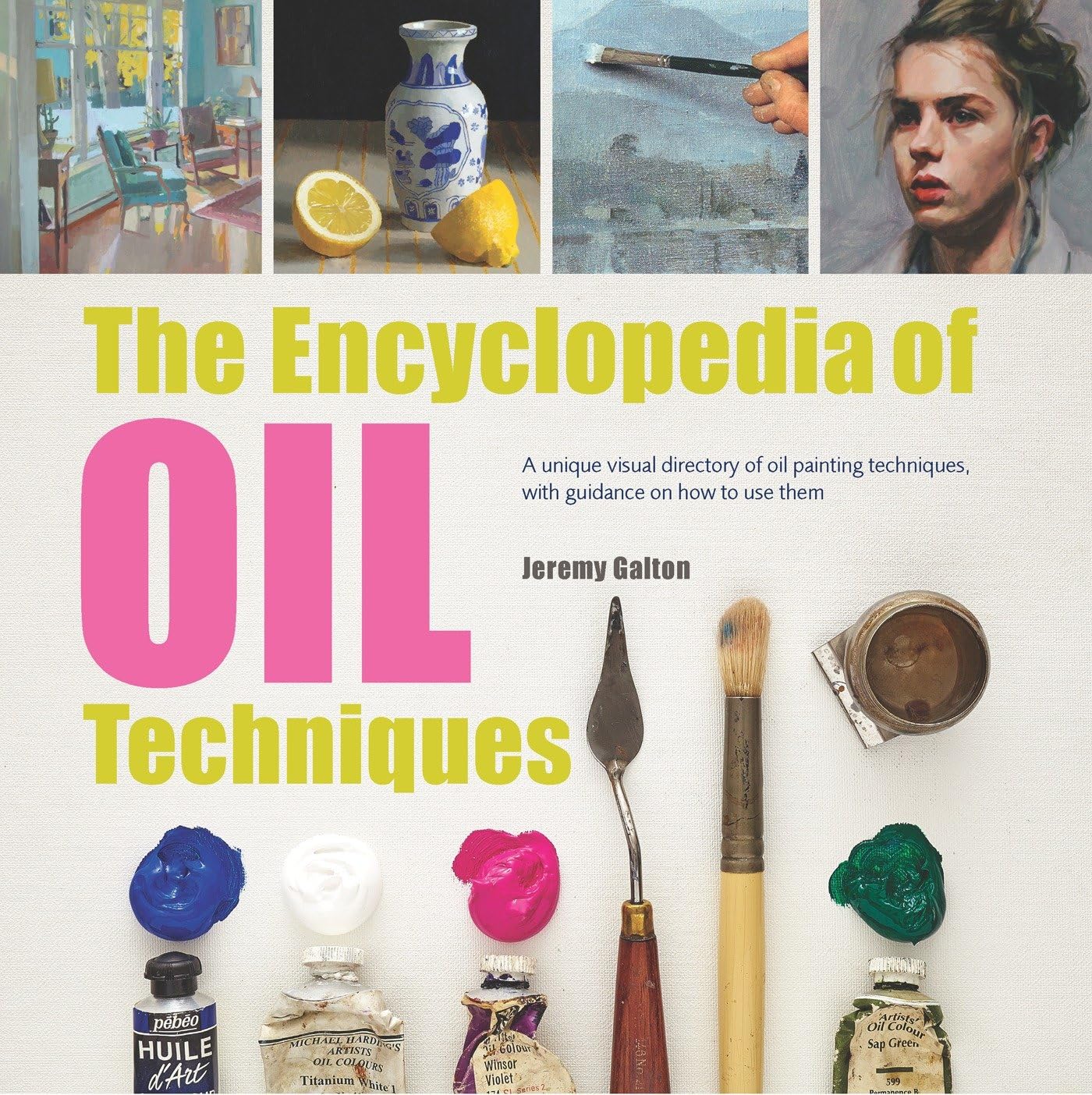
Galton’s book is a visual directory of oil painting techniques with guidance on use. Workshops often introduce several techniques quickly; a directory lets you look up and revisit each one afterward.
Best suited for: Painters who want to review techniques introduced in workshops.
Key features:
- Paperback
- Visual directory
- Guidance on application
Pros:
- Broad coverage
- Easy to look up
- Mid price tier
Cons and limitations:
- Breadth over depth
Buying consideration: Bookmark the techniques your instructor emphasized and compare their approach with the book’s.
4. Oil Painting Techniques edited by David Lewis (Artist’s Painting Library) — Best for a budget technique anthology

Part of the Artist’s Painting Library, this paperback promises to help painters learn to master oil painting working techniques and create successful paintings. It sits in the low price tier and makes a compact companion reference.
Best suited for: Painters who want an inexpensive technique overview.
Key features:
- Paperback
- Artist’s Painting Library series
- Working techniques focus
Pros:
- Low price tier
- Compact
Cons and limitations:
- May be introductory for professionals
- Listing gives limited detail
Buying consideration: Use it for teaching or quick refreshers rather than advanced study.
5. LIGHTWISH 5-Piece Stainless Steel Palette Knife Set — Best for a low-cost workshop knife kit

LIGHTWISH’s set includes five stainless steel painting knives with wood handles and curved stainless steel shanks that keep fingers away from the painting surface, according to the listing. The blades are described as elastic and resistant to wear and corrosion.
Palette knives are on almost every oil workshop supply list, for clean mixing and sometimes for painting. An inexpensive set means you can pack spares and not worry about losing one on location.
Best suited for: Any workshop participant building a travel kit.
Key features:
- 5 stainless steel knives
- Wood handles
- Offset (cranked) shanks
- For oil and acrylic
Pros:
- Lowest price tier
- Several blade shapes
- Corrosion resistant
Cons and limitations:
- Budget knives can flex differently from premium ones
- No case
Buying consideration: Wipe knives clean between mixtures; clean knives are the easiest way to keep colors from turning muddy.
Buying Guide: Choosing a Workshop as a Professional Oil Painter
Target one problem
A workshop that addresses one clear weakness is worth more than a general survey.
Prioritize feedback time
Ask how much one-on-one critique each participant receives.
Match level and pace
Professional or advanced workshops avoid time spent on basics.
Read the supply list closely
It tells you about the instructor’s palette, surfaces and methods.
Budget for the whole trip
Tuition is often less than travel, lodging, model fees and materials combined.
Plan the follow-up
Set aside time after the workshop to repeat exercises and apply lessons.
Red Flags in Workshop Listings
- No stated group size: it often means the class is very large.
- Vague daily schedule: good workshops describe how demonstration, painting and critique time are divided.
- All levels welcome, for professionals: a mixed-level room usually slows down to the newest participant.
- Instructor work you cannot find: you should be able to see a substantial body of recent paintings.
- No refund or transfer policy: plans change, especially for travel workshops.
- A supply list full of one brand: it can signal a sponsored event; ask whether substitutes are fine.
What to Pack for an Oil Painting Workshop
- The exact paints on the supply list, plus a large white.
- Brushes in the shapes and sizes requested, plus a few favorites.
- Palette knives and a palette (or disposable palette paper for travel).
- Pre-toned panels in the sizes requested.
- Odorless mineral spirits or a solvent-free cleaning method, if allowed.
- Paper towels, a lidded solvent container and a bag for used rags.
- Sketchbook and pencil for thumbnails and notes.
- A wet panel carrier for travel home.
Common Mistakes to Avoid
- Choosing by location alone: a beautiful setting does not guarantee good teaching.
- Arriving with the wrong materials: it wastes valuable time and makes demonstrations harder to follow.
- Painting large in a short workshop: small studies let you apply more lessons.
- Defending your choices during critique: try the suggestion first and judge afterward.
- Taking no notes: details fade within weeks.
- Skipping the follow-up: most improvement happens after the workshop ends.
FAQs
Are oil painting workshops worth it for professionals?
Yes, when they target a specific gap and include substantial individual critique. The most valuable workshops are focused, small and followed by deliberate practice.
How long should a professional oil painting workshop be?
Three to five days is common and allows time for demonstrations, painting and critique. Atelier-style intensives can run longer.
How many students is too many in a workshop?
Above about 15, individual feedback time often drops. Ask the organizer before booking.
Should professionals take online workshops?
Online workshops are useful for demonstrations and portfolio critique, and cost less in travel. In-person workshops add direct correction at the easel.
What should I bring to a workshop?
Follow the supply list exactly, then add extra white, palette knives, pre-toned panels, a sketchbook and a wet panel carrier.
How do I find reputable oil painting workshops?
Start with painters whose work you admire and check their websites for teaching schedules. Regional art centers, plein air painting associations and portrait or figurative art societies also list vetted workshops, and past participants can tell you how much individual attention they received.
How do I keep improving after a workshop?
Write up key lessons, repeat the main exercises several times, and apply them to your own subjects. Exercise-based books like New Lessons in Landscape Painting help structure this.
Final Recommendation
The best oil painting workshop for a professional is the one that solves your current problem, taught by an artist whose work you admire, with a small group and generous critique time. Choose between subject intensives, approach workshops, plein air retreats, atelier programs and online mentorships based on what you want to change in your work.
Prepare with Oil Painting: The Workshop Experience, follow up with New Lessons in Landscape Painting or The Encyclopedia of Oil Painting Techniques, and keep the budget-friendly Oil Painting Techniques anthology for quick refreshers. Pack a set of LIGHTWISH palette knives so mixing is never the bottleneck.




