PaintingProGuide is reader-supported. When you buy through links on this page we may earn an affiliate commission at no extra cost to you.
Landscape painting asks more of a palette than almost any other subject. You need clean blues for skies, a range of convincing greens that do not look like they came straight from a tube, warm earths for soil and bark, and a lot of white for atmosphere. The best oil paints for landscapes make those mixtures easy: strong, reliable pigments, a sensible color list and enough paint to cover a sky in one confident pass.
We compared seven oil sets from current Amazon listings with that job in mind. Some are built specifically for landscapes, some are general sets with useful landscape colors, and one is a budget option for learning outdoors without worrying about cost.
Quick answer: The Winsor & Newton Winton 20 x 12ml set is the best all-round choice for landscape painters, pairing a well-chosen range of blues, greens and earths with a stiff consistency that holds brush marks. If you paint Bob Ross-style wet-on-wet landscapes, the Bob Ross 14 x 200ml set is purpose-built. For bigger tubes on a budget, the PHOENIX 10 Classic Colors x 50ml set covers a limited palette well.
Our Top Picks at a Glance
- Winsor & Newton Winton Oil Color Set, 20 x 12ml — Best overall for landscape painting
- Bob Ross Landscape Oil Full Set, 14 x 200ml — Best for wet-on-wet landscapes
- PHOENIX Studio Oil Paint Set, 10 x 50ml — Best limited palette in large tubes
- Paul Rubens Oil Paint, 20 x 50ml — Best for landscapes and seascapes in volume
- Ohuhu Oil Paint Set, 24 x 12ml — Best budget set for plein-air practice
- MyArtscape Oil Paint Set, 48 x 12ml — Best for exploring landscape hues
- Magicfly Oil Paint Set, 40 x 18ml — Best value with extra whites
| Product | Best For | Key Spec | Key Strength | Price Tier |
|---|---|---|---|---|
| W&N Winton 20 x 12ml | All-round landscape work | 20 colors incl. Viridian Hue, Sap Green, Cerulean Hue | Stiff, holds brush marks | $$ |
| Bob Ross 14 x 200ml | Wet-on-wet method | 14 colors incl. Mountain Mixture | Huge tubes, stiff but smooth | $$$ |
| PHOENIX 10 x 50ml | Limited palette | 10 classic colors, 50ml | Large tubes, low odor | $$ |
| Paul Rubens 20 x 50ml | Landscapes and seascapes | 20 colors, 50ml | Refined linseed oil | $$$ |
| Ohuhu 24 x 12ml | Budget outdoor practice | 24 colors incl. Prussian and Cobalt Blue | Very low price tier | $$ |
| MyArtscape 48 x 12ml | Color exploration | 48 colors | Wide range, glossy finish | $$ |
| Magicfly 40 x 18ml | Value with extra white | 40 colors, 2 extra whites | Larger 18ml tubes | $$ |
How We Chose
We did not paint landscapes with each set for this guide. The picks rely on Amazon listing details and specifications checked in October 2026, how well each set’s colors, tube sizes and consistency suit landscape painting, and how widely each product is reviewed by Amazon buyers.
- Landscape-relevant colors: sky blues, mixing greens, earths and a strong white.
- Consistency: stiff enough to hold brush marks for foliage and clouds, workable enough for soft skies.
- Tube size: larger tubes for white and sky colors.
- Pigment information where the listing provides it.
- Portability: whether the set suits outdoor painting.
The Colors Every Landscape Palette Needs
Before comparing sets, it helps to know what you are looking for. Most landscape painters work from a core like this, then add favorites:
- Titanium white in quantity, for skies, atmosphere and tints.
- Ultramarine blue for warm, deep skies and shadows, plus a cooler blue such as cerulean or phthalo for greenish horizons and water.
- A warm yellow and a cool yellow, such as cadmium yellow and lemon, for mixing a full range of greens.
- Yellow ochre and burnt sienna for earth, dry grass, warm light and graying greens.
- A red, often alizarin crimson or a cadmium red, for neutralizing greens and warming shadows.
- A convenience green such as sap green or viridian, useful as a base but rarely used straight.
If a set covers these, it can paint almost any landscape. Extra colors are conveniences, not necessities.
Best Oil Paints for Landscapes Reviewed
1. Winsor & Newton Winton Oil Color Set, 20 x 12ml — Best Overall

Winton is Winsor & Newton’s long-running student line, and this set’s listing is unusually informative. It describes a pigment load higher than many artists’ ranges, a uniform and slightly stiff consistency that retains brush and palette knife strokes, and the selection of the most permanent pigments wherever possible.
The color list reads like a landscape painter’s shopping list: Titanium White, Cadmium Lemon Hue, Chinese Yellow Hue, Cadmium Orange Hue, Scarlet Lake, Cadmium Red Deep Hue, Permanent Rose, Magenta, Cobalt Violet Hue, Phthalo Blue, French Ultramarine, Cerulean Blue Hue, Emerald Green, Viridian Hue and Sap Green, among others. That gives you warm and cool blues, two yellows for mixing greens and greens to adjust from.
Best suited for: landscape painters at any level who want dependable color and stroke-holding body.
Key features
- 20 colors x 12ml
- Stiff, uniform consistency
- High pigment load per the listing
- Permanent pigments selected where possible
Pros
- Landscape-friendly color list
- Holds texture for foliage and clouds
- Established brand with consistent quality
Cons
- 12ml tubes; white runs out fast
- Some colors are hues rather than genuine cadmiums or cobalts
Buying consideration: Buy a large separate tube of titanium white. Skies alone will use more white than every other color combined.
2. Bob Ross Landscape Oil Full Set, 14 x 200ml — Best for Wet-on-Wet

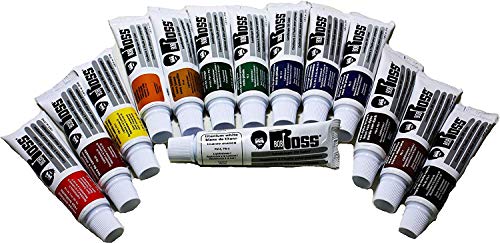
This set exists for one purpose: painting landscapes with the Bob Ross wet-on-wet technique. It includes a 200ml tube of each of 14 colors: Alizarin Crimson, Bright Red, Cadmium Yellow, Dark Sienna, Indian Yellow, Midnight Black, Mountain Mixture, Phthalo Blue, Phthalo Green, Prussian Blue, Sap Green, Titanium White, Van Dyke Brown and Yellow Ochre. The paint is formulated to a stiff but smooth consistency, which lets thick paint sit on a wet base coat.
Two hundred milliliter tubes are enormous by artist standards, so this set will last a long time. The palette leans on convenience colors like Mountain Mixture and Van Dyke Brown that suit the method’s quick, layered mountains and trees.
Best suited for: painters following Bob Ross lessons or workshops.
Key features
- 14 colors x 200ml
- Stiff but smooth formulation
- Includes Mountain Mixture and other method-specific colors
Pros
- Huge volume per color
- Matches the method exactly
Cons
- Highest price tier here
- Designed around one technique
- Includes black, which many landscape painters avoid in favor of mixed darks
Buying consideration: The wet-on-wet method also relies on a liquid base coat and specific brushes and knives. Check what else your lesson plan requires.
3. PHOENIX Studio Oil Paint Set, 10 x 50ml — Best Limited Palette in Large Tubes

A limited palette is the fastest way to learn landscape color, and this PHOENIX set delivers ten classic colors in 50ml tubes. The listing describes high saturation, strong tinting strength, good lightfastness and a thick, creamy consistency usable straight or with medium. It notes low odor and EN 71 and ASTM D-4236 certification.
Ten large tubes encourage mixing your own greens and grays rather than reaching for premixed tones, which produces more natural landscapes.
Best suited for: painters who want to work from a limited palette with plenty of paint.
Key features
- 10 colors x 50ml
- Strong tinting strength listed
- Low odor
- EN 71 and ASTM D-4236
Pros
- Generous tubes at a moderate tier
- Encourages mixing skills
Cons
- Specific color list not detailed in the listing excerpt
- No convenience greens if not included
Buying consideration: Check the color list on the product page to make sure it includes a warm and a cool blue and two yellows.
4. Paul Rubens Oil Paint, 20 x 50ml — Best for Landscapes in Volume

Paul Rubens says its 20 colors were chosen for landscape, seascape, portrait and still life painting, and the 50ml tubes make large skies and fields practical. The listing describes high pigmentation, good covering power and tinting strength, refined linseed oil and a smooth, buttery texture, with a claim of excellent lightfastness.
Best suited for: painters working on larger landscape canvases who want a broad palette without constantly reordering.
Key features
- 20 colors x 50ml
- Refined linseed oil
- High pigmentation listed
Pros
- Large tubes
- Colors chosen with landscapes in mind
Cons
- Higher price tier
- Pigment codes not shown in the listing
Buying consideration: Buttery paint blends skies smoothly; for crisp foliage texture, use a stiff bristle brush and less medium.
5. Ohuhu Oil Paint Set, 24 x 12ml — Best Budget Set for Practice
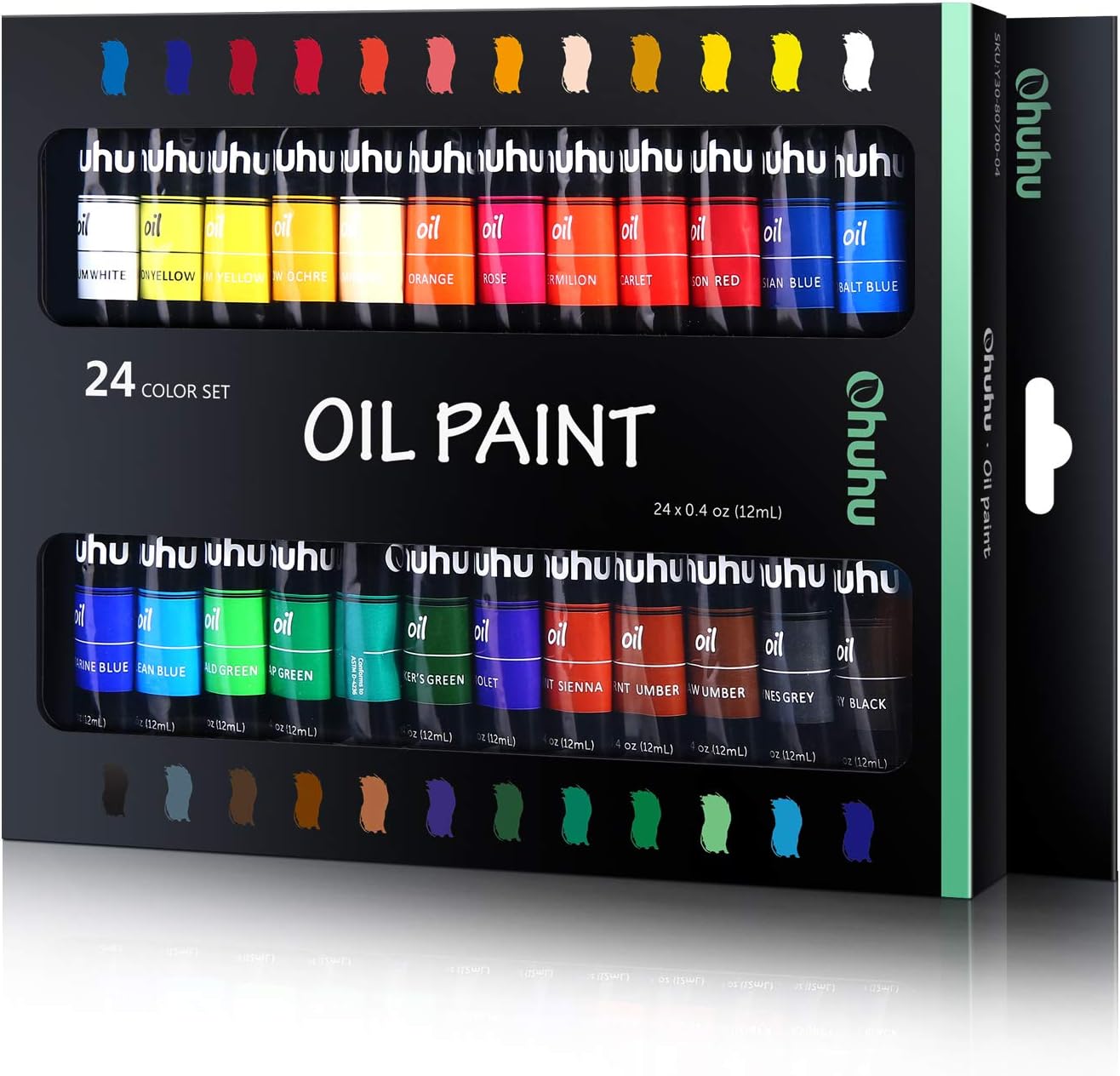
For plein-air practice or quick studies where you do not want to worry about wasting paint, Ohuhu’s 24-color set is the lowest price tier here. The listing names a range including Titanium White, Lemon Yellow, Medium Yellow, Yellow Ochre, Orange, Vermilion, Scarlet, Crimson Red, Prussian Blue, Cobalt Blue and Ultramarine Blue, and positions it for scenery and landscape painting both indoors and outdoors.
The listing also describes the paint as quick drying for a durable finish. Treat it as a learning set rather than for finished exhibition work.
Best suited for: beginners and painters doing lots of small outdoor studies.
Key features
- 24 colors x 12ml
- Three blues including Prussian and Cobalt
- Indoor and outdoor use listed
Pros
- Very affordable
- Good selection of blues for skies and water
Cons
- Small tubes
- Budget pigment quality likely
Buying consideration: Use this set to practice color notes outdoors, then repaint favorites in the studio with stronger paints.
6. MyArtscape Oil Paint Set, 48 x 12ml — Best for Exploring Hues

Forty-eight colors is more than a landscape painter needs day to day, but it is a useful way to discover which greens, blues and earths you like before buying larger tubes. The listing describes lightfast, artist-quality colors with a traditional high-sheen finish.
Best suited for: painters building their first landscape palette by trial.
Key features
- 48 colors x 12ml
- Lightfast pigments listed
- High-sheen finish
Pros
- Broad range of hues
- Satisfaction guarantee
Cons
- Many colors can encourage tube-color landscapes
- Small tubes
Buying consideration: Pick eight to ten colors from the set and set the rest aside. A focused palette produces more harmonious landscapes.
7. Magicfly Oil Paint Set, 40 x 18ml — Best Value with Extra Whites
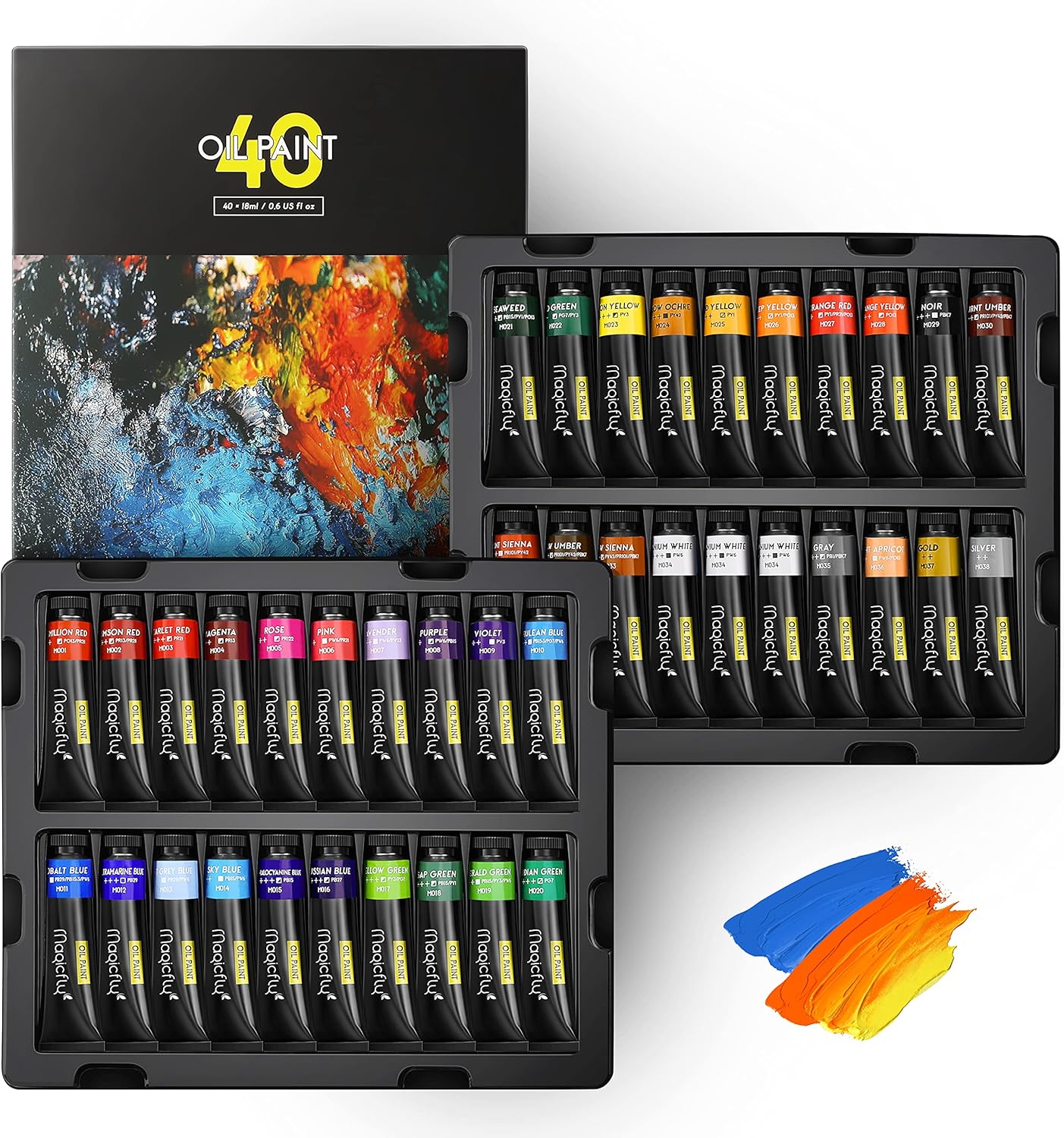
Magicfly’s set includes 40 colors in 18ml tubes plus two extra white tubes, a thoughtful touch for landscape painters who go through white quickly. The listing describes a thick, smooth consistency with good coverage and conformity to ASTM D-4236. Metallic gold and silver are included, which are rarely needed in landscapes.
Best suited for: hobby landscape painters who want plenty of colors and white at a budget tier.
Key features
- 40 colors x 18ml
- Two extra white tubes
- Thick consistency
Pros
- Larger tubes than 12ml sets
- Extra white
Cons
- Metallics of little use for landscapes
- Pigment details not listed
Buying consideration: Good for practice and learning; upgrade your white and blues first when you move to finished work.
Buying Guide: How to Choose Oil Paints for Landscapes
Prioritize blues and yellows over greens
Convincing landscape greens come from mixing blues and yellows, then adjusting with earths and reds. Sets with a warm and cool of each give you more natural greens than sets with many premixed greens.
Plan for white
Skies, atmospheric distance and highlights use white constantly. Whatever set you choose, buy a large tube of titanium white alongside it.
Consistency for skies and foliage
Skies benefit from paint that blends smoothly; foliage and grass benefit from paint that holds a broken stroke. Stiff paints like Winton handle both if you control medium use.
Tube size for scale
Small 12ml tubes suit studies up to about 11×14. For larger canvases, 50ml tubes or more save money and interruptions.
Lightfastness
Landscapes often hang in bright rooms. Look for listings that describe permanent or lightfast pigments, and avoid fugitive colors for important work.
Portability for plein air
For outdoor painting, a small set of well-chosen colors is easier to carry than 48 tubes. Many plein-air painters bring five to seven colors plus white.
Mixing Landscape Color: Quick Tips
- Cool the distance: add a touch of blue and white to distant hills to push them back.
- Warm the foreground: stronger, warmer color and sharper edges bring things forward.
- Gray your greens: a little red or burnt sienna tames tube greens.
- Grade the sky: skies are usually lighter and warmer near the horizon and deeper overhead.
- Mix darks instead of using black: ultramarine and burnt sienna make rich, natural darks.
For a complete walkthrough, read our tips for painting landscapes in oil. If you want to practice color and value on a smaller subject first, our step-by-step oil still life guide teaches the same mixing skills indoors.
Common Mistakes to Avoid
- Using greens straight from the tube. They look artificial; always adjust them.
- Running out of white mid-sky. Buy white separately in a large tube.
- Using too many colors. Large sets can create disjointed landscapes.
- Making distant hills too dark or saturated. Atmosphere lightens and cools distance.
- Overblending foliage. Broken strokes read as leaves; smooth blends read as plastic.
- Relying on black for shadows. Mixed darks stay more alive.
FAQs
What oil colors do I need for landscape painting?
Titanium white, ultramarine blue and a cooler blue, a warm and cool yellow, yellow ochre, burnt sienna, a red such as alizarin crimson and optionally a convenience green like sap green.
Is Winsor & Newton Winton good for landscapes?
Yes. The listed color range covers landscape needs, and the stiff consistency holds brush and knife strokes well for foliage and clouds.
Are Bob Ross paints good for regular oil painting?
They are formulated for the wet-on-wet method but are still oil paints. Their stiff consistency and large tubes work for other approaches, though the palette is built around that technique.
How do I mix natural greens in oil paint?
Combine blues and yellows, then adjust with ochre, burnt sienna or a touch of red. Cool blue plus lemon gives fresh greens; ultramarine plus ochre gives olive greens.
What size oil paint tubes are best for landscapes?
12ml tubes suit small studies. For larger canvases, 50ml tubes or larger, especially for white and blues, are more practical.
Can I use these sets for plein air painting?
Yes. Choose five to seven colors plus white from any set to keep your outdoor kit light.
Final Recommendation
For most landscape painters, the Winsor & Newton Winton 20-color set is the most dependable starting point, with a landscape-ready color list and stroke-holding body. If you are learning the wet-on-wet method, the Bob Ross 14 x 200ml set is built for it. Painters who prefer a limited palette with big tubes should look at the PHOENIX 10 x 50ml, while the Paul Rubens 20 x 50ml set suits larger canvases. For budget practice outdoors, the Ohuhu, MyArtscape and Magicfly sets are fine learning tools, as long as you add a big tube of white.