
PaintingProGuide is reader-supported. When you buy through links on this page we may earn an affiliate commission at no extra cost to you.
Metal is smooth, non-porous and often curved, which means paint has nothing to soak into and everything to slide off. Brushed metal finishes show sags, drips and brush marks more than wood does, and railings, hinges, furniture legs and decorative metalwork are full of edges and round profiles. The best paint brushes for painting metal are smooth synthetic flats and angled brushes from 1 to 2.5 inches for flat panels and rails, small round and angled trim brushes for spindles, scrollwork and hardware, and cheap chip brushes for rust converter and primer. The real secret is in preparation and thin coats; the brush just needs to lay paint smoothly and reach every surface.
Quick answer: For most metal projects, the Coltree 5-piece flat and angle set is the best start: 1 and 2 inch flats plus 1.5, 2 and 2.5 inch angles with thick bristles and stainless steel ferrules, listed for oil and water-based paints. For railings, spindles and scrollwork, the Mister Rui round trim brushes in 0.6, 0.75 and 1 inch are listed for metal and tight spaces. For hinges, hardware and fine edges, add the Bates 4-pack of angled detail brushes from 6 to 25 mm.
Metal painting overlaps with fine art in a few places, such as painted tin signs, metal sculpture and decorative ironwork, but most of what follows applies to DIY projects: patio furniture, railings, gates, mailboxes, lamp bases and light fixtures.
What Metal Needs Before the Brush Touches It
Clean and degrease
Oil, wax and fingerprints stop paint from bonding. Wash metal with a degreasing cleaner, rinse and let it dry fully.
Remove loose rust and old paint
Use a wire brush, sandpaper or a scraper to take off flaking paint and loose rust. Firmly bonded rust can be treated with a rust converter, which is usually brushed on with an inexpensive brush.
Scuff glossy surfaces
Lightly sanding shiny metal gives primer something to grip.
Prime
Bare steel and iron need a rust-inhibiting primer. Galvanized metal and aluminum need primers made for them. Some direct-to-metal paints combine primer and topcoat; follow the label.
Choose the paint
Oil-based and alkyd enamels have long been the standard for metal because they level well and resist moisture. Water-based acrylic and direct-to-metal paints are easier to clean up and widely used today. The paint type determines the best brush filament.
Mind the weather
Metal heats up in sun and gets cold quickly in shade, which affects drying. Paint in mild, dry conditions and avoid direct sun on dark metal.
Our Top Picks at a Glance
- Coltree 5-Piece Flat and Angle Brush Set — Best overall brushes for painting metal
- Mister Rui 3-Piece Round Trim Brushes — Best for railings, spindles and scrollwork
- Bates 4-Pack Angled Detail Trim Brushes — Best for hinges, hardware and fine edges
- Pro Grade 5-Piece Brush Set — Best value set with angle stubby
- AskBed 3-Pack Plastic Handle Brushes — Best rust-proof budget brushes
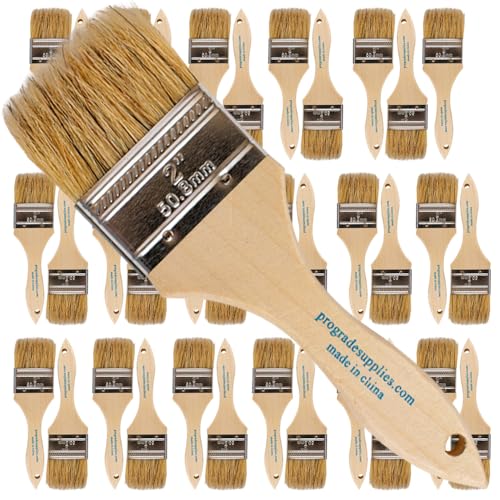
- Newkita 3-Piece Chip Brushes — Best disposable brushes for rust converter and primer
- Bates 6-Pack Flat and Angled Brushes — Best for oil-based enamel on a budget
| Product | Best For | Key Spec | Key Strength | Price Tier |
|---|---|---|---|---|
| Coltree 5-Piece | Panels, rails, furniture | 1″, 2″ flat; 1.5″, 2″, 2.5″ angle; stainless ferrule | Oil and water-based listed | $ |
| Mister Rui Round Trim | Spindles, scrollwork | 0.6″, 0.75″, 1″ round; metal listed | Round heads wrap profiles | $ |
| Bates Detail 4-Pack | Hinges, hardware | Angled 6, 12, 16, 25 mm; synthetic | Very small sizes | $ |
| Pro Grade 5-Piece | General metal projects | Flats, angles, 2″ angle stubby; SRT | Stubby for tight spaces | $ |
| AskBed 3-Pack | Budget, wet conditions | 1″, 1.8″, 2.7″; all-plastic handle | Rust-proof handle | $ |
| Newkita Chip 3-Pack | Rust converter, primer | 3 chip brushes, synthetic | Disposable | $ |
| Bates 6-Pack | Oil-based enamel | 3 flat, 3 angled, natural/synthetic | Natural bristle blend | $ |
How We Chose
We made these picks from the Amazon listing details and specifications checked in October 2026, by how well each brush’s shape, size and filament suit painting metal surfaces and profiles, and by how widely each product is reviewed by Amazon buyers. We have not painted metal with these brushes. Where a listing names metal among its intended surfaces, we note it.
- Smooth filaments that lay enamel without heavy brush marks.
- Shapes for profiles: round and angled brushes for rails and scrollwork.
- Small sizes for hardware and edges.
- Paint compatibility: oil and water-based where stated.
- Disposable options for rust converter and primer.
Best Paint Brushes for Painting Metal Reviewed
1. Coltree 5-Piece Flat and Angle Brush Set — Best for panels, rails and metal furniture
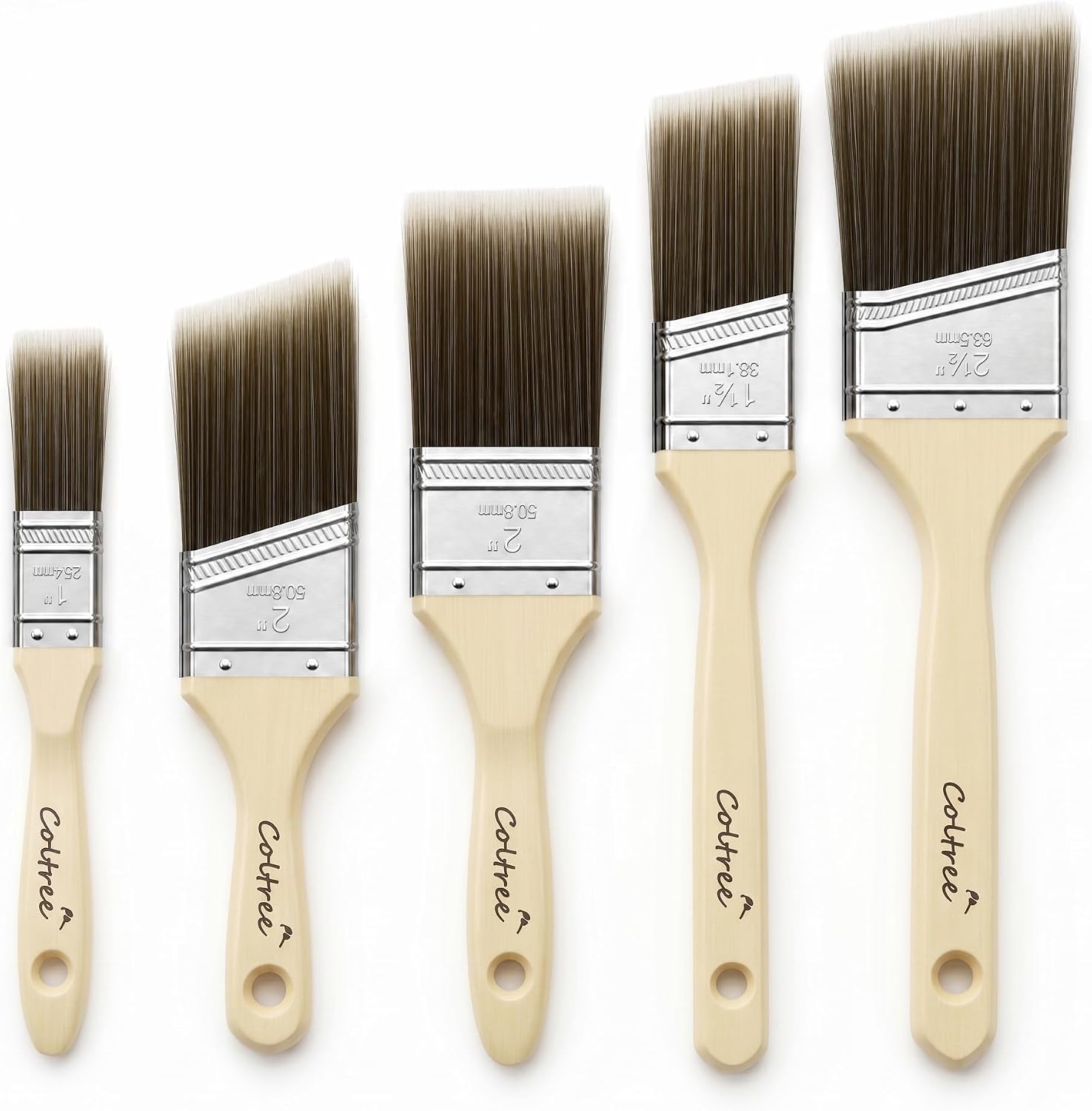
Coltree’s set includes a 1 inch flat, 2 inch flat, 1.5 inch angle, 2 inch angle and 2.5 inch angle with thick bristles that the listing says hold more paint for smooth, even application. The handles are lightweight solid wood with stainless steel ferrules. Coltree says the brushes suit oil and water-based paints and stains, cleaned with water or solvent as appropriate.
Those sizes map well to typical metal jobs. The 2 inch flat handles the flat faces of a gate or a filing cabinet, the angles follow the edges of square tubing and frame rails, and the 1 inch flat reaches between slats on patio furniture.
Stainless steel ferrules are a small but real advantage: they will not rust when cleaned in water after water-based metal paint.
Best suited for: DIYers painting gates, patio furniture, cabinets and other metal items.
Key features:
- 5 brushes: 1″ and 2″ flat; 1.5″, 2″ and 2.5″ angle
- Thick bristles
- Solid wood handles
- Stainless steel ferrule
- Oil and water-based listed
Pros:
- Good size spread
- Rust-resistant ferrules
- Low price tier
Cons and limitations:
- Not designed specifically for metal
- No round brushes for spindles
Buying consideration: Apply thin coats with the grain of the piece, then tip off lightly to reduce sags.
2. Mister Rui 3-Piece Round Trim Brushes — Best for railings, spindles and scrollwork

Mister Rui’s set includes three round brushes at 0.6, 0.75 and 1 inch. The listing describes split-resistant bristles that hold more paint, reduce drips and glide smoothly, with ergonomic round handles for tight spaces. It names oil and water-based paints, stains and varnishes on wood, metal and drywall.
Round brushes are the right shape for round metal: balusters, chair legs, pipe, scrollwork and decorative ironwork. A round head wraps partway around a profile, so you cover more surface per stroke and reach the back side without contorting your wrist.
Best suited for: Wrought iron railings, round furniture legs, pipes and decorative metalwork.
Key features:
- 3 round brushes: 0.6″, 0.75″, 1″
- Split-resistant bristles
- Round ergonomic handles
- Metal listed as a surface
Pros:
- Shape suits round profiles
- Reduces drips
- Low price tier
Cons and limitations:
- Small sizes only
- Not for flat panels
Buying consideration: Work from the top of a railing downward and check the underside for drips as you go.
3. Bates 4-Pack Angled Detail Trim Brushes — Best for hinges, hardware and fine edges

Bates’ detail set includes four angled brushes at 6, 12, 16 and 25 mm with synthetic bristles and wooden handles. The listing describes them for clean edges, trim and detailed painting, cutting in along corners and narrow surfaces.
Hinges, latches, handles and the edges of metal frames need tiny brushes. A 6 mm angled brush can paint a hinge knuckle or a screw head, while the 25 mm brush handles narrow strips of metal.
Best suited for: Painting hardware, small metal parts and edges.
Key features:
- 4 angled brushes: 6, 12, 16, 25 mm
- Synthetic bristles
- Wooden handles
Pros:
- Very small sizes
- Precise edges
- Low cost
Cons and limitations:
- Small brushes only
Buying consideration: Remove hardware when possible and paint it separately on a piece of cardboard.
4. Pro Grade 5-Piece Brush Set — Best for general metal projects

Pro Grade’s set includes 1 and 2 inch flats and 1.5, 2 and 2.5 inch angled brushes, including a 2 inch angle stubby, with SRT filaments and coated steel ferrules. The listing says bristles are adhesive-bonded to prevent loss.
The stubby brush is useful for metal furniture with tight joints and for the inside of metal cabinets or boxes.
Best suited for: General DIY metal painting on a budget.
Key features:
- 5 brushes incl. angle stubby
- SRT synthetic filaments
- Coated steel ferrule
Pros:
- Stubby for tight spaces
- Low price tier
Cons and limitations:
- Coated steel ferrule may rust if left wet
Buying consideration: Dry brushes promptly after washing.
5. AskBed 3-Pack Plastic Handle Brushes — Best for rust-proof budget brushes

AskBed’s three brushes measure 1, 1.8 and 2.7 inches with thickened bristles and BPA-free all-plastic handles. The listing says the all-plastic construction prevents rusting and that they suit all paints, stains and sealants with no bristle loss.
An all-plastic handle is handy for wet, messy metal jobs like rust converter, metal primer and outdoor touch-ups, where brushes end up sitting in water.
Best suited for: Budget metal touch-ups and messy prep coats.
Key features:
- 3 brushes: 1″, 1.8″, 2.7″
- Thickened bristles
- All-plastic BPA-free handle
Pros:
- Rust-proof handle
- Very low cost
- Three sizes
Cons and limitations:
- Basic build
Buying consideration: Use for primer and rust converter, then switch to better brushes for the topcoat.
6. Newkita 3-Piece Chip Brushes — Best for rust converter and primer

Newkita’s chip brushes come in three sizes with synthetic bristles and wooden handles. The listing says they work with paints, stains, varnishes, acrylics and gesso.
Rust converter and metal primer are often harsh on brushes. Chip brushes are cheap enough to use once and discard.
Best suited for: Prep coats on metal.
Key features:
- 3 chip brushes
- Synthetic bristles
Pros:
- Disposable
- Very low cost
Cons and limitations:
- Leaves texture; not for finish coats
Buying consideration: Comb out loose bristles before use.
7. Bates 6-Pack Flat and Angled Brushes — Best for oil-based enamel on a budget

Bates’ six-pack contains three flats and three angled brushes with natural bristles mixed with synthetic filaments, listed for oil-based paints and latex stains.
Natural bristle blends are traditional for oil-based enamels, which are still popular for metal because they level well and resist moisture.
Best suited for: Painters using oil-based metal enamels.
Key features:
- 6 brushes
- Natural and synthetic blend
- Flat and angled
Pros:
- Natural bristle content
- Lowest cost per brush
Cons and limitations:
- Budget quality
- Not ideal for water-based paint
Buying consideration: Clean with the solvent on the paint label, then soap and water.
How to Brush Paint Onto Metal
- Clean, degrease and remove loose rust and paint.
- Apply rust converter if needed, then a primer suited to the metal.
- Stir the paint well and load the brush moderately.
- Apply thin coats, brushing in one direction along the length of each part.
- Paint round rails with a round brush, wrapping strokes around the profile.
- Check for drips and sags on the underside and edges, and brush them out while wet.
- Let each coat dry fully before the next; two thin coats outlast one thick coat.
Brush, Roller or Spray?
Spray paint gives the smoothest finish on small, intricate metal items, but it creates overspray and needs ventilation and masking. Small foam rollers work well on flat metal panels and doors. Brushes are the most controllable choice for railings, fixtures in place and touch-ups, and they waste the least paint. Many metal jobs combine a brush for edges and profiles with a mini roller for flat areas.
Cleaning Brushes After Metal Paint
Metal paints are formulated to bond hard, and they are equally good at bonding to brush bristles. For water-based metal paint, rinse brushes in warm water as soon as you finish, work in brush soap from the ferrule to the tip and rinse until clear. For oil-based enamels, work the brush in the solvent recommended on the can, then wash with soap and water. Shake out excess water, reshape the bristles and hang or lay the brush flat to dry. Brushes left even an hour with enamel in the heel are often impossible to recover.
Decorative and Craft Metal Projects
For painted tin signs, metal ornaments and sculpture, artists often use acrylic paint over a suitable metal primer, applied with soft artist brushes for detail and sealed with a clear coat. The same rules apply: clean and prime first, use thin layers, and seal anything that will be handled or displayed outdoors.
Buying Guide: How to Choose Brushes for Metal
Filament for the paint
Synthetic for water-based metal paints; natural bristle or blends for oil-based enamels.
Shapes for the profiles
Flats for panels, angles for edges, rounds for rails and spindles.
Small sizes for hardware
Very small angled brushes reach hinges and latches without flooding moving parts with paint.
Rust-resistant construction
Stainless steel ferrules and plastic handles resist rust from repeated washing.
Cheap brushes for prep
Rust converter and primer are hard on brushes; use disposables and keep your good brushes for the topcoat.
Finish quality
Smooth, dense brushes reduce brush marks in the topcoat. Since metal shows every ridge in a glossy enamel, the topcoat is where a better brush pays off most.
Related Brush Guides
Keep metal-painting brushes in shape with our tips on preventing shedding and proper drying, and see how to work with large brushes on big metal panels.
Common Mistakes to Avoid
- Painting over grease or loose rust.
- Skipping primer on bare steel.
- Applying thick coats that sag and run.
- Using flat brushes on round railings and missing the back side.
- Painting hot metal in direct sun.
- Using a regular primer on galvanized metal.
FAQs
What brush is best for painting metal?
A smooth synthetic flat or angled brush for most surfaces, round brushes for railings and small angled brushes for hardware.
Should I use natural or synthetic brushes on metal?
Synthetic for water-based paints; natural bristle or blends for oil-based enamels.
How do I avoid brush marks on metal?
Use thin coats, a quality brush and brush in one direction along each part.
Do I need to prime metal before painting?
Usually yes, especially bare steel, galvanized metal and aluminum; some direct-to-metal paints include primer.
What brush shape is best for wrought iron railings?
Round brushes that wrap around profiles, plus small angled brushes for scrollwork.
Can I paint metal with acrylic craft paint?
For decorative indoor pieces over a suitable primer, yes; seal for durability.
Final Recommendation
For most metal painting, start with the Coltree five-piece set for panels, rails and edges. Add Mister Rui round brushes for railings and scrollwork and the Bates angled detail brushes for hinges and hardware. The Pro Grade set is a value alternative with a useful stubby, AskBed brushes are rust-proof budget options, Newkita chip brushes handle rust converter and primer, and the Bates six-pack suits oil-based enamel.




