
PaintingProGuide is reader-supported. When you buy through links on this page we may earn an affiliate commission at no extra cost to you.
Watercolor behaves differently on ceramic than on plastic. On a new plastic palette, a wash tends to bead into droplets because the surface repels water; on glazed porcelain it spreads into an even pool you can read accurately. Ceramic is also heavy enough to stay put while you work, does not stain easily, and wipes clean with a damp tissue. That is why so many watercolorists eventually move to a ceramic palette for watercolor and never go back.
The question is which layout. Round flower palettes, rectangular slant-well trays and lidded travel dishes each suit a different way of painting. Below we compare seven porcelain palettes by well count, size and mixing space.
Quick answer: The MEEDEN 12-well porcelain palette is the best ceramic palette for watercolor for most painters: a 7-inch round with enough wells for a full palette and enough weight to stay put. If you want more mixing room, the 8-inch Gemerglity 13-well palette is the step up; for slant-style wells and two palettes in one order, choose the Jucoan 10-well 2-pack.
Our Top Picks at a Glance
- MEEDEN 12-Well Porcelain Palette, 7 inch — Best overall ceramic watercolor palette
- Gemerglity 13-Well Porcelain Palette, 8 inch — Best for larger mixing space
- MEEDEN 8-Well Ceramic Palette, 7×7 — Best for big washes
- Jucoan 10-Well Rectangle Palette, 2-Pack — Best value pair
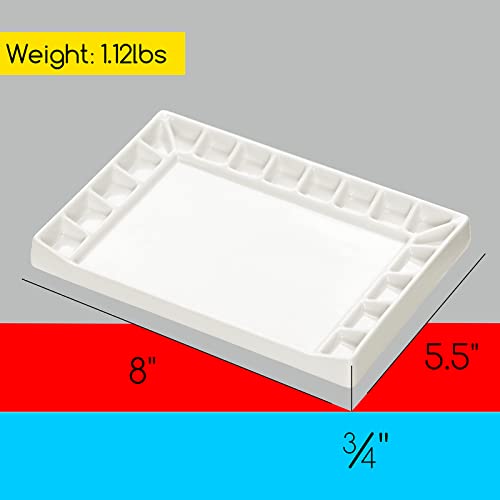
- MEEDEN 9-Well Rectangle Palette — Best slim desk palette
- Ymcafmo 14-Well Porcelain Palette, 2 pieces — Best for many pure colors
- ZROSDSGY 5-inch Plum Blossom Palette with Lid — Best small lidded palette
| Product | Best For | Key Spec | Key Strength | Price Tier |
|---|---|---|---|---|
| MEEDEN 12-Well | Everyday watercolor | 7 in round, 12 wells | Weighted, will not flip | $ |
| Gemerglity 13-Well | Larger mixes | 8 in round, 13 wells | Most mixing space in a round | $ |
| MEEDEN 8-Well | Big washes, fewer colors | 7x7x0.9 in, 8 wells | Larger individual wells | $$ |
| Jucoan 10-Well 2-Pack | Two palettes, studio + travel | 7.5×4.25 in, 5 round + 5 rectangular wells | Two palettes per order | $$ |
| MEEDEN 9-Well Rectangle | Narrow desks | 6.8×3.33 in, 9 wells | Small footprint | $ |
| Ymcafmo 14-Well (2 pcs) | Many tube colors | 14 wells, two pieces | Highest well count | $ |
| ZROSDSGY 5-inch with Lid | Small setups, storage | 5.3 in, lid included | Lid protects paint | $ |
How We Chose
We did not paint with these palettes. Our picks rest on the Amazon listing details and specifications checked in October 2026, how each palette’s size, well layout and features fit watercolor work in particular, and how widely each one is reviewed by Amazon buyers.
The criteria that shaped the ranking:
- Material: glazed ceramic or porcelain only, since that is the point of the category.
- Well count versus well size: more wells hold more pure colors; fewer, larger wells hold bigger washes.
- Mixing area: watercolor needs space for diluted puddles, not just dabs of paint.
- Weight and stability: the listing had to suggest the palette sits firmly on a desk.
- Footprint and portability: we included compact and lidded options for small desks and storage.
Why Choose Ceramic for Watercolor?
Glazed ceramic is non-porous and has a surface that lets water spread rather than bead, which most of these listings mention directly. That means washes pool evenly, so you can judge how much pigment is in a mix before it touches paper. A plastic palette can get there too after it is scuffed and seasoned, but ceramic behaves that way from day one.
Ceramic also resists staining. Staining pigments like phthalo blue and quinacridones can tint plastic permanently, while glazed porcelain usually wipes clean. Its weight keeps it steady, and it does not warp with warm water. The downsides are equally clear: it is heavier to carry, and it can chip or break if dropped.
Best Ceramic Palettes for Watercolor Reviewed
1. MEEDEN 12-Well Porcelain Watercolor Palette, 7 inch — Best Overall Ceramic Watercolor Palette

MEEDEN’s 12-well round is the classic “flower” layout: wells around the rim and mixing space in the middle. It is 7 inches across and about 1 inch tall, made of white porcelain, and the listing describes it as medium-weight with enough heft that it will not flip around in the studio or in the field.
Twelve wells is a practical number for watercolor: enough for a split-primary palette plus earth tones and a couple of convenience colors. The listing states paint spreads smoothly without beading and wipes clean with a tissue.
Best suited for: Watercolor and gouache painters who want one dependable desk palette with room for a full set of colors.
Key features:
- 12 wells
- 7 inch diameter, about 1 inch high
- White porcelain, medium weight
- Smooth surface that resists beading
- Listed for watercolor, gouache, acrylic, oil and tempera
Pros:
- Balanced well count for a typical watercolor palette
- Heavy enough to stay in place
- Easy tissue clean-up
Cons and limitations:
- Round layout uses more desk area than a rectangle
- Wells are not slanted for pooling
- Porcelain can chip if dropped
Buying consideration: If you only buy one ceramic palette, this is the safe choice. Painters who mix large washes may prefer the 8-well version or an 8-inch palette.
2. Gemerglity 13-Well Porcelain Watercolor Palette, 8 inch — Best for Larger Mixing Space

An extra inch of diameter matters more than it sounds on a round palette, since area grows with the square of the radius. Gemerglity’s 8-inch palette has 13 wells and the familiar white porcelain surface that, per the listing, spreads paint smoothly and wipes clean with a tissue.
This is a good match for painters who work on half or full sheets and need large wash puddles alongside individual color wells.
Best suited for: Landscape painters, those who paint larger sheets, and anyone who finds a 7-inch palette crowded.
Key features:
- 13 wells
- 8 inch diameter
- White porcelain
- Listed for watercolor, gouache, acrylic, oil and tempera
Pros:
- More mixing area than 7-inch rounds
- High well count
- Same easy-clean porcelain surface
Cons and limitations:
- Takes more desk space
- Heavier to move
- Listing gives fewer construction details than MEEDEN
Buying consideration: Choose this over the MEEDEN 12-well if space for washes matters more than a compact footprint.
3. MEEDEN 8-Well Ceramic Watercolor Palette, 7×7 — Best for Big Washes

Same brand, different priority. The 8-well MEEDEN measures 7 x 7 x 0.9 inches and divides that space into fewer, larger wells. The listing says paint spreads rather than beads, and it cleans with water and a tissue.
Fewer wells is not a downgrade for every painter. If you work with a limited palette of three to six colors, or mix large batches for skies and backgrounds, bigger compartments give each mix room to breathe.
Best suited for: Limited-palette painters, loose landscape painters, and anyone mixing generous washes.
Key features:
- 8 wells
- 7 x 7 x 0.9 inches
- White eco-friendly ceramic
- Smooth, non-beading surface
Pros:
- Larger compartments for wash mixing
- Same trusted brand and material
- Lightweight for ceramic, per listing
Cons and limitations:
- Fewer wells for pure colors
- Slightly pricier than the 12-well version at check time
- No lid
Buying consideration: Pair it with a small well palette for tube colors if you like keeping many colors out.
4. Jucoan 10-Well Rectangle Ceramic Palette, 2-Pack — Best Value Pair

Jucoan sells two rectangular porcelain palettes, each 7.5 x 4.25 inches with five round wells and five rectangular wells. The listing describes them as moderately weighted so they will not flip, with a smooth white surface that washes off dry or wet paint.
The mixed well shapes are useful: round wells hold pure tube color, while long rectangular wells make good mixing lanes. Two palettes let you keep one for warm colors and one for cool, or one at the desk and one in a sketching bag.
Best suited for: Painters who want two palettes, teachers, and anyone who prefers a rectangular layout.
Key features:
- 2 palettes per pack
- 7.5 x 4.25 inches each
- 5 round and 5 rectangular wells each
- White ceramic, moderately weighted
Pros:
- Two palettes for one price
- Rectangular wells double as mixing lanes
- Fits beside a sketchbook
Cons and limitations:
- Each palette has modest mixing area
- Higher upfront cost than single palettes
- Rectangle shape can feel cramped for big washes
Buying consideration: Good value if you will actually use two. If not, a single MEEDEN round costs less.
5. MEEDEN 9-Well Rectangle Ceramic Palette — Best Slim Desk Palette

At about 6.8 x 3.33 inches, MEEDEN’s rectangle takes up little more room than a smartphone. It has nine wells and the same white ceramic surface as the brand’s rounds.
This is the palette for a cramped desk, a sketchbook session or a secondary palette next to a main one. It also works as a dedicated gouache palette, since gouache users often keep only a few colors out at a time.
Best suited for: Small desks, sketchbook painters, gouache users and beginners who want an inexpensive ceramic palette.
Key features:
- 9 wells
- 6.8 x 3.33 inches
- White ceramic
- Listed for watercolor, gouache, acrylic, oil and tempera
Pros:
- Small footprint
- Low cost for genuine ceramic
- Easy to clean
Cons and limitations:
- Limited mixing space
- Light enough to slide if bumped
- Not suited to large washes
Buying consideration: Treat it as a compact or secondary palette. For a main studio palette, a 7- or 8-inch round gives more room.
6. Ymcafmo 14-Well Porcelain Watercolor Palette, 2 Pieces — Best for Many Pure Colors

Ymcafmo lists a 14-well porcelain palette sold as a two-piece set with an item weight of about 15.8 ounces. Fourteen wells lets you keep a wide range of tube colors squeezed out and ready, which suits painters who like convenience colors as well as primaries.
The listing is short on exact dimensions, so check the photos and measurements on the product page before buying if desk space is tight. It also mentions using the palette as a wet or stay-wet palette, which is unusual for ceramic; most painters simply let watercolor dry in the wells and rewet it.
Best suited for: Painters who keep many colors out at once and like squeezing tube watercolor into wells to dry.
Key features:
- 14 wells
- Two-piece porcelain set
- Approximately 15.8 ounces
- Listed for watercolor and acrylic
Pros:
- Highest well count in this list
- Substantial weight for stability
- Budget-friendly
Cons and limitations:
- Exact dimensions not listed
- Less established brand
- Two-piece description is vague; confirm what arrives
Buying consideration: A good pick if you want lots of wells for little money, provided you verify size on the product page.
7. ZROSDSGY 5-inch Plum Blossom Porcelain Palette with Lid — Best Small Lidded Palette

This 5-inch (5.3 x 5.3 inch) porcelain palette uses a plum blossom petal layout and comes with a lid. The listing says the lid keeps paints fresh and protected and makes the palette easier to carry. It weighs about 12.3 ounces.
The lid is the reason to choose it. Watercolor dries in the wells either way, but a lid keeps dust and cat hair off your colors between sessions, and it lets you stack the palette on a shelf.
Best suited for: Painters with limited space, gouache and watercolor hobbyists who store palettes between sessions, and gift buyers.
Key features:
- 5.3 x 5.3 inches
- Plum blossom well layout
- Lid included
- About 12.3 ounces
Pros:
- Lid protects paint from dust
- Attractive design
- Low cost
Cons and limitations:
- Small mixing area
- Fewer wells than larger palettes
- Ceramic lid adds breakage risk in transit
Buying consideration: Ideal as a compact home palette or second palette for gouache. It is not big enough to be a main palette for large paintings.
Buying Guide: How to Choose a Ceramic Palette for Watercolor
All glazed porcelain palettes share the same basic benefits, so the real decision comes down to layout and size.
Number of Wells
Count the colors you actually use. A limited palette of six to eight colors fits an 8- or 9-well palette with room to spare. If you keep 12 or more tube colors squeezed out, choose a 12-, 13- or 14-well palette so every color has a home.
Mixing Area
Watercolor needs puddles. Round palettes with a central mixing area or larger compartments work well for washes. Small rectangular palettes give more wells per inch but less room for big mixes, so many painters use one of each.
Well Shape
Round wells hold pure color neatly. Long rectangular wells double as mixing lanes and make it easy to drag a large brush through paint. Petal-shaped wells look attractive and hold moderate amounts.
Size and Weight
A 7- to 8-inch round is a comfortable studio size. Weight is a feature at home because the palette does not slide; it is a drawback when you carry it outdoors. For plein air work, a smaller ceramic dish or a metal tin may serve better.
Lid or No Lid
Watercolor can dry in the wells and be rewetted, so a lid is not essential. It does keep dust off and allows stacking. Most ceramic palettes are open; the ZROSDSGY model is the lidded option here.
Glaze Quality and Edges
Look for a fully glazed, smooth white surface; unglazed spots absorb pigment and stain. Check listing photos for clean edges and level wells, and inspect for chips when the palette arrives.
Care and Palette Habits
Ceramic is easy to care for, but a few habits help. Our guide on how to clean a painting palette covers removing dried and staining pigments safely, and if you paint with gouache or acrylic as well, see how to keep a paint palette from drying out.
Common Mistakes to Avoid
- Buying a palette with fewer wells than the colors you use, then mixing in shared wells.
- Choosing a tiny palette for big washes and running out of puddle space mid-sky.
- Scrubbing glaze with abrasive powders that can dull the surface over time.
- Carrying a heavy porcelain palette for hiking or travel when a tin would be lighter.
- Stacking palettes without padding between them, which invites chips.
- Ignoring dimensions on listings that do not state them clearly.
FAQs
Are ceramic palettes better for watercolor than plastic?
For most painters, yes. Glazed ceramic lets water spread instead of beading, resists staining and stays put due to its weight. Plastic is lighter, cheaper and unbreakable, which makes it better for travel and kids.
Is porcelain the same as ceramic for palettes?
Porcelain is a type of ceramic fired at high temperature, which makes it dense and non-porous. In palette listings the terms are often used interchangeably for glazed white palettes.
Can you leave watercolor to dry in a ceramic palette?
Yes. Many painters squeeze tube watercolor into the wells and let it dry, then rewet it with a damp brush in later sessions. Ceramic handles this well.
How many wells do I need in a watercolor palette?
Enough for every color you keep out plus mixing space. Eight to twelve wells suits most painters; landscape and botanical painters with many colors may want 13 or more.
Can I use a ceramic palette for acrylic or gouache?
Yes. Most of these palettes are listed for watercolor, gouache and acrylic. Dried acrylic can be soaked and peeled from glazed ceramic, though it takes more effort than watercolor.
How do I remove stains from a ceramic palette?
Most watercolor wipes off with a damp tissue. For stubborn staining pigments, soak in warm soapy water, then rub gently with a soft sponge. Avoid abrasive powders that can dull the glaze.
Final Recommendation
Start with the MEEDEN 12-well porcelain palette if you want one ceramic palette that suits most watercolor work. Painters who need more puddle space should choose the 8-inch Gemerglity 13-well, while limited-palette and wash-heavy painters will appreciate the larger compartments of the MEEDEN 8-well.
For rectangular layouts, the Jucoan 2-pack gives you two palettes, and the MEEDEN 9-well rectangle fits tight desks. Color collectors can look at the Ymcafmo 14-well, and if you want a lid to keep dust off, the ZROSDSGY plum blossom palette is a small, practical option.




