
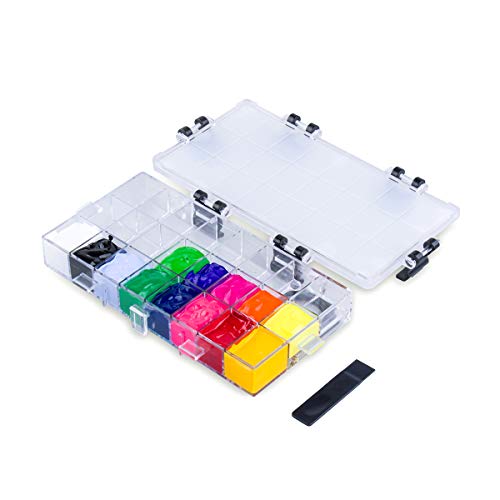
PaintingProGuide is reader-supported. When you buy through links on this page we may earn an affiliate commission at no extra cost to you.
Twenty-four wells is the sweet spot for a working palette. It holds a full spectrum with room for a few convenience colors like Payne’s gray or a quinacridone pink, yet it still fits on a desk or in a backpack. Where 24-well palettes differ is everything else: whether the lid actually seals, how deep each well is, how much mixing space you get, and whether the material stains.
The best palette with 24 wells depends on how you paint. A watercolorist who fills wells from tubes and lets them dry needs a different box than an acrylic painter who wants paint to stay wet overnight. This guide compares six 24-well palettes listed on Amazon, from an airtight studio classic to a porcelain dish and a budget fold-out, and explains which one suits which medium.
Quick answer: The Mijello Fusion 24-Well Palette is the best all-round palette with 24 wells: slanted wells, two large mixing areas, a removable mixing tray and an airtight, leakproof lid that the maker says keeps colors fresh for weeks. For acrylic or gouache that you want to keep wet, the Transon Paint Saver uses a soft rubber lid that seals each deep well separately. On a tight budget for water-based paint, the Junreox fold-out palette gives 24 wells, five mixing spaces and brush storage, though it is not airtight.
Our Top Picks at a Glance
- Mijello Fusion 24-Well Airtight Palette — Best overall for watercolor at home and outdoors
- Falling in Art 24-Well Airtight Palette — Best value airtight studio palette
- Transon Paint Saver Palette 24 Wells — Best for keeping acrylic and gouache wet
- joybest 24-Well Palette Box — Best compact travel box with locking seals
- Junreox Large Fold-Out Palette — Best budget palette with brush storage
- MEEDEN 24-Well Ceramic Palette — Best stain-free porcelain palette
| Product | Best For | Key Spec | Key Strength | Price Tier |
|---|---|---|---|---|
| Mijello Fusion | Watercolor, travel, plein air | Slanted wells; 2 mixing areas; 14 x 11 in | Airtight, removable mixing tray | $$ |
| Falling in Art | Studio watercolor and gouache | Slanted wells; large mixing tray; 12.6 x 6.29 in | Rubber seal plus wet sponge | $$ |
| Transon Paint Saver | Acrylic and gouache storage | Deep 1.3 x 1.1 x 1 in wells; 8.5 x 4.7 in | Soft lid seals each well | $ |
| joybest Palette Box | Pocket-size travel | 10 ml wells, 2 cm deep; 6.41 x 3.26 in | 6 locks and silicone seal | $ |
| Junreox Fold-Out | Budget watercolor | 24 flat wells; 5 mixing areas; brush slot | Lots of mixing room for the tier | $ |
| MEEDEN Ceramic | Desk watercolor | Glazed porcelain; 6 x 4.5 in; coated cover | Does not stain or bead | $$ |
How We Chose
These picks come from the Amazon listing details and specifications checked in October 2026, how well each palette’s well design, seal and mixing space fit specific painting media, and how widely each one is reviewed by Amazon buyers. We have not painted from these palettes; every product detail below is taken from the listings or from well-known properties of plastic, rubber and porcelain palettes.
We compared palettes on:
- Seal: truly airtight, partially sealing, or open. This decides whether wet paint survives between sessions.
- Well shape and depth: slanted wells pool paint at one end; deep wells hold a whole tube of color; flat wells are easier to clean.
- Mixing area: the most common complaint about small palettes is running out of mixing space.
- Material: plastic is light and cheap; porcelain does not stain and lets water spread evenly.
- Size and portability: a 14-inch case is a studio tool; a 6-inch box goes in a pocket.
- Medium compatibility: watercolor, gouache, acrylic and oil each ask something different of a palette.
Best Palettes with 24 Wells Reviewed
1. Mijello Fusion 24-Well Airtight Palette — Best for watercolor at home and outdoors

The Mijello Fusion is one of the most familiar studio watercolor palettes, and the listing explains why. It has 24 ergonomically slanted wells so paint gathers at the low end, two generous mixing areas, and a removable mixing tray that lifts out for washing. Mijello also says the palette surface is designed so colors look the same on the palette as they do on watercolor paper, which helps you judge mixes.
The lid is the main reason to pay for it. The listing describes the case as leakproof and airtight and states it keeps colors fresh for weeks, which suits a painter who squeezes out tube color once and reactivates it session after session. At roughly 14 by 11 inches, it is large enough for serious work but still closes into a single case for classes and plein air trips.
Best suited for: Watercolor painters who fill wells from tubes and want them protected between sessions; students and plein air painters who need one case to carry.
Key features:
- 24 slanted wells
- Two large mixing areas
- Removable mixing tray
- Airtight, leakproof lid
- About 14 x 11 inches; plastic and resin
Pros:
- Strongest seal claim of the group
- Mixing tray lifts out for easy cleaning
- Slanted wells reduce waste
- Suits classroom, travel and studio
Cons and limitations:
- Larger footprint than travel boxes
- Plastic mixing areas can stain with strong staining pigments over time
- Higher price tier than budget plastic palettes
Buying consideration: If you paint mainly with watercolor and want a palette that lasts for years, this is the one to start with. Gouache and oil users can also use it, but the airtight seal matters most for watercolor kept in wells long term.
2. Falling in Art 24-Well Airtight Palette with Sponge — Best for a value airtight studio palette

Falling in Art follows the same basic layout as the Mijello: 24 slanted wells, a removable paint well panel, and a large mixing tray. Its twist is moisture management. The listing says a sealed rubber ring and a wet sponge work together to keep paints fresh for weeks, so you can add a little humidity inside the case for gouache or acrylic.
At 12.6 by 6.29 inches it is narrower than the Mijello, which makes it easier to fit beside a sketchbook on a small desk. It is listed as suitable for gouache, acrylic, watercolor and oil from tubes.
Best suited for: Studio painters who want an airtight case with a humidity option and a slimmer footprint.
Key features:
- 24 slanted wells
- Removable well panel and large mixing tray
- Rubber seal and included wet sponge
- About 12.6 x 6.29 inches; acrylic and rubber
Pros:
- Sponge helps keep gouache and acrylic workable
- Removable panel simplifies cleaning
- Narrower case for small desks
- Works with four common media
Cons and limitations:
- Similar price tier to the Mijello
- Sponge must be kept clean to avoid mildew
- Less established track record than the Mijello design
Buying consideration: A good alternative if you want a sealed palette and plan to switch between watercolor and gouache. Rinse and dry the sponge regularly.
3. Transon Artist Paint Saver Palette, 24 Wells — Best for keeping acrylic and gouache wet

The Transon is built for storage rather than mixing. Its 24 deep wells each measure about 1.3 inches long, 1.1 inches wide and 1 inch deep, big enough to hold a generous amount of acrylic or gouache. The soft rubber lid has grooves that press into each well, sealing them individually so colors do not migrate or dry out. Transon says it keeps paint wet for days.
That design makes it a strong choice for acrylic painters, whose paint dries far faster than watercolor. It also comes with a free fine detail brush. The trade-off is mixing space: there is no dedicated mixing area, so you will want a separate mixing surface.
Best suited for: Acrylic and gouache painters, miniature and craft painters who keep custom-mixed colors between sessions.
Key features:
- 24 deep wells, each about 1.3 x 1.1 x 1 inch
- Grooved soft rubber lid seals wells separately
- Suitable for watercolor, gouache, acrylic and oil
- Includes 1 fine detail brush
- 8.5 x 4.7 x 1.2 inches
Pros:
- Individually sealed wells prevent color bleeding
- Deep wells hold lots of paint
- Low price tier
- Compact for a 24-well box
Cons and limitations:
- No built-in mixing area
- Deep wells are slower to clean
- Rubber lid may hold odors from oil paint over time
Buying consideration: Pair it with a disposable palette pad or a ceramic plate for mixing. For acrylic painters, this combination keeps paint usable far longer than an open tray.
4. joybest 24-Well Airtight Palette Box — Best for compact travel with locking seals

At 6.41 by 3.26 inches, the joybest box is the smallest palette here. It uses six sealed locks and a silicone latex pad to keep paint in and moisture sealed, and each of the 24 wells is listed as 2 cm deep and holding 10 ml. A paint scoop sits at the front, and a thumb hole on the back helps you hold it while painting standing up.
This is a storage and travel box first. It also works with half pans, so you can drop pan colors in and carry a full 24-color set in a jacket pocket. Mixing room is limited, so most painters pair it with a small separate mixing palette or the lid of a sketch kit.
Best suited for: Urban sketchers, travelers and anyone building a custom pocket set from tubes or half pans.
Key features:
- 24 wells, 2 cm deep, 10 ml each
- 6 locking clasps and silicone seal
- Front paint scoop and rear thumb hole
- Thick plastic body; 6.41 x 3.26 inches
- Fits watercolor half pans
Pros:
- Pocket-size for a 24-color set
- Multiple locks reduce leak risk in bags
- Thumb hole for standing work
- Low price tier
Cons and limitations:
- Very little mixing space
- Small wells limit large brushes
- Clasps add a little time to open and close
Buying consideration: Buy it as a travel palette or storage case, not as your main mixing surface.
5. Junreox Large Watercolor Palette with Lid — Best for budget watercolor with brush storage
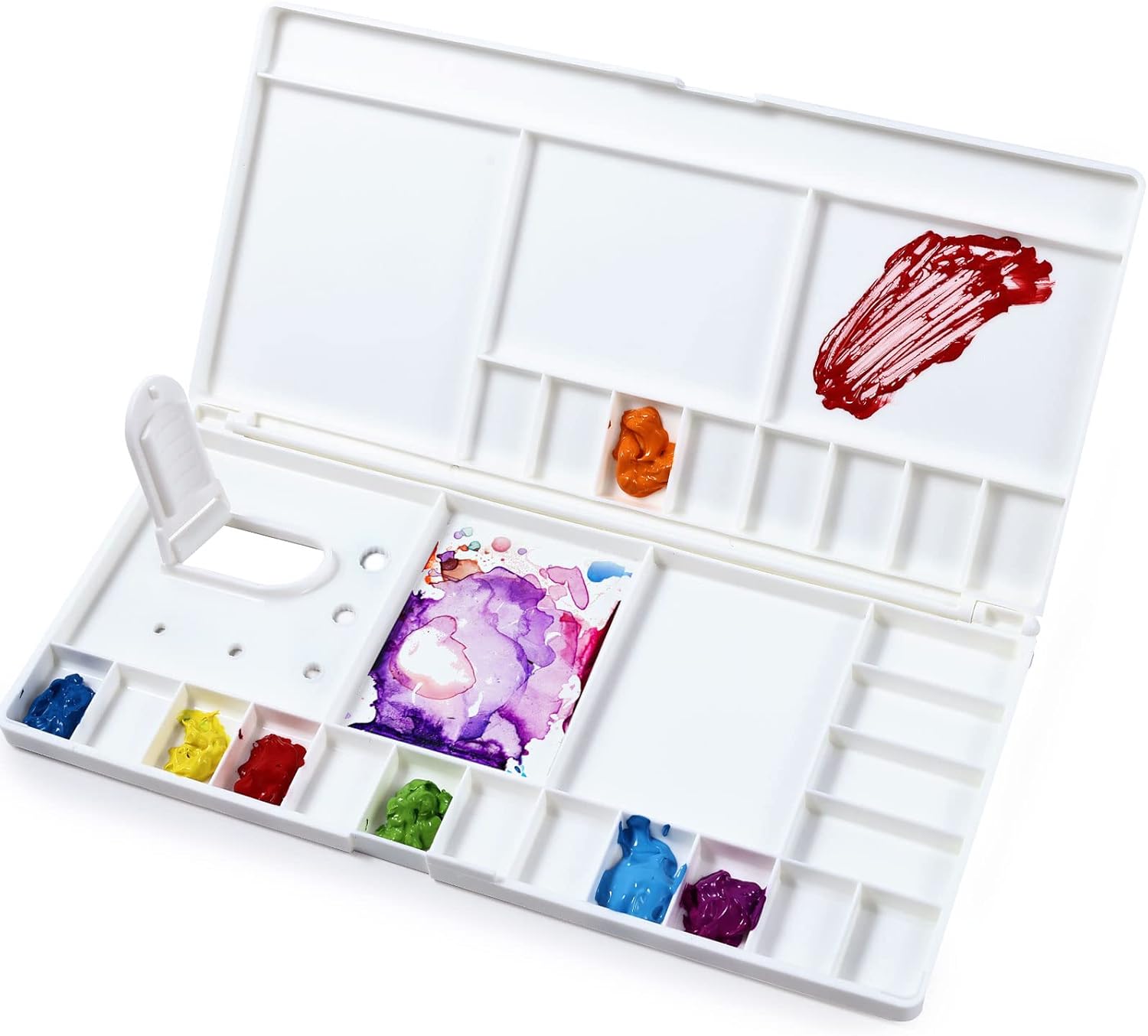
Junreox gives the most mixing room for the lowest price tier here. Its fold-out design has 24 flat, deep wells, five mixing areas of different sizes, a compartment for travel brushes and five brush holes, plus a thumbhole. It folds to 11.8 by 5.35 inches and opens flat to 11.8 by 10.63 inches.
The listing is refreshingly direct about one limitation: it is not airtight. You should empty it or let paint dry solid before packing it, and it is best suited to water-based paints. For watercolor that you let dry in the wells anyway, that is not a problem.
Best suited for: Beginners and students on a budget, and watercolorists who let their paint dry in the wells.
Key features:
- 24 flat deep wells
- 5 mixing areas of different sizes
- Brush compartment and 5 brush holes
- Thumbhole; folds to 11.8 x 5.35 inches
- Not airtight
Pros:
- Most mixing space for the price
- Built-in brush storage
- Opens flat for comfortable painting
- Lowest price tier in this guide
Cons and limitations:
- Not airtight, so wet paint can leak in transit
- Not suited to keeping acrylic wet
- Light plastic is less rigid than heavier palettes
Buying consideration: Ideal for watercolor beginners who want room to mix. If you need wet paint to survive travel, choose an airtight model instead.
6. MEEDEN 24-Well Ceramic Watercolor Palette — Best for stain-free porcelain mixing

Porcelain is the classic palette material for watercolor because water spreads across glazed ceramic instead of beading up the way it can on plastic. MEEDEN describes this palette as glazed pure white porcelain with 24 smooth, stain-resistant wells, and says paint wipes clean with a tissue.
It includes a coated cover that the listing says helps keep paint from drying out and keeps dust off. At 6 by 4.5 inches with some weight to it, this is a desk palette rather than a travel one; the weight is an advantage when it comes to stability.
Best suited for: Watercolor and gouache painters who work at a desk and want a palette that will not stain or warp.
Key features:
- 24 wells in glazed porcelain
- Coated cover to slow drying and block dust
- Stain-resistant, smooth surface
- 6 x 4.5 inches; moderate weight
- Suitable for watercolor, gouache, acrylic, oil, tempera
Pros:
- Will not stain the way plastic can
- Water spreads smoothly for even mixes
- Stable on the desk
- Easy to wipe clean
Cons and limitations:
- Breakable if dropped
- Not airtight
- Wells are small, with limited mixing space
Buying consideration: Choose it for color accuracy and cleanliness at a home desk. Keep a plastic travel box for outdoor trips.
Buying Guide: How to Choose a Palette with 24 Wells
The right 24-well palette depends far more on your medium and habits than on the well count. Work through these points before buying.
Match the seal to your medium
Watercolor can dry in the wells and be rewet, so a seal is about keeping dust out and preventing leaks in a bag. Acrylic dries permanently, so a tight seal is the difference between saving and wasting paint. Gouache sits between the two. Oil dries slowly in air and needs less sealing for short breaks, though a lid helps.
Slanted vs. flat vs. deep wells
Slanted wells let paint pool at the low end and leave a clean slope for picking up color. Flat wells are easier to scrub. Deep wells, like Transon’s inch-deep compartments, store a lot of paint but take longer to clean.
Mixing space
Count the mixing areas, not just the wells. A palette with 24 wells and no mixing area forces you to mix on a separate surface. Large washes need large mixing areas; detailed work needs several small ones so mixes stay separate.
Material: plastic or porcelain
Plastic is light, cheap and travel-friendly, but some pigments, especially phthalo blues and greens, can stain it. Porcelain resists staining and lets water spread evenly, at the cost of weight and fragility.
Size and portability
Large studio palettes (around 12 to 14 inches) give mixing room. Pocket boxes (around 6 inches) travel well. Decide where you will paint most often and buy for that, then add a second palette later if needed.
Cleaning
Removable trays and panels make cleaning far easier. If you hate washing palettes, prioritize a removable mixing tray or a smooth porcelain surface.
Extras
Thumb holes, brush compartments, paint scoops and included sponges are small touches that matter if you paint outdoors or on the move.
Palette Care and Related Guides
If you paint with acrylic and keep losing paint to drying, read our explainer on what a wet palette is and how it differs from a sealed well palette. These tips on how to keep a paint palette from drying out work with any of the palettes above, and our step-by-step guide on how to clean a painting palette covers stained plastic, dried acrylic and porcelain.
Common Mistakes to Avoid
- Buying an open palette for acrylic. Without a seal, acrylic dries in the wells within hours.
- Filling wells with wet watercolor and packing immediately. Let tube paint dry for a day or two before travel, even in an airtight palette.
- Ignoring mixing space. Twenty-four wells with no room to mix is frustrating; add a separate mixing tray if needed.
- Leaving a damp sponge in a closed case for weeks. It can grow mildew; rinse and air it regularly.
- Putting staining pigments next to light colors. Arrange wells so phthalos and quinacridones sit apart from yellows.
- Dropping porcelain. Use a non-slip mat or keep ceramic palettes at home.
FAQs
What is the best palette with 24 wells for watercolor?
For most watercolor painters, the Mijello Fusion 24-well palette is the strongest all-round choice thanks to its slanted wells, two mixing areas, removable tray and airtight lid. A porcelain palette like the MEEDEN is a good desk alternative if you want a stain-free surface.
Can I use a 24-well palette for acrylic paint?
Yes, but choose one with a tight seal. The Transon Paint Saver seals each deep well with a grooved rubber lid, which helps keep acrylic wet for days. Open palettes let acrylic dry quickly.
Is a ceramic or plastic palette better?
Ceramic resists staining and lets water spread evenly, which many watercolorists prefer. Plastic is lighter, cheaper and better for travel. Many painters keep one of each.
How do I set up a 24-well watercolor palette?
Squeeze tube paint into each well, arranging colors by temperature or around the color wheel, then let it dry for a day or two before closing the lid. Label the wells or make a swatch card so you know which color is where.
Do airtight palettes really keep paint fresh?
They slow drying significantly. Watercolor and gouache stay usable for long periods; acrylic will still dry eventually but lasts much longer in a sealed palette than in an open one.
Why do my paints bead up on my plastic palette?
New plastic can repel water. Many painters lightly scrub new palettes with a mild abrasive cleaner to reduce beading; porcelain avoids the problem altogether.
Final Recommendation
For watercolor, the Mijello Fusion is the best palette with 24 wells for most people, with the Falling in Art palette as a slimmer alternative that adds a moisture sponge. Acrylic and gouache painters should look first at the Transon Paint Saver, paired with a separate mixing surface.
Travelers will appreciate the pocket-sized joybest box, and beginners on a budget get the most mixing room from the Junreox fold-out, as long as they accept it is not airtight. If you paint at a desk and want color accuracy without staining, the MEEDEN porcelain palette is a quiet favorite worth having alongside any plastic one.




