

PaintingProGuide is reader-supported. When you buy through links on this page we may earn an affiliate commission at no extra cost to you.
Paint acrylic on ordinary drawing paper and you will see the problem within minutes: the sheet ripples, edges curl, and wet paint soaks through to the table. Acrylic carries water, binder and pigment, and it needs a surface heavy enough to stay flat and sized or textured enough to grip paint. The best paper for acrylic paint is thick, usually 246 lb (around 400 gsm) for serious work, with a canvas or linen texture that gives the brush something to bite into.
We compared seven papers and pads: heavyweight acrylic pads, budget canvas paper for practice, a sized craft paper for kids, and a disposable palette pad for mixing. Below you will find what paper weight means, how texture changes your brushwork, a quick guide to stopping curl, and when to choose paper over canvas.
Quick answer: For finished acrylic paintings on paper, the Strathmore 400 Series acrylic pad (246 lb, linen texture) is the best choice. For the most sheets of heavyweight paper per purchase, the U.S. Art Supply 400 gsm pads (2 x 12 sheets) are excellent value. For daily practice and studies, Prudiut 200 gsm canvas paper keeps costs low.
Our Top Picks at a Glance
- Strathmore 400 Series Acrylic Pad, 246 lb — Best overall paper for acrylic paint
- U.S. Art Supply 400 gsm Acrylic Pads, 2-Pack — Best value heavyweight paper
- wingpaper 400 gsm Acrylic Pad, Top Spiral — Best spiral pad for students
- Prudiut Canvas Paper Pad, 200 gsm — Best budget canvas paper for practice
- Hapikalor Canvas Paper, 115 lb — Best lightweight canvas paper for oil pastel and acrylic sketches
- Colorations Art Paper, Sized — Best paper for kids’ acrylic and tempera
- Mr. Pen Disposable Palette Paper, 40 Sheets — Best paper for mixing acrylic
| Product | Best For | Key Spec | Key Strength | Price Tier |
|---|---|---|---|---|
| Strathmore 400 Acrylic | Finished paintings | 246 lb, linen texture, 9×12, 10 sheets | Strong paint adherence | $ |
| U.S. Art Supply 400 gsm | Value | 246 lb (400 gsm), 2 pads x 12 sheets | Spiral bound, acid-free | $ |
| wingpaper 400 gsm | Students | 400 gsm, 8.5×11, 25 sheets | Top spiral, perforated | $ |
| Prudiut Canvas Paper | Practice | 200 gsm, 9×12, 25 sheets | Canvas texture, glue bound | $ |
| Hapikalor Canvas Paper | Sketches | 115 lb (187 gsm), 9×12, 20 sheets | Acid-free canvas texture | $ |
| Colorations Art Paper | Kids, classroom | Sized 9×12 craft paper | Soak-resistant | $ |
| Mr. Pen Palette Paper | Mixing | 9×12, 40 poly-coated sheets | Tear-off cleanup | $ |
How We Chose
We did not paint on these papers. Our picks are based on Amazon listing details and specifications checked in October 2026, how well each paper’s weight, texture, binding and coating suit acrylic paint, and how widely each product is reviewed by Amazon buyers.
- Weight: heavier paper resists buckling and bleed-through.
- Surface texture: linen or canvas textures grip paint and add character.
- Archival qualities: acid-free paper resists yellowing.
- Binding: glue-bound, spiral or perforated for easy removal.
- Purpose fit: finished work, practice, kids’ projects or mixing.
Do You Need Special Paper for Acrylic?
Not always, but it helps a lot. Acrylic can be used on heavy watercolor paper, mixed-media paper and even primed cardboard. Purpose-made acrylic and canvas papers simply perform more predictably: they are heavy, often sized or coated so paint sits on the surface, and textured like canvas. We go deeper on alternatives in do you need special paper for acrylic paint.
Paper Weight Explained
| Weight | Approx. gsm | Use With Acrylic |
|---|---|---|
| Up to 90 lb | Up to about 150 gsm | Light washes and markers only; will buckle |
| 115 lb | About 187 gsm | Sketches and light layers |
| About 130 lb | About 200 gsm | Practice paintings, moderate layers |
| 246 lb | About 400 gsm | Finished paintings, heavy layers, palette knife |
Best Paper for Acrylic Paint Reviewed
1. Strathmore 400 Series Acrylic Paper Pad, 246 lb, 9 x 12 — Best for finished acrylic paintings on paper

Strathmore’s 400 Series acrylic pad uses a heavy 246 lb sheet with a textured linen surface. The listing says the linen texture assures maximum adherence and layering of paint, and notes that the paper is manufactured in France. The pad is glue bound with 10 white sheets at 9 x 12 inches, with a satin finish.
Linen texture is finer and more even than canvas texture, which suits detailed work and smooth blending while still giving the brush some grip. The heavy weight resists buckling under multiple layers.
Best suited for: Painters who want finished, frame-worthy acrylic paintings on paper.
Key features:
- 246 lb weight
- Linen-textured surface
- 9 x 12 inches, 10 sheets
- Glue-bound pad
- Made in France
Pros:
- Heavyweight and stable
- Refined linen texture
- Trusted art paper brand
Cons and limitations:
- Only 10 sheets
- Higher cost per sheet than budget pads
- Linen texture shows in thin glazes
Buying consideration: Tape the sheet to a board on all four sides before painting for the flattest result.
2. U.S. Art Supply 400 gsm Acrylic Painting Paper Pads, 2-Pack — Best for value heavyweight paper

U.S. Art Supply bundles two 9 x 12 spiral pads of 12 sheets each, 24 sheets in total, at 246 lb (400 gsm). The listing describes moisture-resistant, bleed-resistant paper that is acid-free and suits techniques from bold strokes to fine detail.
Spiral binding makes it easy to turn pages and remove sheets. For painters who use a lot of heavyweight paper, this is one of the best values per sheet in the group.
Best suited for: Students and hobbyists who want heavyweight paper in quantity.
Key features:
- 246 lb (400 gsm)
- 2 pads x 12 sheets, 9 x 12
- Spiral bound
- Acid-free
- Bleed and moisture resistant
Pros:
- Many heavyweight sheets
- Easy removal
- Archival
Cons and limitations:
- Surface texture not described
- Spiral pages can tear at the binding if pulled carelessly
- Mid price tier
Buying consideration: Remove the sheet before painting heavy layers so the spiral does not cause a ridge.
3. wingpaper 400 gsm Acrylic Paper Pad, 8.5 x 11, Top Spiral — Best for students and classroom use

wingpaper’s pad holds 25 sheets of 400 gsm (246 lb) paper at 8.5 x 11 inches, with top spiral binding and micro-perforated pages. The listing says it resists moisture and bleed-through and is compatible with acrylic paint, pencil, marker and ink.
Top binding lays flat and works equally well for left- and right-handed painters, and perforations make it easy to hand in or display finished work.
Best suited for: Students, art classes and anyone who wants many heavyweight sheets in a letter-size pad.
Key features:
- 400 gsm (246 lb)
- 25 sheets, 8.5 x 11
- Top spiral binding
- Micro-perforated
- Mixed media compatible
Pros:
- Heavyweight with 25 sheets
- Clean tear-out
- Lays flat
Cons and limitations:
- Letter size is smaller than 9 x 12
- Surface texture not specified
- Mid price tier
Buying consideration: Use it for assignments and studies; letter size fits standard sheet protectors for portfolios.
4. Prudiut Canvas Paper Pad, 9 x 12, 200 gsm, 25 Sheets — Best for budget practice

Prudiut offers 25 sheets of 200 gsm canvas-textured paper in a glue-bound 9 x 12 pad. The listing describes a canvas-textured surface that holds paint well for acrylics and oils, with single-sided glue binding to keep sheets flat and secure.
It is ideal for daily practice, color studies and exercises where you want a canvas feel without the cost of canvas boards.
Best suited for: Beginners and students painting often.
Key features:
- 200 gsm
- Canvas texture
- 25 sheets, 9 x 12
- Glue bound
Pros:
- Low cost per sheet
- Canvas feel
- Good for practice
Cons and limitations:
- Lighter weight can curl with heavy, wet layers
- Not described as acid-free
- Basic packaging
Buying consideration: Paint with thicker, less watery acrylic on lighter papers to limit curling.
5. Hapikalor Canvas Paper, 9 x 12, 115 lb (187 gsm), 20 Sheets — Best for light sketches and mixed media

Hapikalor’s pad contains 20 sheets of 115 lb (187 gsm) canvas-textured paper. The listing describes it as acid-free and suitable for acrylics, oils and oil pastels, and claims it handles repeated corrections and heavy layering without warping.
At this weight, it is best for sketches, studies and travel painting, where a light pad is easier to carry.
Best suited for: Travel sketching, oil pastel and light acrylic studies.
Key features:
- 115 lb (187 gsm)
- Canvas texture
- 20 sheets, 9 x 12
- Acid-free
Pros:
- Lightweight and portable
- Acid-free
- Low price
Cons and limitations:
- Lightest paper in this list
- Heavy wet paint may buckle it despite claims
- Fewer sheets
Buying consideration: Keep layers thin, or tape the sheet down, if you plan heavier acrylic on this paper.
6. Colorations Art Paper, 9 x 12, Sized — Best for kids’ painting

Colorations’ craft paper is engineered with sizing so wet paints stay on the surface rather than soaking through to the table, according to the listing. It is designed for finger paint, watercolor, gel, tempera and markers in classrooms and homeschool areas.
For kids using craft acrylic or tempera, sized paper is a sensible, inexpensive surface for everyday projects.
Best suited for: Teachers, parents and kids painting frequently.
Key features:
- 9 x 12 sheets
- Sized, soak-resistant
- For finger paint, tempera, watercolor and more
Pros:
- Inexpensive for daily use
- Resists soak-through
- Classroom friendly
Cons and limitations:
- Not a heavyweight acrylic paper
- Weight not stated in listing
- Not for archival work
Buying consideration: Save heavyweight acrylic paper for older kids’ finished pieces; use this for everyday experiments.
7. Mr. Pen Disposable Palette Paper Pad, 9 x 12, 40 Sheets — Best for mixing acrylic
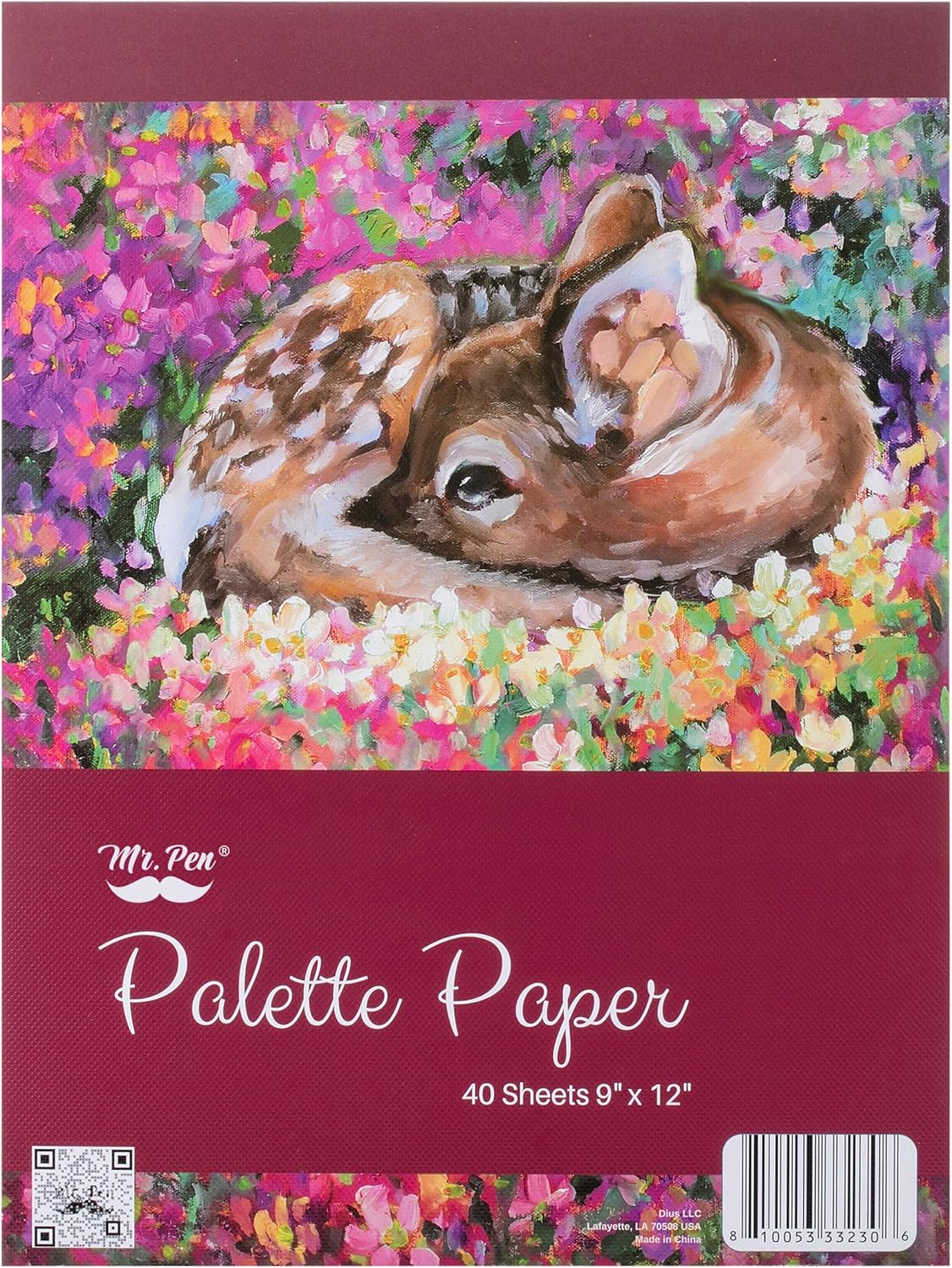
Not every paper is for painting on. Palette paper is for mixing, and Mr. Pen’s 40-sheet pad is poly-coated so paint does not seep through. Tear off the used sheet and throw it away when you are done, which saves cleanup time with fast-drying acrylic.
The listing says it works with acrylic, oil, watercolor, gouache and casein, with brushes, spatulas or knives, and that sheets are thick enough not to tear.
Best suited for: Painters who want quick cleanup and a fresh mixing surface every session.
Key features:
- 40 sheets, 9 x 12
- Poly-coated, no seep-through
- Adhesive-bound for easy removal
- For acrylic, oil, watercolor, gouache
Pros:
- No palette cleaning
- Smooth mixing surface
- Low price
Cons and limitations:
- Ongoing cost
- Paint dries fast on paper palettes
- Single-use
Buying consideration: Lay palette paper over a damp paper towel in a lidded tray for a quick wet palette.
Buying Guide: How to Choose Paper for Acrylic Paint
Weight first
For finished paintings, choose 246 lb (about 400 gsm). For practice, 200 gsm canvas paper is fine. Lighter papers suit sketches and markers.
Texture changes the look
Canvas texture adds tooth and character. Linen is finer and more refined. Smooth surfaces suit detail and paint markers.
Archival or practice
Acid-free paper resists yellowing for work you keep. Practice papers do not need to be archival.
Binding and size
Glue-bound pads keep sheets flat; spiral pads make removal easy; perforated sheets tear cleanly. Choose a size that fits your workspace.
Coating and sizing
Sized or coated papers keep paint on the surface for brighter color. Uncoated papers absorb more and can dull color.
Do not forget palette paper
Disposable palette paper makes mixing and cleanup easier for acrylic.
How to Stop Acrylic Paper From Curling
- Tape all four edges to a rigid board with painter’s tape or artist tape before painting.
- Use less water in your paint; thicker paint introduces less moisture.
- Paint a thin coat on the back of the sheet too if you are working loose.
- Let the painting dry flat, still taped.
- If it curls, place it face down under heavy books between sheets of clean paper overnight.
Turning Other Papers Into Acrylic Paper
If you have heavy mixed-media or watercolor paper on hand, you can prepare it for acrylic with a thin coat of gesso. Brush it on in one direction, let it dry, then add a second coat at a right angle for a subtle crosshatch texture. Gesso seals the fibers so paint sits on top, increases brightness and adds tooth. It also adds some stiffness, which helps lighter papers resist curling. Tape the sheet down first and let each coat dry flat. This trick is also useful for painting on sketchbook pages or mat board offcuts when you want to experiment without buying a dedicated pad. Tinted gesso goes a step further, giving you a toned ground in the same coat.
Paper or Canvas?
Paper is cheaper, flatter and easier to store, which makes it ideal for studies, practice and series of small works. It needs framing behind glass or acrylic glazing to display. Canvas and canvas board are sturdier and can hang unframed. Many artists practice on paper and finish important pieces on canvas; see using acrylic paint on canvas board for that next step.
Paper is also the best surface for marker work; learn how in using acrylic paint markers on paper, and for kid-friendly projects, try painted paper crafts.
Common Mistakes to Avoid
- Using thin drawing paper: it buckles and tears under acrylic.
- Painting very watery layers on light paper: excess water causes curl.
- Skipping tape: unsecured sheets warp as they dry.
- Ignoring acid-free labels for keepsakes: non-archival paper can yellow.
- Framing without glazing: paper paintings need protection from dust and handling.
- Mixing on your painting paper: use palette paper or a palette instead.
FAQs
What is the best paper weight for acrylic paint?
For finished work, 246 lb (about 400 gsm) is ideal. For practice, around 200 gsm canvas paper works if you keep layers moderate.
Can I use watercolor paper for acrylic?
Yes. Heavy watercolor paper, especially 140 lb or heavier, takes acrylic well. Its texture differs from canvas paper.
Is canvas paper as good as canvas?
Canvas paper mimics canvas texture and is great for practice and studies. It is less durable and needs framing behind glass for display.
How do I keep acrylic paper flat?
Tape it to a rigid board on all sides, use thicker paint and let it dry flat. Press curled paintings under books overnight.
Does acrylic paper need gesso?
Purpose-made acrylic and canvas papers do not need gesso. Applying gesso can add tooth or a smoother surface if you prefer.
What is palette paper used for?
Palette paper is a coated paper for mixing paint. You tear off and discard each sheet after use, saving cleanup time.
Final Recommendation
For finished acrylic paintings on paper, the Strathmore 400 Series acrylic pad is the top pick. U.S. Art Supply offers the best value in heavyweight sheets, and wingpaper’s top-spiral pad suits students and classes. Use Prudiut canvas paper for daily practice, Hapikalor for light sketches and travel, Colorations sized paper for kids, and keep Mr. Pen palette paper on hand for fast, mess-free mixing.




