PaintingProGuide is reader-supported. When you buy through links on this page we may earn an affiliate commission at no extra cost to you.
Ordinary drawing paper buckles, pills and lets moisture soak through the moment wet acrylic touches it. Paper made for acrylic avoids that through three things: weight (heavier sheets stay flat), sizing or coating (so paint sits on the surface rather than sinking in), and texture (a canvas or linen tooth that grips brushstrokes). The best paper for acrylic painting balances those with how you plan to work: practice studies, finished pieces you will frame, or a sketchbook that mixes acrylic with pencil and ink.
This guide compares six acrylic-friendly papers on Amazon, from a heavy 246 lb linen-textured pad to budget canvas paper and a mixed media sketchbook, plus a disposable palette pad that makes cleanup easier. It also explains paper weights, when to choose acrylic paper versus watercolor paper, and how to stop sheets from warping.
Quick answer: For finished acrylic paintings on paper, the Strathmore 400 Series Acrylic Pad is the best choice: 246 lb sheets with a textured linen surface designed for paint adhesion and layering. For practice and student work in larger sheets, the Canson XL Oil & Acrylic pad offers 24 sheets of 136 lb (290 gsm) canvas-textured paper at 11 x 14 inches that needs no priming. On a budget, the Prudiut 200 gsm canvas paper pad gives you 25 glue-bound 9 x 12 sheets.
Our Top Picks at a Glance
- Strathmore 400 Series Acrylic Pad, 246 lb Linen — Best overall for finished work
- Canson XL Oil & Acrylic Pad, 11 x 14 — Best value for students and practice
- wingpaper 400 gsm Acrylic Paper Pad, 8.5 x 11 — Best heavy spiral pad
- Prudiut 200 gsm Canvas Paper Pad, 9 x 12 — Best budget canvas paper
- Hapikalor 115 lb Canvas Paper, 9 x 12 — Best lightweight canvas texture for quick studies
- Hapikalor Mixed Media Sketchbook, 160 gsm — Best sketchbook for acrylic plus drawing
- Mr. Pen Disposable Palette Paper, 40 Sheets — Best palette accessory
| Product | Best For | Key Spec | Key Strength | Price Tier |
|---|---|---|---|---|
| Strathmore 400 Acrylic | Finished paintings | 246 lb; linen texture; 10 sheets | Heaviest, most rigid sheet | $ |
| Canson XL Oil & Acrylic | Practice at larger size | 136 lb (290 gsm); 11×14; 24 sheets | Canvas feel both sides | $$ |
| wingpaper 400 gsm | Layered work, mixed media | 400 gsm (246 lb); 8.5×11; spiral | Perforated, lies flat | $ |
| Prudiut Canvas Paper | Budget practice | 200 gsm; 9×12; 25 sheets | Glue-bound, tears off cleanly | $ |
| Hapikalor Canvas Paper | Quick studies | 115 lb (187 gsm); 9×12; 20 sheets | Acid-free, low cost | $ |
| Hapikalor Sketchbook | Acrylic sketching plus pencil | 98 lb (160 gsm); 30 sheets; spiral | Heavily sized, multi-media | $ |
| Mr. Pen Palette Pad | Mixing paint | 9×12; 40 poly-coated sheets | Tear off and toss | $ |
How We Chose
We selected these papers from Amazon listing details and specifications checked in October 2026, judging weight, surface texture, binding and stated acrylic suitability, and considering how widely each is reviewed by Amazon buyers. We have not painted on these papers ourselves. Paper weight conversions and handling advice reflect standard art paper practice.
- Weight — heavier sheets resist buckling under wet paint.
- Surface — canvas or linen texture for brush grip; smoother for detail and mixed media.
- Acrylic readiness — no priming needed and bleed-proof claims.
- Binding — glue, tape or spiral, and whether sheets lie flat.
- Archival quality — acid-free paper for work you keep.
Paper Weight Explained
Paper weight is listed in pounds (lb), based on a ream of a standard sheet size, or in grams per square meter (gsm). Because the pound basis differs between paper types, gsm is the more reliable comparison.
| Weight | Feel | Acrylic suitability |
|---|---|---|
| Around 160 gsm (98 lb) | Heavy sketchbook | Thin acrylic layers; some buckling with heavy paint |
| 187–200 gsm (115–135 lb) | Light canvas paper | Practice and studies; tape down for flatness |
| Around 290 gsm (136 lb) | Firm | Good for most acrylic work |
| 400 gsm (246 lb) | Very stiff, card-like | Heavy layers, palette knife, finished pieces |
Acrylic Paper vs Watercolor Paper
Acrylic paper is coated or sized so paint stays on top, often with canvas texture. Watercolor paper is designed to absorb water and is usually internally and externally sized; heavy watercolor paper (300 gsm and up) takes acrylic well, especially thin washes and glazes. Our full comparison of acrylic paper vs watercolor paper goes deeper, and we also answer whether you can use acrylic paint on watercolor paper.
Best Paper for Acrylic Painting Reviewed
1. Strathmore 400 Series Acrylic Pad, 246 lb Linen — Best for finished acrylic paintings

Strathmore’s 400 Series acrylic pad uses a heavy 246 lb sheet with a textured linen surface that, according to the listing, assures maximum adherence and layering of paint. At that weight the sheet behaves more like a thin board than paper, so it stays flat under thick layers and palette knife work.
The pad is glue-bound with 10 sheets at 9 x 12 inches, and the listing notes it is manufactured in France. Linen texture is finer and more irregular than typical canvas-texture papers, which many painters prefer for a natural look.
Ten sheets is a small pad, so save it for paintings you intend to finish and frame.
Best suited for: Painters creating finished acrylic work on paper for framing or sale.
Key features:
- 246 lb heavyweight sheets
- Textured linen surface
- 9 x 12 in, 10 sheets, glue-bound
- Made in France
Pros:
- Very rigid; minimal buckling
- Linen tooth holds paint layers
- Trusted student-to-professional brand
Cons and limitations:
- Only 10 sheets
- Higher cost per sheet
- Texture shows in very detailed work
Buying consideration: Use it for final pieces and do studies on a cheaper canvas paper.
2. Canson XL Oil & Acrylic Pad, 11 x 14 in — Best for student work and practice
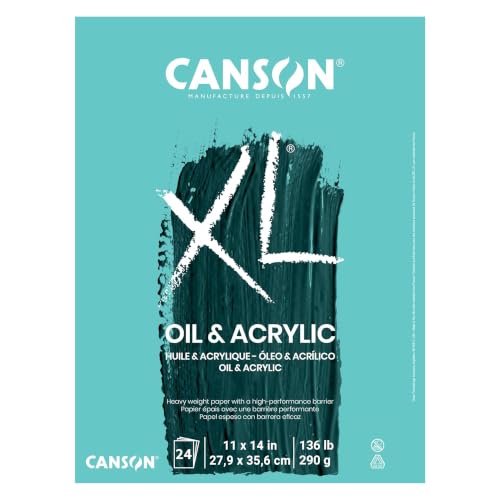
Canson’s XL Oil and Acrylic pad is a popular student choice: 24 sheets of 136 lb (290 gsm) paper, tape-bound, at 11 x 14 inches. The listing describes a medium, canvas-like texture on both sides that is ready for acrylic or oil without priming, and acid-free, bleed-proof paper.
Being able to use both sides doubles the practice value, and 11 x 14 inches gives more room than the many 9 x 12 pads.
It is affordable and sturdy for daily practice.
Best suited for: Students, classes and regular practice painters.
Key features:
- 136 lb (290 gsm)
- Canvas-like texture on both sides
- 11 x 14 in, 24 sheets, tape-bound
- Acid-free, bleed-proof; no priming
Pros:
- Larger sheets
- Two usable sides
- Good weight for the tier
Cons and limitations:
- Not as rigid as 246 lb paper
- Tape binding means sheets do not lie as flat as spiral
- Texture may be uniform-looking
Buying consideration: Tape the sheet to a board on all four sides while painting; it dries flatter.
3. wingpaper 400 gsm Acrylic Paper Pad, 8.5 x 11 in — Best for heavy layered work

wingpaper’s pad uses 400 gsm (246 lb) paper, the same weight class as the Strathmore, in 25 sheets at 8.5 x 11 inches. The listing says it resists moisture and paint bleed-through and is compatible with acrylic, pencil, marker and ink.
Top spiral binding lets the pad lie fully flat and works for left- and right-handed painters, and micro-perforated sheets tear out cleanly for display or classroom submission.
It gives you more heavyweight sheets for the money than the Strathmore pad, though at a slightly smaller size.
Best suited for: Painters who want heavy paper in a convenient spiral pad, including mixed media users.
Key features:
- 400 gsm (246 lb)
- 8.5 x 11 in, 25 sheets
- Top spiral binding; micro-perforated
- Acrylic, pencil, marker and ink
Pros:
- Heavy and stiff
- Lies flat
- Clean tear-out
Cons and limitations:
- Letter size, not standard art sizes
- Surface texture not specified
- Mid tier
Buying consideration: Letter size fits standard frames and scanners, which is handy if you digitize your paintings.
4. Prudiut Canvas Paper Pad, 200 gsm, 9 x 12 in — Best for budget canvas paper

Prudiut’s pad gives you 25 sheets of 200 gsm canvas-textured paper at 9 x 12 inches. The listing describes a surface that holds acrylic and oil, and single-sided glue binding that keeps sheets flat and allows clean removal.
Canvas paper at this weight is ideal for color studies, technique drills and class exercises where you want the feel of canvas without the cost.
It is one of the lowest-cost options here.
Best suited for: Students and hobbyists practicing on canvas texture.
Key features:
- 200 gsm canvas-textured paper
- 9 x 12 in, 25 sheets
- Glue-bound, tear-off sheets
- For acrylic and oil
Pros:
- Low cost per sheet
- Canvas feel
- Clean removal
Cons and limitations:
- Lighter than 290–400 gsm papers
- May cockle with heavy water
- Less known brand
Buying consideration: Avoid diluting acrylic heavily on lighter canvas paper; thin with medium instead to limit warping.
5. Hapikalor Canvas Paper, 115 lb, 9 x 12 in — Best for quick studies

Hapikalor offers 20 sheets of 115 lb (187 gsm) canvas paper that mimics real canvas texture, designed for student practice with acrylics according to the listing. The paper is acid-free.
It is the lightest canvas paper here, best for quick studies, thumbnails and warm-ups rather than heavy, wet layers.
The pad is lightweight and portable.
Best suited for: Beginners and anyone doing fast acrylic sketches.
Key features:
- 115 lb (187 gsm)
- Canvas texture
- 9 x 12 in, 20 sheets
- Acid-free
Pros:
- Very low tier
- Portable
- Real canvas feel for practice
Cons and limitations:
- Lightest sheet here
- More prone to buckling
- Not for heavy impasto
Buying consideration: Use thicker paint with little water on lightweight canvas paper.
6. Hapikalor Mixed Media Sketchbook, 160 gsm — Best for acrylic sketching alongside drawing
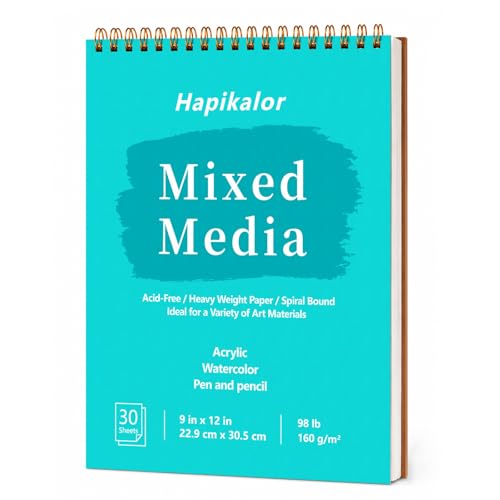
For a sketchbook that handles acrylic as well as pencil, pen and ink, Hapikalor’s mixed media sketchbook offers 30 sheets of 98 lb (160 gsm) paper with a lightly textured, heavily sized surface. The listing names acrylic, light watercolor washes, pen and ink among suitable media.
Spiral binding and micro-perforated pages make it practical for daily sketching and for kids.
Keep acrylic layers thin in a 160 gsm book to limit warping.
Best suited for: Sketchbook artists combining acrylic with drawing media.
Key features:
- 98 lb (160 gsm)
- 30 sheets, 9 x 12 in
- Heavily sized, lightly textured
- Spiral bound; micro-perforated
Pros:
- Works with many media
- Low tier
- Erases and blends cleanly
Cons and limitations:
- Lighter weight for acrylic
- Not for heavy layers
- Pages may stick if closed wet
Buying consideration: Let acrylic pages dry completely before closing the book, or place wax paper between them.
7. Mr. Pen Disposable Palette Paper, 9 x 12 in, 40 Sheets — Best for mixing paint without cleanup

This is not a painting surface but a palette: 40 poly-coated, glossy sheets held by adhesive that you tear off and throw away after mixing. The listing says paint does not seep through and that it suits acrylic, oil, watercolor and gouache.
Acrylic dries quickly on palettes and is hard to scrub off, so disposable sheets save time.
It is the lowest-cost item in this guide.
Best suited for: Any acrylic painter who wants faster cleanup.
Key features:
- 40 sheets, 9 x 12 in
- Poly-coated, glossy
- Tear-off adhesive pad
- Acrylic, oil, watercolor, gouache
Pros:
- No palette scrubbing
- Lowest tier
- Smooth mixing surface
Cons and limitations:
- Single-use paper
- Not airtight; paint still dries
- Can curl if very wet
Buying consideration: Mist your mixed acrylic piles lightly to keep them workable on the open palette sheet.
How to Stop Acrylic Paper From Warping
- Choose heavier paper for wet techniques.
- Tape all four edges to a rigid board with artist tape before painting.
- Thin with medium, not lots of water. Water causes most buckling.
- Prime lighter papers with a thin coat of gesso on both sides if you will paint heavily.
- Dry flat. Leave the painting taped until fully dry.
- Flatten if needed. Place a dry painting face-down between clean sheets under heavy books overnight.
Buying Guide: How to Choose Paper for Acrylic Painting
Weight first
For most acrylic work, aim for around 290 gsm or more. Lighter papers are fine for studies with thicker paint.
Texture
Canvas and linen textures grip brushstrokes and mimic canvas. Smoother sized papers suit detailed work and mixed media.
Binding
Spiral pads lie flat; glue-bound pads give clean edges; tape-bound pads are economical.
Size
9 x 12 is common and fits many frames; 11 x 14 gives more room for practice.
Archival quality
Acid-free paper resists yellowing for work you plan to keep or sell.
Finished work or practice
Save premium heavyweight paper for finished pieces and practice on budget canvas paper.
Learn More About Acrylic on Paper
Start with our guide on how to use acrylic paper. For layered techniques, see how to do an underpainting in acrylic, and if you are deciding between paper and board, read whether you can use acrylic paint on canvas board.
Common Mistakes to Avoid
- Using printer or sketch paper. It buckles and pills.
- Diluting with lots of water. Use medium to thin paint.
- Painting untaped lightweight paper. It curls as it dries.
- Closing sketchbooks while wet. Pages stick.
- Framing without glass or varnish. Varnish or glaze to protect the surface.
- Assuming lb weights compare across brands. Compare gsm.
FAQs
What weight paper is best for acrylic painting?
Around 290 gsm (136 lb) or heavier is a good general choice. Heavier 400 gsm (246 lb) paper suits thick layers and finished pieces.
Can I use watercolor paper for acrylic painting?
Yes. Heavy watercolor paper takes acrylic well, especially thin layers and glazes. It is more absorbent than coated acrylic paper.
Do I need to prime acrylic paper?
Usually not. Papers like Canson XL Oil & Acrylic are ready without priming. Lighter papers benefit from a coat of gesso if you paint heavily.
What is the difference between canvas paper and acrylic paper?
Canvas paper is embossed to imitate canvas texture. Acrylic paper is sized or coated for acrylic and may be textured or smooth. Many products are both.
How do I frame an acrylic painting on paper?
Varnish it or frame it behind glass with a mat so the paint surface does not touch the glass. Use acid-free mats and backing.
Why does my acrylic paper curl?
Water causes paper fibers to expand. Tape the sheet down, use less water and choose heavier paper to prevent curling.
Final Recommendation
For finished acrylic paintings on paper, the Strathmore 400 Series 246 lb pad is the best surface, with the wingpaper 400 gsm pad as a heavyweight spiral alternative. Students get the most value from Canson XL Oil & Acrylic. For budget practice, choose Prudiut or Hapikalor canvas paper, keep a Hapikalor mixed media sketchbook for everyday sketching, and add a Mr. Pen palette pad for quick cleanup.