PaintingProGuide is reader-supported. When you buy through links on this page we may earn an affiliate commission at no extra cost to you.
Plastic palettes are the default for most painters for good reasons: they are light, cheap, nearly unbreakable and easy to rinse. Whether you need a large welled tray for watercolor, a clear sheet for acrylic mixing or forty identical trays for a classroom, plastic is usually the most practical material.
They do have trade-offs. Plastic can stain with strong pigments, scratch under metal palette knives, and wet paint beads on some surfaces more than on ceramic or glass. Dried acrylic usually peels off, but harsh solvents can cloud or soften some plastics.
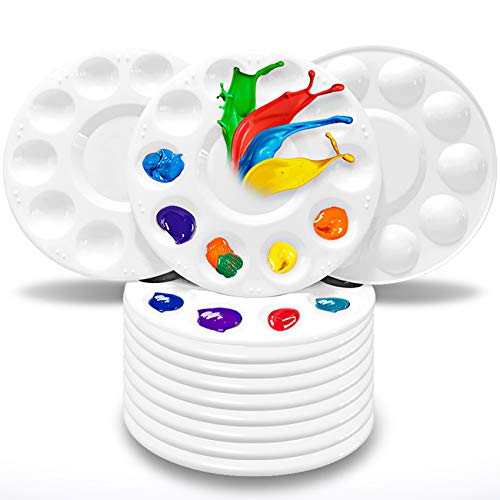
Plastic palettes for painters come in three main forms: welled studio trays, flat clear acrylic sheets with thumb holes, and small round or oval trays sold in multi-packs.
Knowing those limits makes it easy to get the best from plastic and to recognize when another material would serve you better.
We compared six options available on Amazon using each listing’s dimensions, well layout and pack size, then added practical advice on breaking in, cleaning and storing plastic palettes.
Quick answer: For studio painting, the DUGATO 20-Well Plastic Palette 2-Pack offers the most mixing space: two 10 x 13 inch trays with 20 wells each. For flat mixing of acrylic and gouache, the Tamaki Clear Acrylic Palette 2-Pack gives thumb-hole palettes in rectangle and oval. For classrooms, the 40-Piece Round Paint Tray Pack gives every student a tray.
Pros and Cons of Plastic Palettes
Pros: light weight, low cost, shatterproof, easy to carry, easy to stack and store, simple to rinse, and dried acrylic often peels off.
Cons: staining from phthalo, quinacridone and other strong pigments; scratches from metal knives; paint can bead on smooth plastic until the surface is broken in; some solvents can damage cheaper plastics.
For most watercolor, gouache and acrylic painters, the pros clearly win. Oil painters often prefer glass, wood or a dedicated non-porous acrylic sheet.
Welled Trays vs. Flat Sheets
Welled trays keep fluid paints separate and give dedicated mixing wells, ideal for watercolor and gouache.
Flat clear sheets let you mix heavier paint with a knife and place white or toned paper underneath to judge color.
Small round trays are best for limited palettes, kids and group sessions. They also make handy side trays next to a main palette for glazes, metallics or a single color you want to keep pure.
Our Top Picks at a Glance
- DUGATO 20-Well Plastic Paint Palette (2-Pack) — Best plastic studio palette
- Tamaki Clear Acrylic Palette (2-Pack) — Best flat plastic palette
- Hulameda 4-Pack Oval Paint Trays with Thumb Hole — Best hand-held welled palette
- LNAUJS 15-Pack Round Plastic Palettes — Best mid-size multi-pack
- Hulameda 12-Piece Plastic Paint Trays — Best for families and small groups
- HYL.LL&RQ 40-Piece Round Paint Trays — Best for classrooms and events
| Product | Best For | Key Spec | Key Strength | Price Tier |
|---|---|---|---|---|
| DUGATO 20-Well Plastic Paint Palette (2-Pack) | plastic studio palette | Two 10 x 13 in trays, 20 wells each | Large mixing area and a spare tray | $ |
| Tamaki Clear Acrylic Palette (2-Pack) | flat plastic palette | Rectangle and oval, each 11.8 x 7.9 in, thumb hole | Clear sheet for knife mixing | $ |
| Hulameda 4-Pack Oval Paint Trays with Thumb Hole | hand-held welled palette | Four 9 x 6.6 in trays, 9 wells + oval center | Thumb hole plus wells | $ |
| LNAUJS 15-Pack Round Plastic Palettes | mid-size multi-pack | 15 trays, 6.69 in, 3.07 in center well | Large central mixing well | $ |
| Hulameda 12-Piece Plastic Paint Trays | families and small groups | 12 trays, 6.7 x 6.7 in | Durable, stackable | $ |
| HYL.LL&RQ 40-Piece Round Paint Trays | classrooms and events | 40 trays, 6.6 x 6.6 in, 10 wells + center | Largest quantity | $$ |
We left out a 22-piece round tray pack that duplicates the 40-piece option at a smaller count.
How We Chose
We did not paint on these palettes. Picks are based on the Amazon listing details and specifications checked in October 2026, how well each plastic palette’s size, wells and pack quantity suit painters and groups, and how widely each product is reviewed by Amazon buyers.
- Format: welled tray, flat sheet or small tray
- Mixing area and well count
- Hand-held options
- Pack size for solo or group use
- Plastic quality and cleanup
- Value
Best Plastic Palettes for Painters Reviewed
1. DUGATO 20-Well Plastic Paint Palette (2-Pack) — Best plastic studio palette

Two large 10 x 13 inch trays with 20 wells each give plenty of room for a full set of colors and mixes. The listing describes sturdy, non-toxic white plastic that is light enough to hold, with a smooth non-stick surface for mixing and easy cleanup.
Two trays let you separate media or keep one tray of dried watercolor ready while mixing on the other.
Best suited for: Watercolor, gouache and fluid acrylic painters.
Key features:
- Two 10 x 13 inch trays
- 20 wells each
- Non-toxic white plastic
- Lightweight
Pros:
- Lots of wells and space
- Spare tray
- White surface for accurate color
Cons / limitations:
- Not for thick knife mixing
- Stains with strong pigments
- Large footprint
Buying consideration: Break in new plastic wells by rubbing with a little toothpaste or mild abrasive, which reduces paint beading.
2. Tamaki Clear Acrylic Palette (2-Pack) — Best flat plastic palette

These two clear acrylic palettes, one rectangular and one oval, measure 11.8 x 7.9 inches with a thumb hole for holding. Peel the protective film off both sides before use.
Clear sheets suit acrylic and gouache mixed with a knife or brush, and you can slide paper of any tone underneath to match your ground.
Best suited for: Acrylic and gouache painters, and easel painters who hold their palette.
Key features:
- Two palettes: rectangle and oval
- 11.8 x 7.9 inches each
- Thumb holes
- Clear acrylic
Pros:
- Flat mixing space
- Choose your background tone
- Cheap pair
Cons / limitations:
- No wells
- Scratches with metal knives
- Not for runny watercolor
Buying consideration: Use a plastic palette knife to keep the surface clear.
3. Hulameda 4-Pack Oval Paint Trays with Thumb Hole — Best hand-held welled palette

These oval trays combine a thumb hole with nine wells and a large oval central well, so you can hold the palette and still keep colors separate. Each is 9 x 6.6 inches.
Four in a pack suits a family or small class.
Best suited for: Kids, students and painters who want a hand-held welled palette.
Key features:
- Four plastic trays
- 9 wells plus oval center well
- Thumb hole
- 9 x 6.6 inches
Pros:
- Hand-held with wells
- Light
- Low price
Cons / limitations:
- Smaller mixing area
- Basic plastic
- Shallow wells
Buying consideration: Good for plein air sketching with gouache or acrylic.
4. LNAUJS 15-Pack Round Plastic Palettes — Best mid-size multi-pack

Each round tray is 6.69 inches across with a central mixing area 3.07 inches wide and about 0.34 inches deep, surrounded by wells. Fifteen trays suits classes and workshops.
They stack and carry easily.
Best suited for: Classes, homeschool groups and workshops.
Key features:
- 15 round trays
- 6.69-inch diameter
- 3.07-inch central well
- Stackable
Pros:
- Roomy center
- Good group size
- Precise dimensions listed
Cons / limitations:
- Small trays
- Shallow center
- Basic plastic
Buying consideration: Use the center for a base color shared across several paintings.
5. Hulameda 12-Piece Plastic Paint Trays — Best for families and small groups

Twelve sturdy plastic trays, each 6.7 inches square, described as break-proof with a smooth surface that washes off quickly. They stack for storage.
A dozen is the right size for family painting nights and small clubs.
Best suited for: Families, clubs and small classes.
Key features:
- 12 trays
- 6.7 x 6.7 inches
- Break-resistant plastic
- Stackable
Pros:
- Durable for a cheap tray
- Easy to clean
- Good quantity
Cons / limitations:
- Small mixing area
- Stains over time
- Not a studio palette
Buying consideration: Assign a tray per person to keep colors clean.
6. HYL.LL&RQ 40-Piece Round Paint Trays — Best for classrooms and events

Forty round trays with 10 wells and a central reservoir, each 6.6 inches across. The listing describes molded plastic that is sturdy, non-toxic and easy to clean, with deep wells to keep colors separate.
For schools, camps and paint parties, this many trays means every participant has one and spares remain.
Best suited for: Teachers, camps and large events.
Key features:
- 40 trays
- 6.6 x 6.6 inches
- 10 wells plus central reservoir
- Stackable molded plastic
Pros:
- Huge quantity
- Deep wells
- Low cost per tray
Cons / limitations:
- Far more than a solo painter needs
- Small trays
- Storage space
Buying consideration: Pre-fill trays with the same colors before an event to speed things up.
What Separates a Good Plastic Palette From a Cheap One
Thickness is the first clue. Thin, flexible trays bend when you lift them full of paint, which spills wells into each other. Thicker molded trays stay rigid.
Well depth matters next. Wells around a third of an inch deep or more hold fluid paint without overflow; very shallow wells let watercolor creep across.
Look at the edges and rims. Smooth, rounded edges are comfortable to hold and do not crack. Sharp molding seams can cut fingers and chip over time.
Finally, consider color. Bright white plastic gives the most accurate read of color; off-white or tinted plastic shifts your mixes slightly.
Stopping Paint From Beading on Plastic
New plastic palettes are slick, so watercolor can bead up instead of spreading. Rub the wells with a little non-gel toothpaste or a mild abrasive cleaner and rinse well.
Over time, a palette breaks in naturally; light staining is a sign it is working well and that paint now grips the surface instead of beading.
Wiping the surface with a drop of dish soap before painting also helps water spread.
Cleaning Plastic Palettes
Watercolor and gouache rinse off under the tap or can be left to dry and rewetted later.
For acrylic, let it dry and peel it off, or soak the palette in warm soapy water to soften paint. Avoid sharp metal tools that scratch.
Strong pigment stains are cosmetic; a little rubbing alcohol or a mild cleaner can lighten them.
Avoid harsh solvents on cheap plastic; they can cloud or soften it.
Plastic Palettes by Medium
Watercolor. Welled plastic trays are ideal. Squeeze tube colors into the outer wells and let them dry; they rewet each session. Keep the large central areas for mixing washes.
Gouache. Welled trays work well, especially deep ones. Cover them with plastic wrap or a lid to slow drying between sessions.
Acrylic. Flat clear sheets suit knife mixing; small round trays suit limited palettes. Mist paint often, and peel off dried acrylic later.
Oil. Clear acrylic sheets can work if you avoid strong solvents on the surface. Many oil painters prefer glass or wood.
Kids’ tempera and washable paint. Round multi-pack trays are perfect: cheap, stackable and dishwasher-friendly in many cases.
Setting Up a Plastic Palette
Arrange colors in the same order every time, warm to cool, with white in its own large well. Keep mixing wells next to the colors they usually combine with.
Label the edge of the palette with a marker so you remember which dried cake is which.
Leave at least as many empty wells as filled ones for mixing.
Storing Plastic Palettes
Stack trays only once dry, or put a paper towel between them. Keep palettes flat and out of direct sun, which can warp thin plastic.
For watercolor trays, a closed box or a lid keeps dust out of the dried paint.
Running Group Sessions With Plastic Trays
Fill every tray with the same colors before people arrive, using small dabs. Give each person a tray and a water cup.
At the end, collect trays into a tub of warm soapy water to soak while you tidy, then rinse them all together. Washable paints come off quickly; acrylic peels once dry.
When to Choose Another Material
If staining bothers you or you paint watercolor seriously, porcelain or ceramic palettes resist staining and let paint spread evenly.
For oil painting with solvents, glass or wood palettes are safer and easier to scrape.
For acrylic you want to keep wet for hours, a wet palette is the better choice.
Buying Guide: How to Choose a Plastic Palette
Format
Welled trays for fluid paints, flat sheets for thicker paint, small trays for groups.
Many painters own one of each.
Size
10 x 13 inch trays suit studio work; 6 to 7 inch trays suit small sessions and kids.
Larger palettes reduce muddy mixes.
Wells
Count your colors and double it for wells.
Mixed well sizes help separate storage and mixing.
Holding
Thumb holes help at an easel or outdoors.
Table palettes can be larger.
Plastic quality
Thicker plastic resists flexing and cracking.
Clear acrylic sheets are smoother than molded trays.
Quantity
Solo painters need one or two. Groups benefit from packs of 12 to 40.
Spare trays are useful for glazes and side mixes.
Plastic Palette Care
Dried acrylic stuck on? Follow our guide to removing dried paint from a plastic palette.
For general cleaning, see how to clean a painting palette, and if acrylic dries too fast on plastic, try a wet palette.
Common Mistakes to Avoid
- Using solvents that cloud cheap plastic
- Scraping plastic with metal blades
- Mixing runny watercolor on a flat sheet
- Buying tiny trays for a full studio palette
- Letting acrylic cure in wells without a plan to remove it
- Expecting plastic to resist staining like ceramic
FAQs
Are plastic palettes good for watercolor?
Yes. Welled plastic trays are the most common watercolor palettes. Break them in to reduce beading.
Do plastic palettes work for oil paint?
They can, but solvents may damage cheap plastic. Glass, wood or a quality acrylic sheet is safer.
How do I get dried acrylic off a plastic palette?
Peel it off once fully dry, or soak in warm soapy water. Avoid sharp tools.
Why does watercolor bead on my plastic palette?
New plastic is slick. Rub with a little toothpaste or mild abrasive to break in the surface.
Will staining affect my colors?
Light staining is cosmetic and rarely affects mixes once the palette is clean.
Is plastic or ceramic better?
Ceramic resists staining and is heavier; plastic is lighter, cheaper and unbreakable.
Final Recommendation
For studio painters, the DUGATO 20-well 2-pack is the best plastic palette here. The Tamaki clear 2-pack is the pick for flat acrylic and gouache mixing, and Hulameda’s oval thumb-hole trays suit hand-held work.
For groups, choose by size: Hulameda 12-piece for families, LNAUJS 15-pack for classes and the 40-piece set for schools and events.
Because plastic palettes are so inexpensive, it is worth owning more than one: a large welled tray for studio work, a flat sheet for knife mixing and a few small trays for glazes, side mixes and visitors.