PaintingProGuide is reader-supported. When you buy through links on this page we may earn an affiliate commission at no extra cost to you.
Wooden palettes for painters have been the standard in oil studios for centuries, and for good reason. A seasoned wood surface is warm in tone, which helps you judge color for paintings on toned grounds, it is light enough to hold for hours, and it cleans up with a rag and a little oil.
Today’s options range from large 12 by 16 inch ovals for easel work to 25-packs for paint parties. Most arrive unfinished, so the real difference between a palette that lasts decades and one that stains in a week is how you prepare it. We cover both the picks and the seasoning method.
Quick answer: For oil painting at an easel, the PATIKIL 12 x 16 in palettes give the most mixing room. The Mr. Pen two-pack is the best value full-size pair, and the LOYORTY 25-pack is the practical choice for classes and paint parties.
Our Top Picks at a Glance
- PATIKIL 12 x 16 in Wooden Oval Palettes (2 pc) — Best for oil painters who need a large hand-held palette
- Mr. Pen Wooden Paint Palettes (2 pc) — Best for the best value full-size pair
- Tamaki Wooden Paint Palette — Best for a single, inexpensive palette for acrylic or craft
- U.S. Art Supply Wood Palette with 6 Acrylic Paints — Best for a starter palette with paints and brushes
- LOYORTY Wood Palettes (25 pack, 8 x 12 in) — Best for classes, workshops and paint parties
- Cregugua Unfinished Wood Palettes (12 pack) — Best for crafts, decorating and smaller groups
| Product | Best For | Key Spec | Key Strength | Price Tier |
|---|---|---|---|---|
| PATIKIL 12 x 16 in Wooden Oval Palettes (2 pc) | Oil painters who need a large hand-held palette | 11.8 x 15.75 x 0.15 in | Largest mixing area here | $$ |
| Mr. Pen Wooden Paint Palettes (2 pc) | The best value full-size pair | 14 x 10 in; oval; large thumb hole | Large thumb hole, left or right hand | $ |
| Tamaki Wooden Paint Palette | A single, inexpensive palette for acrylic or craft | 13.7 x 9.3 in; thumb hole | Very low price tier | $ |
| U.S. Art Supply Wood Palette with 6 Acrylic Paints | A starter palette with paints and brushes | 9 x 12 in palette; 6 acrylic tubes; 3 brushes | Ready-to-paint kit | $ |
| LOYORTY Wood Palettes (25 pack, 8 x 12 in) | Classes, workshops and paint parties | 25 palettes; 8 x 12 in; thick sanded wood | Group quantity | $$ |
| Cregugua Unfinished Wood Palettes (12 pack) | Crafts, decorating and smaller groups | 12 palettes; 12 x 9 x 0.1 in; plywood | Unfinished surface to decorate or seal | $$ |
How We Chose
We compared Amazon listing details and specifications checked in October 2026, considering how well each palette’s size, shape, thumb hole and material fit hand-held painting, and how widely each product is reviewed by Amazon buyers. We noted where listing dimensions conflict and left out near-duplicate two-packs.
Our criteria:
- Size and mixing area
- Thumb hole size and handedness
- Wood type and thickness
- Finish: unfinished, sanded or polished
- Pack size relative to use
- Value for the price tier
How to Season a Wooden Palette
An unfinished wooden palette absorbs oil and pigment, which stains it and pulls oil out of your paint. Seasoning seals the grain so paint sits on top and wipes away. The traditional method uses linseed oil:
- Lightly sand the surface and edges with fine sandpaper, then wipe off the dust.
- Rub a thin coat of raw or refined linseed oil into the wood with a lint-free cloth.
- Wipe off all excess oil after 15 to 30 minutes.
- Let it dry for several days in a ventilated area until it is no longer tacky.
- Repeat for three or more thin coats, letting each dry fully.
The result is a warm, smooth surface that improves with use. Remember that rags soaked in linseed oil can self-heat as they dry; lay them flat outdoors or store them in a sealed metal container with water before disposal.
For acrylic, linseed oil is not the right seal. Use a clear acrylic finish or simply lay disposable palette paper or plastic wrap on top of the wood.
Best Wooden Palettes for Painters Reviewed
1. PATIKIL 12 x 16 in Wooden Oval Palettes (2 pc) — Best for oil painters who need a large hand-held palette
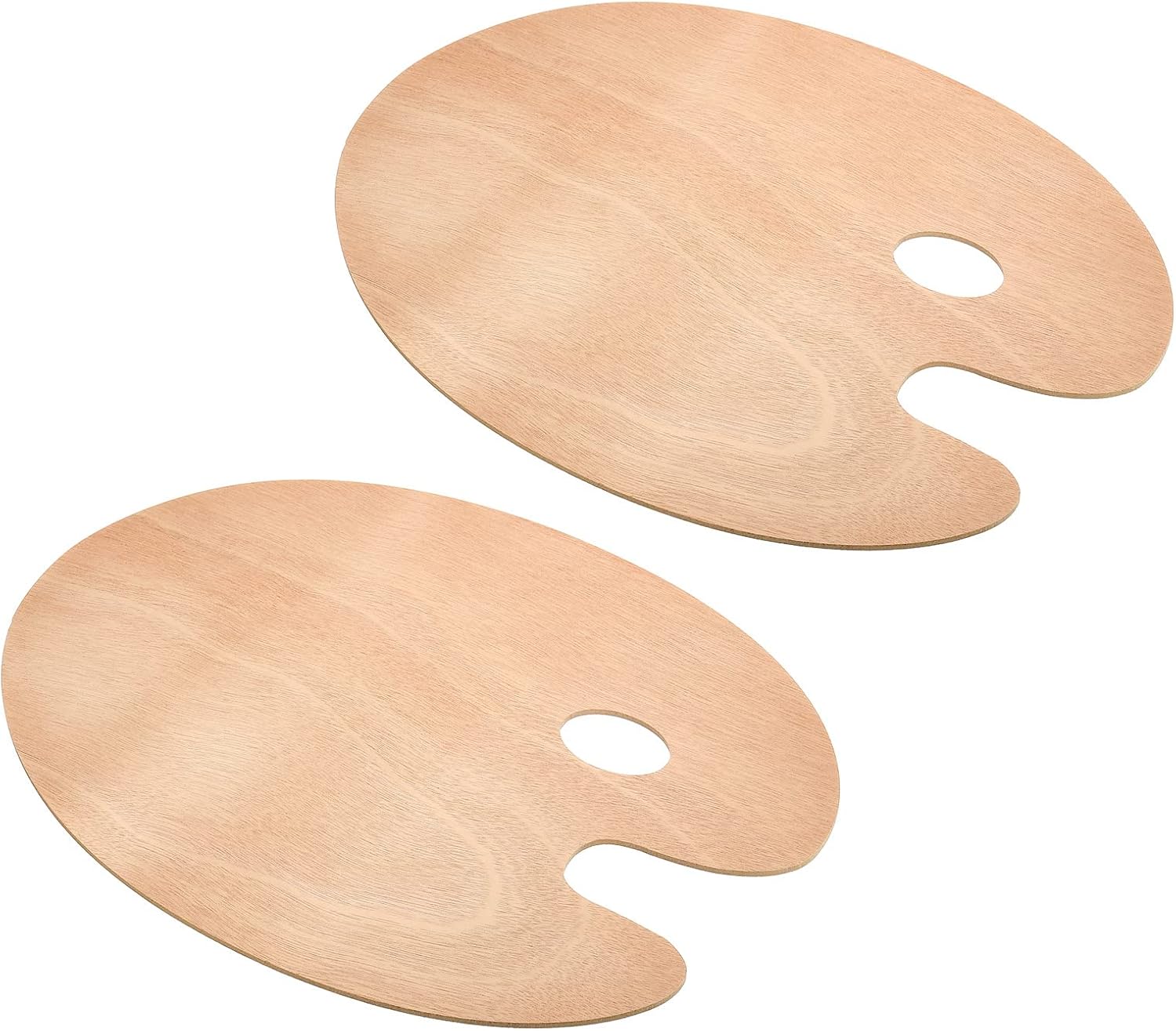
A hand-held palette for oil painting needs enough room to lay out a full set of colors along the edge and still mix in the middle. At roughly 12 by 16 inches, the PATIKIL palettes are the largest in this list. The listing describes sturdy, polished wood about 3.8 mm thick, and the pack includes two.
Two palettes are genuinely useful for oil painters. You can keep one with a fresh layout and one still carrying yesterday’s mixes, or reserve one for a limited earth palette and one for a full-color palette. The listing names watercolor, oil, gouache and craft use.
A larger palette is heavier to hold for long periods, so test whether you prefer to hold it or rest it on a side table. Many studio painters do both, holding it while working near the canvas and setting it down for longer mixing sessions.
Best suited for: Oil and acrylic painters working at an easel who want a generous mixing surface.
Key features:
- Two oval wooden palettes
- About 12 x 16 inches each
- Around 3.8 mm thick
- Polished smooth finish
Pros:
- Ample room for a full color layout
- Two palettes for rotating mixes
- Middle price tier for the pair
Cons and limitations:
- Heavier to hold for long sessions
- Unsealed wood needs seasoning for oil
- Thin board may flex slightly
Buying consideration: Season the surface with linseed oil before first use (see the section below), or acrylic and oil will soak into the grain and stain it.
2. Mr. Pen Wooden Paint Palettes (2 pc) — Best for the best value full-size pair

Mr. Pen’s two-pack hits a sweet spot: 14 by 10 inches is large enough for an oil or acrylic layout and still comfortable to hold. Each palette is oval with a large thumb hole and is described as suitable for left or right hand use.
The large thumb hole is a small detail that matters. A tight thumb hole tires the hand quickly; a generous one lets you shift grip during a long session. At this low price tier, the pair is an easy way to try a traditional hand-held palette.
Best suited for: Beginners and intermediate painters trying a traditional hand-held palette for oil or acrylic.
Key features:
- Two wooden palettes
- 14 x 10 inch oval shape
- Large thumb hole
- Left or right hand use
Pros:
- Comfortable size to hold
- Low price tier for two
- Ambidextrous
Cons and limitations:
- Unfinished surface needs preparation
- Few construction details in the listing
- Lighter wood may warp if soaked
Buying consideration: Never soak a wooden palette in water. Wipe it clean and let it dry flat to avoid warping.
3. Tamaki Wooden Paint Palette — Best for a single, inexpensive palette for acrylic or craft

Tamaki’s palette is a single, traditionally shaped wooden palette about 13.7 by 9.3 inches, with a thumb hole for right or left hand use. The listing describes a smooth surface and edges and positions it as easy to carry outdoors in a backpack or tote.
It suits acrylic sessions, craft painting and outdoor sketching where a palette may get knocked around. For acrylic, many painters use a sheet of tear-off palette paper or plastic wrap on top of wood to make cleanup easier.
Best suited for: Hobby painters, crafters and outdoor sketchers who want an affordable single palette.
Key features:
- One wooden palette
- About 13.7 x 9.3 inches
- Thumb hole for either hand
- Smooth surface and edges
Pros:
- Very low price tier
- Light and portable
- Comfortable size
Cons and limitations:
- Single palette only
- Listing dimensions conflict in places
- Acrylic can stain unsealed wood
Buying consideration: If you plan to use acrylic, seal the palette or use a disposable layer on top; dried acrylic is hard to remove from wood grain.
4. U.S. Art Supply Wood Palette with 6 Acrylic Paints — Best for a starter palette with paints and brushes

This U.S. Art Supply set bundles a 9 by 12 inch wooden palette with six acrylic paint tubes and three brushes. It is a small, portable kit for someone who wants to start painting immediately, and the listing frames it as beginner-friendly and easy to take on trips.
The palette itself is compact, which suits small canvases and studies. Treat the paints and brushes as a starting point; the palette will outlast them and remains useful once you upgrade your supplies.
Best suited for: Beginners and gift buyers who want a palette, paints and brushes in one package.
Key features:
- 9 x 12 inch wooden palette
- Six acrylic paint tubes
- Three brushes
- Portable set
Pros:
- Ready to paint out of the box
- Compact and portable
- Low price tier
Cons and limitations:
- Small palette for larger work
- Starter-quality paints and brushes
- Limited color range
Buying consideration: This is a starter kit first and a palette second. If you only need the palette, a two-pack offers more value.
5. LOYORTY Wood Palettes (25 pack, 8 x 12 in) — Best for classes, workshops and paint parties
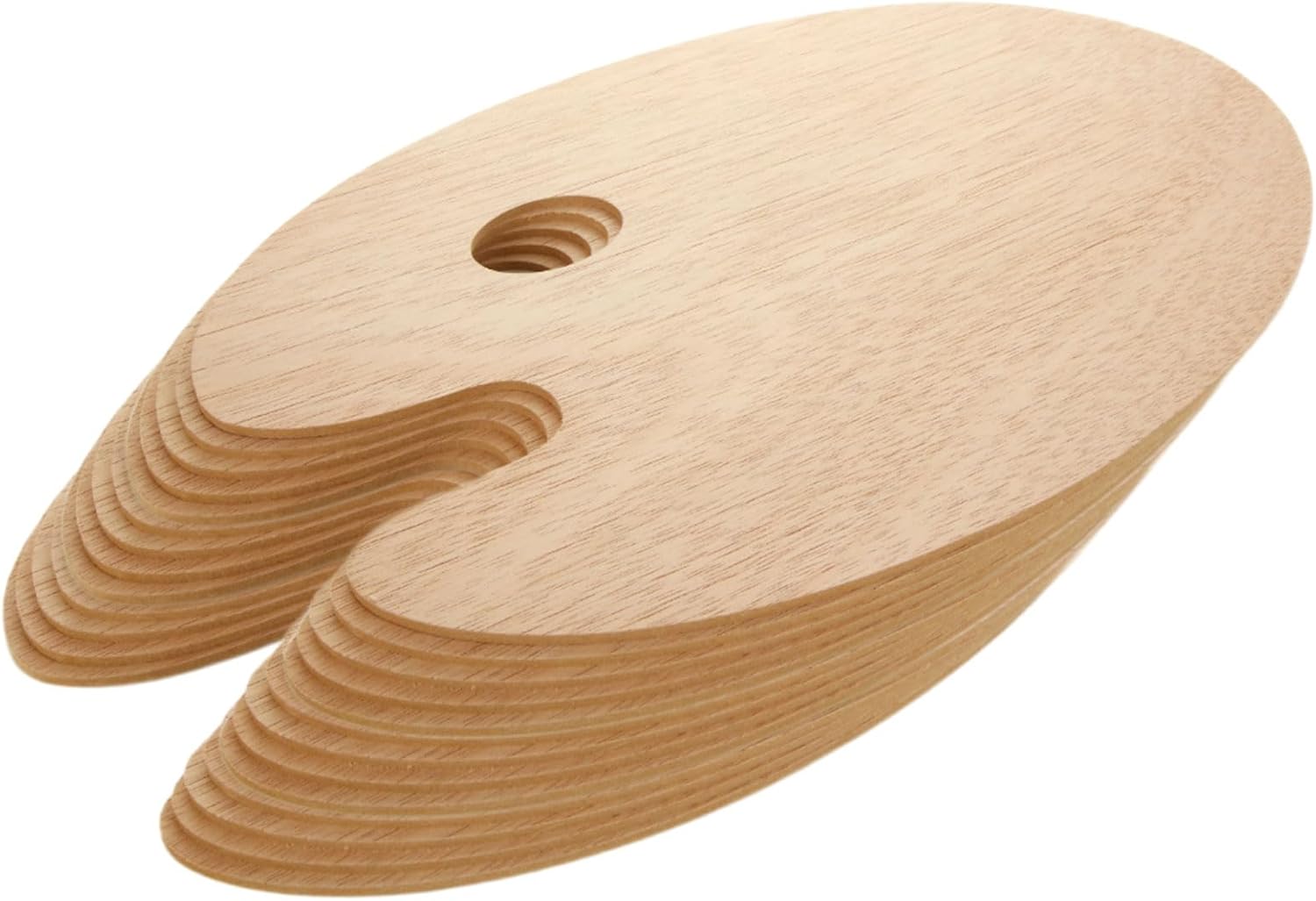
Running a paint-and-sip night or a class means providing a palette for everyone. LOYORTY’s pack contains 25 oval palettes, 8 by 12 inches, made from thick sanded wood with thumb holes for either hand. The listing names watercolor, oil, acrylic and gouache.
At this quantity, the cost per palette is low, and participants can take theirs home. The 8 by 12 size is compact but plenty for small canvas sessions.
Best suited for: Art teachers, paint party hosts and community workshops.
Key features:
- 25 oval wooden palettes
- 8 x 12 inch size
- Thick sanded wood
- Thumb hole for either hand
Pros:
- Low cost per palette
- Enough for a full class
- Easy to clean when wet
Cons and limitations:
- Too many for solo painters
- Small for large oil palettes
- Unsealed surface
Buying consideration: For acrylic workshops, ask participants to wipe palettes before paint dries; it saves a lot of scraping later.
6. Cregugua Unfinished Wood Palettes (12 pack) — Best for crafts, decorating and smaller groups

Cregugua’s palettes are unfinished plywood ovals, 12 by 9 inches, in a pack of 12. Plywood is stable and inexpensive, and the unfinished surface can be sealed for painting use or decorated as a craft blank.
The thin profile, about 0.1 inch, keeps them light. They are a good middle ground between a two-pack and the 25-pack for small classes, scout groups or family craft days.
Best suited for: Smaller groups, crafters and anyone who wants palettes to seal or decorate.
Key features:
- Twelve plywood palettes
- 12 x 9 inch oval
- Thumb hole
- Unfinished surface
Pros:
- Mid-size group quantity
- Plywood resists warping
- Can be sealed or decorated
Cons and limitations:
- Very thin board
- Needs sealing for oil
- Plywood edges can splinter if not sanded
Buying consideration: Lightly sand the edges and thumb hole before use, then seal with linseed oil or a clear finish if you plan to paint on them repeatedly.
Cleaning and Caring for a Wooden Palette
After an oil session, scrape remaining paint to one side with a palette knife and save usable piles. Wipe the surface with a rag and a little oil or odorless mineral spirits, then wipe dry. A thin layer of residue left behind builds up into a beautiful patina over time.
For acrylic, wipe paint away before it dries. Dried acrylic on wood can sometimes be peeled from a well-sealed surface, but on raw wood it locks into the grain.
Never soak a wooden palette or leave it in standing water. Store it flat, out of direct sun and away from heaters, so it does not warp. If the surface becomes rough, sand lightly and add another coat of oil.
Buying Guide: How to Choose a Wooden Palette
Size for your painting style
For oil at an easel, 12 by 16 inches or larger gives room for a full color layout. For acrylic, small canvases or travel, 9 by 12 or 8 by 12 inches is lighter and easier to hold. Larger palettes are heavier, so balance size against comfort.
If your arm tires quickly, consider a large palette on a side table instead of holding it.
Thumb hole and balance
A generous thumb hole reduces fatigue. Ambidextrous designs suit both left- and right-handed painters. Check that the palette balances on your forearm with paint laid out along the far edge.
Wood and thickness
Solid wood and plywood both work. Plywood resists warping; solid wood can be more attractive when seasoned. Very thin boards are light but can flex.
Finish and preparation
Most budget palettes arrive unfinished. Plan on sanding and seasoning before oil painting. A polished surface still benefits from oil.
Pack size
Solo painters need one or two. Teachers and hosts benefit from 12- or 25-packs. Avoid paying for extras you will not use.
Wood tone and color judgment
Wood gives a mid-tone, warm surface that helps when painting on toned grounds. If you paint on a white ground, a white or gray palette may make color judgment easier, and some painters prefer glass for that reason.
More Palette Guides and Projects
Not sure whether wood is right for you? Our guide on cleaning a painting palette compares how wood, glass and plastic clean up. If you paint fast-drying acrylic, read what a wet palette is for an alternative.
Have spare wood boards after a class? Try our project on painting DIY wooden pallet signs.
Common Mistakes to Avoid
- Painting on an unseasoned palette with oil
- Soaking a wooden palette in water
- Leaving acrylic to dry on raw wood
- Applying thick coats of linseed oil that stay sticky
- Bunching oily rags in a closed bin
- Choosing a palette too heavy to hold comfortably
FAQs
Are wooden palettes good for acrylic paint?
They can be, but acrylic stains raw wood and is hard to remove once dry. Seal the palette or lay palette paper on top for easier cleanup.
How do you season a wooden palette?
Sand lightly, rub in thin coats of linseed oil, wipe off the excess and let each coat dry for several days. Three or more coats give a sealed surface.
What size wooden palette should I buy?
For oil at an easel, around 12 by 16 inches. For small acrylic work or travel, 9 by 12 or 8 by 12 inches is lighter and easier to hold.
Why do oil painters use wooden palettes?
Seasoned wood is light, comfortable to hold, cleans with oil and gives a warm mid-tone for judging color, especially on toned grounds.
Can I use a wooden palette for watercolor?
It is not ideal. Watercolor soaks into wood and is hard to see on a brown surface. A white ceramic, metal or plastic palette works better.
How do I remove dried paint from a wooden palette?
Scrape gently with a palette knife or razor held flat, then wipe with a little oil. Sand lightly and re-oil if the surface is damaged.
Final Recommendation
For oil painters at an easel, the PATIKIL 12 by 16 inch pair gives the most room, while the Mr. Pen two-pack offers a comfortable full size at a low price tier. Tamaki’s single palette suits craft and outdoor painting on a budget.
Teachers and hosts should look at the LOYORTY 25-pack or the Cregugua 12-pack, and beginners who want everything at once can start with the U.S. Art Supply kit. Whichever you choose, season it first; that single step decides how long a wooden palette lasts.