PaintingProGuide is reader-supported. When you buy through links on this page we may earn an affiliate commission at no extra cost to you.
Ceramic and porcelain palettes have a loyal following among watercolor and gouache painters, and the reason is visible the first time you use one. Paint does not bead on a glazed ceramic surface the way it does on new plastic; it spreads in an even film, so you see the true color of a wash.
That even film also makes color mixing more predictable: what you see in the well is close to what you get on paper.
Ceramic also resists staining. Phthalo blue and quinacridone magenta that tint plastic permanently wipe off glazed porcelain. The weight keeps the palette steady on the table, and a well-made ceramic palette lasts a lifetime unless dropped.
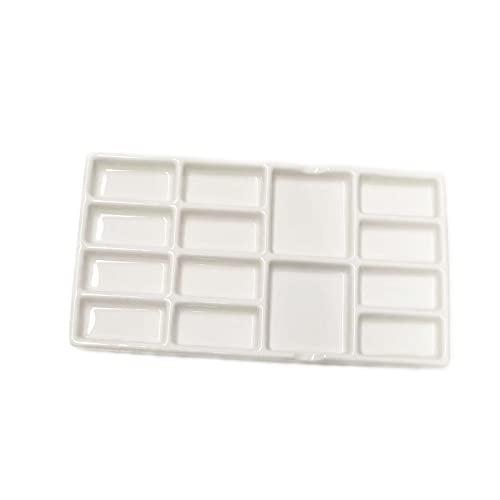
Ceramic palettes for painters come as round flower-style palettes with wells around the edge, rectangular slant trays with wells and mixing areas, and flat porcelain trays with raised edges for large mixes.
We compared six ceramic palettes available on Amazon using each listing’s well count, size and stated features, and left out one plastic wet palette that appeared in the results.
Quick answer: For most watercolor and gouache painters, the Gemerglity 8-Inch 13-Well Porcelain Palette is the best all-rounder: a pure white surface where paint spreads smoothly instead of beading, plus 13 wells. For large flat mixes, the VUFVOID Porcelain Rectangle Palette 2-Pack gives two 10 x 4.7 inch trays with raised edges. For travel and small studies, the MEEDEN 9-Well Rectangle Ceramic Palette is compact at about 6.8 x 3.3 inches.
Ceramic vs. Plastic Palettes
Paint behavior. Watercolor spreads evenly on glazed ceramic; on new plastic it beads until the surface is broken in.
Staining. Ceramic resists staining from strong pigments; plastic often stains permanently.
Weight and stability. Ceramic is heavy and stays put; plastic is light and can slide or tip.
Durability. Ceramic is scratch-resistant but can chip or break if dropped; plastic is unbreakable but scratches.
Portability. Plastic wins for travel; small ceramic palettes are still portable, but heavier.
Cost. Ceramic costs a little more, though most palettes here are still inexpensive.
Which Painters Benefit Most
Watercolorists gain the most, because accurate wash color and clean mixing areas are central to the medium. Gouache painters benefit from easy cleanup and true opaque color.
Acrylic painters can use ceramic, but acrylic dries quickly on a cold ceramic surface; it does peel off easily once dry. Oil painters sometimes use ceramic slabs for mixing, though wood and glass are more common.
Our Top Picks at a Glance
- Gemerglity 8-Inch 13-Well Porcelain Palette — Best overall ceramic palette
- Gemerglity 14-Well Ceramic Artist Palette (8 in) — Best for more colors
- VUFVOID Porcelain Rectangle Palette (2-Pack) — Best for large flat mixes
- MEEDEN 9-Well Rectangle Ceramic Palette — Best compact ceramic palette
- Gemerglity 9-Well Flower Porcelain Palette (5 in) — Best small flower palette
- Xinjincang White Porcelain Watercolor Palette — Best budget porcelain palette
| Product | Best For | Key Spec | Key Strength | Price Tier |
|---|---|---|---|---|
| Gemerglity 8-Inch 13-Well Porcelain Palette | overall ceramic palette | 8 in round, 13 wells, white porcelain | Paint spreads without beading | $ |
| Gemerglity 14-Well Ceramic Artist Palette (8 in) | more colors | 14 wells, white ceramic, about 6.89 x 3.54 in listed | One extra well for a larger palette | $ |
| VUFVOID Porcelain Rectangle Palette (2-Pack) | large flat mixes | Two 10.23 x 4.73 in trays, raised edges, stackable | Huge flat mixing areas | $$ |
| MEEDEN 9-Well Rectangle Ceramic Palette | compact ceramic palette | About 6.8 x 3.3 in, 9 wells | Small and portable | $ |
| Gemerglity 9-Well Flower Porcelain Palette (5 in) | small flower palette | 5 in round, 8 petal wells + center | Petal wells for a limited palette | $ |
| Xinjincang White Porcelain Watercolor Palette | budget porcelain palette | Porcelain, multiple wells and mixing areas | Non-stick, washable | $ |
We left out a plastic wet palette for miniature painting that appeared in the results.
How We Chose
We did not paint on these palettes. Picks are based on the Amazon listing details and specifications checked in October 2026, how well each ceramic palette’s size, wells and mixing space suit watercolor, gouache and other media, and how widely each product is reviewed by Amazon buyers.
- Number and size of wells
- Flat mixing space
- Overall size and weight
- Surface finish and stain resistance
- Portability
- Value
Best Ceramic Palettes for Painters Reviewed
1. Gemerglity 8-Inch 13-Well Porcelain Palette — Best overall ceramic palette

This 8-inch round porcelain palette has 13 wells with a pure white smooth surface. The listing says paint will not bead but spreads smoothly, and wipes clean with a tissue.
It is made of white eco-friendly ceramic and described as durable. The size sits comfortably on a desk beside a watercolor block, with room for a full color layout plus mixing.
Best suited for: Watercolor and gouache painters who want a classic porcelain palette.
Key features:
- 8-inch round
- 13 wells
- Pure white porcelain
- Wipes clean
Pros:
- Even paint spreading
- Resists staining
- Stable weight
Cons / limitations:
- Breakable
- Limited large mixing area
- Heavier for travel
Buying consideration: Place it on a folded towel to cushion it on hard tables.
2. Gemerglity 14-Well Ceramic Artist Palette (8 in) — Best for more colors

Gemerglity’s 14-well palette offers one more well than its 13-well sibling and is listed for watercolor, gouache, acrylic and oil. The listing calls it an 8-inch porcelain palette made from white eco-friendly ceramic, though the product details give dimensions of about 6.89 x 3.54 inches; check the page for the version you are buying.
Pure white makes color easy to judge, and the extra well suits painters with a larger set.
Best suited for: Painters who use more tube colors.
Key features:
- 14 wells
- White ceramic
- Multi-media use per listing
- Hand-sized
Pros:
- More wells
- Easy to clean
- Accurate white ground
Cons / limitations:
- Listing dimensions inconsistent
- Breakable
- Small mixing wells
Buying consideration: Confirm dimensions on the product page before ordering.
3. VUFVOID Porcelain Rectangle Palette (2-Pack) — Best for large flat mixes

Two rectangular porcelain trays, 10.23 x 4.73 inches each, with large flat areas for mixing many colors. The edges are raised so paint does not overflow, and you can dab excess paint on them.
They stack to save space, and the listing says the pure white surface shows no permanent stains.
Best suited for: Painters who mix large washes or opaque gouache batches.
Key features:
- Two rectangle trays
- 10.23 x 4.73 inches each
- Raised edges
- Stackable porcelain
Pros:
- Large mixing space
- Two trays
- Stain-resistant
Cons / limitations:
- No wells for storing colors
- Heaviest option
- Highest price tier here
Buying consideration: Pair one with a welled palette: store colors in wells, mix on the flat tray.
4. MEEDEN 9-Well Rectangle Ceramic Palette — Best compact ceramic palette

MEEDEN’s rectangle palette measures about 6.8 x 3.3 inches with nine wells in white eco-friendly ceramic. The listing says the smooth surface is easy to clean and mix on and makes colors come alive.
It is listed for watercolor, gouache, acrylic, oil and tempera, and its size suits travel kits and small desk setups.
Best suited for: Sketchbook painters, travelers and small workspaces.
Key features:
- 9 wells
- About 6.8 x 3.3 inches
- White ceramic
- Multi-media use per listing
Pros:
- Compact
- From an art supply brand
- Easy cleanup
Cons / limitations:
- Small wells
- Limited mixing space
- Breakable in a bag
Buying consideration: Wrap it in a cloth when packing it for travel.
5. Gemerglity 9-Well Flower Porcelain Palette (5 in) — Best small flower palette

A 5-inch white glazed porcelain flower palette with eight petal-shaped wells and a center section. The listing says the smooth glaze wipes clean with a cloth or paper.
It is ideal for a limited palette of a few colors, glazes or a single study, and doubles as a pretty desk dish.
Best suited for: Limited-palette studies, glazes and small desk setups.
Key features:
- 5-inch diameter
- 8 petal wells plus center
- White glazed porcelain
- Easy wipe cleaning
Pros:
- Compact
- Attractive design
- Low price
Cons / limitations:
- Few colors
- Small mixing area
- Breakable
Buying consideration: Use it next to your main palette for a dedicated glaze color.
6. Xinjincang White Porcelain Watercolor Palette — Best budget porcelain palette

An inexpensive white porcelain palette with multiple wells and mixing areas. The listing describes a non-stick surface for quick cleanup and a compact but spacious design suitable for plein air sessions, for watercolor, gouache and other water-based media.
Dimensions are not clearly listed, so check the product page.
Best suited for: Budget watercolor and gouache painters.
Key features:
- White porcelain
- Wells and mixing areas
- Non-stick surface per listing
- Portable
Pros:
- Lowest price
- Washable
- Good for water media
Cons / limitations:
- Dimensions unclear in listing
- Breakable
- Basic design
Buying consideration: A good first ceramic palette to see whether you prefer ceramic to plastic.
Setting Up a Ceramic Palette
Squeeze tube watercolor into the wells and let it dry; it rewets each session. Arrange colors warm to cool, with your most-used colors in the largest wells.
Keep a separate flat palette or a clean area for mixing so your stored colors stay pure.
For gouache, squeeze fresh paint each session or cover the palette with plastic wrap between sessions.
Rewetting Watercolor in Ceramic Wells
Dried watercolor in ceramic wells rewets well. Spritz the wells with clean water a minute before you start, so the surface of each cake softens and releases color quickly.
If a color cracks or crumbles after many cycles, top it up with fresh tube paint and let it dry overnight. Honey-based and well-bound watercolors rewet most smoothly.
Gouache rewets too, but its texture can change. For gouache, many painters squeeze small fresh amounts each session and use the ceramic for mixing.
Cleaning and Caring for Ceramic
Wipe watercolor and gouache off with a damp tissue or rinse under the tap. Acrylic peels off once dry, or soak briefly in warm water.
Avoid sudden temperature changes, such as hot water on a cold palette, which can crack ceramic.
Store flat and cushioned. Chips usually happen in drawers and bags, not while painting.
Many ceramic palettes are dishwasher-tolerant, but hand washing is gentler and avoids food-residue contamination.
Ceramic Palette Layouts Explained
Round flower palettes have wells around the rim, often petal-shaped, with a mixing area in the center. They suit a limited palette of six to twelve colors and look lovely on a desk.
Round multi-well palettes of around 8 inches have more wells, often in two sizes, and a central mixing well. They are the classic watercolorist’s choice.
Rectangular slant palettes have sloped wells that let paint pool at one end, so you can pick up concentrated paint or dilute it at the shallow end.
Flat trays with raised edges give the biggest mixing area and are best paired with a welled palette for color storage.
Building a Ceramic Palette Setup
A practical studio setup is one welled palette for storing colors plus one flat tray for mixing. Store your dried watercolors in the wells, mix on the tray, and wipe the tray clean between paintings while your stored colors stay ready.
Add a small flower dish for a dedicated glaze, a masking fluid pot or a special color you do not want contaminated.
Place ceramic on a cloth or silicone mat. It protects the table and the palette, and it stops the palette sliding when you dab a brush.
Ceramic, Glass or Enamel?
Glass palettes are smooth and easy to scrape, ideal for oil and acrylic, but watercolor beads on glass more than on ceramic. Enamel tins are light, durable and common in travel watercolor sets, though they can chip and rust at the chip.
Ceramic sits in the middle: excellent for water media, decent for acrylic, and heavier than both alternatives.
Using Ceramic Palettes Beyond Watercolor
Gouache painters enjoy ceramic because opaque mixes are easy to judge on bright white.
Acrylic painters can mix on ceramic for short sessions and peel dried paint off later.
Oil painters sometimes use a ceramic tray for small mixes; clean with a rag and a little oil.
Buying Guide: How to Choose a Ceramic Palette
Wells or flat
Welled palettes store colors; flat trays mix large batches. Many painters use both.
Count your colors before choosing a well count.
Size
Five-inch palettes suit limited palettes and travel; 8 to 10 inch palettes suit studio work.
Bigger means heavier.
Glaze quality
A smooth, even glaze lets paint spread and wipes clean.
Pinholes or rough spots trap pigment.
Color
Pure white gives the most accurate color judgment.
Avoid decorated surfaces in mixing areas.
Weight and portability
Ceramic is heavy; for travel choose small rectangles and cushion them.
At home, weight is an advantage.
Raised edges
Raised rims stop paint overflowing and give a place to wipe brushes.
Useful on flat trays especially.
Palette Know-How
Keep watercolor and gouache fresh between sessions with our tips on keeping a palette from drying out.
For acrylic you want to keep wet for hours, a wet palette is the better tool. For upkeep of any palette, see how to clean a painting palette.
Common Mistakes to Avoid
- Dropping or knocking ceramic palettes on hard surfaces
- Pouring hot water on a cold ceramic palette
- Mixing on top of stored colors and muddying them
- Packing ceramic loose in a bag
- Using decorative dishes with uneven glaze for mixing
- Expecting ceramic to keep acrylic wet
FAQs
Is ceramic better than plastic for watercolor?
For most watercolorists, yes: paint spreads evenly without beading and the surface resists staining. Plastic is lighter and unbreakable.
Do ceramic palettes stain?
Glazed ceramic resists staining from strong pigments, which wipe off easily.
Can I use a ceramic palette for acrylic?
Yes for short sessions. Acrylic dries quickly but peels off ceramic easily once dry.
Are ceramic palettes heavy?
Heavier than plastic, which keeps them stable. Small rectangles are still portable if cushioned.
How do I clean a ceramic palette?
Wipe with a damp tissue or rinse in warm water. Soak dried acrylic briefly and peel.
Can I use a plate as a ceramic palette?
A plain white glazed plate works well. Avoid decorated plates and keep it separate from food use.
Final Recommendation
For most painters, the Gemerglity 8-inch 13-well porcelain palette is the best ceramic choice, combining good well count with a surface where paint spreads smoothly. The 14-well version adds a color slot, though its listed dimensions vary.
Choose the VUFVOID rectangle 2-pack for large flat mixes, the MEEDEN 9-well rectangle for travel, the Gemerglity flower dish for limited palettes and glazes, and the Xinjincang palette as a low-cost first ceramic.
If you are unsure whether ceramic suits you, start with an inexpensive small palette for one watercolor session. Most painters notice the difference in how washes spread right away, and many never go back to plastic for water media.