

PaintingProGuide is reader-supported. When you buy through links on this page we may earn an affiliate commission at no extra cost to you.
The best primed canvas for acrylic is one that matches what the painting is for. A gallery piece wants a heavy, deep-profile stretched canvas with a medium tooth. Weekly practice wants inexpensive cotton panels that store flat. Classroom work wants bulk packs in mixed sizes. Every option below is pre-primed with acrylic gesso, so you can open the wrapper and start painting.
Acrylic is easy on canvas: it is flexible, water-based and bonds well to acrylic primer. That means the real differences between products come down to construction, weight, depth, size range and cost per surface, not whether the primer is compatible.
Quick answer: For finished acrylic paintings, Creative Mark The Edge deep-profile canvas is the strongest pick thanks to its 14 oz primed weight and triple acrylic priming. For practice on a budget, the Simetufy 11×14 canvas panels give you twelve flat, MDF-backed surfaces. If you want stretched canvases in many sizes, the ESRICH 14-pack covers seven formats in one box.
Our Top Picks at a Glance
- Creative Mark The Edge 1-1/2″ Deep Stretched Canvas, 12×12 (3-Pack) — Best for finished and frameless work
- FIXSMITH Stretched Canvas, 11×14 (8-Pack) — Best value stretched canvas in one size
- ESRICH Stretched Canvas, 14-Pack Multi-Size — Best variety of stretched sizes
- KEFF Canvas Boards, 24-Pack Multi-Size — Best panel pack for studies in four sizes
- Simetufy 11×14 Canvas Panels (12-Pack) — Best larger practice panels
- Simetufy 8×10 Canvas Boards (12-Pack) — Best low-cost bulk boards
- ESRICH 8×10 Canvas Boards (5-Pack) — Best small starter pack
| Product | Best For | Key Spec | Key Strength | Price Tier |
|---|---|---|---|---|
| Creative Mark The Edge | Finished, frameless work | 1-1/2″ deep, 14 oz primed, 3 x 12×12 | Heavy cotton, triple primed | $$$ |
| FIXSMITH 11×14 | Regular painting practice | 8 stretched, 5/8″ profile, cotton | Low cost per stretched canvas | $$ |
| ESRICH 14-Pack | Trying many sizes | 7 sizes from 4×4 to 12×16 | Size variety | $$ |
| KEFF 24-Pack Boards | Studies and classes | 6 each of 5×7, 8×10, 9×12, 11×14 | 24 flat surfaces | $$ |
| Simetufy 11×14 Panels | Larger practice pieces | 12 cotton panels on MDF | Rigid, will not warp easily | $$ |
| Simetufy 8×10 Boards | Bulk practice | 12 boards, MDF core | Lowest cost per surface | $ |
| ESRICH 8×10 Boards | First-time painters | 5 cotton boards | Small, low-risk pack | $ |
How We Chose
We did not paint on these canvases for this guide. The picks are based on the Amazon listing details and specifications checked in October 2026, on how well each product’s construction, priming and sizes suit acrylic painting, and on how widely each product is reviewed by Amazon buyers. Product claims such as “triple primed” are reported as the maker states them.
We weighed:
- Priming: acid-free acrylic gesso, and whether the maker states the number of coats or primed weight.
- Support type: stretched canvas on wood bars versus canvas panels on MDF or board.
- Fabric and weight: 100% cotton across the board; heavier weights resist dents and feel firmer under the brush.
- Profile depth: deep profiles hang without a frame; thin ones are cheaper and frame easily.
- Size range and pack count: what the set lets you paint and how much each surface costs.
Best Primed Canvas for Acrylic Reviewed
1. Creative Mark The Edge Deluxe Cotton Canvas — Best for Finished Work

The Edge is the heavyweight here. The listing gives a raw weight of 8 oz and a primed weight of 14 oz, meaning a substantial layer of gesso sits between paint and fabric. It is hand-stretched, triple-acrylic primed for archival quality and has a medium tooth, which gives acrylic something to grip without fighting smooth blends.
The 1-1/2 inch depth and “tuck-n-roll” corner construction are designed for frameless display. You can paint the sides a solid color or wrap the image around them. Creative Mark lists it for acrylics, water-mixable oils, alkyds and mixed media. This pack is three 12×12 squares; the line comes in other sizes and in 11/16 and 2-1/2 inch depths.
Best suited for: acrylic paintings you plan to sell, gift or hang without framing.
Key features:
- 14 oz primed weight, 8 oz raw cotton
- Triple acrylic primed, medium tooth
- 1-1/2″ deep profile, tuck-n-roll corners
- Hand-stretched; 3 x 12×12 in this pack
Pros:
- Heaviest, most professional build in the roundup
- Gallery-style edges ready to hang
- Archival priming
Cons/limitations:
- Highest tier and only three canvases
- Square format only in this listing
Buying consideration: Use these for finished pieces and practice on panels. Spending premium money on studies rarely pays off.
2. FIXSMITH Stretched Canvas 11×14, 8-Pack — Best Value Stretched Canvas
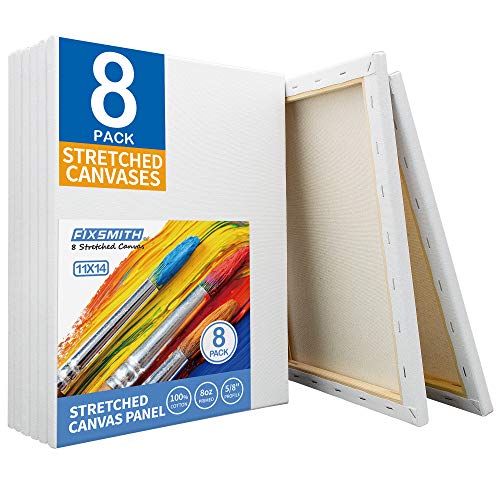
FIXSMITH gives you eight 11×14 stretched canvases with a 5/8 inch profile. The fabric is 100% cotton, stapled onto pinewood bars, and pre-coated with acid-free acrylic gesso. The listing states an unprimed weight of 4 oz and says the cotton is not rinsed with alkaline chemicals, which keeps it flexible.
The 5/8 inch profile is a standard thin profile. It frames easily and stores compactly, but it looks thin on a wall without a frame. For regular weekly painting at a comfortable size, the cost per stretched canvas is the main appeal.
Best suited for: hobby painters and students who want real stretched canvases for regular practice without premium pricing.
Key features:
- 8 x 11×14 inch stretched canvases
- 100% cotton, 4 oz unprimed weight
- Acid-free acrylic gesso primer
- 5/8 inch pinewood bars
Pros:
- Low cost per stretched surface
- Comfortable mid-size format
- Frames easily
Cons/limitations:
- Light raw fabric dents more easily than heavy canvas
- Thin profile looks unfinished unframed
Buying consideration: If the surface feels too absorbent or smooth, one extra coat of gesso fixes both.
3. ESRICH Stretched Canvas 14-Pack — Best Size Variety
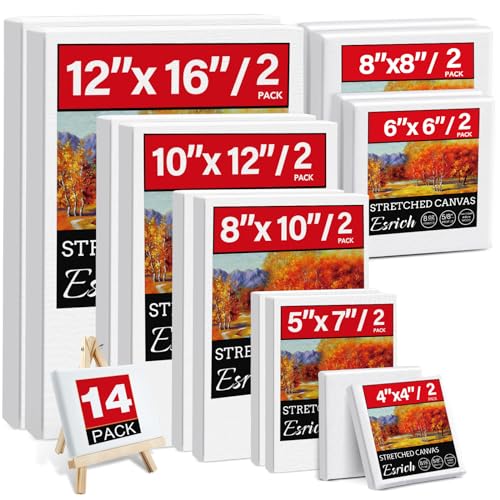
This pack contains two each of seven sizes: 12×16, 10×12, 8×10, 5×7, 8×8, 6×6 and 4×4. Each canvas is nailed to a pinewood frame and pre-coated with acid-free acrylic gesso. The listing describes it as suitable for oils, watercolor, acrylic, tempera and gouache.
The mix is useful when you are still figuring out what size you like to paint, or when you want small squares for a series. The smaller sizes also make good gifts and quick daily paintings.
Best suited for: painters who want to try several stretched formats, including squares, in one purchase.
Key features:
- 14 canvases, 7 sizes from 4×4 to 12×16
- Pinewood frames
- Acid-free acrylic gesso priming
Pros:
- Widest stretched size range here
- Square and rectangular formats
Cons/limitations:
- Only two of each size
- Fabric weight and profile depth not stated
Buying consideration: The listing asks buyers to check the backs of canvases when counting, since smaller sizes are stacked inside larger ones.
4. KEFF Canvas Boards 24-Pack — Best Panel Pack for Studies
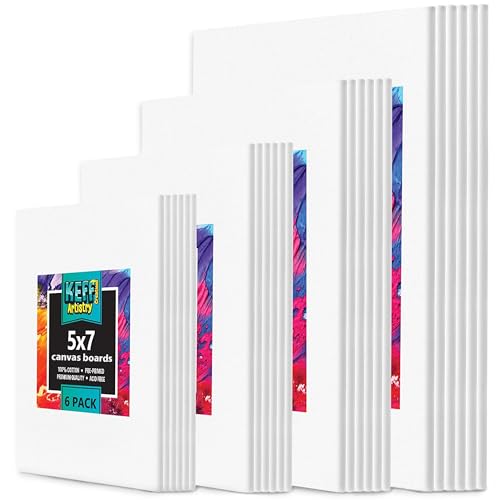
KEFF includes six each of 5×7, 8×10, 9×12 and 11×14 canvas boards, all 100% cotton and described as triple-primed. Boards are flat, which makes them easy to store, carry in a bag and paint on at a tabletop or small easel.
Twenty-four surfaces in four useful sizes is a practical way to build a painting habit. The 9×12 and 11×14 sizes are large enough for full compositions; the 5×7 and 8×10 sizes are ideal for color studies and value sketches.
Best suited for: daily painting practice, classes and plein air studies in acrylic.
Key features:
- 24 boards: 6 each of 4 sizes
- 100% cotton, triple-primed surface
- Listed for acrylic, oil, watercolor, tempera and gouache
Pros:
- Lots of surfaces in practical sizes
- Stores and transports flat
Cons/limitations:
- Board core material not specified
- Panels need a frame or easel to display
Buying consideration: Keep boards flat and dry; even sturdy panels can bow if stored in humid conditions.
5. Simetufy 11×14 Canvas Panels, 12-Pack — Best Larger Practice Panels

Simetufy’s 11×14 panels use 100% cotton glued to acid-free heavy MDF board, which the listing says resists bending, curling and deforming even with plenty of paint. The surface is described as triple primed with acid-free acrylic and ready to use.
An MDF core is stiffer than a cardboard core, so these panels are better suited to heavier acrylic application and palette knife work than the cheapest boards. Twelve panels at 11×14 is a solid supply for a few months of practice.
Best suited for: painters who want rigid, mid-size surfaces for regular practice or framed work.
Key features:
- 12 x 11×14 inch panels
- Cotton on acid-free MDF
- Triple acrylic priming
Pros:
- Rigid core handles heavy paint
- Good size for complete compositions
Cons/limitations:
- MDF adds weight compared with card boards
- Single size only
Buying consideration: Panels this size fit standard 11×14 frames, which keeps display costs down.
6. Simetufy 8×10 Canvas Boards, 12-Pack — Best Low-Cost Bulk Boards

The 8×10 version uses the same approach: 100% cotton, acid-free acrylic priming and an MDF core instead of recycled paper. Twelve boards at the lowest tier make this the cheapest way to get a stack of real canvas surfaces.
The 8×10 size is the classic study format, small enough to finish in one sitting and big enough for meaningful composition practice.
Best suited for: beginners, art teachers and anyone doing daily small paintings.
Key features:
- 12 x 8×10 inch boards
- Cotton surface, MDF core
- Pre-primed with acid-free acrylic
Pros:
- Lowest cost per surface in the roundup
- Rigid core resists warping
Cons/limitations:
- Small size limits composition
- Number of primer coats not stated
Buying consideration: Ideal for the “paint one a day” habit that builds skill fastest.
7. ESRICH 8×10 Canvas Boards, 5-Pack — Best Small Starter Pack

For someone painting with acrylic for the first time, five boards is a sensible commitment. ESRICH uses pure cotton with a non-toxic, acid-free primer over a sturdy board core that the listing says resists deforming and warping. The surface is described as smooth.
A smoother surface suits detailed work and lettering, while textured canvas suits looser brushwork. If you prefer more tooth, a quick coat of gesso adds it.
Best suited for: first-time acrylic painters, kids’ projects and party painting.
Key features:
- 5 x 8×10 cotton boards
- Acid-free, non-toxic primer
- Board core resists warping
Pros:
- Lowest total spend
- Smooth surface for detail
Cons/limitations:
- Few surfaces per pack
- Smooth surface may feel slippery to some painters
Buying consideration: If you enjoy the first five, a bulk pack will save money on the next batch.
Matching the Canvas to Your Acrylic Style
Acrylic can be poured, glazed, troweled or brushed thin like watercolor, and each approach puts different demands on the surface.
Heavy Body and Impasto
Thick paint and palette knife work need a support that does not flex much. MDF-backed panels such as the Simetufy boards, or a heavy stretched canvas like The Edge, handle that pressure better than light fabric on thin bars. Light canvas can bounce under a knife and dent if you push too hard.
Acrylic Pouring
Pours add a lot of wet weight at once. Stretched canvas can sag in the middle, letting paint pool, so many pourers prop the center from behind or use rigid panels. Keep the surface level while it dries, and expect heavy pours to need extra drying time.
Glazing and Fine Detail
Thin glazes and small detail benefit from a smoother, less absorbent surface. Smooth boards like the ESRICH 8×10 pack suit this, and an extra sanded coat of gesso on any canvas will make it smoother still.
Large Abstract and Gestural Work
Big, loose brushwork shows texture and edges. A medium tooth and deep profile look finished on the wall. If you work large often, look at heavier stretched canvas in the sizes you need rather than bulk practice packs.
Classroom and Group Painting
For paint-and-sip nights and classes, consistency and cost per surface matter most. Single-size packs like the FIXSMITH 11×14 or Simetufy 11×14 give everyone the same starting point.
Buying Guide: How to Choose Primed Canvas for Acrylic
Stretched Canvas or Canvas Panel
Stretched canvas has a little bounce under the brush and is ready to hang. Panels are rigid, cheaper, store flat and suit palette knife work and small studies. Many acrylic painters practice on panels and save stretched canvas for pieces they want to display.
Primer Quality and Coats
All products here use acrylic gesso, which acrylic bonds to well. More coats or a higher primed weight generally mean a less absorbent, more consistent surface. If paint sinks in or the weave shows through too much, add one or two coats of gesso and sand lightly between them.
Fabric Weight
Heavier canvas resists dents and sagging. Creative Mark lists 14 oz primed; FIXSMITH lists 4 oz unprimed. Lighter fabric is fine for practice but more vulnerable to pokes and humidity.
Profile Depth
A thin profile (around 5/8 inch) is made to be framed. A deep profile (1-1/2 inch and up) can hang on its own with painted edges. Decide how the piece will be displayed before you buy.
Surface Tooth
Medium tooth grips acrylic and shows brush texture. Smooth surfaces suit detail and glazing. A rough surface can eat small brushes quickly, so match tooth to your style.
Size and Pack Mix
Multi-size packs help you discover your preferred format. Single-size packs are better once you know what you like and want consistency for a series or class.
Acid-Free and Archival Claims
Acid-free priming helps protect the fabric over time. For work you intend to keep or sell, look for acid-free materials and a durable support.
Get More From Your Primed Canvas
A toned ground makes values easier to judge than bright white; our guide to underpainting on canvas with acrylic shows how to start. If you are deciding between panels and stretched canvas, read whether you can use acrylic paint on canvas board. When the painting is done, learn how to seal acrylic paint on canvas to protect it.
Common Mistakes to Avoid
- Using premium canvas for practice. Save heavy stretched canvas for finished work.
- Skipping a test on a new brand. Paint a small swipe to check absorbency before committing to a large piece.
- Storing panels upright in humid rooms. Keep them flat and dry to avoid bowing.
- Leaning heavily on a stretched canvas. Pressure dents light fabric; support it from behind if needed.
- Ignoring edges. Decide early whether you will frame, paint the sides or wrap the image.
- Re-gessoing with the wrong product. Use acrylic gesso, not oil-based primer, under acrylic.
FAQs
Do I need to prime a pre-primed canvas before using acrylic?
No. Pre-primed canvas is ready for acrylic. Some painters add an extra coat of acrylic gesso to make the surface smoother or less absorbent, but it is optional.
Is canvas board or stretched canvas better for acrylic?
Both work. Canvas boards are cheaper, rigid and ideal for practice. Stretched canvas is better for finished pieces you want to hang or sell.
What does “triple primed” mean?
It means the maker applied three coats of primer. More coats usually create a more even, less absorbent surface.
What size canvas should a beginner use for acrylic?
8×10 to 11×14 inches is a comfortable range. It is large enough for composition practice and small enough to finish in one session.
Can I use oil-primed canvas with acrylic?
No. Acrylic does not bond reliably to an oil ground. Use acrylic-primed (often labeled universal or acrylic gesso) canvas, like every product in this guide.
Why does my acrylic paint look dull on canvas?
Absorbent grounds can soak up binder and make paint look flat. An extra coat of gesso or a final varnish usually restores depth.
Final Recommendation
Pick primed canvas for acrylic by purpose rather than by price alone:
- Finished or frameless paintings: Creative Mark The Edge deep-profile canvas.
- Regular practice on stretched canvas: FIXSMITH 11×14 8-pack.
- Exploring sizes and squares: ESRICH 14-pack stretched canvas.
- Studies and classes in several sizes: KEFF 24-pack boards.
- Rigid mid-size practice panels: Simetufy 11×14.
- Lowest cost per surface: Simetufy 8×10 12-pack.
- A first, small trial: ESRICH 8×10 5-pack.
A practical approach is to buy one bulk panel pack for practice and a few quality stretched canvases for the paintings that earn them.





One Comment