
PaintingProGuide is reader-supported. When you buy through links on this page we may earn an affiliate commission at no extra cost to you.
Varnish is the final layer of an oil painting and the one that protects every layer underneath. A good picture varnish evens out patchy sheen where some colors dried dull and others glossy, saturates darks so they look as rich as when wet, and shields the paint from dust, grime and UV light. The best varnish for oil paintings is clear, non-yellowing, flexible and, ideally, removable, so a conservator (or you) can clean it off and replace it decades later without touching the paint.
The second big question is timing. Varnish applied before an oil painting is dry enough can trap solvents and cause problems. Each product below has different guidance, and we explain it clearly.
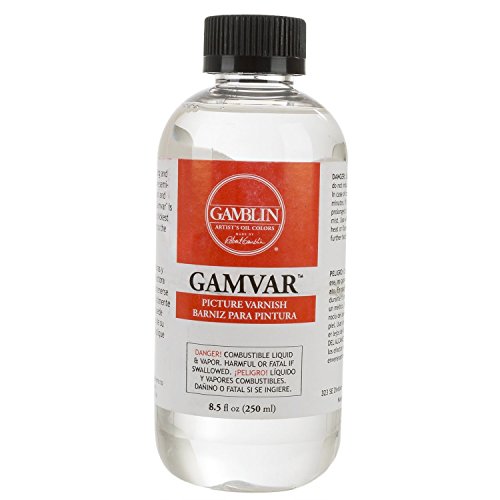
Quick answer: For most oil painters, Gamblin Gamvar Picture Varnish is the top pick: a synthetic resin varnish that, according to its listing, can be used sooner than many other varnishes. Winsor & Newton Professional Artists’ Gloss Varnish is the classic UV-resistant, non-yellowing alternative, removable with white spirit, for paintings that have dried fully (the listing says 6 to 12 months). For spray application, Krylon Gallery Series UV Archival Varnish adds UV protection with an even coat.
Why Varnish an Oil Painting?
- Even sheen: oil colors dry with different gloss levels. Varnish unifies the surface.
- Color saturation: dull, “sunken” areas regain depth under varnish.
- Protection: dust and grime sit on the varnish, not the paint.
- UV filtering: UV-resistant varnishes help reduce light damage.
- Reversibility: removable varnishes can be cleaned off and replaced, which is the core of conservation practice.
When Can You Varnish?
Traditional advice is to wait until the painting is thoroughly dry, often six months or more depending on paint thickness. Winsor & Newton’s listing states not to use its varnish until the painting is completely dry, 6 to 12 months. Some modern varnishes are designed for earlier application: Gamblin says Gamvar can be used sooner than other varnishes, and Tusc & Pine says InstaVar can go on when paint is dry to the touch and firm in its thickest areas, which might be two weeks or, in humid areas, two months.
If you are unsure, a retouch varnish (a thin, temporary varnish) can even out sheen and protect a newer painting until it is ready for final varnish. Tusc & Pine notes InstaVar can serve as a retouch varnish.
Our Top Picks at a Glance
- Gamblin Gamvar Picture Varnish, 8.5 oz — Best for varnishing sooner with a modern resin
- Winsor & Newton Professional Artists’ Gloss Varnish, 75 ml — Best for a classic removable final varnish
- Tusc & Pine InstaVar Gloss Picture Varnish, 16.9 oz — Best for nearly odorless brush-on varnish
- Krylon Gallery Series UV Archival Varnish Spray, Gloss, 11 oz — Best for even spray coats with UV protection
- Krylon Kamar Varnish, Satin, 11 oz — Best for a low-cost satin spray
| Product | Best For | Key Spec | Key Strength | Price Tier |
|---|---|---|---|---|
| Gamblin Gamvar Picture Varnish, 8.5 oz | Varnishing sooner with a modern resin | Synthetic resin, gloss, 8.5 oz | Can be applied sooner than many varnishes | $$ |
| Winsor & Newton Professional Artists’ Gloss Varnish, 75 ml | A classic removable final varnish | 75 ml, gloss, UV-resistant | Non-yellowing, removable with white spirit or turpentine | $$ |
| Tusc & Pine InstaVar Gloss Picture Varnish, 16.9 oz | Nearly odorless brush-on varnish | 16.9 oz, gloss, dries in 24 hours | Can be applied when firm to the touch; doubles as retouch varnish | $$$ |
| Krylon Gallery Series UV Archival Varnish Spray, Gloss, 11 oz | Even spray coats with UV protection | 11 oz aerosol, gloss | Maximum UV protection claim; ASTM D 4236 | $$ |
| Krylon Kamar Varnish, Satin, 11 oz | A low-cost satin spray | 11 oz aerosol, satin, clear | Protects oil, acrylic and watercolor; allows rework | $ |
How We Chose
We compared these varnishes using Amazon listing details and specifications checked in October 2026, and did not varnish paintings with them ourselves. We looked at stated compatibility with oil paint, removability, yellowing and UV claims, timing guidance, finish and application method, and gave weight to products widely reviewed by Amazon buyers. We excluded acrylic-only and non-removable acrylic varnishes from our picks, since they are not intended for oil paintings.
Criteria:
- Oil compatibility stated on the listing.
- Removability for future conservation.
- Non-yellowing and UV resistance claims.
- Timing guidance: how soon it can be applied.
- Application method: brush-on vs spray.
Best Varnish for Oil Paintings Reviewed
1. Gamblin Gamvar Picture Varnish, 8.5 oz — Best for varnishing sooner with a modern resin

Gamvar is a synthetic resin picture varnish from Gamblin, an oil paint maker. The listing describes it as similar to damar natural varnish but made from synthetic resin, with a gloss surface, in an 8.5 oz bottle. Its headline benefit is timing: it can be used sooner than other varnishes.
For painters who sell or exhibit work soon after finishing, that matters. Rather than waiting many months, you can protect and unify a painting earlier, following Gamblin’s guidance on dryness.
Best suited for: Working artists, painters who need to deliver or exhibit work, and anyone wanting a modern alternative to damar.
Key features:
- Synthetic resin varnish
- Similar to damar in effect
- Gloss surface
- Earlier application than many varnishes
Pros:
- Shorter waiting time
- From an established oil paint brand
- Damar-like look without natural resin issues
Cons and limitations:
- Gloss only in this listing
- Higher price tier than sprays
Buying consideration: Apply in thin coats with a soft, wide brush, working in one direction. Two thin coats look more even than one heavy one.
2. Winsor & Newton Professional Artists’ Gloss Varnish, 75 ml — Best for a classic removable final varnish

Winsor & Newton’s gloss varnish is a final clear varnish for oil, alkyd and acrylic paintings. The listing describes it as non-yellowing, UV-resistant, quick drying, and resistant to blooming or cracking. Crucially for oils, it is removable with white spirit or distilled turpentine.
The listing is explicit about timing: do not use it as a medium, or until the painting is completely dry, 6 to 12 months.
Best suited for: Finished, fully dried oil paintings, archival-minded artists and painters who follow traditional timing.
Key features:
- Gloss, non-yellowing final varnish
- UV-resistant
- Removable with white spirit or distilled turpentine
- Does not bloom or crack
Pros:
- Clear removability information
- UV resistance
- Trusted brand
Cons and limitations:
- Requires full drying, 6 to 12 months
- Small 75 ml bottle for large works
Buying consideration: Mark the completion date on the back of each painting. It makes it easy to know when the varnishing window opens.
3. Tusc & Pine InstaVar Gloss Picture Varnish, 16.9 oz — Best for nearly odorless brush-on varnish

InstaVar is an archival-quality gloss picture varnish for oils, alkyds and acrylics. The listing describes it as crystal clear, non-yellowing and nearly odorless, removable with StudioSolv, and able to saturate color, bring up dull sunken areas and serve as a retouch varnish. It dries in 24 hours.
Timing guidance is practical: apply when paint is dry to the touch and firm in its thickest sections, which might take two weeks for some paintings and two months in humid areas. The listing also notes a flashpoint of 144 degrees F, classing it as combustible but safer than varnishes with lower flashpoints.
Best suited for: Painters sensitive to odor, those wanting earlier varnishing, and larger studios (big bottle).
Key features:
- 16.9 oz gloss varnish
- Nearly odorless, non-yellowing
- Removable with StudioSolv
- Can act as retouch varnish
Pros:
- Large volume
- Earlier application guidance
- Low-odor brush-on option
Cons and limitations:
- Highest price tier
- Removal uses a specific solvent
Buying consideration: Use it as a retouch varnish on newer paintings and again as a final coat later. That gives consistent sheen across your body of work.
4. Krylon Gallery Series UV Archival Varnish Spray, Gloss, 11 oz — Best for even spray coats with UV protection

Spray varnish avoids brush marks and can lay down a very even coat, especially on textured impasto where brushing is tricky. Krylon’s Gallery Series UV Archival Varnish is marketed for maximum UV protection on fine art, conforms to ASTM D 4236 and is made in the USA.
The listing carries strong safety warnings: extremely flammable, vapors may cause flash fires, contents under pressure and vapor harmful. Spray outdoors or in a well-ventilated space with a suitable respirator.
Best suited for: Textured paintings, artists who prefer spray application and work hung in brighter rooms.
Key features:
- 11 oz aerosol
- Gloss finish
- UV protection focus
- ASTM D 4236, made in USA
Pros:
- Even, brush-free coats
- UV-protective focus
- Good for impasto
Cons and limitations:
- Flammable aerosol, needs strict ventilation
- Listing does not state removability
Buying consideration: Spray several light passes from the distance on the can rather than one heavy coat. Heavy spray coats can run and drip.
5. Krylon Kamar Varnish, Satin, 11 oz — Best for a low-cost satin spray

Kamar is a long-running Krylon spray varnish in a satin finish. The listing says it protects oil, acrylic and watercolor paintings, keeps colors looking fresh and allows easy rework.
Satin sits between gloss and matte, which suits paintings where glare would be distracting, such as works hung opposite windows. It is the most affordable option here.
Best suited for: Studies, student work, satin finishes and budget-conscious painters.
Key features:
- 11 oz aerosol
- Satin finish
- For oil, acrylic and watercolor
- Allows rework
Pros:
- Lowest price tier
- Satin reduces glare
- Multi-media use
Cons and limitations:
- Fewer archival details on the listing
- Aerosol needs ventilation
Buying consideration: Test satin on a scrap painted panel first. Satin can slightly lighten very dark passages compared with gloss.
How to Varnish an Oil Painting
- Confirm dryness per the varnish maker’s guidance. Press gently on the thickest area; it should be firm, not soft.
- Clean the surface. Remove dust with a soft brush or lint-free cloth.
- Work in a dust-free, ventilated room at moderate temperature and humidity.
- Lay the painting flat to prevent drips.
- Apply thin, even coats. Use a soft, wide varnish brush in parallel strokes, or light spray passes.
- Let it dry as directed, then apply a second thin coat if needed.
- Protect it while drying. Cover loosely to keep dust off without touching the surface.
Troubleshooting Varnish Problems
Cloudy or milky patches (bloom). Usually caused by humidity or applying varnish over paint that still holds moisture or solvent. Varnish in dry conditions, and with removable varnishes, a conservator-style removal and re-application can fix it.
Uneven sheen after one coat. Absorbent, sunken areas soak up the first coat. A second thin coat usually evens the surface.
Brush marks. Varnish was too thick or overbrushed. Use a soft, wide brush, load lightly, and avoid going back over areas that have started to set.
Dust specks. Varnish in a clean room, let the painting dry flat under a loose cover, and wipe the surface with a lint-free cloth just before starting.
Sticky surface days later. Coats may be too thick, or the room too cool or humid. Give it more time in a warm, dry, ventilated space.
Drips on spray coats. Too much paint in one pass. Hold the can at the recommended distance and build several light coats.
Keeping a small test panel painted with your usual colors lets you try a new varnish before it touches finished work.
Gloss, Satin or Matte?
- Gloss: maximum saturation and depth; can glare under direct light.
- Satin: a balance of richness and reduced glare.
- Matte: minimal glare but can slightly flatten darks.
Many artists varnish in gloss for saturation and, if needed, add a satin or matte coat on top to tune the sheen.
Buying Guide: How to Choose Varnish for Oil Paintings
Confirm oil compatibility
Choose a varnish that states it is for oil paintings. Non-removable acrylic varnishes made for acrylic paintings are not appropriate for oils.
Prefer removable varnishes
A removable varnish lets future cleaning happen without harming paint. Listings that state removal solvents give the most confidence.
Check timing
Some varnishes require full drying (months); others can go on sooner. Match the varnish to your schedule.
Look for non-yellowing and UV resistance
Modern synthetic resins are generally chosen for non-yellowing and UV stability.
Choose application method
Brush-on gives control and works well on smooth surfaces. Spray gives even coats on texture but requires strict ventilation.
Pick a sheen
Gloss, satin or matte affects how the painting reads in its final location.
Plan for safety
Varnishes contain solvents. Ventilate, wear gloves and avoid open flames, especially with aerosols.
Learn More About Varnishing
For a full walkthrough, read how to varnish an oil painting correctly and how to varnish and protect your oil paintings. If you use water-mixable oils, see how to varnish a water-mixable oil painting. Glazing painters may also enjoy our oil painting glazing technique guide.
Common Mistakes to Avoid
- Varnishing too early. Follow the maker’s dryness guidance.
- Using acrylic-only varnish on oils. Choose varnishes made for oil paintings.
- Heavy coats. They run, cloud and take longer to dry.
- Varnishing in humidity. Moisture can cause cloudiness (bloom).
- Dusty environments. Dust embeds in wet varnish.
- Shaking brush-on varnish. It creates bubbles; stir gently instead.
FAQs
How long should I wait to varnish an oil painting?
It depends on the varnish and paint thickness. Traditional varnishes, such as Winsor & Newton’s, say to wait until fully dry, 6 to 12 months. Some modern varnishes like Gamvar or InstaVar are designed for earlier application when the paint is firm.
What is the best varnish for oil paintings?
Gamblin Gamvar is a popular choice because it is a removable synthetic resin varnish that can be applied sooner. Winsor & Newton’s gloss varnish is a classic, removable, UV-resistant option for fully dry paintings.
Can I use acrylic varnish on an oil painting?
Varnishes labeled only for acrylic paintings, especially non-removable ones, are not intended for oils. Choose a varnish that states it is suitable for oil paintings.
Should I use gloss or matte varnish?
Gloss gives the richest colors and darks; matte reduces glare but can flatten darks. Satin is a middle option. Many artists use gloss first and adjust sheen with a final coat.
What is a retouch varnish?
A retouch varnish is a thin, temporary varnish used to even out sheen and protect a painting before it is dry enough for final varnishing.
Is spray varnish good for oil paintings?
Spray varnish applies evenly and works well on textured surfaces. Use it in a well-ventilated area with a respirator, and apply several light coats.
Final Recommendation
Choose Gamblin Gamvar if you want a removable varnish you can apply sooner. Use Winsor & Newton’s Gloss Varnish for fully dried paintings when traditional timing is fine, or Tusc & Pine InstaVar for a nearly odorless, large-volume brush-on option. For spray application, Krylon’s UV Archival Varnish prioritizes UV protection, and Krylon Kamar is a budget satin spray for studies.


One Comment