
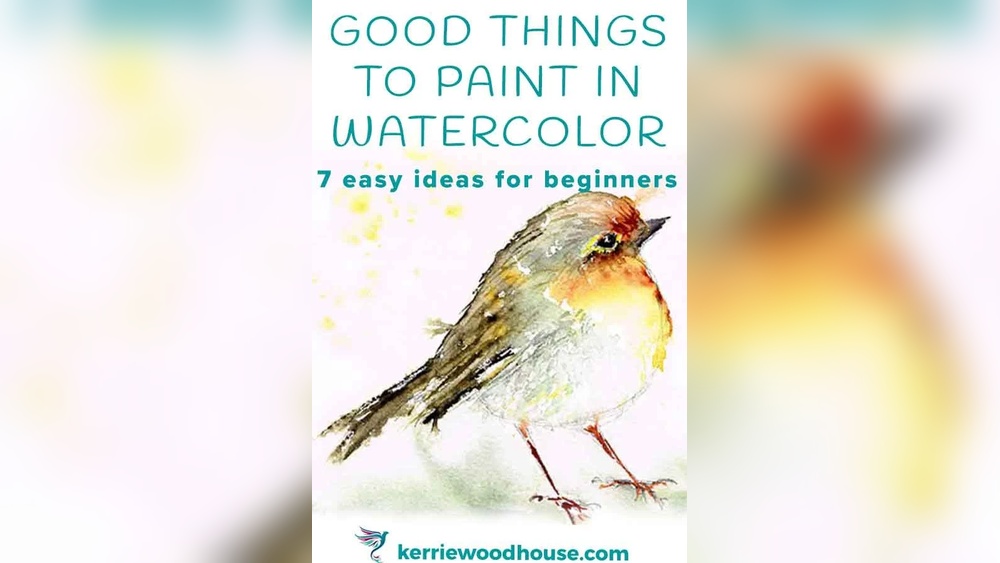
Quick answer: Good easy watercolor ideas for beginners include gradient sunsets, galaxy skies, full moons, misty mountain layers, simple trees in silhouette, lemons and other fruit, rainbow abstracts, leaves, hot air balloons, and cozy mugs. Each teaches one core skill, such as a graded wash, wet-on-wet blending or layering, and can be finished in 20 to 60 minutes. Start with a size 8 round brush, 140 lb paper and three to five colors.
The best beginner projects are not just “easy.” They teach something. A sunset gradient teaches you to control water across a wash. A galaxy teaches wet-on-wet blending. Misty mountains teach layering from light to dark. Choosing easy watercolor ideas for beginners with that in mind means every painting builds skills for the next one.
This list contains 25 projects grouped by the technique they practice, with time estimates, short methods and a suggested order to work through them. For a broader introduction to materials, color and building a practice habit, see our painting for beginners guide.
Basic Supplies
- Paper: 140 lb (300 gsm) cold-press. A pad of 9×12 inch sheets cut into quarters gives plenty of practice pieces.
- Brushes: a size 8 or 10 round, a size 2 round for details, and optionally a 1-inch flat for washes.
- Paint: a student pan set is fine. Make sure it includes a warm yellow, a cool yellow, a red, a blue and a brown.
- Extras: masking tape, two water jars, paper towels, a pencil, white gel pen for highlights, and salt or plastic wrap for textures.
Why Short Projects Work Better Than Big Ones
Beginners often jump straight into a large, detailed landscape and end up discouraged. Short projects work better for a few practical reasons. Each one gives you a complete cycle of planning, painting, drying and judging the result, so you learn from start to finish many times rather than once. Small paper dries faster, so you spend less time waiting. Mistakes cost only a scrap of paper, which makes it easier to experiment with water amounts and color mixes. And finishing something every session builds the habit that matters most: coming back to paint again.
The Three Skills These Projects Teach
| Skill | What it is | Projects that teach it |
|---|---|---|
| Washes | Laying flat or graded color across an area | Sunsets, skies, ombre, color swatches |
| Wet-on-wet | Dropping color into wet paper so it blooms and blends | Galaxies, abstracts, clouds, soft backgrounds |
| Layering (glazing) | Adding layers once the previous one is dry | Mountains, trees, fruit, simple objects |
Easy Watercolor Painting Ideas That Teach Washes
1. Gradient color swatches (10 minutes)
Paint a strip of strong color and add water to your brush with each stroke so the strip fades to white. Do one for every color in your set. It is the best first exercise, and the result doubles as a color reference chart.
2. Sunset sky (20 minutes)
Wet the top two-thirds of the paper. Starting at the top, paint purple, then pink, then orange, then yellow toward the horizon, letting each band touch the next while wet. Once dry, paint a dark silhouette strip of land or a row of palm trees along the bottom.
3. Ocean horizon (25 minutes)
Paint a pale blue sky on the top half, fading downward. Let it dry. Paint the sea with a stronger blue, darkest at the bottom, leaving a few thin white streaks for sparkle.
4. Ombre heart (15 minutes)
Draw a heart in pencil. Fill it with a graded wash from deep pink at the top to almost white at the bottom.
5. Simple rainbow (15 minutes)
Paint arcs of each color, letting edges just touch so they blend slightly. Add soft gray-blue clouds at each end.
Easy Watercolor Ideas Using Wet-on-Wet
6. Galaxy (25 minutes)
Wet a circle or the whole paper. Drop in dark blue, purple and a touch of pink, letting them swirl. Leave a few lighter areas. Once dry, flick white paint or gouache from a toothbrush for stars, and add a few larger stars with a white gel pen.
7. Full moon (20 minutes)
Trace a circle. Wet inside it and drop in very pale gray and blue, then dab with a crumpled paper towel to create crater texture. Paint a dark navy sky around it on dry paper.
8. Abstract color blooms (15 minutes)
Wet random shapes and drop in two or three colors. Watch how they spread. This teaches how much water causes how much movement, which helps with every later project.
9. Soft clouds (20 minutes)
Wet the paper. Paint blue around cloud shapes, leaving them white. Lift some color with a dry paper towel to soften cloud edges, and add pale gray to the bottom of each cloud for shadow.
10. Northern lights (25 minutes)
Wet the top of the paper and drop in green and teal in vertical streaks, with touches of purple. Once dry, paint a dark row of pine trees along the bottom.
Easy Watercolor Ideas Using Layering
11. Misty mountains (30 minutes)
Paint the farthest mountain range in very pale blue. When dry, paint a closer range slightly darker and lower on the page. Repeat with three or four layers, each darker than the last. The fading creates depth.
12. Pine tree silhouettes (20 minutes)
Over a dry sky wash, paint pine trees with a small round brush: a vertical line for the trunk, then short downward zigzag strokes getting wider toward the bottom.
13. Lemons (25 minutes)
Paint a pale yellow oval and let it dry. Add a deeper yellow on one side for shadow and a touch of green near the ends. Paint a small cast shadow beneath in diluted blue-gray.
14. Cozy mug (30 minutes)
Draw a simple mug shape. Paint it in a flat color, let it dry, then add a darker shade down one side for form. Paint swirly steam above with a very diluted gray.
15. Strawberries (20 minutes)
Paint red heart shapes. While still damp, drop darker red into one side. When dry, add tiny seed marks with a fine brush or leave tiny unpainted dots, then paint green leafy tops.
16. Simple house (35 minutes)
Paint a square wall, a triangle roof and a door. Layer windows and shadows once dry. A tree or two on the side completes the scene.
More Simple Watercolor Ideas for Beginners
17. Leaves (15 minutes)
Use press-and-lift strokes to make leaf shapes in several greens, or paint a branch of autumn leaves in yellow, orange and red.
18. Feathers (20 minutes)
Paint a thin central line, then fill each side with soft strokes angled outward, varying color along the feather. Leave small gaps for a natural split-feather look.
19. Hot air balloons (25 minutes)
Paint balloon shapes with vertical color stripes, small brown baskets below and a soft blue sky behind.
20. Cactus in a pot (25 minutes)
Paint a terracotta pot, then a green rounded cactus with darker vertical lines and tiny spines added with a fine brush once dry.
21. Mushroom (20 minutes)
Red cap with white spots left unpainted, a cream stem and a little grass at the base.
22. Simple fish (20 minutes)
Paint an oval body with a triangle tail in bright colors, letting two colors blend wet-on-wet. Add an eye and a few fin lines when dry.
23. Lavender sprigs (15 minutes)
Thin stems topped with dabbed purple florets. Our guide to painting ideas for beginners with flowers has many more floral options.
24. Snowy cabin (35 minutes)
Leave white paper for snow, paint a small cabin and dark pine trees, and add a gray-blue shadow across the snow. Leaving the snow as bare paper, rather than painting it white, is what keeps the scene bright.
25. Salt texture abstract (15 minutes)
Paint a wet wash of dark blue or purple and sprinkle table salt or coarse salt on it while wet. As it dries, the salt pulls pigment into starburst patterns. Brush off the salt when fully dry.
Suggested Order for Your First Month
| Week | Projects | Focus |
|---|---|---|
| Week 1 | Swatches, sunset, rainbow, ombre heart | Water control in washes |
| Week 2 | Galaxy, abstract blooms, clouds, northern lights | Wet-on-wet timing |
| Week 3 | Misty mountains, pine trees, lemons, strawberries | Layering and patience |
| Week 4 | Mug, house, hot air balloons, snowy cabin | Combining techniques into scenes |
Painting three or four short sessions per week, even 20 minutes each, builds skill faster than one long weekend session.
Easy Watercolor Projects for Beginners: Common Problems
| Problem | Why it happens | What to do |
|---|---|---|
| Hard edges in a wash | Part of the wash dried before you finished | Work faster, mix enough paint in advance, keep a wet edge |
| Blotches or “blooms” | Wet paint added to half-dry areas | Wait for fully dry or work while fully wet |
| Muddy colors | Too many colors mixed or layered | Limit palette; let layers dry; rinse often |
| Washed-out results | Watercolor dries lighter | Mix stronger color than you think you need |
| Paper warps | Lightweight paper, lots of water | Use 140 lb paper and tape edges |
| Lost white areas | Painted over them | Plan whites first; use masking fluid or leave paper bare |
How to Turn Practice Pieces Into Finished Art
Small beginner paintings can become useful, giftable pieces with a few finishing touches.
- Greeting cards: paint on a quarter sheet, then fold or mount it on blank card stock. Sunsets, wreaths and hot air balloons work well.
- Bookmarks: paint gradient strips or lavender sprigs on 2 by 6 inch pieces.
- Mini gallery wall: frame four postcard-sized paintings that share a color scheme, such as four galaxy variations.
- Gift tags: cut leftover painted washes into tags and add a hole punch and twine.
- Sketchbook spreads: paint a series of the same subject on facing pages to track improvement over time.
Seeing a painting used or displayed is motivating, and it encourages you to finish pieces rather than abandon them halfway.
Tips That Make Every Project Easier
- Tilt your board slightly so washes flow downward evenly.
- Mix more paint than you need before starting a wash, so you do not run out halfway.
- Use the paper’s white as your lightest color instead of white paint.
- Keep a scrap sheet beside you to test color strength before touching the painting.
- Stop when it looks almost done. Overworking is the most common beginner mistake.
- Paint small. Postcard-size paintings are faster, less wasteful and easier to complete.
Tips by Skill Level
First-time painters
Begin with swatches, sunsets and galaxies. They have no drawing and teach how water moves.
Beginners with a few sessions behind them
Move to mountains, fruit and simple objects to practice layering and shadows.
Confident beginners
Combine techniques into small scenes and start working from photos. Our step-by-step painting ideas for adult beginners offer structured projects to try next.
FAQs
What should a beginner paint first in watercolor?
Start with gradient color swatches and a simple sunset sky. Both teach water control, which is the foundation of every other watercolor technique.
What are easy watercolor ideas for beginners?
Sunsets, galaxies, full moons, misty mountains, pine trees, lemons, leaves, rainbows, hot air balloons and cozy mugs are all easy and teach core skills.
How long does it take to learn watercolor?
It varies by person and practice time. Many beginners notice clear improvement in water control within a few weeks of regular short sessions.
Do I need a lot of colors to start watercolor?
No. Three to five colors, such as a warm yellow, a cool yellow, a red, a blue and a brown, can mix most of what beginners need.
Why does my watercolor look blotchy?
Blotches usually happen when wet paint is added to an area that is partly dry. Either work quickly while everything is wet or wait until it is completely dry.
Is watercolor harder than acrylic for beginners?
Watercolor is less forgiving because it is transparent and hard to cover mistakes, but the projects are quick and inexpensive, which makes practice easy.
Next Step
Work through these easy watercolor ideas in order, washes, then wet-on-wet, then layering, and you will build real control in a few weeks. Keep paintings small, keep sessions short and keep going. When you are ready to strengthen your foundations in materials, color and technique, our essential beginner painting tips will help you take the next step.



2 Comments