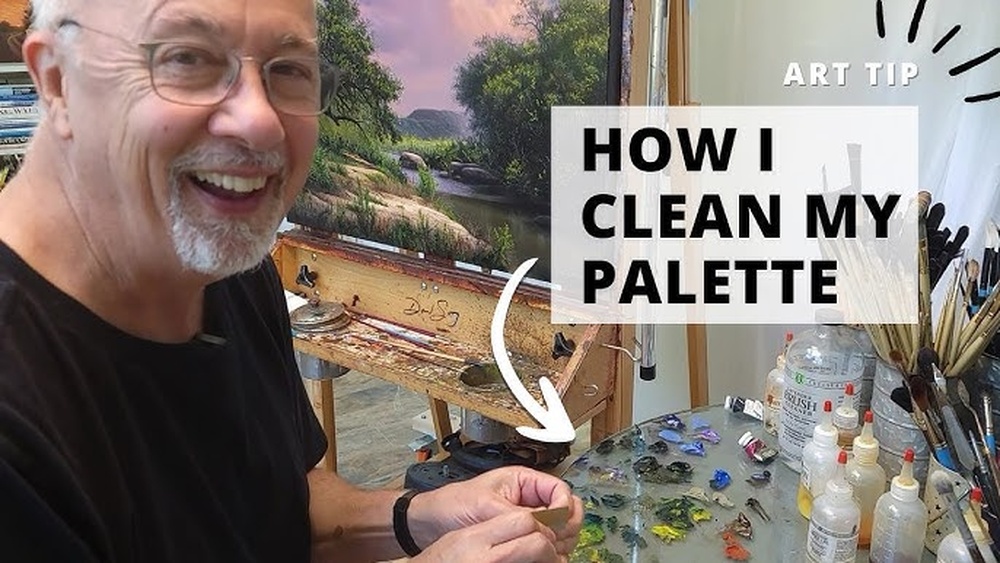
Glass palettes are popular with oil and acrylic painters for one big reason: almost nothing sticks to them permanently. Even paint that has dried for days can be lifted with the right tool, leaving a surface that is as smooth as the day you bought it. The trick is knowing which method suits which paint, and how to avoid scratching the glass or cutting yourself on the edge. Here is how to clean a glass palette quickly and safely.
Quick answer: The best way to clean a glass palette is to scrape off wet or dried paint with a single-edge razor blade scraper held at a low angle, then wipe away residue. For oil paint, follow with a rag dampened with odorless mineral spirits or a little vegetable oil, then soap and water. For acrylic, let the paint soften under a damp paper towel for a few minutes or spray with water, scrape, then wash with warm soapy water. Finish with glass cleaner or rubbing alcohol for a streak-free surface.
Why Glass Palettes Are So Easy to Clean
Glass is non-porous, hard and chemically resistant. Paint sits on the surface rather than soaking in, and the glass is hard enough that a steel razor blade held flat will not scratch it under normal use. That combination makes glass one of the easiest palette surfaces to restore to perfect condition, unlike plastic, which stains and scratches, or wood, which absorbs oil over time.
Glass palettes are also a natural fit for mixing specialty paints. If you use glass paints for decorative projects, our guide to glass paint techniques explains how those paints behave and how to get crisp, durable results.
What You Need
- Razor blade scraper: A single-edge blade in a holder with a handle is safer and easier to control than a loose blade.
- Paper towels or lint-free rags.
- For oil paint: Odorless mineral spirits, or a vegetable oil such as safflower or sunflower for a solvent-free option.
- For acrylic: Spray bottle with water, warm water and dish soap.
- Rubbing alcohol or glass cleaner for a final streak-free wipe.
- Gloves if you use solvents or have sensitive skin.
- Optional: A plastic scraper or palette knife for gentle removal of wet paint.
How to Clean a Glass Palette After Oil Painting
- Save usable paint. Before cleaning, scrape any clean, unmixed paint into a small airtight container or onto a piece of palette paper for later use. Mixed grays from the palette can be gathered into a “palette gray” for toning canvases or neutral mixes.
- Scrape the bulk. Hold the razor scraper at a low angle, around 20–30 degrees, and push it across the glass in long strokes, collecting paint onto the blade. Wipe the blade on a paper towel between strokes.
- Wipe residue. Dampen a rag with a small amount of odorless mineral spirits or vegetable oil and wipe the remaining film.
- Wash. Wipe with warm soapy water to remove any oily layer, then rinse or wipe with a clean damp cloth.
- Final polish. Spray glass cleaner or wipe with rubbing alcohol for a clear, streak-free surface. Dry thoroughly.
If oil paint has dried, the same process works: the razor scraper lifts dried oil films from glass well. Very thick, old paint may need a few passes or a few minutes under a solvent-dampened rag first.
Dispose of oil- and solvent-soaked rags safely. Rags soaked with drying oils can heat up as they cure and, in rare cases, ignite. Lay them flat to dry outdoors or place them in a sealed metal container with water before disposal, following local guidelines.
How to Clean a Glass Palette After Acrylic Painting
- Clean while wet if possible. Wet acrylic wipes off easily with a damp paper towel.
- Soften dried paint. Spray the palette with water or lay a wet paper towel over the dried paint for a few minutes. This loosens acrylic’s grip.
- Scrape. Use the razor scraper at a low angle. Dried acrylic often comes off in satisfying flexible sheets.
- Wash. Clean with warm, soapy water and a soft sponge to remove film.
- Polish and dry. Wipe with rubbing alcohol or glass cleaner and dry completely.
Some painters let acrylic dry intentionally and peel it off; on glass, a thick layer of dried acrylic can sometimes be lifted at the edge with a fingernail or blade and peeled in one piece.
Cleaning Other Media From Glass
| Medium | Best method | Notes |
|---|---|---|
| Oil | Scrape, then solvent or vegetable oil, then soap | Works wet or dry |
| Acrylic | Soak with water, scrape, wash | Easiest while wet |
| Watercolor | Rinse with water and wipe | Dried watercolor rewets; many artists leave it to reuse |
| Gouache | Rewet and wipe; scrape if thick | Acrylic gouache behaves like acrylic |
| Alcohol ink | Rubbing alcohol on a paper towel | Wear gloves; ventilate |
| Glass/enamel paint | Follow paint label; often solvent or alcohol | Clean before curing |
How to Clean a Watercolor Palette Made of Glass
Watercolor on glass is unusual but some painters use a glass or porcelain surface for mixing. Dried watercolor can be rewetted and reused, so many artists do not clean it at all between sessions. When you do want a clean slate, rinse under running water and wipe with a soft sponge. Staining pigments, such as phthalos, may leave a faint tint on porous palettes like plastic, but glass usually wipes clean.
Razor Scraper Technique and Safety
The razor blade scraper is the most effective tool for glass palettes, but it deserves respect.
- Use a holder. A blade in a handle gives better control and protects your fingers.
- Keep the angle low. Around 20–30 degrees. A steep angle can catch, chip the blade or skip.
- Push away from your body. Never pull the blade toward your hand.
- Keep the glass wet when possible, especially with acrylic, to help the blade glide.
- Replace dull or nicked blades. A damaged blade can leave fine marks; a sharp, clean blade glides and lifts paint.
- Retract or cap the blade after use and store it out of reach of children.
- Check palette edges. Many artist glass palettes have ground or beveled edges. If yours has raw cut edges, handle with care or cover the edges with tape.
How to Use a Glass Palette So Cleaning Is Easier
Place a gray or white sheet underneath
Placing a neutral gray sheet of paper under clear glass helps you judge colors and values accurately, especially when painting on a toned canvas. A white sheet works if you paint on white surfaces. This does not affect cleaning but is one of the best features of a glass palette.
Lay paint in a consistent order
Arranging colors along the top edge and keeping the center for mixing means you scrape a single area clean, leaving paint piles untouched for the next session.
Clean the mixing area between sessions
Scraping the mixing area at the end of each session takes less than a minute and prevents dried layers from building up.
Cover leftover oil paint
Oil paint piles on glass can stay workable for days if covered. A palette with a lid, or plastic wrap pressed loosely over the piles, slows skinning. Some painters store covered oil palettes in the freezer to slow drying further.
Choosing a Glass Palette
If you are considering a glass palette or a replacement, a few features make cleaning and use easier.
| Feature | Why it matters |
|---|---|
| Tempered glass | Stronger and safer if it breaks, since it crumbles into small pieces rather than sharp shards |
| Ground or beveled edges | Safer handling and cleaning |
| Neutral gray or white backing | Accurate color judgment |
| Non-slip feet | Keeps the palette stable while scraping |
| Size | Large palettes give more mixing room; small ones suit travel and detail work |
| Lid or cover | Keeps oil paint fresh between sessions |
Glass palettes with covers or lids are especially useful for oil painters who want to save paint for several days. A glass palette and muller combination is also used by painters who grind their own pigments, since the smooth, hard glass surface works well for dispersing pigment into oil.
Dealing With Stubborn Residue and Haze
Occasionally a glass palette develops a faint haze or a ghost of old color even after scraping. This is usually a thin film of binder or oil rather than a stain in the glass itself. A wipe with rubbing alcohol often clears acrylic film, while oil haze responds to a little dish soap worked in with a soft sponge, followed by rinsing. For very stubborn residue, let a solvent-dampened rag (for oil) or a wet paper towel (for acrylic) sit on the area for several minutes before scraping again. Avoid abrasive powders, which may dull some glass finishes.
DIY Glass Palette Options
A sheet of glass from an old picture frame can work as a budget palette. Tape the edges with duct tape or painter’s tape to reduce the risk of cuts, and place it on a gray or white board. Make sure the glass is thick enough not to flex under pressure; thin frame glass can crack if you press hard while scraping.
Common Mistakes When Cleaning a Glass Palette
Using abrasive scouring pads
Steel wool or harsh scouring pads can scratch some glass or leave fine marks. A razor scraper is gentler and more effective.
Scraping dry acrylic without softening
This works, but softening first with water makes it faster and reduces the chance of the blade chattering.
Pouring solvent down the sink
Solvents and paint residue should not go down drains. Let solids settle in a closed jar, decant the clear solvent for reuse and dispose of sludge according to local hazardous waste guidelines.
Leaving the palette greasy
An oily film can make the next session’s paint bead or behave oddly. Finish with soap and water and then rubbing alcohol.
Ignoring blade condition
A nicked blade drags paint instead of lifting it. Replace blades regularly.
Quick Cleaning Routine by Frequency
- After every session: Scrape the mixing area; save usable paint; cover oil paint piles.
- Weekly: Full scrape of all paint, wash with soapy water, polish with alcohol.
- Monthly: Check the palette edges, feet and blade; replace the blade if it is dull.
Glass vs Other Palette Materials for Cleaning
| Material | Ease of cleaning | Staining | Best for |
|---|---|---|---|
| Glass | Excellent; scrape and wipe | Very low | Oil, acrylic |
| Porcelain/ceramic | Very good | Low | Watercolor, gouache |
| Plastic | Fair; dried paint and stains linger | High with strong pigments | Budget, kids, acrylic |
| Wood (sealed) | Good for oil if well seasoned | Moderate | Traditional oil |
| Palette paper | Tear off and discard | N/A | Quick cleanup, travel |
FAQs
What is the best way to clean a glass palette?
Scrape paint off with a razor blade scraper held at a low angle, wipe residue with solvent (oil) or water (acrylic), wash with soapy water and finish with rubbing alcohol or glass cleaner.
Will a razor blade scratch a glass palette?
A clean, sharp razor blade held at a low angle generally does not scratch glass. Damaged blades or grit trapped under the blade can leave marks, so replace blades regularly and wipe the surface first.
How do you get dried acrylic paint off a glass palette?
Soften it with a wet paper towel or spray of water for a few minutes, then scrape with a razor blade. It often lifts in sheets.
Can I clean a glass palette without solvents?
Yes. For oil paint, scrape and wipe with vegetable oil, then wash with dish soap. For acrylic, water and soap are enough.
How do I use a glass palette for painting?
Place a neutral gray or white sheet underneath, arrange paints along the edges, mix in the center with a palette knife, and scrape clean after each session.
Is a glass palette good for oil painting?
Yes. It is easy to clean, does not absorb oil, and pairs well with a gray backing for accurate color mixing.
Final Thoughts
A glass palette rewards a simple routine: scrape, wipe, wash and polish. With a good razor scraper and a minute or two after each session, the surface stays perfectly smooth for years. If you are also painting directly on glass for decorative projects, explore our guide to painting on glass with the right techniques and paints, and for project inspiration, browse these glass painting ideas.