Quick answer: To paint tropical leaf wall art, choose a leaf type (monstera, palm, banana or bird of paradise), prime a canvas or wall, and sketch the leaf with a central vein and outline. Block in a mid-green base, paint a darker green along one side of the midrib and between veins for depth, then add lighter green highlights and fine veins with a liner brush. Finish with a simple background, a few overlapping leaves for depth and a clear varnish.
Tropical leaves are one of the most forgiving subjects for DIY wall art. Monstera, palm and banana leaves have bold, graphic shapes that read clearly from across a room, and nobody will notice if a split or a vein is slightly off. They suit modern, boho, coastal and minimalist interiors and work equally well as a single statement leaf or a lush cluster.
This guide covers how to paint tropical leaf wall art step by step: choosing leaf types, materials, sketching, color mixing for greens, painting on canvas and directly on walls, style variations and finishing. For paints that hold color and coverage across large art pieces, see our guide to paints suited to DIY wall art.
Popular Tropical Leaves to Paint
| Leaf | Shape | Difficulty | Tips |
|---|---|---|---|
| Monstera | Heart-shaped with deep splits and holes | Beginner to intermediate | Draw the overall heart first, then cut in splits |
| Palm frond | Long central stem with many narrow leaflets | Beginner | Use quick tapered strokes for leaflets |
| Banana leaf | Long, wide, with parallel veins and ragged tears | Beginner | Paint parallel veins at an angle to the midrib |
| Bird of paradise leaf | Long paddle shape, smooth edges | Beginner | Emphasize the central vein and soft shading |
| Fan palm | Radiating segments from one point | Intermediate | Draw radiating guide lines first |
| Philodendron | Deeply lobed or heart-shaped | Intermediate | Similar approach to monstera |
Materials
- Stretched canvas, wood panel, heavy watercolor paper, or a primed wall
- Acrylic paints: titanium white, black or Payne’s gray, a cool blue (phthalo), a warm blue (ultramarine), cadmium or hansa yellow, yellow ochre, sap green or a ready-mixed green
- Gesso or primer
- Brushes: large flat for backgrounds, medium filbert for leaf shapes, small round and liner for veins
- Pencil or chalk
- Painter’s tape (for clean borders)
- Palette, water and paper towels
- Satin or matte varnish
- Optional: metallic gold paint, stencils, a projector
Art Supplies for DIY Wall Art Projects
If you are new to DIY art, you do not need a huge kit. A set of acrylics in basic colors, three or four brushes, a canvas and gesso cover most tropical leaf projects. DIY art kits for adults sometimes bundle these with a pre-printed design, which can help if you want guidance. For larger pieces, buying a few larger tubes of white and your main greens is more economical than a big set of small tubes.
Mixing Tropical Greens
Real tropical leaves are rarely one flat green. Mixing your own greens gives richer, more natural results.
| Green | Mix | Use |
|---|---|---|
| Deep emerald | Phthalo blue + cadmium yellow + touch of black | Shadows, dark leaves |
| Mid jungle green | Ultramarine + cadmium yellow | Main leaf base |
| Olive green | Ultramarine + yellow ochre | Muted, natural leaves |
| Bright lime | Cadmium yellow + touch of phthalo blue + white | Highlights, young leaves |
| Sage green | Mid green + white + touch of gray | Soft, modern palettes |
| Blue-green | Phthalo blue + small amount of yellow + white | Cool accents |
Mix at least three values of green (dark, mid, light) before you start so you can paint without stopping.
How to Paint Tropical Leaf Wall Art: Step-by-Step
Step 1: Prepare the surface
Apply a coat of gesso to canvas or panel for a smooth, bright surface. If you want crisp white borders, tape the edges of the canvas.
Step 2: Paint the background
Options include crisp white, warm cream, blush pink, terracotta, soft gray, navy or a gradient. Light backgrounds feel airy; dark navy or black makes greens pop dramatically. Let the background dry fully.
Step 3: Sketch the leaves
Lightly sketch with pencil or chalk.
- Monstera: draw a heart shape, then the midrib (central vein) curving gently from the stem. Add side veins radiating outward. Draw splits between veins from the edge inward, and a few oval holes near the midrib.
- Palm: draw a curved stem and mark where leaflets attach, then draw leaflets as long, tapered shapes angled toward the tip.
- Banana leaf: draw a long oval with a midrib, then add tears in the edges.
For multiple leaves, overlap them at different angles and sizes for a natural arrangement.
Step 4: Block in the base color
Fill each leaf with your mid-green using a filbert brush. Paint in the direction of the veins. Two thin coats give even coverage.
Step 5: Add shadows
Paint a darker green along one side of the midrib and along the edges of leaves that overlap or curve away from the light. Darken the inner areas near the stem. On monstera, darken the areas just inside the splits.
Step 6: Add highlights
Using a lighter green, paint highlights on the opposite side of the midrib and along the raised sections of the leaf between veins. Blend softly into the mid-green for a natural look.
Step 7: Paint veins
With a liner brush and a light green or pale yellow-green, paint the midrib and side veins. Taper lines from thick at the base to thin at the tip. Keep veins slightly lighter than the leaf but not white.
Step 8: Add details and depth
Add a few darker accents where leaves overlap and soft shadows cast on the background beneath leaves. These details make the composition feel layered.
Step 9: Remove tape and varnish
Pull tape carefully for crisp edges. Once dry, apply a satin or matte varnish to protect the painting and even out the sheen.
Style Variations
Minimalist single leaf
One large monstera leaf on a white or cream background, painted in a flat green with simple light veins. Clean and modern.
Line art leaves
Draw leaf outlines and veins only, in black or gold, on a plain background. Quick and elegant.
Abstract tropical
Use bold, unexpected colors like pink, orange or blue for leaves, overlapping them freely with color blocks and gold accents.
Watercolor-style leaves
Thin acrylic with water for transparent layers, letting colors blend softly. Works well on paper or watercolor canvas.
Silhouette leaves
Paint solid dark leaf shapes against a vivid sunset or gradient background for a dramatic tropical look.
Metallic accent leaves
Add gold leaf or metallic gold paint to veins or edges for a glamorous finish.
Painting Tropical Leaves Directly on a Wall
- Clean the wall and make sure the base paint is fully cured.
- Plan the design on paper, then project or grid it onto the wall.
- Trace lightly with pencil.
- Use wall paint samples for large areas and acrylics for details.
- Paint from background to foreground, darkest leaves first and brightest leaves on top.
- Seal high-touch areas with a clear water-based topcoat.
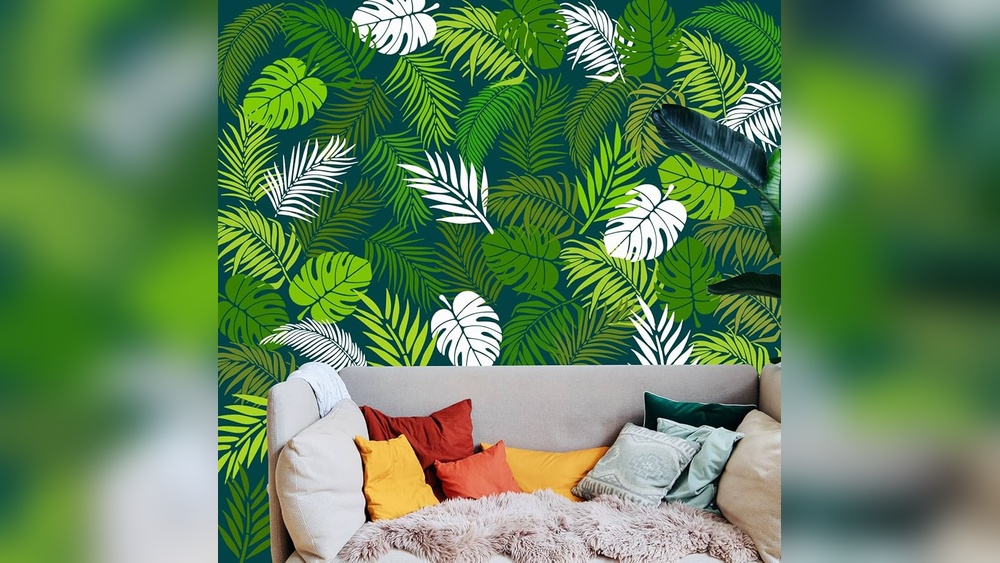
Large tropical murals look striking behind beds, sofas or in bathrooms. Renters should check whether wall painting is allowed and choose a design that can be painted over.
DIY Large Canvas Art Ideas for Beginners
Large canvases can feel intimidating, but tropical leaves scale up well:
- One oversized monstera leaf on a 30 x 40 inch canvas.
- A cluster of three palm fronds overlapping diagonally.
- Diptych or triptych with leaves spanning multiple canvases.
- Leaf pattern repeat using a stencil across the whole canvas.
Use larger brushes and a small foam roller for backgrounds to save time. Step back often to check composition from a distance.
If you enjoy natural motifs for wall art, our guide on painting pampas grass wall art offers another soft, botanical project that pairs nicely with tropical leaves.
Composition Tips
- Vary sizes and angles so leaves do not look repeated.
- Let some leaves extend off the canvas for a natural, cropped look.
- Use odd numbers of leaves (three or five) for balance.
- Leave negative space so the design does not feel cluttered.
- Place the brightest leaf near the focal point.
Common Mistakes
- Flat single green: mix multiple greens for depth.
- Bright white veins: look harsh. Use pale green or yellow-green.
- Symmetrical leaves: real leaves are irregular.
- Too many leaves: leads to clutter.
- Muddy greens from overmixing: mix with clean brushes and fewer colors.
- Skipping varnish: leaves acrylic vulnerable to dust and fading.
Painting Tropical Leaves on Different Surfaces
Canvas is the usual choice, but tropical leaf designs translate well to other surfaces if you adjust the prep.
| Surface | Prep | Notes |
|---|---|---|
| Stretched canvas | Ready to paint if pre-primed; one extra coat of gesso gives a smoother finish | Easiest option; light and easy to hang |
| Canvas panel or board | Usually pre-primed | Good for small practice pieces and gallery walls |
| Wood panel | Sand lightly, then apply two to three coats of gesso | Very smooth surface suits crisp leaf edges and line art |
| Paper (heavyweight mixed media) | Tape all four edges to a board | Best for watercolor-style leaves; frame behind glass |
| Interior wall | Clean, base coat with wall paint, let cure | Use acrylic craft or wall paint; seal in high-touch areas |
Building a Three-Panel Tropical Set
A triptych of three matching canvases is one of the simplest ways to fill a large wall without working on a single oversized surface. Three 12×16 or 16×20 inch canvases hung with 2 to 3 inches between them read as one piece from across the room.
- Line the canvases up on the floor with the same spacing you plan to hang them with.
- Sketch one continuous design across all three. Let one or two large leaves cross the gaps so the panels feel connected.
- Mix each green in one batch and use it on all three canvases. Mixing a fresh batch later almost always produces a slightly different shade.
- Paint the panels side by side, completing each step across the full set before moving on, so shadows and highlights stay consistent.
- Wrap the leaf edges around the canvas sides or paint the sides a solid color for a clean finish.
Another approach is a themed set: a monstera on one canvas, a banana leaf on the second and a palm frond on the third, all on the same background color. Repeating the same two or three greens across the set ties them together even though the shapes differ.
Caring for Finished Leaf Art
Once the varnish has cured, dust the surface with a soft, dry brush or microfiber cloth. Avoid hanging painted canvases in direct, strong sunlight for long periods, as some greens, especially those mixed with lower-lightfastness pigments, can shift over time. A UV-resistant varnish offers extra protection for pieces near bright windows.
FAQs
How do you paint a monstera leaf for beginners?
Sketch a heart shape with a curved midrib and side veins, cut in splits from the edge toward the midrib, and add a few holes. Fill with mid-green, add darker green shadows on one side of the midrib, light green highlights on the other, and paint veins with a liner brush.
What colors make a good tropical green?
Mix ultramarine or phthalo blue with cadmium yellow for vibrant greens. Add yellow ochre for olive tones, white for lighter greens and a touch of black or Payne’s gray for deep shadows.
What paint is best for tropical leaf wall art?
Acrylic paint is the most popular choice for canvas wall art because it dries quickly and comes in many colors. For murals, wall paint samples work well for large areas.
Can I paint tropical leaves directly on my wall?
Yes. Project or grid your design, trace it, paint with wall paint samples and acrylics, and seal high-touch areas with a clear topcoat.
What size canvas is best for tropical leaf art?
For a statement piece, 24 x 36 inches or larger works well. Smaller canvases like 11 x 14 or 16 x 20 inches suit gallery walls and smaller rooms.
How do I make painted leaves look realistic?
Use multiple greens, paint shadows on one side of the midrib and highlights on the other, vary leaf sizes and angles, and add cast shadows on the background.
Next Step
Tropical leaf wall art is a satisfying DIY project because the shapes are bold, forgiving and versatile. Mix several greens, sketch simple shapes, build depth with shadows and highlights, and finish with veins and varnish. Whether you paint a single minimalist monstera or a lush jungle mural, the result will bring life to your room.
Paint quality affects how vibrant and even your greens look on large surfaces. Compare options in our guide to the best paints for wall art before starting your tropical piece.