
PaintingProGuide is reader-supported. When you buy through links on this page we may earn an affiliate commission at no extra cost to you.
Search Amazon for a Jackson’s acrylic brush and the results get muddled fast. Alongside two genuine Jackson’s brushes you will see a run of “acrylic brushes” that are actually Kolinsky nail-art brushes for acrylic nail powder, a completely different craft. Once you strip those out, the honest list for painters is short: the Jackson’s synthetic Comb brush, the Jackson’s Icon sable/synthetic quill, and one fine Kolinsky detail brush made for acrylic miniature painting.
This review covers those three, explains which suits acrylic painting and which is a stretch, and gives you a clear checklist for choosing acrylic brushes from any maker.
Quick answer: The Jackson’s brush best matched to acrylic painting on Amazon right now is the Jackson’s Comb (1/4 inch), a synthetic effects brush for foliage, grass and texture. For tiny acrylic detail on miniatures and small work, the Green Stuff World Silver Series Kolinsky Size 0 is made for water-based acrylics. The Jackson’s Icon quill is a watercolour brush; use it only for thin acrylic glazes if you already own it.
Our Top Picks at a Glance
- Jackson’s Comb Brush, 1/4 inch (Synthetic) — Best Jackson’s acrylic brush for texture and foliage
- Green Stuff World Silver Series Kolinsky Brush, Size 0 — Best for fine acrylic detail and miniatures
- Jackson’s Icon Sable Synthetic Mix Quill No.0 — Best for thin acrylic glazes and watercolor-style detail, with caveats
| Product | Best For | Key Spec | Key Strength | Price Tier |
|---|---|---|---|---|
| Jackson’s Comb 1/4 in | Foliage, grass, fur texture | Synthetic hair, comb shape, 1/4 in | Many lines in one stroke | $$ |
| Green Stuff World Kolinsky Size 0 | Miniatures, fine detail | Kolinsky hair, pointed round, size 0 | Made for water-based acrylics | $ |
| Jackson’s Icon Quill No.0 | Thin glazes, watercolor detail | Sable/synthetic mix, round, size 0 | Soft, responsive point | $$ |
How We Chose
These picks are based on the Amazon listing details and specifications checked in October 2026, on how well each brush’s fiber, shape and intended medium fit acrylic painting, and on how widely each listing has been reviewed by Amazon buyers. We have not painted with these brushes. We excluded four Kolinsky brushes sold as “acrylic nail brushes” because they are designed for nail-salon acrylic powder systems, not acrylic paint, which means only three products made the list.
- Medium match: brushes sold for acrylic or water-based paint ranked highest.
- Fiber durability: acrylic is hard on brushes, so synthetic hair is favored for general use.
- Shape usefulness: what a painter can actually do with the brush.
- Listing clarity: size, fiber and shape stated plainly.
Jackson’s Acrylic Brush Review
1. Jackson’s Comb Brush, 1/4 inch — Best Jackson’s Acrylic Brush for Texture

A comb brush is a flat whose synthetic hair is thinned or arranged so that it splits into separate tufts, leaving several parallel lines with each stroke. Jackson’s lists this one as synthetic, size 1/4 inch, in an “other shapes” category, described for effects and foliage.
That makes it a specialist tool, and a good one for acrylic. Synthetic hair copes with acrylic’s quick drying and frequent cleaning better than natural hair, and a 1/4-inch comb is small enough for grasses in the foreground, fur on an animal, wood grain on a fence post or hair strands in a portrait. Load it with slightly thinned paint so the tufts stay separate.
Best suited for: acrylic landscape, wildlife and decorative painters who want fast, natural-looking texture.
Key features
- Synthetic hair
- Comb shape, 1/4 inch width
- Listed for effects and foliage
Pros
- Synthetic hair suits acrylic
- Produces multiple fine lines per stroke
- Small width gives control on small and medium paintings
Cons and limitations
- Specialist brush, not a general-purpose tool
- Handle length not stated in the listing
- A single 1/4 inch size limits coverage on large canvases
Buying consideration: add it to an existing set of rounds and flats; it is a texture tool, not a starter brush.
2. Green Stuff World Silver Series Kolinsky Brush, Size 0 — Best for Fine Acrylic Detail

Green Stuff World makes hobby supplies for miniatures and models, and this listing is direct about its purpose: a hand-crafted size 0 brush with a high natural Kolinsky hair content that works best with water-based acrylic paints, especially for washing, blending and layering.
Kolinsky hair is prized for holding a very fine point, which matters when you are painting eyes on a 28 mm figure or the last highlight on a small canvas. The trade-off is care. Natural hair suffers if acrylic dries in it, so rinse often, never let paint creep into the ferrule, and use a brush soap.
Best suited for: miniature and model painters, and canvas painters who need a precise point for tiny acrylic details.
Key features
- Kolinsky hair, hand-crafted
- Round pointed shape, size 0
- Designed for water-based acrylics
- Recommended for washing, blending, layering
Pros
- Explicitly made for acrylic detail
- Fine point for very small work
- Low price tier for natural hair
Cons and limitations
- Not a Jackson’s brush
- Natural hair demands careful cleaning with acrylic
- Tiny size; useless for coverage
Buying consideration: the right choice if detail is your bottleneck and you will commit to cleaning it properly.
3. Jackson’s Icon Sable Synthetic Mix Quill No.0 — Best for Thin Glazes, With Caveats

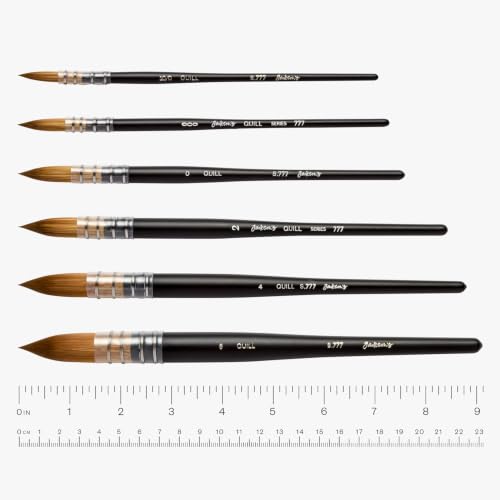
The Icon quill appears in searches for Jackson’s acrylic brushes, but its listing calls it a watercolour brush: a red sable and synthetic mix, round, size 0, for detail and wash. That is an important distinction. Blended sable hair gives a soft, responsive point and good water capacity, which watercolorists love, but acrylic’s fast-drying plastic binder is tough on natural hair.
If you already own one, it can handle very thin acrylic glazes or fluid detail as long as you rinse it every minute or two. If you are shopping specifically for acrylic, the Green Stuff World brush is the better-aligned detail choice and a synthetic round is the most durable one.
Best suited for: painters who mix watercolor and fluid acrylic and want one soft detail brush for both, used carefully.
Key features
- Red sable/synthetic mix
- Round quill profile, size 0
- Sold for watercolour detail and wash
Pros
- Soft, responsive point for fine lines
- Blend adds some resilience over pure sable
Cons and limitations
- Not designed for acrylic
- Natural hair content needs extra care
- Highest price tier of the three for a small brush
Buying consideration: buy it as a watercolor brush first; acrylic use is a bonus, not the main job.
Why We Left Out the “Acrylic Nail” Brushes
Several Kolinsky brushes appear when you search for acrylic brushes, with sizes like 8, 10, 14 or 22 and descriptions about powder absorption, nail extensions and carving. They are built to pick up a bead of acrylic monomer and powder and press it onto a nail. Their shape, size and ferrule design are optimized for that, not for paint on canvas or paper. They may be good at their own job, but they are not acrylic painting brushes, so recommending them here would mislead you.
What Makes a Good Acrylic Brush
Acrylic paint dries quickly into a flexible plastic film. That single fact shapes everything about brush choice. Brushes need to be resilient enough to be cleaned often, and their hair needs to resist the slight swelling and stiffening that comes with repeated wet-dry cycles.
That is why synthetic filaments, such as nylon and taklon, dominate acrylic painting. They spring back after heavy-bodied paint, survive soap and water, and are cheap enough to replace when they wear. Stiffer synthetics suit heavy body acrylic and impasto; softer synthetics suit fluid acrylic and glazes. Natural hair has a place for very fine detail work, as with the Kolinsky brush above, but only with disciplined cleaning.
Synthetic, natural and blended hair compared
Synthetic (nylon, taklon and similar): durable, consistent, easy to clean and the standard for acrylic. Quality varies, so look for good snap and a clean point. The Jackson’s Comb falls here.
Natural Kolinsky or sable: the finest points and best water handling, but vulnerable to acrylic drying in the hair. Worth it for tiny details if you clean carefully, as with the Green Stuff World brush.
Blends: combine some natural softness with synthetic toughness. They are usually designed for watercolor, like the Jackson’s Icon quill, and sit in between on durability.
Hog bristle: stiff natural bristle mostly used for oil. Some acrylic painters use it for heavy texture, but acrylic shortens its life.
Buying Guide: How to Choose a Jackson’s Acrylic Brush or Alternative
Read the intended medium on the listing
Brushes are designed for specific paints. A “watercolour brush” and an “acrylic nail brush” can both show up in an acrylic search; neither is designed for acrylic paint. Prefer listings that name acrylic paint or water-based acrylics.
Favor synthetic fibers for general work
For most acrylic painting, synthetics are the durable, practical choice. Reserve natural hair for detail brushes you will clean carefully.
Match stiffness to paint body
Heavy body acrylic and palette-knife-like texture need firm brushes. Fluid acrylic, inks and glazes work better with softer brushes that leave fewer marks.
Cover the core shapes first
Most acrylic painters rely on a few rounds, flats and filberts. Specialty tools like the Jackson’s Comb come after that foundation.
Consider the scale of your work
A size 0 and a 1/4-inch comb are small-scale tools. On large canvases you need brushes an inch wide or more for coverage, with small brushes reserved for finishing.
Plan for cleaning
Keep a water jar for rinsing, a second for cleaner rinse, and a brush soap. With natural hair, rinse frequently during the session, not only at the end.
How to Use the Jackson’s Comb for Acrylic Texture
Comb brushes look simple, but the results depend on paint consistency and pressure more than on the brush itself. A short routine helps you get natural marks rather than stripes.
- Thin the paint slightly. Mix heavy body acrylic with a little water or flow medium until it is creamy. Paint that is too thick clumps the tufts together; paint that is too thin runs.
- Load lightly and evenly. Dip only the front of the hair and wipe one side on the palette so each tuft carries a similar amount.
- Use the side of your wrist. Flick upward from the base for grass, following the growth direction. For fur, follow the form of the animal with short, curved strokes.
- Vary angle and pressure. Rotate the brush slightly between strokes and change how hard you press. Identical strokes in identical directions read as a pattern rather than as grass or hair.
- Layer dark to light. Lay darker texture first, let it dry (acrylic is fast), then add mid tones and a few light strokes on top for depth.
- Rinse frequently. Fine tufts clog quickly with acrylic. Rinse and blot every few loads.
A Starter Acrylic Kit Around These Brushes
None of the three brushes here is a complete acrylic kit, and that is fine. Specialist and detail brushes work best on top of a solid base. A practical acrylic setup looks like this:
- Coverage: a 1-inch synthetic flat for backgrounds and large shapes.
- Workhorses: synthetic rounds around sizes 4, 8 and 12, plus a medium filbert.
- Edges: a 1/2-inch flat or angle for crisp lines and corners.
- Texture: the Jackson’s Comb for foliage, grass and fur.
- Detail: the Green Stuff World Kolinsky Size 0 for the finest touches, or a synthetic size 0 if you want something tougher.
With that combination, each brush has a clear job and nothing sits unused in the jar. It also keeps your more delicate natural-hair brush away from the heavy lifting that would wear it out.
Keeping Acrylic Brushes Alive
Most acrylic brushes die from dried paint in the ferrule, not from wear at the tip. Load only the front half to two-thirds of the hair, and rinse before paint can creep up toward the metal. During a session, rest brushes flat or in a holder that keeps the tips out of water; standing them in a jar bends the hair and soaks the handle and glue.
At the end of the day, wash with mild soap, work it gently from ferrule to tip, rinse until clear, reshape and dry flat. If paint has dried, a dedicated brush cleaner or restorer can sometimes soften it, but prevention is far easier than repair. For natural-hair brushes like the Kolinsky and Icon, a conditioner-type brush soap helps keep the hair supple.
Learn the Techniques These Brushes Are Built For
If you are choosing between detail sizes, our guide to what size brush to use for detail acrylic work explains how 0, 00 and smaller compare. Long, thin acrylic lines are easier with the right technique; see how to use a liner brush for detail work. For a quick test of how well a round holds its point, try painting dots with a round brush.
Common Mistakes to Avoid
- Buying nail-art Kolinsky brushes for acrylic painting because the title says “acrylic brush”.
- Letting acrylic dry in the ferrule; it rarely comes out completely.
- Using a soft watercolor brush for heavy body acrylic.
- Pressing a comb brush flat and overloading it, which merges the tufts into one stroke.
- Painting large areas with a size 0; it frays the point and wastes time.
- Rinsing with hot water, which can loosen ferrule glue and set acrylic faster.
FAQs
Does Jackson’s make brushes for acrylic paint?
Yes, Jackson’s sells synthetic brushes for acrylic. On Amazon.com, the clearest option is the Jackson’s Comb, a synthetic effects brush. The Icon quill listed alongside it is a watercolour brush.
Can I use a Kolinsky brush with acrylic paint?
Yes, for fine detail, and the Green Stuff World brush is designed for water-based acrylics. Rinse often and never let paint dry in the hair.
What is a comb brush used for in acrylic painting?
A comb brush makes several fine parallel lines at once, useful for grass, fur, hair, wood grain and foliage texture.
Are acrylic nail brushes the same as acrylic paint brushes?
No. Acrylic nail brushes are made to apply nail acrylic powder and liquid. Their shape and size are designed for nails, not painting.
Can I use watercolor brushes for acrylic?
Occasionally, for thin washes, but acrylic is harsh on soft natural hair. Keep dedicated synthetic brushes for regular acrylic work.
How often should I rinse brushes when painting with acrylic?
Every few minutes, and immediately whenever you switch colors or pause. Natural-hair brushes need even more frequent rinsing.
Final Recommendation
If you want a Jackson’s acrylic brush from Amazon, the Jackson’s Comb is the one that truly fits: synthetic, specialist and well suited to acrylic texture. For fine acrylic detail, the Green Stuff World Kolinsky Size 0 is built for exactly that job. The Jackson’s Icon quill is a lovely watercolor detail brush but only a cautious occasional acrylic tool.
Beyond these three, the best acrylic setup is a solid base of synthetic rounds, flats and filberts from any reputable maker, with specialty brushes like the Comb added on top. Ignore the nail brushes, pick brushes designed for paint, and clean them like you mean it.



One Comment