
PaintingProGuide is reader-supported. When you buy through links on this page we may earn an affiliate commission at no extra cost to you.
Rembrandt vs Cobra oil paint is not a contest between a good brand and a bad one. Both are made by Royal Talens in the Netherlands, and both are pitched at serious painters. The real difference is chemistry. Rembrandt is a traditional artist-grade oil color, ground in linseed or safflower oil and cleaned up with solvents. Cobra Artist is a water-mixable oil: it behaves like oil on the palette and the canvas, but you thin it and wash your brushes with water.
So the choice is less about quality and more about how and where you paint. If you work in a ventilated studio and want maximum pigment strength with classic handling, Rembrandt is the natural pick. If you paint at a kitchen table, share space with family or simply want to avoid solvents, Cobra gives you most of the oil experience without the fumes. Below we compare the two lines in detail and point to the specific tubes and sets currently listed on Amazon.
Quick answer: Choose Rembrandt (for example the Rembrandt 10 x 15 ml Basic Set) if you want traditional, highly pigmented artist oils and you are comfortable using solvents or oil for cleanup. Choose Cobra (start with the Cobra Artist 5-Color Mixing Set) if you want solvent-free painting with water cleanup. Add Cobra Painting Medium if you go the water-mixable route and want better flow.
Our Top Picks at a Glance
- Rembrandt Oil Colour 10 x 15 ml Basic Set — Best Rembrandt starting point for traditional oil painters
- Cobra Artist Oil Color Mixing Set, 5 x 20 ml — Best Cobra starter for solvent-free primary mixing
- Rembrandt Cobalt Blue Ultramarine, 38 ml — Best single Rembrandt tube to judge pigment strength
- Cobra Ivory Black, 40 ml — Best Cobra tube for value studies and darks
- Cobra Permanent Lemon Yellow, 150 ml — Best large tube for painters who go through yellow fast
- Cobra Painting Medium 091, 75 ml — Best medium for improving Cobra flow and gloss
| Product | Best For | Key Spec | Key Strength | Price Tier |
|---|---|---|---|---|
| Rembrandt 10 x 15 ml Basic Set | Traditional oil starter palette | 10 tubes, 15 ml each | Finely ground pure pigments in linseed or safflower oil | $$$ |
| Cobra Artist 5 x 20 ml Mixing Set | Solvent-free primary palette | Cyan, magenta, yellow, white, black | Water cleanup, triple-roller milled | $$ |
| Rembrandt Cobalt Blue Ultramarine | Testing Rembrandt quality | 38 ml tube | Very high pigment concentration | $$ |
| Cobra Ivory Black | Darks and grisaille | 40 ml tube | Highest lightfastness rating per listing | $ |
| Cobra Permanent Lemon Yellow | Heavy yellow use | 150 ml tube | Large volume for frequent mixing | $$ |
| Cobra Painting Medium 091 | Flow and glazing with Cobra | 75 ml bottle | Water-thinnable, raises gloss and transparency | $ |
| Cobra Cobalt Blue Ultramarine | Direct comparison with Rembrandt blue | 40 ml tube | Same hue family, water-mixable | $$ |
How We Chose
The products here were selected from Amazon listings checked in October 2026. We looked at what each listing states about pigment, binder, lightfastness and format, and we chose items that let you compare the two lines fairly: a starter set from each, single tubes in the same color family, a large-format tube and the key Cobra medium. We also considered how widely each product is reviewed by Amazon buyers, which helps signal that a listing is established.
The comparison criteria:
- Binder and cleanup: traditional oil with solvents versus water-mixable oil with water.
- Pigment strength: how concentrated each line is, according to the manufacturer’s descriptions.
- Handling: buttery consistency, drying time and how each takes mediums.
- Health and space: fumes, ventilation and suitability for shared rooms.
- Value: tube sizes, set composition and price tier.
Rembrandt vs Cobra Oil Paint at a Glance
| Factor | Rembrandt | Cobra Artist |
|---|---|---|
| Type | Traditional artist-grade oil | Artist-grade water-mixable oil |
| Binder | Linseed or safflower oil | Modified oil that accepts water |
| Thinning and cleanup | Odorless mineral spirits or oil | Water (or Cobra mediums) |
| Pigment load | Very high concentration | High, artist quality |
| Mixing with other oils | Mixes with any traditional oil | Can be mixed with traditional oils; listing cites a 4:1 ratio |
| Ventilation needs | Higher if solvents are used | Lower; no solvents required |
| Typical buyer | Studio painters, traditionalists | Home painters, classrooms, solvent-sensitive artists |
Rembrandt Oil Paint: What You Get
Rembrandt is Royal Talens’ top traditional line. The listings emphasize pure, costly pigments ground to extreme fineness and the highest possible color strength. In practice that means a little paint goes a long way in mixes, tints stay clean when you add white, and the paint holds brushstrokes well. It is designed for painters who build in layers using the fat-over-lean rule and who are comfortable working with solvents or solvent-free oil cleanup.
The main trade-offs are cost and the cleanup routine. You will need mineral spirits or a safe oil for washing brushes, good ventilation if you use solvents, and patience: traditional oils dry slowly, which is wonderful for blending but means planning your layers.
Cobra Oil Paint: What You Get
Cobra Artist is a genuine oil paint whose binder has been modified so it accepts water. You can thin it with water, rinse brushes in water and soap, and skip solvents altogether. The Cobra listings stress artist-quality pigments, triple-roller milling for fineness, 100 colors including 45 single-pigment shades, and the ability to mix with traditional oils at a ratio of around four parts Cobra to one part traditional oil while staying water-mixable.
Painters switching from traditional oil often notice that water-mixable oils can feel slightly stickier or less buttery, especially if you add a lot of water. The fix is to thin with a dedicated water-mixable medium rather than plain water for anything beyond the first lean layers. That is where Cobra Painting Medium comes in.
Best Rembrandt and Cobra Products Reviewed
1. Rembrandt Oil Colour 10 x 15 ml Basic Set — Best for Traditional Oil Painters

This basic set is the simplest way to see what Rembrandt quality means across a full palette. The listing describes pigments ground to extreme fineness in the purest linseed or safflower seed oil, made with valuable pure pigments and produced at the highest color strength possible. Ten 15 ml tubes give you enough range to paint complete studies and decide which colors you want to buy in larger sizes later.
Small tubes are a smart way to start with an expensive line. You avoid committing to colors you rarely use, and you learn quickly which pigments you reach for most. Once you know, buy those in 40 ml tubes.
Best suited for: painters who want artist-grade traditional oils and already have a solvent or oil-based cleanup routine.
Key features:
- Ten 15 ml tubes
- Linseed or safflower binder
- Finely ground pure pigments
- Highest color strength per listing
Pros:
- Strong, clean mixes with less paint
- Classic oil handling and drying
- Good way to sample the range
Cons and limitations:
- Small tubes run out quickly on larger canvases
- Needs solvents or oil for cleanup
- Premium price tier
Buying consideration: check the color list on the listing before buying, since set contents can vary, and make sure it covers a warm and cool version of each primary if you want to mix freely.
2. Cobra Artist Oil Color Mixing Set, 5 x 20 ml — Best for Solvent-Free Primary Mixing

This set is built around a modern primary palette: primary cyan, primary magenta, primary yellow, titanium white and ivory black (listing color numbers 105, 275, 369, 572 and 701). That combination can mix a very wide range of hues and is excellent for learning color mixing without a cluttered palette.
The listing highlights water cleanup, premium pigments and oils, and triple-roller milling for fine consistency. Because the paint is water-mixable, you can try oil painting at a dining table or in a dorm room without bringing solvents into the space.
Best suited for: beginners and home painters who want real oil handling with water cleanup, and anyone learning color mixing.
Key features:
- Five 20 ml tubes: cyan, magenta, yellow, white, black
- Water-mixable, no solvents needed
- Triple-roller milled
- Mixable with traditional oils at about 4:1
Pros:
- Clean, wide-gamut mixing palette
- No solvent fumes
- Easy brush cleanup
Cons and limitations:
- Small tubes, especially the white
- Process primaries can make some earthy colors harder to mix
- Can feel tacky if overthinned with water
Buying consideration: buy a larger tube of white alongside the set; white runs out first in almost every palette.
3. Rembrandt Cobalt Blue Ultramarine Oil Colour, 38 ml — Best for Judging Rembrandt Pigment Strength
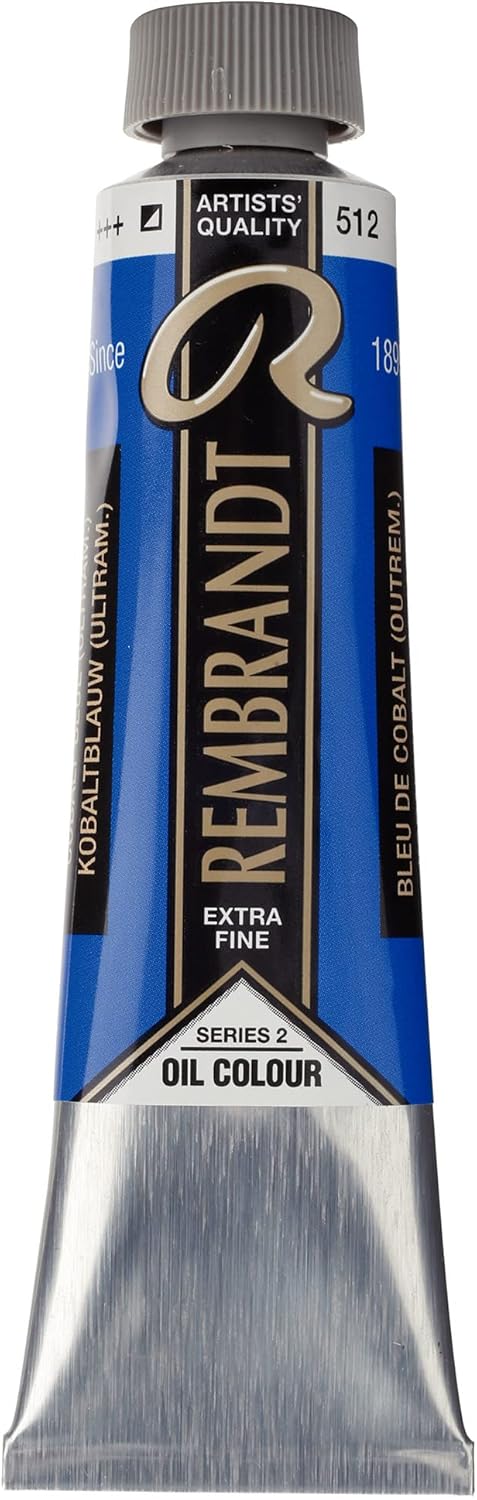
A single tube is the cheapest way to see if Rembrandt is worth the upgrade for you. The listing describes extra-fine oil color with optimal color strength, very high pigment concentration and the highest degree of lightfastness, and it conforms to ASTM D 4236 labeling.
Cobalt blue ultramarine is a versatile blue for skies, shadows and cool mixes. Compare a tint of this tube with white against the Cobra cobalt blue ultramarine below and you will see the difference in tinting strength between the two lines for yourself.
Best suited for: painters building a Rembrandt palette one tube at a time, or comparing it against a cheaper brand.
Key features:
- Approximately 38 ml tube
- Very high pigment concentration
- Highest lightfastness rating
- ASTM D 4236 conforming
Pros:
- Strong tinting power
- Useful everyday blue
- Low-risk way to try the line
Cons and limitations:
- Single color only
- Traditional cleanup required
Buying consideration: start with the colors you use most, such as a blue and an earth color, before replacing your whole palette.
4. Cobra Water Mixable Oil Colour, Ivory Black, 40 ml — Best for Darks and Value Studies

Ivory black is a classic neutral black that many painters use for grisaille underpaintings and value studies. This Cobra tube lists the highest degree of lightfastness, the same results as traditional oil paint, and water mixability without solvents.
A 40 ml tube is the standard working size and lasts much longer than set tubes. Paired with titanium white, it gives you a complete value-study palette for practicing form and light before introducing color.
Best suited for: grisaille, monochrome studies and anyone who wants a reliable black in the Cobra line.
Key features:
- 40 ml tube
- Water-mixable oil
- Highest lightfastness per listing
Pros:
- Good working size
- Ideal for underpainting
- No solvent needed
Cons and limitations:
- Black can deaden mixes if overused
- Few buyer reviews on this listing
Buying consideration: use black sparingly in color mixes; a blue and an earth tone often make livelier darks.
5. Cobra Water Mixable Oil Colour, Permanent Lemon Yellow, 150 ml — Best for Painters Who Use a Lot of Yellow

Large tubes make sense for colors that disappear quickly, and a cool lemon yellow is one of them: it is essential for clean greens and bright highlights. This 150 ml Cobra tube offers the same water-mixable formula with the highest lightfastness rating listed.
Note that some listing details are inconsistent (the color field reads white while the title says permanent lemon yellow), so confirm the color on the tube image before ordering.
Best suited for: landscape painters and anyone who mixes many greens.
Key features:
- 150 ml tube
- Water-mixable oil
- Opaque coverage noted in listing details
Pros:
- Better value per milliliter than small tubes
- Lasts through many paintings
Cons and limitations:
- Big commitment to one color
- Listing details contain a color mismatch to double-check
- Very few buyer reviews
Buying consideration: only buy big tubes of colors you already know you use heavily.
6. Cobra Water Mixable Oil Colour Painting Medium 091, 75 ml — Best for Improving Cobra Flow and Gloss

If you choose Cobra, this medium is the most useful companion purchase. The listing describes a colorless medium made with synthetic resin and vegetable oil-based ingredients. It improves flow, reduces visible brush strokes and allows smooth layering, while increasing gloss, transparency and durability.
It is water-thinnable and can be mixed with Cobra or traditional oils. Using it instead of extra water helps avoid the sticky, underbound feel that sometimes frustrates painters new to water-mixable oils.
Best suited for: Cobra painters who glaze, layer or want a glossier, smoother finish.
Key features:
- 75 ml bottle
- Synthetic resin and vegetable oil base
- Water-thinnable
- Raises gloss, transparency and durability
Pros:
- Better handling than thinning with water alone
- Works with traditional oils too
- Widely reviewed listing
Cons and limitations:
- Adds an extra step to mixing
- Not needed for every layer
Buying consideration: use it in middle and upper layers; keep early lean layers thinned with a little water.
7. Cobra Water Mixable Oil Colour, Cobalt Blue Ultramarine, 40 ml — Best for Direct Comparison With Rembrandt Blue

This tube is the Cobra counterpart to the Rembrandt cobalt blue ultramarine above. It lists the highest degree of lightfastness and water mixability with no solvents required, in a 40 ml working size.
Buying both tubes is the cheapest controlled experiment you can run: paint the same swatch and tint from each and judge handling, color strength and cleanup in your own space before investing in either line.
Best suited for: painters who want a solvent-free cobalt-type blue, or who want to compare lines side by side.
Key features:
- 40 ml tube
- Water-mixable oil
- Highest lightfastness per listing
Pros:
- Same color family as the Rembrandt tube
- Water cleanup
- Standard working size
Cons and limitations:
- Slightly less pigment-dense than Rembrandt by design
- Limited buyer reviews
Buying consideration: pair it with the Cobra medium if you plan to glaze skies or water.
Verdict by Use Case
Best for Studio Painters: Rembrandt
If you have a ventilated room, want the most pigment per brushstroke and plan to work with classic mediums like linseed oil and solvent, Rembrandt is the better match.
Best for Painting at Home or in Shared Spaces: Cobra
Water cleanup and no solvents make Cobra the practical choice for apartments, kitchens, classrooms and painters with sensitivities to fumes.
Best for Beginners: Cobra
Cobra lowers the barrier to trying oil. You can learn layering, blending and color mixing without also learning solvent safety.
Best for Traditional Techniques and Glazing: Rembrandt
Painters following old-master workflows with oil mediums usually find traditional oils more predictable over many layers.
Best of Both: Mix Them
Because Cobra tolerates a portion of traditional oil, you can add a favorite Rembrandt pigment to a Cobra palette. Keep the traditional portion small, as the listing suggests, so the mix stays water-mixable.
Buying Guide: How to Choose Between Rembrandt and Cobra Oil Paint
Where You Paint
Your space is the deciding factor more often than paint quality. Poor ventilation, pets, children or shared living spaces push the choice toward Cobra.
How You Clean Up
Rembrandt brushes need solvent or oil and then soap. Cobra brushes rinse with water and soap. Think honestly about which routine you will follow every session.
Pigment Strength and Value
A more concentrated paint stretches further in mixes, which partly offsets the higher price. If you paint large canvases, compare price per milliliter, not just per tube.
Mediums You Want to Use
Traditional mediums like linseed oil, stand oil and alkyd mediums suit Rembrandt. Cobra has its own water-mixable mediums. Mixing traditional mediums into Cobra reduces its water compatibility.
Tube Sizes
Sets with 15 or 20 ml tubes are great for sampling. Workhorse colors such as white, a blue and an earth tone are better value in 40 ml or larger tubes.
Lightfastness
Both lines list the highest degree of lightfastness on the colors shown here. Always check the rating printed on each tube, since it varies by pigment across any brand.
Practice With Either Paint
Whichever line you choose, small studies teach you its handling fastest. Try our step-by-step guide to painting a seashell in oil for blending practice, or painting fog in oil to learn soft, layered edges. Landscape painters can also work through painting grass in oil to test greens mixed from a lemon yellow.
Common Mistakes to Avoid
- Thinning Cobra with lots of plain water in upper layers, which weakens the paint film.
- Adding too much traditional oil or solvent medium to Cobra and losing water cleanup.
- Buying a full Rembrandt palette in large tubes before learning which colors you actually use.
- Using solvents in a closed room without ventilation.
- Ignoring fat-over-lean layering with either paint.
- Expecting water-mixable oils to dry much faster; they dry at roughly oil-like speeds.
FAQs
Is Cobra as good as Rembrandt oil paint?
Both are artist-grade lines from Royal Talens. Rembrandt is a traditional oil with very high pigment concentration, while Cobra is a water-mixable oil. Many painters find Rembrandt slightly richer in handling, but Cobra is the better choice if you want to avoid solvents.
Can you mix Cobra with Rembrandt oil paint?
Yes. The Cobra listing states it can be mixed with traditional oils at about a 4:1 ratio, four parts Cobra to one part traditional oil, while staying water-mixable. Larger amounts of traditional paint reduce water compatibility.
Does Cobra oil paint dry faster than Rembrandt?
Not significantly. Water-mixable oils still dry through oxidation like traditional oils. Thin layers dry in days, thick layers take longer. Drying time depends more on pigment, thickness and mediums than on the brand.
Do I need solvents with Rembrandt oil paint?
You do not strictly need solvents. You can clean brushes with a vegetable oil such as safflower, then soap and water. Many painters still use odorless mineral spirits for thinning and cleaning, which requires good ventilation.
Is Cobra good for beginners?
Yes. Cobra offers real oil handling and artist-quality pigments with water cleanup, which makes it one of the easiest ways to start oil painting at home.
Which is cheaper, Rembrandt or Cobra?
Cobra tubes are generally priced below comparable Rembrandt tubes, but prices vary by color series. Compare price per milliliter for the exact colors you need.
Final Recommendation
If you paint in a dedicated studio and want traditional oil handling with maximum pigment strength, start with the Rembrandt 10 x 15 ml Basic Set and add single tubes like cobalt blue ultramarine as your palette grows. If you paint at home, teach, or simply want to avoid solvents, the Cobra Artist 5-color mixing set plus a bottle of Cobra Painting Medium is the smarter start. Not sure? Buy one cobalt blue from each line and paint the same swatch; your own hands will settle it faster than any spec sheet.




