
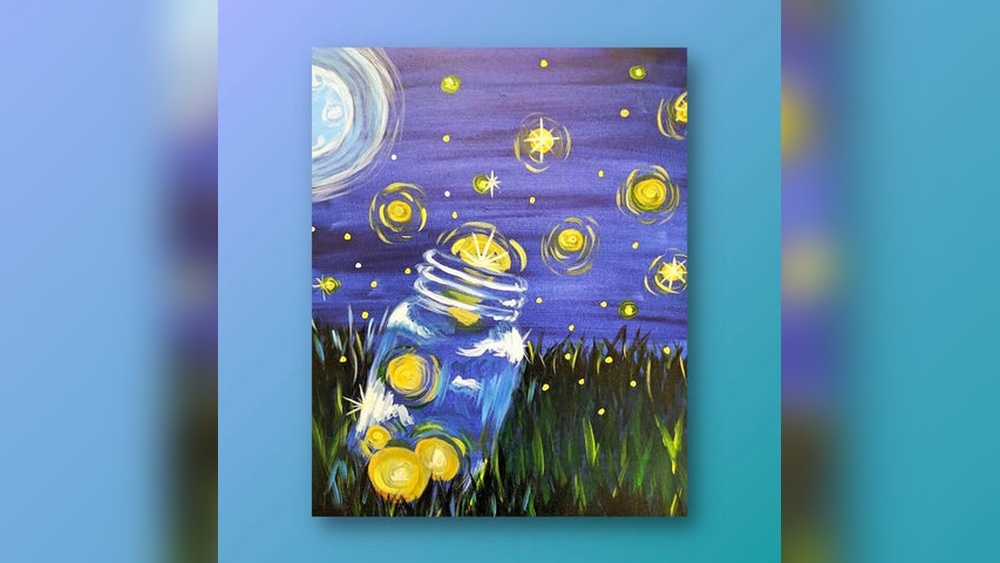
Quick answer: Simple acrylic painting ideas for beginners include a moon over the sea, a lavender field, a single lemon, a cactus in a pot, a rainbow abstract, a snowy pine, a hot-air balloon, a bird silhouette, a koi fish and a sliced watermelon. Each can be finished in under two hours on a small canvas with five colors and three brushes. Choose projects with clear shapes, few colors and no fine detail, and you will get a result you are proud of while practicing one real skill per painting.
“Simple” does not have to mean childish. The projects below are the kind that look good framed on a shelf, yet each one is built from a handful of shapes and a limited palette. That makes them achievable on a first or second attempt.
Each idea lists the colors, the time it takes, the key skill and short steps. Work through them in order, or jump to whatever appeals to you. The list starts with the easiest and ends with projects that introduce a little more control.
Before You Start: A Minimal Kit
Every acrylic painting idea for beginners in this guide uses the same basic setup:
- Colors: titanium white, a primary yellow, a primary red (or magenta), a primary blue and black or burnt umber
- Brushes: one large flat (about 1 inch), one medium round or filbert, one fine liner
- Surface: canvas panels between 6×6 and 9×12 inches
- Extras: painter’s tape, a pencil, paper towels, water and a palette
A balanced set of primaries matters more than the number of tubes. Weak, chalky paint makes even simple projects look patchy. If you are still choosing a set, our roundup of the best acrylic paints for beginners compares coverage and color range across popular starter kits.
Simple Projects at a Glance
| # | Project | Time | Skill practiced |
|---|---|---|---|
| 1 | Rainbow arch abstract | 30 min | Clean edges, color order |
| 2 | Moon over the sea | 45 min | Soft gradients |
| 3 | Single lemon on a plain ground | 45 min | Light and shadow on a form |
| 4 | Cactus in a terra-cotta pot | 1 hr | Flat shapes, simple texture |
| 5 | Lavender field | 1 hr | Perspective, repeated strokes |
| 6 | Snowy pine tree | 1 hr | Layering light over dark |
| 7 | Hot-air balloon in a pale sky | 1 hr | Curved shapes, stripes |
| 8 | Bird silhouette on a wire | 45 min | Silhouette, negative space |
| 9 | Sliced watermelon | 1 hr | Color contrast, small details |
| 10 | Koi fish from above | 1.5 hrs | Glazing, transparency |
| 11 | Northern lights | 1 hr | Dry brushing, glow |
| 12 | Simple sleeping cat | 1.5 hrs | Curves, fur direction |
The Easiest Acrylic Painting Ideas for Beginners
1. Rainbow Arch Abstract
Colors: red, yellow, blue, white. Skill: clean edges and mixing secondaries.
- Draw five or six nested arches with a pencil, using a plate or bowl as a guide for the outermost curve.
- Mix muted versions of each color by adding a little white (and a dab of umber for an earthy, modern look).
- Fill each arch with a medium round brush. Work from the outside in.
- Leave a thin strip of white canvas between arches, or let colors touch for a bolder look.
Muted “boho” rainbows are forgiving because uneven edges look intentional.
2. Moon Over the Sea
Colors: blue, black, white, a touch of yellow. Skill: gradients.
- Trace a circle for the moon in the upper third.
- Paint the sky around it, dark navy at the top easing to a lighter blue near the horizon. Blend borders while wet.
- Paint the sea darker than the sky, with horizontal strokes.
- Fill the moon with off-white (white plus a speck of yellow).
- Once dry, paint a broken vertical path of short white dashes on the water directly below the moon.
3. A Single Lemon
Colors: yellow, blue, white, umber. Skill: modeling a 3D form.
- Paint the background a soft blue-gray and let it dry.
- Paint the lemon shape in mid-yellow.
- Add the shadow side with yellow mixed with a tiny bit of blue and umber; pure black turns yellow green and dull.
- Add a highlight of pale yellow-white on the side facing the light.
- Paint a soft cast shadow under the lemon so it sits on the surface.
This is a small painting with a big lesson: light, shadow and cast shadow make anything look round.
4. Cactus in a Terra-Cotta Pot
Colors: blue, yellow, red, white, umber. Skill: flat shapes.
- Paint a flat background in pale peach or sage.
- Block in the pot with orange-brown (red, yellow and a touch of umber).
- Paint the cactus in a mid green, with a darker green stripe down each lobe for depth.
- Add tiny white or pale yellow spines with the liner brush, in short V-shaped marks.
Simple Painting Ideas for Beginners That Build Skill
5. Lavender Field
Colors: blue, red, yellow, white. Skill: perspective through scale.
- Paint a sunset sky in the top third.
- Block in the field with green, then add rows of violet (blue plus red plus white) that converge toward a point on the horizon.
- In the foreground, dab individual lavender heads with the tip of a round brush, using small vertical strokes. Make them smaller and less distinct toward the horizon.
The trick here is that big, detailed marks in front and tiny, blurry marks in the distance create depth automatically.
6. Snowy Pine Tree
Colors: blue, black, white, a little yellow. Skill: light over dark.
- Paint a gray-blue winter sky.
- With a fan or flat brush held vertically, paint a dark green pine, using downward-sloping strokes from a center trunk line, wider at the base.
- Once dry, dab white along the tops of the branches with an almost-dry brush.
- Spatter a few white snowflakes with a toothbrush.
7. Hot-Air Balloon
Colors: all five. Skill: curved stripes.
Paint a pale sky with a few soft clouds. Draw a teardrop balloon shape and divide it into vertical curved panels that bow outward like the segments of an orange. Fill alternating panels with two or three colors, then paint a small basket below with thin lines connecting it to the balloon. Add one or two tiny balloons in the distance for scale.
8. Bird Silhouette on a Wire
Colors: red, yellow, blue, black. Skill: negative space.
Blend a warm sunset background. Once it is dry, paint a thin black line across the canvas for the wire and add two or three small bird shapes perched on it. Leave large empty sky above them. The emptiness is part of the design.
Acrylic Painting Ideas for Beginners: Animals and Food
9. Sliced Watermelon
Colors: red, yellow, blue, white, black. Skill: complementary contrast.
- Paint a wedge shape in pinkish red.
- Add a thin pale green-white band, then a darker green rind along the curve.
- Add seeds as small black teardrops, each with a tiny white highlight.
- Set it on a pale blue or mint background so the red pops.
10. Koi Fish from Above
Colors: red, yellow, blue, white, black. Skill: glazing.
- Paint a deep teal pond background.
- Paint one or two koi as simple elongated teardrop shapes in white.
- Add orange and red patches on top once the white is dry.
- When everything is dry, brush a thin, watery glaze of teal over the tail and fins so they look submerged.
- Add a few curved white ripple lines.
11. Northern Lights
Colors: blue, yellow, white, black, a little red. Skill: dry brushing.
Paint a dark navy sky. Load a dry flat brush with a little green and drag it upward in soft vertical streaks, wiping most of the paint off first. Add a touch of white to the bottom edge of each streak for glow. Finish with a black treeline silhouette along the bottom and a few stars.
12. Sleeping Cat
Colors: umber, white, black, plus any accent. Skill: curved forms.
Draw a curled oval body, a rounded head tucked in and a tail wrapping around. Paint the cat in a mid-tone first, then add darker strokes following the curve of the body and lighter strokes along the top where light hits. Two closed-eye curves and small ear triangles finish it. A plain cushion shape underneath grounds the composition.
Turning One Idea into a Mini Series
Once you finish a project you like, paint it again with one change. Try the moon over the sea in a warm palette, the lemon on a dark background, or the snowy pine at sunset instead of midday. Repeating a familiar layout frees your attention for color and brushwork, and three small variations hung together look far more intentional than a single piece. It is also an easy way to see your own progress, since the second and third versions almost always improve on the first.
How to Make Simple Paintings Look More Finished
- Paint the edges. Extending the background around the sides of a canvas gives a clean, gallery look without a frame.
- Add one highlight. A single bright accent, such as a glint in an eye or a shine on a fruit, adds life.
- Keep backgrounds calm. A flat or softly blended background makes a simple subject look deliberate.
- Varnish. A satin or gloss varnish deepens colors that dried slightly dull.
How to Do Acrylics for Beginners: Habits That Help Every Project
- Sketch lightly with pencil or a thin wash, not heavy graphite that smudges into paint.
- Paint background first, then the subject, then details.
- Let layers dry before adding detail on top.
- Rinse your brush between colors so mixes stay clean.
- Step back every 10 minutes to see the whole painting.
If you want a fuller walkthrough of technique basics such as consistency, blending and brush care, our guide of tips for absolute beginners in acrylic painting covers each step in order.
Common Problems with Beginner Projects
The background shows through. Most colors need two coats over a contrasting background. Let the first dry fully before the second.
Blends look stripy. You are probably working on paint that has started to set. Blend smaller sections and mist the canvas lightly.
Details look clumsy. Thin your paint slightly with water so it flows off a liner brush, and steady your painting hand on your other hand or a mahlstick.
Colors look muddy. Mixing complementary colors (red and green, blue and orange) makes browns and grays. Clean the brush thoroughly between them.
Branching Out to Other Media
Many of these ideas translate well to other paints. Simple watercolor ideas for beginners, like the moon over the sea or the lemon, work beautifully with transparent washes. Gouache, including acrylic gouache, suits flat-color projects like the cactus and the hot-air balloon because it dries matte and opaque. Simple oil painting ideas for beginners overlap too, though oils stay wet for days, which suits slow blending.
FAQs
What is the easiest thing to paint with acrylics?
Silhouettes against a gradient sky, simple abstracts like rainbow arches, and single fruits on a plain background are among the easiest. They rely on clear shapes and few colors, so they are hard to get badly wrong.
What are good acrylic painting ideas for beginners animals?
Bird silhouettes, a sleeping cat, koi fish from above and stylized foxes work well. Paint the overall shape and main color zones first, then add a few directional strokes for fur or feathers instead of painting every hair.
How many colors do I need for simple acrylic paintings?
Five is enough: white, a yellow, a red, a blue and a dark such as burnt umber or black. You can mix almost any color you need from these, and a limited palette makes paintings look harmonious.
Are acrylic pouring ideas for beginners easier than brush painting?
Pouring requires no drawing skill, but it does require getting paint consistency right and is messier. Many beginners enjoy trying both: brush painting for control and pouring for experimentation.
What size canvas is best for simple beginner paintings?
Canvas panels from 6×6 to 9×12 inches suit most simple projects. They need less paint, dry quickly and can be finished in one session.
How can I make my beginner paintings look professional?
Choose a clear focal point, keep the background simple, use clean color mixes, paint the canvas edges and finish with varnish. These details matter more than complex subjects.
Final Thoughts
Work through a few of these projects over the next couple of weeks and keep every result. By the twelfth painting, you will handle gradients, edges and highlights with far more confidence than you started with.
Good paint makes simple projects look better and frustrates you less. To pick a set that suits these exercises, browse our guide to reliable acrylic paint kits for new painters.


8 Comments