When you pick up a paintbrush, you might wonder which one is best for your project. The truth is, not all paint brushes are created equal.
Each type has its own unique shape and purpose, designed to help you achieve specific effects and details in your artwork or home improvement tasks. Understanding the different types of paint brushes and their uses will give you the confidence to choose the right tool every time.
Whether you want sharp lines, smooth blending, or bold strokes, this guide will help you find the perfect brush for your needs. Ready to discover how the right brush can transform your painting experience? Let’s dive in!
Round Brushes
Mop brushes are large, round paintbrushes with soft bristles. They hold a lot of water and paint. Artists use them to cover big areas quickly. These brushes create smooth, even washes of color. Mop brushes work well for both wet and dry techniques. They are gentle on paper and canvas, making them popular for many art styles.
Large, Soft Heads
The mop brush has a big, soft head made from natural or synthetic hair. This design helps the brush absorb plenty of paint and water. The soft bristles glide smoothly across surfaces. It allows artists to paint large sections without leaving streaks. The size and softness make it easy to blend colors.
Smooth Washes And Gradients
Mop brushes are perfect for creating smooth color washes. They blend colors gently, making soft gradients. These brushes spread paint evenly over paper or canvas. They help avoid harsh lines and marks. Mop brushes are ideal for backgrounds and skies in paintings.
Watercolor And Oil Uses
Artists use mop brushes in watercolor and oil painting. In watercolor, they hold water well to keep paint flowing. They help create light, transparent layers. In oil painting, mop brushes soften edges and mix colors directly on the canvas. Their versatility makes them a useful tool in any artist’s kit.
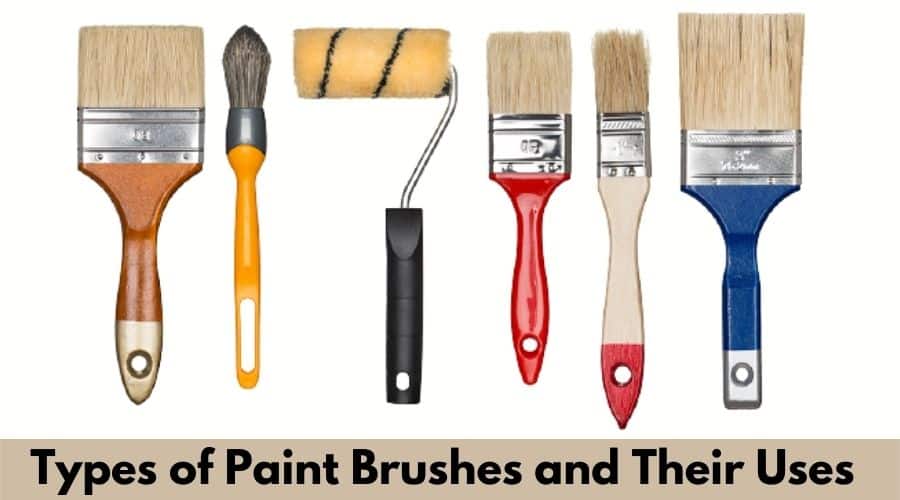
Credit: civiconcepts.com
Flat Brushes
Script liner brushes are slim and delicate tools used for detailed painting tasks. They have long, thin bristles that hold a good amount of paint. These brushes allow artists to create fine lines and intricate designs with ease. Their unique shape makes them perfect for precise work in various art projects.
Fine Hair Design
Script liner brushes have very fine hair that tapers to a sharp point. This feature helps in drawing tiny lines and delicate shapes. Artists use them to add subtle details that other brushes cannot achieve. The fine hair also makes it easier to control the paint flow.
Long, Continuous Lines
The length of the bristles on a script liner brush helps paint long, smooth lines. It holds paint well, allowing artists to draw continuous strokes without stopping. This quality makes it ideal for outlining and creating flowing patterns in artwork.
Calligraphy And Detailing
Script liner brushes are popular for calligraphy and detailed painting. They help in crafting elegant letters and decorative accents. These brushes give artists the ability to add precision and finesse to their work, enhancing the overall beauty of the piece.
Filbert Brushes
Dagger brushes are unique tools favored by many artists. Their sharp, angled shape sets them apart from regular brushes. These brushes offer control and flexibility for various painting styles. They are ideal for creating dynamic lines and shapes with ease.
Tapered Shape
The dagger brush has a pointed, tapered tip. This shape allows for both broad and fine strokes. Artists can use the wide side for bold lines. The pointed end helps with precise details. The shape makes it easy to switch between thick and thin strokes quickly.
Expressive Strokes
Dagger brushes are perfect for expressive, flowing strokes. They glide smoothly across the canvas. The brush can create sharp edges or soft curves. This versatility makes it popular for calligraphy and lettering. It also suits abstract and modern art styles well.
Specialty Uses
These brushes work great for painting leaves, petals, and feathers. They help create natural shapes with clean edges. Many artists use dagger brushes for glazing and layering techniques. The angled tip allows for careful blending without losing shape. It is a handy tool for detailed work in acrylic and oil painting.
Credit: stepbysteppainting.net
Credit: www.youtube.com
Frequently Asked Questions
What Are The Different Types Of Paint Brushes And Uses?
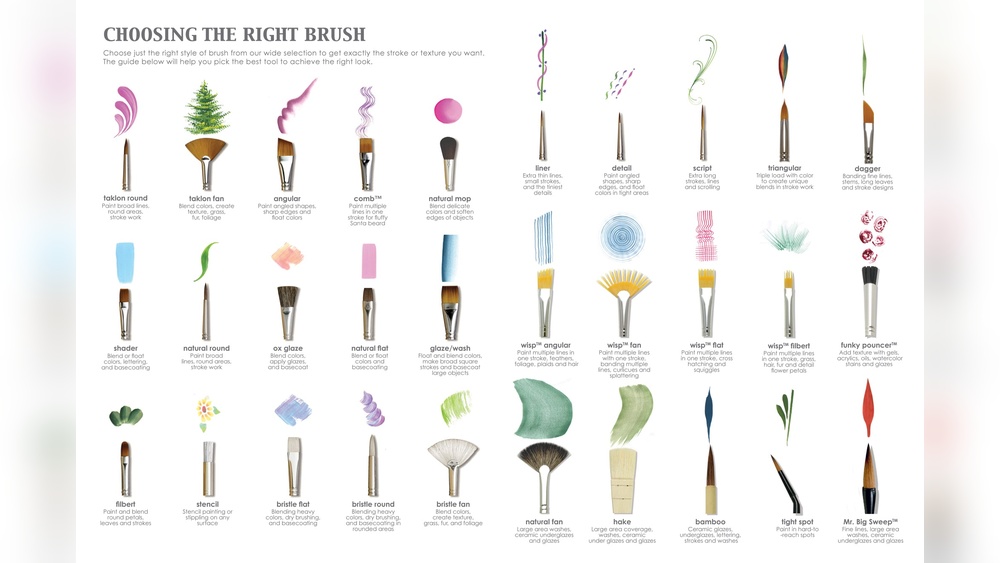
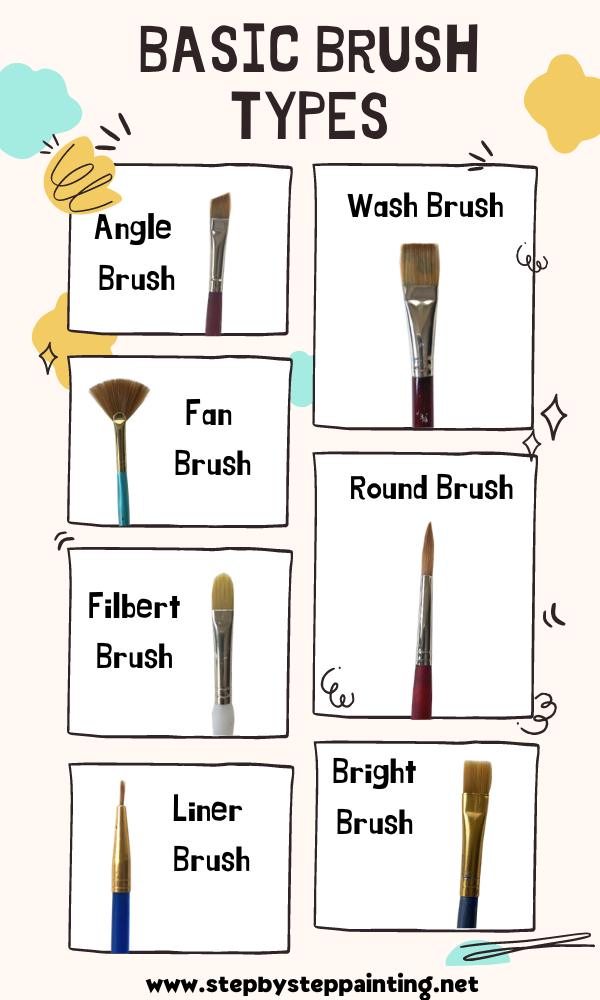
Round brushes suit detailed lines and curves. Flat brushes fill large areas with bold strokes. Filbert brushes blend softly with rounded edges. Fan brushes create textures like grass or clouds. Mop brushes apply smooth washes and gradients. Each brush offers unique effects for varied painting styles.
What Are 24 Types Of Paint Brushes With Names?
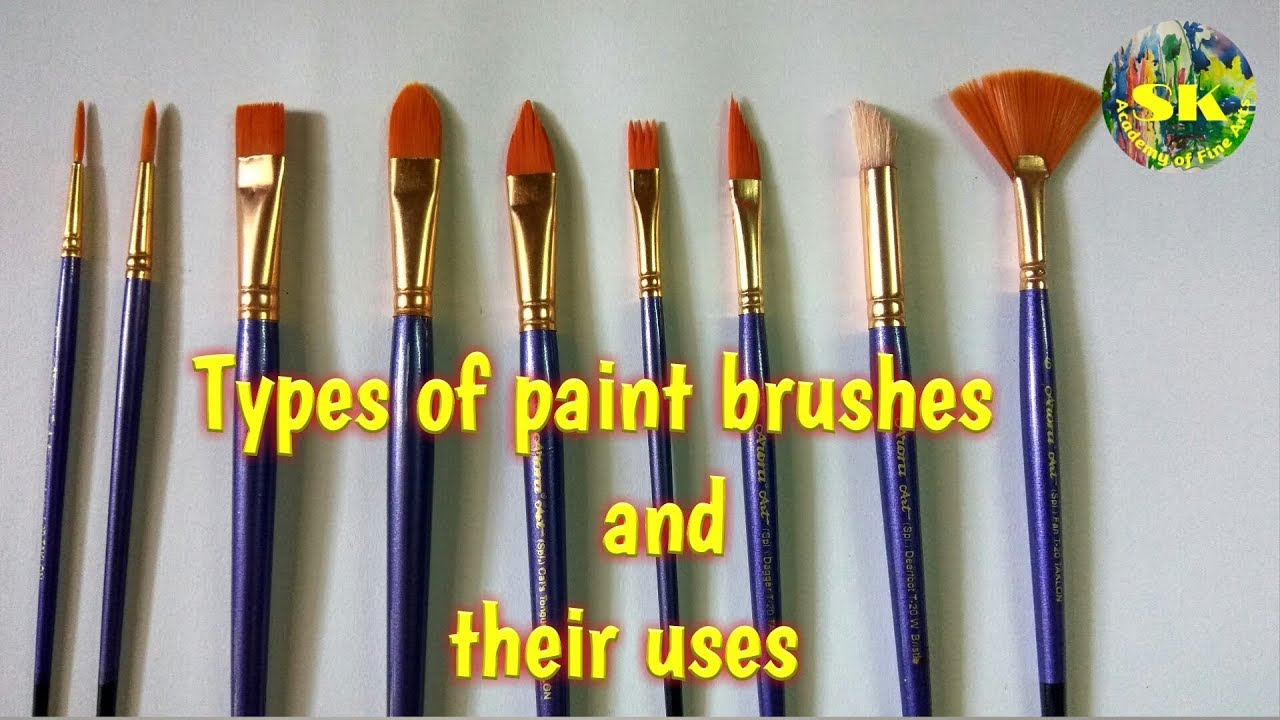
The 24 types of paint brushes include Round, Flat, Filbert, Fan, Liner, Bright, Angular, Mop, Script Liner, Rigger, Detail, Spotter, Comb, Dagger, Tongue, Stippler, Wash, Hake, Sash, Bristle, Shader, Mop, Flogger, and Spotter brushes. Each serves specific painting techniques.
What Are The Five Types Of Brushes?
The five types of brushes are Round, Flat, Filbert, Fan, and Mop. Each serves unique painting purposes.
What Are The Six Different Brush Styles?
The six brush styles are Round, Flat, Angular, Filbert, Fan, and Liner. Each suits different painting techniques and effects.
Conclusion
Choosing the right paint brush helps improve your painting experience. Each brush type serves a special purpose. Round brushes work well for fine details and lines. Flat brushes cover large areas with bold strokes. Filbert brushes blend colors smoothly with soft edges.
Fan brushes create texture and gentle blending. Using the correct brush makes your work easier and more enjoyable. Practice with different brushes to see their unique effects. Painting becomes more fun when you know which brush to use. Keep exploring and enjoy your creative journey.