Quick answer: To paint feathers in oil painting, start with the central shaft (rachis) as a single curved line, then paint each vane as one soft shape with a light side and a shadow side. Add barb texture with a dry, slightly splayed brush or a rigger, pulling strokes outward and slightly toward the tip at a consistent angle. Leave a few natural splits in the vane, keep the edges soft and broken except near the shaft, and paint pattern bands so they follow the feather’s curve.
A single feather is a surprisingly rich subject. It has a strong central structure, delicate texture, subtle curves, and in many species striking patterns or iridescence. Feathers also appear in nearly every bird painting, as wing and tail detail. Learning to paint one feather convincingly teaches the brush control, edge handling and restraint you need for full bird plumage.
This guide explains how to paint feathers in oil painting, from the anatomy of a feather to brush techniques, patterns, iridescent feathers and feathers within bird plumage. For more general background on oil techniques, the guide to oil painting techniques and styles covers the medium in more depth.
The Anatomy of a Feather
Knowing a few parts of a feather makes it much easier to paint convincingly.
| Part | Description | Painting implication |
|---|---|---|
| Rachis (shaft) | The central stiff spine running the length of the feather | Paint it as one confident curved line, lighter on one side, often slightly translucent |
| Calamus (quill) | The hollow, bare base of the shaft | Smooth and often pale or translucent, with a small highlight |
| Vanes | The flat surfaces on either side of the shaft | Paint each as a shape first, then add texture |
| Barbs | Fine branches making up the vane, angled toward the tip | Suggest with angled strokes, not by painting every one |
| Splits | Gaps where barbs separate | A few natural splits add realism |
| Afterfeather / down | Fluffy barbs near the base | Paint with soft, loose, broken strokes |
Flight feathers, such as primaries and tail feathers, have asymmetrical vanes: the leading vane is narrow and the trailing vane is wider. Contour feathers on the body are more symmetrical and rounded. Down feathers have little or no structure and look like soft tufts.
Materials for Painting Feathers
- Surface: a smooth primed panel or fine-weave canvas. Coarse texture breaks up fine barb strokes.
- Brushes: a size 4 to 6 filbert for vane shapes, a size 0 or 1 round for the shaft, a rigger for barbs and edges, and a worn or splayed small filbert or fan brush for texture.
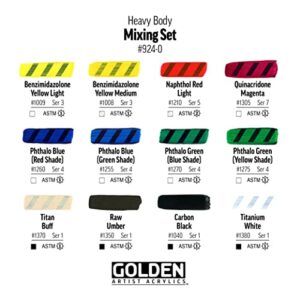
- Colors: titanium white, yellow ochre, burnt sienna, burnt umber, raw umber, ultramarine blue and, for colorful feathers, cadmium yellow light, cadmium red light, phthalo blue and phthalo green or viridian.
- Medium: a small amount of medium helps fine strokes flow; mineral spirits for the underpainting.
- Extras: a mahlstick or hand rest for steadiness.
Paint from a real feather if you can. Found feathers make good still life subjects. Check local regulations before collecting, since in the United States many wild bird feathers are protected under the Migratory Bird Treaty Act; feathers from domestic birds such as chickens, ducks or farmed peacocks, or craft-store feathers, are a safer choice.
How to Paint Feathers in Oil Painting: Step-by-Step Guide
Step 1: Set up and draw
Place the feather on a contrasting background under a single light. Draw the shaft first as a smooth curve, then the outline of each vane on either side. Note that the shaft is rarely straight; most feathers curve gently. Mark any splits and the position of the fluffy base.
Step 2: Paint the background
Block in the background first, slightly overlapping the feather’s outline. A darker background makes a light feather glow; a light background makes a dark feather crisp. Painting the background first lets you cut back into the feather edges later.
Step 3: Block in the vanes as shapes
Mix the main color of the feather and paint each vane as a single, smooth shape. Most feathers curve slightly, so one vane may catch more light than the other. Paint the lighter vane slightly warmer and lighter, and the shadowed vane slightly cooler and darker. Do not add texture yet.
Step 4: Paint the shaft
With a small round and a confident single stroke, paint the shaft. It is often lighter than the vanes, with a thin highlight along one side and a faint shadow on the other. Toward the tip, it narrows and becomes less visible. Toward the base, it thickens into the quill.
Step 5: Add barb texture
Using a rigger or a slightly splayed small filbert with a little paint, pull strokes from the shaft outward toward the edge of the vane, angled toward the feather’s tip. Use a slightly lighter color on the lit vane and a slightly darker one on the shadowed vane. Keep the angle consistent and the strokes fine, but do not paint every barb. Concentrate texture in the light and near the edges.
Step 6: Paint splits and edges
Add a few splits where groups of barbs separate, painting them as thin gaps showing the background color, angled with the barbs. Soften the outer edge of the vanes slightly with short strokes pulled outward, so the edge looks feathery rather than cut out. Keep the edge near the shaft cleaner.
Step 7: Paint the downy base
At the base, paint the fluffy afterfeather with loose, soft, curling strokes using a dry brush. Let these strokes break into the background.
Step 8: Add pattern
Bars, spots and bands must follow the feather’s surface. Bands curve slightly with the vane, and their edges are often slightly irregular because they are made of separate barbs. Paint them over the dry or semi-dry base, using short strokes in the barb direction.
Step 9: Cast shadow and highlights
Paint the feather’s soft cast shadow on the surface, slightly offset from the feather where it lifts away. Add a few small highlights along the shaft and on the lit edge of the vane.
Brush Techniques for Feather Texture
- Dry brush: wipe most paint from a bristle brush and drag lightly over a dry or semi-dry layer. The broken strokes suggest fine barbs.
- Splayed brush: press a small filbert so its bristles fan out, then pull lightly. Each bristle leaves a fine line.
- Rigger lines: for individual barbs near the edge or splits, a rigger with thinned paint gives long, fine lines.
- Sgraffito: while the paint is wet, scratch fine lines with the tip of a palette knife or the end of a brush handle to reveal the layer beneath. This can create crisp light or dark barbs quickly.
- Soft blending: on downy areas, lightly blend with a soft dry brush to create a fluffy appearance.
Painting Iridescent Feathers
Peacock, magpie, starling and hummingbird feathers show iridescence, colors that shift with the viewing angle. These colors come from the structure of the feather rather than pigment alone, which is why they appear so intense.
- Paint a dark base. Iridescent colors glow most strongly against a dark ground. Start with a deep mix such as ultramarine and burnt umber.
- Place saturated colors side by side. Add patches of phthalo green, phthalo blue, violet or gold next to each other, keeping their values relatively close.
- Use transparent glazes. Once dry, glaze transparent phthalo green or blue over parts of the feather to deepen the jewel-like color.
- Add sharp light accents. Small, bright touches of lighter color where the light catches the feather make the iridescence sparkle.
- Keep the dark surroundings. Too much light paint around iridescent areas weakens the effect.
The peacock eye, with its concentric rings of bronze, blue and green around a dark center, is a classic practice subject. Paint the rings from the outside in, softening their boundaries slightly.
Color Mixes for Common Feathers
| Feather | Base | Shadow | Accents |
|---|---|---|---|
| White (gull, egret) | White + a touch of yellow ochre | White + ultramarine + a little burnt sienna | Pure white highlights on the lit edge |
| Brown, barred (hawk, owl) | Yellow ochre + burnt sienna + white | Burnt umber + ultramarine | Dark bars of burnt umber; cream edges |
| Black (crow) | Ultramarine + burnt umber | Same, darker | Blue-violet sheen where light reflects |
| Blue (jay) | Ultramarine or phthalo blue + white | Ultramarine + burnt umber | Black bars and white tips |
| Peacock | Ultramarine + burnt umber dark base | Same | Phthalo green, phthalo blue, gold (yellow ochre + cadmium yellow) |
Feathers Within Bird Plumage
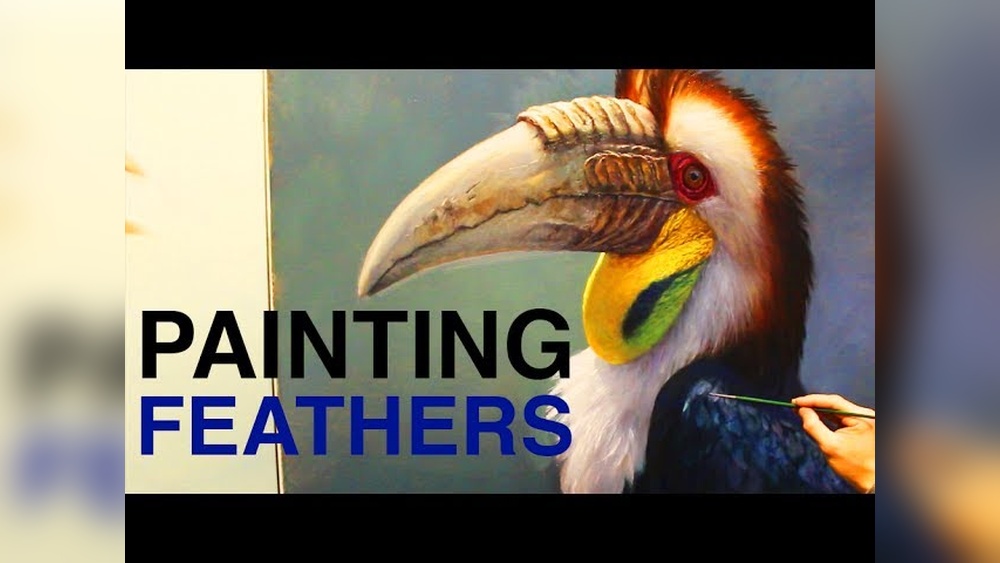
When painting a whole bird, the approach changes. Instead of painting individual feathers, you paint feather groups: the rows of coverts on the wing, the long primaries at the wing tip and the soft contour feathers of the breast. Paint each group as a mass with light and shadow first, then add a few individual feather edges near the focal point, usually on the wing and tail. Body feathers should remain soft and blended, since individual feathers there are rarely visible at normal viewing distances.
Feathers also make elegant still life companions to other natural objects. A feather beside a shell or a stone creates contrast between soft and hard textures; the guide to painting a seashell in oil covers the glossy, hard side of that pairing.
Composing a Feather Still Life
A feather on its own can look lost on a canvas. A few composition choices give it presence.
- Use a diagonal. Laying the feather on a diagonal across the canvas adds movement and fits its long shape better than a horizontal or vertical placement.
- Let it lift slightly. A feather resting partly raised off the surface casts a shadow that shifts away from it, which adds depth and a sense of lightness.
- Choose a background that contrasts in value. A pale feather on a dark, warm ground, or a dark feather on a light, cool ground, keeps the edges readable.
- Group carefully. Two or three feathers of different sizes, overlapping slightly and pointing in varied directions, create a more natural arrangement than a neat row.
- Crop close. Filling most of a small panel with a single feather turns the texture and pattern into the subject, almost like an abstract.
Lighting matters as much as placement. Low side light rakes across the barbs and reveals texture. Backlighting can make thin feathers glow at their edges, especially pale ones, but reduces the visibility of pattern.
Common Mistakes When Painting Feathers
- Painting every barb. It looks mechanical. Suggest texture with groups of strokes.
- Straight, stiff shaft. Most feathers curve. A ruler-straight shaft looks artificial.
- Barb angle inconsistent. Barbs angle toward the tip. Random directions break the illusion.
- Hard outline around the vane. Feather edges are soft and slightly broken.
- Flat color. A vane without light and shadow variation looks like paper.
- Overdone iridescence. Without dark surroundings, bright colors look garish rather than glowing.
Related Reading
FAQs
What brush is best for painting feathers in oil?
A rigger for fine barbs and edges, a small round for the shaft, and a worn or splayed small filbert or fan brush for texture. A soft blender helps with downy areas.
How do you paint realistic feather texture?
Paint each vane as a smooth shape first, then add barb texture with dry-brush or splayed-brush strokes angled from the shaft toward the tip. Add a few splits and soften the outer edges.
How do you paint a white feather in oil?
Paint it mostly in light grays, warm creams and cool blues, with a clear shadow side, and keep pure white for the brightest highlights along the lit edge.
How do you paint a peacock feather?
Start with a dark base, place saturated greens, blues and golds side by side, glaze transparent colors over them when dry, and add small bright accents. Paint the eye’s rings from the outside in.
Can you use sgraffito for feathers?
Yes. Scratching fine lines into wet paint with a knife tip or brush handle reveals the layer below and creates crisp barb lines quickly.
Is it legal to paint from found feathers?
Painting a feather is not the concern; possessing it may be. In the United States, many wild bird feathers are protected, so domestic bird feathers or craft feathers are safer still life references. Check current regulations where you live.
Final Thoughts
Convincing feathers come from structure first: a curved shaft, vanes painted as shapes with light and shadow, then barb texture and a few splits added with restraint. The same discipline scales up to full bird plumage. For more oil painting subjects, techniques and guidance on styles and materials, explore our oil paintings guide with expert painting tips.