Painting Ideas For Beginners: Flowers
Painting flowers is a wonderful place to start if you are new to art. Flowers are easy to find, come in many shapes, and allow for simple or complex designs. They can be bright and colorful or soft and gentle.
Even if you have never held a paintbrush, you can create beautiful floral art with a few tips, ideas, and the right approach.
Why Flowers Are Perfect For Beginners
For many beginners, choosing a subject can be overwhelming. Flowers make this decision easy for several reasons:
- Simple shapes: Most flowers are made up of circles, ovals, and lines.
- Colorful options: You can play with many colors or just a few.
- Mistakes are easy to fix: Unlike faces or buildings, small errors in flower shapes are not obvious.
- No two flowers are the same: Each flower looks different, so your painting is unique.
Starting with flowers helps you learn about mixing colors, using brushes, and understanding light and shadow. You will also find that painting flowers boosts your confidence as you see your progress.
Best Types Of Paint For Flower Paintings
Choosing the right paint will make your experience smoother. Here are three popular options for beginners:
- Acrylic paint: Dries fast, easy to clean with water, and covers well.
- Watercolor paint: Transparent, blends softly, and great for light, airy flowers.
- Gouache paint: Similar to watercolor but more opaque, so mistakes are easy to cover.
Each type has its own feel. Acrylic is very forgiving, while watercolor requires more planning. Gouache sits between the two. Try different types to see what you like best.
Essential Tools And Materials
You don’t need expensive supplies to begin painting flowers. A basic set is enough:
- Brushes: Start with a round brush (size 4–8), a flat brush, and a detail brush.
- Paper or canvas: Use watercolor paper for water-based paints, or canvas for acrylic.
- Palette: For mixing colors.
- Water jar: For cleaning brushes.
- Paper towels: To blot and clean up.
- Pencil: For light sketches before painting.
Spending a little more on good paper can make your painting look much better, even with student-grade paints.
Easy Flower Painting Ideas For Beginners
You don’t need to paint a realistic rose on your first try. Start with flowers that have simple shapes and build up from there. Here are some beginner-friendly ideas:
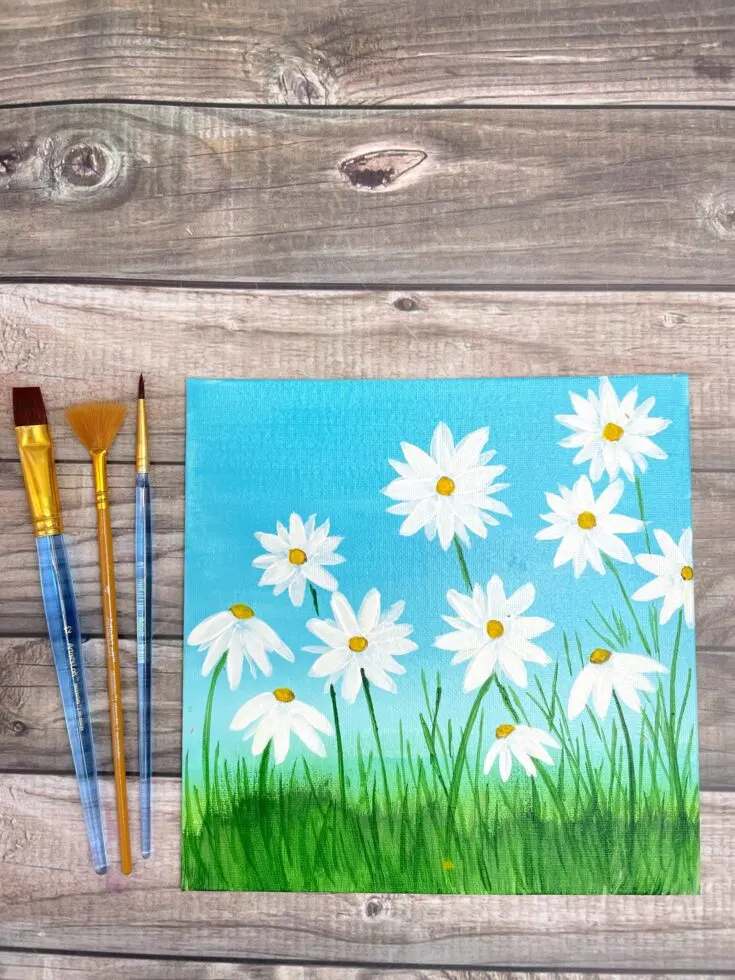
1. Daisy Painting
Daisies are among the easiest flowers to paint. Their petals are long and simple, and the center is just a circle.
- Start by drawing a small circle for the center.
- Add oval petals around the center.
- Fill the center with yellow, and the petals with white or light colors.
- Add green stems and leaves.
For a fun effect, paint several daisies together, overlapping them slightly for a natural look.
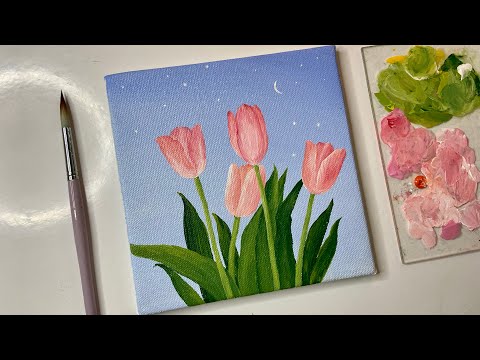
2. Tulip Painting
Tulips have cup-shaped petals that are easy to paint with bold brush strokes.
- Sketch a tall oval for the main petal.
- Add two side petals that curve outward.
- Use bright reds, yellows, or pinks.
- Paint a long green stem and a simple leaf.
Tulips look beautiful when you paint a group in different colors. Try blending two colors on the petals for more depth.
Credit: www.youtube.com
3. Sunflower Painting
Sunflowers are lively and large, perfect for practicing bold strokes.
- Draw a large circle for the center.
- Add big, pointed petals all around.
- Use dark brown for the center and bright yellow for petals.
- Paint a thick green stem.
Try adding some highlights with a lighter yellow for extra dimension.
4. Lavender Sprigs
Lavender is made of small purple flowers on a long green stem.
- Paint a thin green stem with a small brush.
- Use dabs of purple to create the flower buds.
- Cluster several sprigs together.
This is a great way to practice fine brush control and layering colors.
5. Simple Rose
Roses can look complicated but there’s an easy method for beginners.
- Start with a spiral in the center for the rosebud.
- Add curved lines around the spiral for petals.
- Use shades of red or pink.
- Add leaves and a stem.
If you want a softer look, try painting roses with watercolor and let the colors blend naturally.
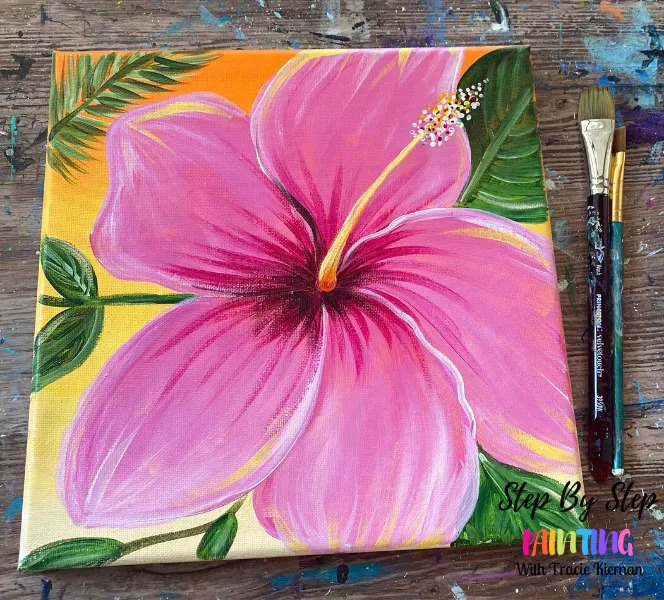
6. Poppy Flowers
Poppies have large, simple petals and a dark center.
- Paint a circle for the flower’s base.
- Add four or five big, ruffled petals.
- Use reds and oranges for petals, black for the center.
Let the paint bleed a little for a soft, natural effect.
Credit: stepbysteppainting.net
7. Cherry Blossoms
Cherry blossoms are small pink or white flowers found on tree branches.
- Paint a thin brown branch.
- Add clusters of tiny flowers using a small round brush.
- Use pale pinks or whites.
- Dot the centers with a darker color.
Cherry blossoms are beautiful as a full branch or scattered as falling petals.
8. Hydrangea Clusters
Hydrangeas are made of many small flowers grouped in a ball.
- Sketch a round shape for the cluster.
- Fill with many small dots or tiny petals in shades of blue, purple, or pink.
- Add a few green leaves.
This is a good exercise for practicing light and shadow by using different shades.
Credit: feelingnifty.com
9. Marigolds
Marigolds have layers of ruffled petals and come in warm colors.
- Paint a small circle for the center.
- Add several layers of short, rounded petals.
- Use orange and yellow, and blend a little for a soft look.
- Add a green stem and leaf.
10. Dandelions
Dandelions have thin, spiky petals and a fluffy look.
- Start with a small yellow center.
- Use quick, short strokes to add many thin petals all around.
- Paint a thin green stem.
For the “seed head” look, use white and gray to create a soft, round puff.
Experimenting With Different Styles
You can paint flowers in many ways. Try these styles to see what you enjoy most:
- Realistic: Try to match the flower as it looks in real life, with careful color mixing and shading.
- Impressionist: Use quick, loose brush strokes. Focus on color and light, not details.
- Abstract: Use bold colors and shapes. The flower does not have to look real.
Switching between styles helps you learn new techniques and keeps painting fun.
Mixing Colors For Flowers
Getting the right colors can be tricky for beginners. Here are some tips to make color mixing easier:
- Always start with primary colors: Red, yellow, blue.
- Mix small amounts at first. It’s easier to adjust.
- To make a color lighter, add white (for acrylic and gouache) or more water (for watercolor).
- To make a color darker, add a tiny bit of its opposite color (for example, add a little green to red for a deeper red).
Often, flower petals have more than one color. Try blending two shades while the paint is still wet for a natural look.
Common Mistakes Beginners Make
Learning from mistakes can save you time and frustration. Here are a few common issues:
- Too much water: For acrylics and gouache, too much water makes colors pale and hard to control.
- Not letting layers dry: If you paint on wet paint, colors can mix in a messy way.
- Overworking details: Simple brush strokes often look better than trying to fix every line.
- Skipping the sketch: A light pencil sketch helps keep your flowers balanced.
If you notice your colors turning muddy, clean your brush and palette often.
Practice Exercises For Improvement
To get better at painting flowers, try these simple exercises:
- Petal practice: Fill a page with different petal shapes using one brush and color.
- Color blending: Practice blending two colors on one petal.
- Value study: Paint the same flower in black, white, and gray to learn about light and shadow.
- Quick sketches: Set a timer for 5 minutes and paint a flower quickly. This helps you loosen up.
These exercises will build your confidence and help you develop your own style.
How To Arrange Flowers In A Painting
Painting a single flower is a good start, but arranging several flowers adds interest. Try these ideas:
- Bouquet: Paint a group of different flowers in a jar or vase.
- Field: Show many flowers together, like a wildflower field.
- Close-up: Focus on just one part of a flower, like the petals or center.
- Pattern: Repeat one flower across the page for a decorative look.
Arranging flowers helps you learn about composition, which is how you place things in your painting.
Inspiration From Famous Artists
Many great artists have painted flowers. Looking at their work can inspire your own. Some famous examples include:
- Vincent van Gogh: Known for his bold sunflowers and energetic brush strokes.
- Georgia O’Keeffe: Famous for her large, close-up flower paintings.
- Claude Monet: Painted soft, colorful water lilies and gardens.
Try to study how these artists used color, light, and shape in their paintings. For more inspiration, you can explore resources like the Flower painting Wikipedia page.
Comparison Of Paint Types For Flower Painting
Here is a useful comparison to help you choose the best paint for your flower art:
| Paint Type | Drying Time | Opacity | Best For |
|---|---|---|---|
| Acrylic | Fast (minutes) | Opaque | Bold, bright flowers |
| Watercolor | Medium (minutes to hour) | Transparent | Soft, light flowers |
| Gouache | Medium | Semi-opaque | Flat, graphic flowers |
This will help you match your painting style with the paint type.
Comparison Of Flower Difficulty For Beginners
Some flowers are easier to start with than others. This table shows a few common options:
| Flower | Shape Complexity | Color Variety | Beginner Friendly |
|---|---|---|---|
| Daisy | Simple | Low | Yes |
| Rose | Medium | Medium | Yes (simple version) |
| Sunflower | Simple | High | Yes |
| Hydrangea | Complex | High | Not for first painting |
This helps you pick the right flower for your skill level.
Non-obvious Tips For Better Flower Paintings
Most beginners focus on the flower, but two things often get missed:
- Backgrounds matter: Painting a simple background (like a light blue wash for the sky or soft green for leaves) can make your flower stand out. Don’t leave the background plain white every time.
- Use reference photos: Take your own photos of flowers or use free image sites. Painting from real-life photos helps you see details you might miss from memory.
Also, don’t forget to step back and look at your painting from a distance. This helps you spot problems with shape or balance that you don’t see up close.
Frequently Asked Questions
What Is The Easiest Flower To Paint For Absolute Beginners?
The daisy is usually the easiest because it has a simple round center and oval petals. You do not need to blend many colors or worry about complex shapes.
Do I Need To Draw First Before Painting Flowers?
It helps to lightly sketch the basic shape with a pencil, especially if you are new. This keeps your flower balanced and helps you place petals evenly.
What Are The Best Brushes For Painting Flowers?
A round brush works well for petals, while a flat brush is good for stems and leaves. A small detail brush helps with fine lines or small flowers.
How Do I Make My Flower Painting Look More Realistic?
Pay attention to light and shadow. Use lighter colors where the light hits the flower and darker shades for shadows. Also, look at real flowers or photos for reference.
Can I Mix Different Types Of Paint In One Flower Painting?
It’s possible, but mixing water-based paints like watercolor with acrylic can be tricky. Usually, it’s better to stick to one type or use gouache and watercolor together, as they work well on similar paper.
Painting flowers is a joyful and creative way to start your art journey. With simple shapes, bright colors, and a little practice, you will see progress quickly. Try different ideas, don’t be afraid of mistakes, and most importantly—enjoy the process.
Every flower you paint will teach you something new.