PaintingProGuide is reader-supported. When you buy through links on this page we may earn an affiliate commission at no extra cost to you.
Two brushes can be the same shape and size and behave completely differently, and the reason is almost always the bristle. This paint brush bristle types explained guide covers the fibers you will meet in an art store or an Amazon listing, what each one does well, which paint it belongs with, and how to read a listing that only says “premium hair.” At the end we point to a few brush sets whose listings are specific enough about fiber to recommend.
The focus here is fine-art and craft painting: acrylic, oil, watercolor and gouache on canvas, paper and craft surfaces. House-painting brushes follow similar logic, and one natural-bristle wall set makes the list for priming large canvases, but we are not reviewing trim brushes.
Quick answer: Choose synthetic (nylon or polyester) bristles for acrylic and most craft paint, hog bristle for stiff oil-paint work and heavy texture, and soft natural hair or soft synthetic (sable, squirrel, goat or their imitations) for watercolor and smooth blending. If a listing does not name the fiber, assume a basic synthetic and price accordingly.
Bristle Types at a Glance
- Hog (Chungking) bristle — Best for oils, impasto and scrubbing in color
- Sable and kolinsky — Best for watercolor detail and fine oil glazing
- Squirrel and goat — Best for soft watercolor washes and mop work
- Ox and pony — Best for budget natural soft brushes and lettering
- Synthetic nylon (Taklon-style) — Best for acrylic and all-purpose craft painting
- Synthetic sable and squirrel imitations — Best vegan alternative for watercolor
- Blends and specialty filaments — Best for texture brushes such as grainers, combs and fans
| Bristle Type | Best For | Key Spec | Key Strength | Price Tier |
|---|---|---|---|---|
| Hog bristle | Oil, heavy-body acrylic | Stiff, flagged tips, holds thick paint | Moves heavy paint, leaves visible stroke | $ to $$ |
| Sable / kolinsky | Watercolor, oil detail | Fine point, strong spring, high capacity | Precision and snap | $$$ |
| Squirrel / goat | Washes, mops | Very soft, huge water load, little spring | Smooth, puddle-free washes | $$ to $$$ |
| Ox / pony | Budget soft brushes | Medium soft, moderate spring | Inexpensive natural option | $ |
| Synthetic nylon | Acrylic, craft, gouache | Tapered filaments, resists solvents and water | Durable and affordable | $ to $$ |
| Synthetic sable / squirrel | Watercolor | Mixed-diameter filaments mimic hair | Animal-free, holds a point | $ to $$ |
| Specialty filaments | Texture effects | Split, comb or fan arrangements | Grass, fur, wood grain in one stroke | $ |
How We Chose
The bristle explanations below rest on well-established properties of each fiber as used in artist brushes. For the product section, we did not paint with the brushes; picks are based on Amazon listing details and specifications checked in October 2026, with preference for listings that actually name the fiber and the brush shapes included, and with some weight given to how widely each set is reviewed by Amazon buyers.
- Fiber named: the listing states nylon, hog, sable, or a specific synthetic rather than “premium hair.”
- Shape variety: rounds, flats, filberts and liners, or a specialty set with a clear purpose.
- Ferrule and handle: seamless or double-crimped ferrules and sealed handles reduce shedding and swelling.
- Fit to medium: stiffness and absorbency matched to the paint the set claims to serve.
Paint Brush Bristle Types Explained
Hog bristle
Hog bristle, often labeled Chungking after the Chinese region historically associated with the best quality, is the classic oil-painting fiber. Each bristle is naturally split at the tip into “flags,” which hold thick paint and leave a textured stroke. It is stiff enough to push heavy-body acrylic or oil around the canvas and to scrub color into a toothy ground.
Hog does not hold a fine point and absorbs water, so it goes limp in thin watercolor. Interlocked hog bristles, where the natural curve of each fiber bends inward, keep their shape far better than cheap straight-set bristle.
Sable and kolinsky
Sable comes from the tail hair of members of the weasel family; kolinsky is the premium grade from the Siberian weasel. The hairs taper to a needle point, carry a lot of liquid and spring back after each stroke. That combination is why kolinsky rounds dominate watercolor detail work and fine oil glazing.
Prices are high, supply is restricted and the hair is damaged by acrylic drying in the belly. Reserve true sable for watercolor, gouache and thinned oils.
Squirrel and goat
Squirrel hair is extremely soft with almost no spring and enormous capacity, which makes it ideal for mops and large watercolor washes where you want the paint to flow out evenly. Goat hair is similar, slightly coarser, and common in hake brushes used for wetting paper and laying flat washes.
Neither holds a sharp point or handles thick paint. If a brush feels floppy and holds a puddle, it is doing its job.
Ox and pony
Ox hair, from the ears of cattle, is springy but lacks a fine point; it appears in lettering and sign brushes and in budget flats. Pony is soft and inexpensive, common in school and craft brushes and in cosmetic brushes. Both are honest low-cost natural fibers, not substitutes for sable.
Synthetic nylon and polyester
Modern synthetics are extruded nylon or polyester filaments, tapered and sometimes textured to mimic natural hair. Golden Taklon-style filaments are the standard for acrylic: they resist the alkaline water in acrylic paint, spring back well and are easy to clean. Stiffer white synthetics imitate hog for acrylic impasto; softer synthetics imitate sable for watercolor.
Synthetics shed less than natural hair, cost less and can be rinsed hard. Their weakness is that filaments eventually curl at the tip if left standing in water or dried paint.
Synthetic sable and squirrel imitations
Newer synthetics blend filaments of different diameters and surface texture to approach the capacity and point of sable or the softness of squirrel. They are the realistic animal-free choice for watercolor and have narrowed the performance gap considerably, especially in rounds under size 10.
Specialty filaments and arrangements
Grainers, combs, rakes and fans use ordinary synthetic or hog filaments arranged in splits or thin fans to produce multiple lines in one stroke. They paint grass, fur, hair and wood grain quickly and are among the cheapest ways to add texture to acrylic and watercolor work.
Matching Bristle to Medium
Acrylic
Synthetic nylon in rounds, flats, filberts and liners. Stiff synthetics for heavy body, soft synthetics for fluid acrylic and glazing. Avoid natural soft hair; acrylic ruins it.
Oil
Hog bristle for blocking in and texture; soft synthetic or sable for details and smoothing. Solvent-safe synthetics survive mineral spirits better than cheap nylon.
Watercolor and gouache
Sable or synthetic sable rounds for control, squirrel or goat mops for washes. Spring matters for detail, capacity for washes.
Craft paints on wood, rock and fabric
Inexpensive synthetic sets. Rough surfaces chew up brushes, so buy quantity over quality and keep a few liners for detail.
Brush Sets With Clearly Specified Bristles
1. Fuumuui 26-Piece Professional Synthetic Brush Set — Best for Acrylic, Oil and Gouache Variety

Fuumuui’s 26-piece set is a good illustration of what a well-specified synthetic set looks like. The listing names soft synthetic nylon bristles chosen for load capacity, elasticity and shape retention, and spells out the shapes: large wide flats, pointed rounds, liners, flats, brights, slants, daggers, filberts, fans, feather and more. Ferrules are described as double-crimped copper with strong adhesive at the handle joint to prevent loosening.
Handles are birch wood, and the set ships in a canvas roll. For a painter who wants to feel the difference between a bright, a filbert and a dagger with the same fiber, this is a practical sampler.
Best suited for: acrylic and gouache painters, and oil painters who want synthetic detail brushes, who want every common shape in one roll.
Key features:
- 26 brushes, synthetic nylon
- Shapes include flat, bright, filbert, round, liner, dagger, fan, slant
- Double-crimped copper ferrules
- Birch handles, canvas storage roll
Pros:
- Fiber and shapes clearly specified
- Shape variety teaches what each does
- Roll keeps tips protected
Cons and limitations:
- Soft synthetic will not move very thick oil like hog bristle
- Twenty-six brushes is more than most need
- Mid-range price tier
Buying consideration: Treat this as a shape library; once you know which three shapes you actually use, buy those in higher grades.
2. GACDR Grainer and Comb Brush Set — Best for Texture Effects

The GACDR set shows the specialty-filament category in action: four comb-tip brushes in 1/4, 3/8, 1/2 and 5/8 inch widths. The listing specifies split synthetic Toray hair and imported Korean nylon, seamless silver ferrules and short black birch handles, and recommends the set for acrylic, watercolor, gouache and oil.
Split filaments produce multiple parallel lines per stroke, which is exactly what you want for grass, fur, hair and wood grain. Short handles give close control for small texture passages.
Best suited for: landscape and animal painters, and crafters adding wood grain or fur texture in a few strokes.
Key features:
- 4 comb brushes: 1/4, 3/8, 1/2, 5/8 inch
- Split synthetic Toray and Korean nylon filaments
- Seamless silver ferrules
- Short birch handles
Pros:
- Instant texture
- Fiber clearly named
- Inexpensive
Cons and limitations:
- Single-purpose brushes
- Split tips lose definition if paint dries in them
- Short handles are less suited to easel work at arm’s length
Buying consideration: Keep these rinsed; dried acrylic in the splits turns a comb into a flat.
3. KEVIN&SASA CRAFTS 24-Piece Brush Set with Canvas Case — Best for Budget Shape Variety

This 24-piece set is the budget end of the spectrum, and its listing is a fair example of a general craft set: it names the shapes included (fan, bright, detail, round, mop and angle brushes) and says the set suits watercolor and acrylic, but it does not specify the fiber beyond wood handles. Expect basic synthetic filaments.
That is fine for its purpose. For kids, classrooms and rough craft surfaces where brushes wear out quickly, a cased set of 24 shapes at this price is sensible.
Best suited for: students, craft tables and anyone painting on wood, rock or fabric who needs many brushes cheaply.
Key features:
- 24 brushes across fan, bright, round, mop, angle and detail shapes
- Canvas carrying case
- For watercolor and acrylic per listing
- Wood handles
Pros:
- Lowest price tier
- Good shape variety for learning
- Case included
Cons and limitations:
- Fiber not specified
- Expect shedding and tip curl sooner than specified sets
- Mop brushes in cheap synthetics hold less water than natural hair
Buying consideration: Buy for craft and practice, not for a watercolor you plan to frame.
4. Bates 6-Pack Natural Bristle Brushes — Best for Gesso and Priming Large Canvases

A wall brush is not an art brush, but a natural-bristle flat is the most economical way to prime large canvases and panels. The Bates six-pack includes three flats (1, 1.5 and 2 inch) and three angled brushes (1.5, 2 and 2.5 inch). The listing describes sturdy natural bristles that hold more paint for a smoother finish, lightweight wood handles, and compatibility with both oil-based paints and latex stains.
For a painter, that translates to spreading gesso or an oil ground quickly and evenly, or laying in a toned background on a large canvas before switching to artist brushes.
Best suited for: painters who prime their own canvases or work large and need wide, inexpensive bristle brushes.
Key features:
- 6 brushes: 1, 1.5, 2 inch flats and 1.5, 2, 2.5 inch angles
- Natural bristle
- Oil- and water-based compatible per listing
- Wood handles
Pros:
- Cheap way to cover large areas
- Natural bristle holds a lot of gesso
- Angled brushes reach canvas edges
Cons and limitations:
- Not for detail or fine art strokes
- Natural bristle swells in water-based gesso over time
- Listing is for walls, so expect a coarse finish
Buying consideration: Keep one for gesso and one for varnish; never mix the two.
5. Artist’s Toolbox: Painting Tools and Materials — Best Reference Book

If you want the full picture beyond bristles, the Walter Foster Creative Team’s Artist’s Toolbox: Painting Tools and Materials is a practical paperback guide to paints, brushes, palettes and the rest of the studio kit. Its listing offered no detailed description when we checked, so we can only say it is a general materials primer from a long-running art-instruction publisher.
Best suited for: beginners who want one book that explains brushes, paints and surfaces together.
Buying consideration: a reference like this pays off most before you buy a large brush set, not after.
Buying Guide: Reading a Brush Listing
Fiber named, not implied
“Premium hair,” “artist quality” and “professional” mean nothing. Look for nylon, Taklon, hog, sable, squirrel, goat or synthetic sable in the text.
Ferrule construction
Seamless or double-crimped metal ferrules resist loosening and shedding. Plastic ferrules and single crimps are the first thing to fail on cheap brushes.
Handle length
Long handles suit easel painting at arm’s length in oil and acrylic. Short handles suit watercolor, detail and table work.
Shape list
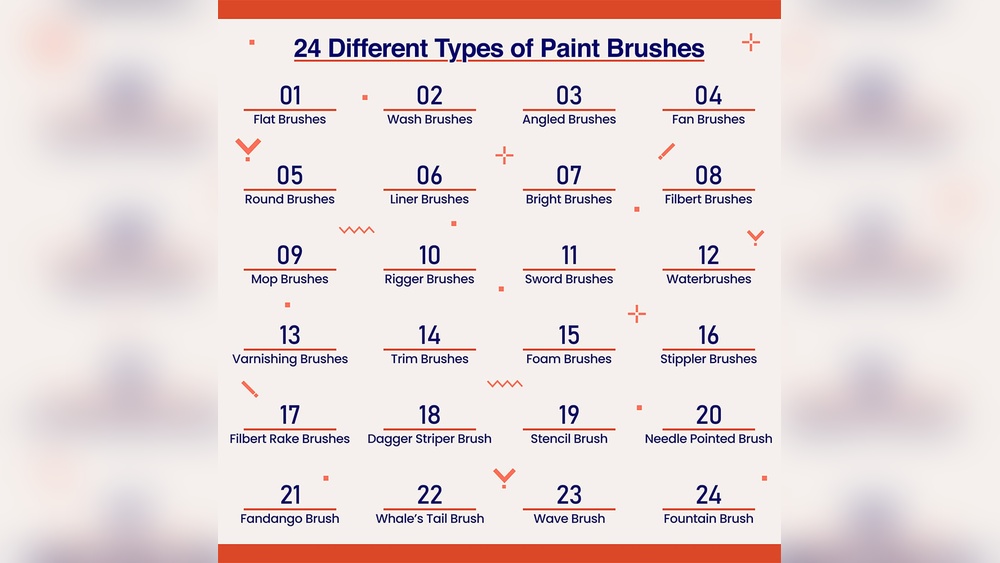
A good listing names shapes: round, flat, bright, filbert, angle, fan, liner, mop. A set that only shows a photo is a gamble.
Stiffness versus medium
Thick paint needs stiff fiber; thin paint needs soft, absorbent fiber. A set that claims to be perfect for everything is usually mediocre at both.
Price per useful brush
Divide the price by the number of brushes you will actually use, not the number in the box. A 26-piece set you use six brushes from is a six-brush set.
Technique Guides for Specific Brushes
Bristle type sets the ceiling, but technique does the work. See how to use a liner brush for detail work, what size brush for detail acrylic work and how to paint dots with a round brush for shape-specific practice.
Common Mistakes to Avoid
- Using sable or squirrel with acrylic and ruining it in a week.
- Leaving any brush standing on its tip in water.
- Buying hog bristle for watercolor and wondering why it goes limp.
- Trusting “premium hair” without a fiber name.
- Washing natural hair with hot water, which strips its oils.
- Judging a set by piece count rather than by ferrule quality and fiber.
FAQs
What is the difference between natural and synthetic paint brush bristles?
Natural bristles come from animals (hog, sable, squirrel, goat, ox, pony) and vary in stiffness and absorbency. Synthetics are nylon or polyester filaments engineered to imitate them; they resist water and acrylic better and cost less.
Which bristle type is best for acrylic paint?
Synthetic nylon or Taklon-style filaments. They tolerate the alkaline water in acrylic, spring back and clean easily. Stiffer synthetics handle heavy body; softer ones handle fluid acrylic.
Is hog bristle good for watercolor?
No. Hog is stiff and absorbs water, so it loses shape and cannot hold a point. Use sable, synthetic sable or squirrel for watercolor.
What does kolinsky mean on a brush?
Kolinsky is the premium grade of sable hair from the Siberian weasel, prized for its fine point, spring and capacity. It is the most expensive common brush fiber.
How can I tell what bristles a brush has from an Amazon listing?
Look for the fiber named in the title, bullets or the Bristle Type detail. If it only says premium or professional hair, assume a basic synthetic.
Do synthetic brushes shed less than natural ones?
Generally yes, provided the ferrule is well made. Shedding is more often a ferrule and glue problem than a fiber problem.
Final Recommendation
Match fiber to paint: synthetic nylon for acrylic and craft work, hog bristle for oil texture, and sable, synthetic sable or squirrel for watercolor. For a shape sampler in a clearly specified synthetic, the Fuumuui 26-piece set is a sensible start; add the GACDR grainer set for texture, keep the Bates natural bristle flats for gesso, and use the KEVIN&SASA set where brushes will take abuse.