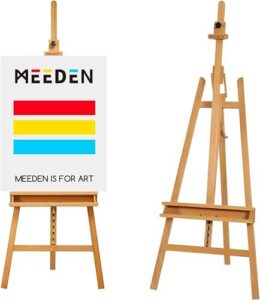
If you are an artist looking for the right easel, you have probably seen two main types: H-frame easels and A-frame easels. Choosing between them is not always simple. Both have unique advantages, and the best choice often depends on your space, budget, and painting style. In this article, you will discover the key differences, strengths, and weaknesses of each, so you can confidently select the easel that fits your needs.
What Is An H-frame Easel?
An H-frame easel gets its name from its shape—it looks like the letter “H” when viewed from the front. These easels are usually made from wood and have a rectangular, sturdy base with two vertical posts. The design allows for maximum stability and support for larger canvases.
H-frame easels are a favorite in art studios and by professional artists. They usually offer adjustable canvas holders and some models include storage trays for paints and brushes. Their solid structure makes them ideal for heavy work or long painting sessions.
What Is An A-frame Easel?
The A-frame easel, sometimes called a Lyre easel, has a triangular shape that resembles the letter “A.” It stands on three legs, with the back leg adjustable to change the angle. These easels are often lighter and take up less space compared to H-frame models.
A-frame easels are popular with hobbyists, students, and artists who work in smaller rooms. They are easy to move, set up, and store, making them a flexible option for many environments.
H-frame Vs A-frame Easel: Key Differences
To help you see the distinctions at a glance, here’s a side-by-side comparison:
| Feature | H-Frame Easel | A-Frame Easel |
|---|---|---|
| Shape | Rectangular (H-shape) | Triangular (A-shape) |
| Stability | Very stable | Moderately stable |
| Canvas Size | Supports larger canvases | Best for small/medium canvases |
| Weight | Heavier | Lighter |
| Portability | Less portable | Highly portable |
| Storage | Needs more space | Folds flat, easy storage |
| Price Range | Usually higher | Budget-friendly options |
Pros And Cons Of H-frame Easels
Advantages
- Superior Stability: H-frame easels are less likely to wobble, even when working with heavy brush strokes. This is crucial for oil and acrylic painters who sometimes use forceful techniques.
- Holds Large Canvases: Many H-frame models can hold canvases up to 84 inches tall. This makes them ideal for muralists or artists who work big.
- Adjustable Features: You can adjust the angle, height, and sometimes even tilt the easel forward for pastel work.
- Storage Options: Some H-frame easels come with built-in trays or boxes for keeping your art supplies organized.
- Long-lasting Build: The solid wood construction usually lasts many years, even with heavy use.
Disadvantages
- Heavy and Bulky: Most H-frame easels weigh over 20 pounds, making them harder to move around your studio.
- Takes Up Space: They need a dedicated area and are not ideal for small rooms or shared spaces.
- Higher Cost: Quality H-frame easels are an investment, often costing more than A-frame models.
- Assembly Required: Some H-frame easels come in parts and can take an hour or more to assemble.

Credit: www.amazon.com
Pros And Cons Of A-frame Easels
Advantages
- Lightweight Design: Most A-frame easels weigh less than 15 pounds and are easy to carry.
- Space Saving: Their slim profile fits in corners, and they fold flat for storage under a bed or in a closet.
- Quick Setup: You can set up or collapse an A-frame easel in less than a minute.
- Affordable: Many good-quality A-frame easels are available for under $100.
- Flexible Angle: The back leg adjusts to change your working angle, which is handy for different painting techniques.
Disadvantages
- Less Stability: Because of the three-leg design, A-frame easels can wobble, especially on uneven floors.
- Limited Canvas Size: Most support canvases up to 48 inches; larger ones may not fit securely.
- Less Storage: Few A-frame models have built-in storage for tools or paints.
- Not Ideal for Heavy Media: If you use thick paints or a lot of pressure, the easel may move.
When To Choose An H-frame Easel
An H-frame easel is a smart choice if you:
- Paint on large canvases
- Need extra stability for detailed or heavy work
- Have a dedicated studio space
- Want an easel that will last for years
H-frame easels are popular among professional artists and art students who need a reliable workhorse. They are also a good choice if you plan to do mixed media work, as the sturdy design can handle heavy paper, canvas, or even wood panels.
Non-obvious insight: If you have physical limitations or use a wheelchair, many H-frame easels allow you to adjust the height for comfortable sitting work, which A-frame models often do not.
When To Choose An A-frame Easel
An A-frame easel is best if you:
- Paint on small or medium canvases
- Need to move your easel often
- Have limited space at home or in a classroom
- Want a budget-friendly option
A-frame easels work well for beginners, students, and artists who want a lightweight, portable solution. They are also a good backup for outdoor painting or workshops.
Non-obvious insight: If you attend group classes or art clubs, an A-frame easel is much easier to transport and set up quickly compared to an H-frame.
Comparing H-frame And A-frame For Different Art Styles
The right easel also depends on the medium you use. Here’s how each type fits common painting styles:
| Art Style | Best Easel Type | Reason |
|---|---|---|
| Oil Painting | H-Frame | Handles heavy canvases and forceful brushwork |
| Acrylic Painting | H-Frame / A-Frame | Both work; H-frame for large pieces, A-frame for small |
| Watercolor | A-Frame | Lightweight and easy to tilt for washes |
| Pastels | H-Frame | Forward tilt prevents dust buildup |
| Plein Air | A-Frame | Portable for outdoor painting |
Cost Comparison And Value For Money
Budget is a big concern for many artists. Here’s how the typical costs compare:
- H-frame easel: $120–$500 for quality wood models. Some professional versions can cost over $1,000.
- A-frame easel: $30–$150 for most entry-level to mid-range models.
While H-frame easels cost more, they often last longer and hold their value. A-frame easels are great for those just starting or with limited funds.
Important tip: Some artists buy a used H-frame easel to save money. These can often be found at art schools, studios, or online marketplaces.
Space And Storage Considerations
If you paint at home, space is often limited. Think about:
- H-frame easel: Needs a permanent spot. Most models are 24–30 inches wide and 6 feet tall.
- A-frame easel: Folds flat to just a few inches thick. Easily stored behind a door or under furniture.
If you need to pack away your art gear between sessions, the A-frame is much more practical.

Credit: www.jerrysartarama.com
Portability: Moving Your Easel Around
For artists who attend workshops, teach, or paint in different locations, portability matters.
- H-frame: Some have wheels, but most are heavy and awkward to move.
- A-frame: Weighs less, fits in a car, and is easy to carry.
Practical example: If you live in a small apartment and need to move your easel every time you paint, an A-frame is much easier to handle.
Durability And Maintenance
Both types of easels are usually made from beech wood or oak. H-frames are thicker and heavier, which gives them a longer lifespan with proper care.
- A-frame: Can last years if not overloaded with large canvases.
- H-frame: Will withstand decades of use, even in busy studios.
Keep your easel away from moisture and direct sunlight to prevent warping or cracking. Clean paint splatters regularly to keep moving parts smooth.

Credit: www.jerrysartarama.com
Choosing The Right Easel For Your Situation
To decide which easel suits you, consider these questions:
- How large are your typical canvases?
- Do you have a fixed studio or need to store the easel?
- Is your budget flexible or tight?
- Do you need to transport the easel often?
- What medium do you use most?
Matching your answers to the strengths of each easel type will guide you toward the right choice.
Common Mistakes When Choosing An Easel
Avoid these pitfalls:
- Buying an easel that’s too small: Your largest canvas should fit comfortably.
- Ignoring your workspace: Measure your available area before buying.
- Focusing only on price: Cheap easels may wobble or break quickly.
- Missing special features: Some easels tilt forward or have extra trays—check before you buy.
- Overlooking future needs: Will your art style change? Buy an easel that can adapt.
Real-world Feedback: What Artists Say
Many artists share their experiences online. A professional oil painter may say, “My H-frame easel never moves, even when I use a palette knife. ” A student might comment, “My A-frame fits in my dorm and I can take it to class.
”
In a recent survey by a leading art supply retailer, 60% of professional artists preferred H-frame easels for studio work, while 70% of students chose A-frame models for their flexibility.
Additional Resources
For more on easel types and how to choose, visit this Wikipedia page about easels.
Frequently Asked Questions
What Size Canvas Can I Use With An H-frame Easel?
Most H-frame easels support canvases up to 84 inches tall. Always check the model’s specifications, as some may hold even larger pieces.
Can I Use An A-frame Easel For Oil Painting?
Yes, you can use an A-frame easel for oil painting, but it works best for small to medium canvases. For large or heavy canvases, an H-frame is more stable.
Is It Hard To Assemble An H-frame Easel?
Some H-frame easels require assembly, which can take 30–60 minutes. Instructions are usually provided. If you’re not comfortable with tools, ask for help or choose a model that comes pre-assembled.
Are There Easels For Children Or Beginners?
Yes, both H-frame and A-frame easels are made in smaller sizes for children and beginners. These are lighter, more affordable, and easier to use.
How Do I Clean And Maintain My Easel?
Wipe off paint drips regularly and check for loose screws. Keep your easel in a dry place and avoid direct sunlight to prevent wood damage. A little maintenance will keep your easel working smoothly for years.
Choosing between an H-frame and A-frame easel depends on your art style, workspace, and budget. Think about your current needs, but also plan for how your art may grow. Both easel types can help you create beautiful work—select the one that lets you paint with comfort and confidence.