
PaintingProGuide is reader-supported. When you buy through links on this page we may earn an affiliate commission at no extra cost to you.
The best brush for acrylic paint is almost always synthetic. Acrylic is water-based, fast-drying and slightly alkaline, conditions that make natural hair go limp and splay, while nylon and other synthetic filaments keep their spring and shape and clean more easily. After that, the right brush depends on the mark you want to make: a flat for broad, even strokes and crisp edges, a round for lines and detail, a filbert for soft edges, a liner or rigger for branches and lettering, and a fan for foliage and texture.
This guide explains which brush shapes and sizes to buy first, then reviews six synthetic brush sets on Amazon, from a 24-piece set with mixed shapes and a canvas case to fine detail sets and bulk classroom packs. It also covers how to keep acrylic from ruining brushes, the most common reason beginners replace them.
Quick answer: For most acrylic painters, the KEVIN&SASA CRAFTS 24-piece set is the best starting point because it mixes the shapes you actually need (flats, brights, rounds, angles, fans, a mop and detail brushes) and includes a canvas roll-up case. For fine detail and miniature work, the Phinus 20-piece round-pointed set (sizes from 5/8 down to 2/0) is the better pick. Teachers and families who need many brushes should look at the ONEXIZ 162-piece bulk set of flat and round brushes.
Acrylic Brush Shapes and What They Do
| Shape | Marks | Best for |
|---|---|---|
| Flat | Broad strokes, sharp edges, thin lines with the edge | Backgrounds, skies, buildings, blocking in |
| Bright | Short flat with more control | Shorter, thicker strokes; impasto |
| Round | Lines that thicken with pressure; points | Details, outlines, dots, small shapes |
| Filbert | Soft, rounded edge | Blending, petals, portraits |
| Angle (angular flat) | Tapered strokes, curves | Corners, leaves, edges |
| Fan | Feathery, broken strokes | Grass, trees, texture, blending |
| Liner / rigger | Long, very thin lines | Branches, rigging, lettering, signatures |
| Mop | Soft, large wash strokes | Glazes and smooth gradients |
If you only buy three brushes, choose a 1-inch flat, a medium flat (around size 8) and a small round (around size 2 to 4). Add a liner as your fourth. For more on sizing, see our guide to what size brush to use for detailed acrylic work.
Our Top Picks at a Glance
- KEVIN&SASA CRAFTS 24-Piece Brush Set with Case — Best overall mix of shapes
- Phinus 20-Piece Round-Pointed Brush Set — Best for details and miniatures
- Soucolor 20-Piece Pointed Tip Brush Set — Best soft round set for general painting
- AROIC 60-Piece Brush Set — Best value multi-pack
- ONEXIZ 162-Piece Bulk Flat and Round Brushes — Best for classrooms and groups
- ESRICH 12-Piece Brush Set — Best budget starter set
| Product | Best For | Key Spec | Key Strength | Price Tier |
|---|---|---|---|---|
| KEVIN&SASA 24 with Case | Varied acrylic techniques | 24 brushes: flat, bright, round, angle, fan, mop, detail | Canvas storage case | $ |
| Phinus 20 Round | Detail, rocks, miniatures | 20 brushes, sizes 5/8 to 2/0; nylon | Double-crimped ferrules | $ |
| Soucolor 20 Pointed | General painting | 20 brushes in 10 sizes | Soft flagged bristles | $ |
| AROIC 60 | Many brushes for the price | 60 brushes in 10 sizes; nylon | Value multi-pack | $ |
| ONEXIZ 162 Bulk | Classrooms and parties | 81 flat + 81 round | Huge quantity | $ |
| ESRICH 12 | First brushes | 12 sizes; nylon | Lowest tier | $ |
How We Chose
These sets were selected from Amazon listing details and specifications checked in October 2026, judged on bristle material, shape variety, size range and value for acrylic painting, and on how widely each set is reviewed by Amazon buyers. We have not painted with these brushes. Shape and care advice reflects standard acrylic practice.
- Synthetic filaments — nylon or similar for acrylic.
- Shape variety — sets with flats, rounds and specialty shapes score higher.
- Size range — from broad coverage to fine detail.
- Construction — crimped ferrules and sturdy handles.
- Value — cost per brush versus how many you will really use.
Best Brushes for Acrylic Paint Reviewed
1. KEVIN&SASA CRAFTS 24-Piece Brush Set with Canvas Case — Best for an all-round mix of shapes

Most budget brush sets are 10 or 20 rounds in slightly different sizes, which leaves you without the flats and specialty brushes acrylic painting relies on. KEVIN&SASA’s 24-piece set lists fan brushes, bright brushes, detail brushes, round brushes, mop brushes and angle brushes, giving you every common shape in one purchase.
A canvas brush case is included, which protects bristles from being bent and makes it easy to carry brushes to classes.
The listing positions it for both watercolor and acrylic; for acrylic, use the synthetic brushes in the set and keep them clean between colors.
Best suited for: Beginners and hobbyists who want to try every major shape.
Key features:
- 24 brushes
- Fan, bright, detail, round, mop and angle shapes
- Canvas brush case
- Wooden handles
Pros:
- Real shape variety
- Storage case included
- Mid tier
Cons and limitations:
- Bristle material not fully specified
- Budget quality; some brushes may shed early
- Mop brushes suit washes more than thick acrylic
Buying consideration: Try each shape on a sampler board before your first painting; you will quickly learn which ones you reach for.
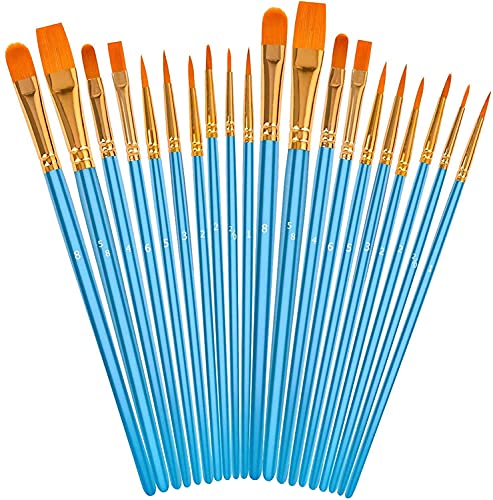
2. Phinus 20-Piece Round-Pointed Brush Set — Best for detail work and miniatures

Phinus supplies two packs of ten round-pointed brushes (20 total) in sizes 5/8, 8, 6, 4, 5, 3, 2, 2, 1 and 2/0, 6.5 to 7.5 inches long. Bristles are synthetic nylon with rust-resistant nickel ferrules that the listing says are double crimped.
Pointed rounds excel at small dots, outlines and tiny details, which is why the listing mentions miniatures and rock painting. The small sizes (2/0 and 1) are the ones detail painters wear out fastest, so having two of each is useful.
For dot-heavy designs, see our guide to painting dots with a round brush.
Best suited for: Detail painters, rock painters and miniature hobbyists.
Key features:
- 20 round-pointed brushes, sizes 5/8 to 2/0
- Synthetic nylon bristles
- Double-crimped nickel ferrules
- Two color sets for organization
Pros:
- Fine detail sizes
- Two of each size
- Low tier
Cons and limitations:
- Rounds only; no flats
- Small sizes wear quickly with thick paint
- Not for large areas
Buying consideration: Thin acrylic slightly for fine lines so it flows off the tip instead of dragging.
3. Soucolor 20-Piece Pointed Tip Brush Set — Best for general painting with soft rounds

Soucolor’s set includes 20 brushes in 10 sizes with pointed tips and flagged bristles, nickel ferrules and blue wooden handles. The listing describes the bristles as soft and strong and says they recover their shape after washing.
Flagged bristles have split ends that hold more paint, which helps smooth strokes with fluid acrylic.
It is a good all-purpose round set for small paintings, crafts and details.
Best suited for: Hobbyists painting small canvases, crafts and details.
Key features:
- 20 brushes in 10 sizes
- Pointed tips, flagged bristles
- Nickel ferrules, wooden handles
- Easy soap-and-water cleanup
Pros:
- Soft bristles for smooth strokes
- Low tier
- Reshape well after cleaning
Cons and limitations:
- Mostly rounds
- Soft bristles struggle with heavy-body paint
- Budget durability
Buying consideration: Use these with fluid or soft-body acrylic; for thick paint, choose stiffer flats.
4. AROIC 60-Piece Brush Set — Best for many brushes for the price

AROIC’s 60-piece set provides multiple brushes in 10 sizes with nylon flagged bristles, anti-rust nickel ferrules and solid wood handles. The listing describes them as holding plenty of color for smooth, streak-free strokes.
A multi-pack means you can dedicate brushes to specific uses (one for white, one for dark colors, one for varnish) and replace worn ones without reordering.
It is also handy for families painting together.
Best suited for: Painters who want backups and families sharing supplies.
Key features:
- 60 brushes in 10 sizes
- Nylon flagged bristles
- Anti-rust nickel ferrules
- Solid wood handles
Pros:
- Very low cost per brush
- Plenty of spares
- Good for groups
Cons and limitations:
- Limited shape variety
- Budget build
- More brushes than most individuals need
Buying consideration: Label a few handles for specific tasks, such as white only, to keep colors clean.
5. ONEXIZ 162-Piece Bulk Flat and Round Brushes — Best for classrooms and groups

ONEXIZ packs 81 flat brushes (about 0.59-inch edge) and 81 round brushes (about 0.39-inch tips) with nylon bristles and lightweight plastic handles. The pairing of one flat and one round per student covers most classroom acrylic projects.
The listing lists face painting, ceramics, fabric and model painting among uses, and says brushes clean with warm soapy water.
For a class or party, bulk brushes mean every participant has their own.
Best suited for: Teachers, camps, party hosts and community events.
Key features:
- 162 brushes: 81 flat, 81 round
- Nylon bristles
- Plastic handles
- Soap-and-water cleanup
Pros:
- Enough for large groups
- Low cost per brush
- Simple flat-and-round pairing
Cons and limitations:
- Two shapes only
- Basic quality
- Plastic handles are light
Buying consideration: Hand out brushes in flat-and-round pairs and collect them in water buckets at the end so acrylic never dries in them.
6. ESRICH 12-Piece Brush Set — Best for a budget first set

ESRICH’s 12-piece set offers 12 sizes of nylon brushes with anti-rust nickel ferrules. The listing describes a mix of flat, fan and curved heads among the sizes, and recommends cleaning with soap and warm water.
It is the lowest-cost set here and a sensible way to start before learning which shapes you prefer.
Use it for practice and crafts.
Best suited for: Absolute beginners and kids.
Key features:
- 12 brushes in 12 sizes
- Nylon bristles
- Nickel ferrules
- Mixed head shapes
Pros:
- Lowest tier
- Varied sizes
- Good for practice
Cons and limitations:
- Budget quality
- Shape mix not clearly specified
- May shed with heavy use
Buying consideration: Replace brushes as you identify favorites; upgrading your two most-used brushes makes the biggest difference.
Brush Sizes Explained
Brush numbers are not standardized between brands, so a size 6 round from one maker can be noticeably larger than a size 6 from another. Treat numbers as relative within a set. Larger flats are often labeled by width in inches (1/2, 3/4, 1 inch), which is more reliable. Very small brushes are numbered with zeros: 0, 2/0 (also written 00), 3/0 and so on, getting smaller as the first number rises.
| Canvas size | Main blocking brush | Detail brush |
|---|---|---|
| Up to 8 x 10 in | 1/2 in flat or size 8 flat | Size 0 to 2 round |
| 11 x 14 to 16 x 20 in | 3/4 to 1 in flat | Size 2 to 4 round, liner |
| 18 x 24 in and up | 1 to 2 in flat or a wide synthetic background brush | Size 4 to 6 round, liner |
Four Brush Techniques Every Acrylic Painter Uses
Dry brushing
Wipe most of the paint off a stiff flat and drag it lightly across the surface. Paint catches on texture, perfect for wood grain, rocks and sunlit grass.
Scumbling
Scrub a thin, opaque layer loosely over a dry area so some of the color beneath shows through. It softens transitions and builds atmosphere.
Stippling
Tap the tip of a round or an old fan brush straight down to build up dots of color for foliage, sand or texture.
Glazing
Brush a thin, transparent layer of color mixed with glazing medium over a dry area to shift its hue or deepen shadows without hiding detail. A soft flat or mop brush gives the smoothest glazes.
How to Keep Acrylic From Ruining Your Brushes
- Never let paint dry on a brush. Rinse every few minutes and between colors.
- Do not dip past the ferrule. Paint that creeps into the metal collar splays bristles.
- Keep brushes horizontal in water briefly, not standing on their tips for long periods.
- Wash with soap at the end. Work lather gently into the bristles and rinse until clear.
- Reshape and dry flat or tips up. Store upright only once fully dry.
- Rescue dried brushes with a brush cleaner or by soaking the bristles (not the handle) in a solution made for dried acrylic.
Our step-by-step guide to cleaning acrylic paint off brushes fast covers this in more detail.
Buying Guide: How to Choose Brushes for Acrylic
Synthetic over natural
Synthetic filaments keep their shape in water-based acrylic and survive scrubbing. Save natural hair for watercolor and oil.
Stiff or soft
Stiff synthetic brushes push heavy-body acrylic and create texture. Soft synthetics suit fluid acrylic, glazes and smooth blending.
Shapes before quantity
A set with flats, rounds, a filbert and a liner is more useful than 20 rounds.
Sizes for your canvas
Larger canvases need larger brushes. Using a small brush for big areas leads to streaky, overworked paintings.
Specialty brushes
Liners and riggers handle branches and lettering; see our guide on using a rigger brush with acrylic paint and using a liner brush for detail work.
Consider an airbrush for smooth gradients
For perfectly smooth gradients and stencil work, some painters use an airbrush with thinned acrylic. Read how to use acrylic paint in an airbrush before trying it.
Common Mistakes to Avoid
- Leaving brushes in the water jar. Bristles bend permanently.
- Using one brush for everything. Match shape and size to the job.
- Painting with a dry brush full of thick paint. Dampen the brush first.
- Using hot water to clean. It can loosen glue in the ferrule; use lukewarm.
- Storing wet brushes upright. Water runs into the ferrule.
- Buying only tiny brushes. Beginners often need bigger brushes than they think.
FAQs
What type of brush is best for acrylic paint?
Synthetic brushes (usually nylon or a blend) are best because they keep their shape in water-based acrylic and are easy to clean.
Which brush shapes should a beginner buy first?
A large flat, a medium flat and a small round cover most needs. Add a liner for details and a filbert for blending.
Can I use watercolor brushes for acrylic?
Soft synthetic watercolor brushes work with fluid acrylic, but acrylic can wear them faster. Keep good watercolor brushes for watercolor.
How do I clean acrylic paint from brushes?
Rinse frequently while painting, then wash with soap and lukewarm water, reshape and dry. Never let acrylic dry in the bristles.
Are cheap brush sets good enough?
For learning, yes. Budget sets help you discover which shapes you use. Upgrade the two or three you use most.
What brush is best for fine details in acrylic?
Small pointed rounds (sizes 2/0 to 2) and liner or rigger brushes. Thin the paint slightly for smoother lines.
Final Recommendation
Choose synthetic brushes and buy shapes before quantity. The KEVIN&SASA 24-piece set gives you the widest mix of shapes plus a case. Detail painters should add the Phinus 20 round-pointed set, and the Soucolor 20 is a soft all-purpose round set. For spares and families, choose AROIC 60; for classrooms, ONEXIZ 162; and for a first low-cost set, ESRICH 12.





3 Comments