

PaintingProGuide is reader-supported. When you buy through links on this page we may earn an affiliate commission at no extra cost to you.
Detail work lives or dies on the surface. When you are painting eyelashes, lettering, botanical veins or the rigging of a ship, the weave of a canvas is either invisible or it is the enemy. A coarse cotton duck breaks a fine line into a string of dots, and a thirsty ground drags paint off a small brush before it reaches the end of the stroke. The best canvas for detail work is a fine-weave, heavily primed surface, ideally fine linen or smooth triple-primed cotton, that is rigid or tightly stretched so the brush tip lands exactly where you aim it.
Quick answer: The PHOENIX Fine Texture Belgian Linen (16×20, 10 oz) is the best surface here for fine detail, with a nearly toothless triple-primed finish made for realism. The Winsor & Newton Classic Cotton Canvas 16×20 is a reliable stretched alternative with titanium gesso, and the Simetufy 8×10 MDF-core boards are an inexpensive rigid option for small, precise pieces.
This guide covers realism, miniature painting, botanical work, lettering and illustration on canvas. It compares seven surfaces from premium linen to practice pads and explains how to make any canvas smoother when the weave still gets in the way.
Our Top Picks at a Glance
- PHOENIX Fine Texture Belgian Linen, 16×20, 2 Pack — Best overall for fine detail and realism
- Winsor & Newton Classic Cotton Canvas, 16×20 — Best stretched cotton for detailed work
- Daler-Rowney Simply Canvas Panel, 11×14, 3 Pack — Best triple-primed panel for detail
- Simetufy 8×10 Canvas Boards, 12 Pack — Best rigid board for small precise pieces
- ESRICH 11×14 Canvas Boards, 2 Pack — Best smooth board on a budget
- Jofuler 8×10 Canvas Boards, 5 Pack — Best small smooth trial pack
- Prudiut Canvas Paper Pad, 8×10, 25 Sheets — Best for practicing detail strokes
| Product | Best For | Key Spec | Key Strength | Price Tier |
|---|---|---|---|---|
| PHOENIX Fine Linen | Realism, portraits, glazing | 16×20, 10 oz Belgian linen, triple primed | Nearly toothless surface | $$$ |
| W&N Classic Cotton | Detailed stretched work | 16×20, titanium gesso, kiln-dried bars | Hand stretched, tailored corners | $$ |
| Daler-Rowney Panel | Detailed panel work | 11×14, 3 pack, triple primed, medium grain | Rigid and archival | $ |
| Simetufy 8×10 Boards | Small precise pieces | 12 pack, cotton, MDF core | Very rigid | $ |
| ESRICH 11×14 Boards | Budget smooth board | 2 pack, smooth cotton, board core | Smooth surface | $ |
| Jofuler 8×10 Boards | Trial | 5 pack, smooth cotton | Low cost | $ |
| Prudiut Canvas Pad | Stroke practice | 8×10, 25 sheets, 200 gsm | Cheap practice | $ |
How We Chose
We did not paint detailed work on these surfaces. Our picks are based on the Amazon listing details and specifications checked in October 2026, how well each surface’s weave, priming and rigidity fit fine detail, and how widely each product is reviewed by Amazon buyers.
What mattered:
- Weave fineness: fine linen and smooth cotton keep thin lines continuous.
- Priming: multiple coats fill the weave and reduce absorbency so small brushes carry paint further.
- Rigidity and tension: panels and tightly stretched canvas keep the surface still under a small brush.
- Ground color: bright titanium white helps clarity in small, high-contrast passages.
- Size: detail work is often small, but realism at 16×20 needs a fine surface too.
Best Canvas for Detail Work Reviewed
1. PHOENIX Fine Texture Belgian Linen, 16×20, 2 Pack — Best for fine detail and realism

PHOENIX lists 100% Belgian linen with a fine, archival-quality weave, triple-primed with acrylic gesso for what it calls a nearly toothless surface. The listing pitches it for photographic realism, smooth skin tones, fine glazing and delicate brushwork, and describes the fine weave as eliminating distracting texture.
At 10 oz, the linen is heavy enough to feel stable without being stiff. Linen fibers are longer and stronger than cotton, so a fine linen weave can be both smooth and durable, which is why it is the traditional surface for detailed oil painting.
For the most demanding realism, this is the surface in this list that needs the least preparation before you start.
Best suited for: Realist painters, portraitists and anyone glazing fine detail in oil or acrylic.
Key features:
- 16×20 inch, 2 pack
- 100% Belgian linen, fine weave
- 10 oz weight
- Triple primed, acid-free acrylic gesso
Pros:
- Nearly toothless surface
- Archival linen
- Stable for long projects
- Minimal prep needed
Cons and limitations:
- Premium price tier
- Too smooth for heavy dry brush texture
Buying consideration: Smooth surfaces show brush marks in thick paint. Keep layers thin and use soft synthetic or sable brushes for the smoothest finish.
2. Winsor & Newton Classic Cotton Canvas, 16×20 — Best for detailed stretched work
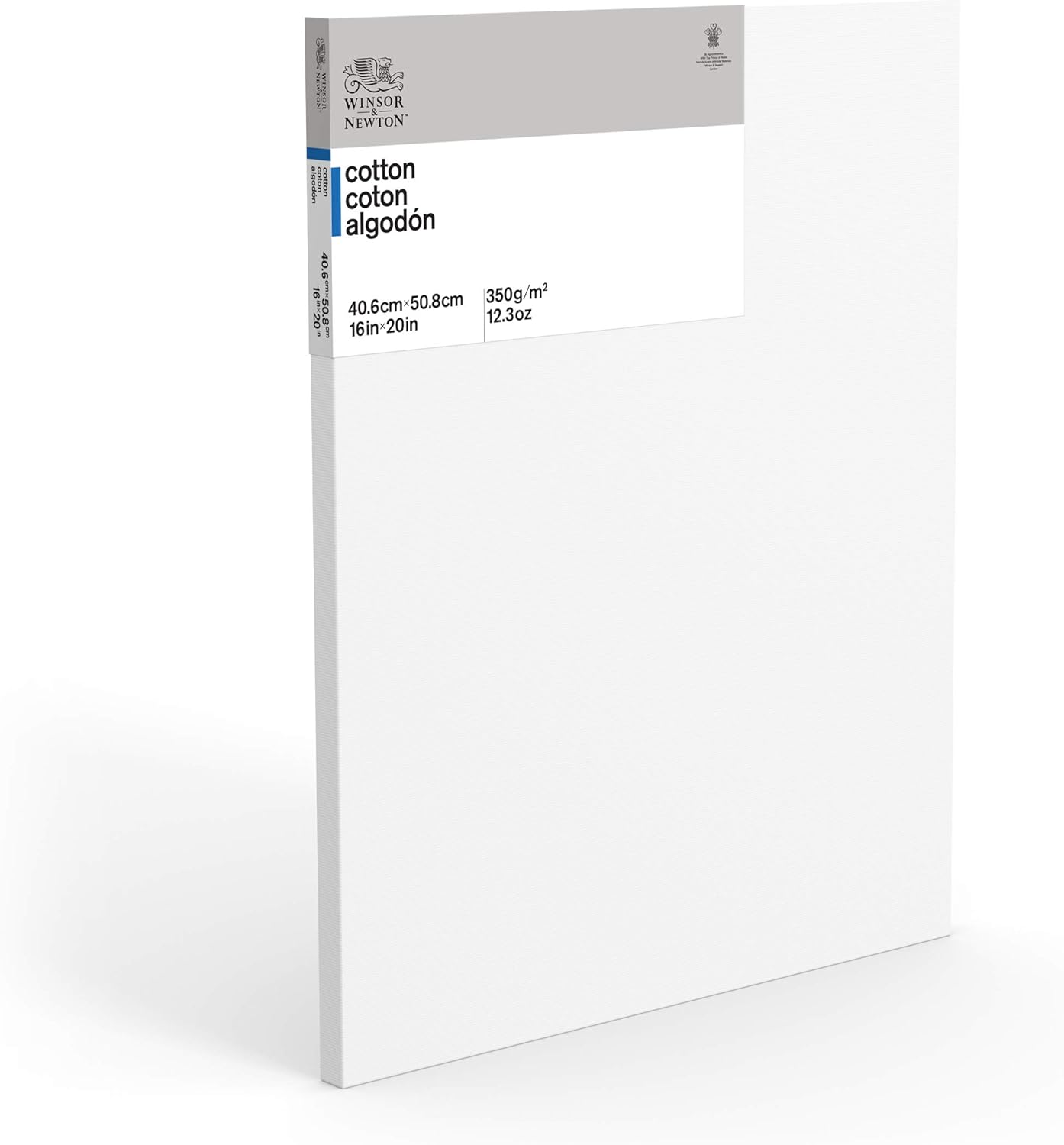
Winsor & Newton lists warp-resistant kiln-dried solid wood stretcher bars, highly pigmented titanium dioxide gesso, hand stretching for best tension with tailored corners, and back stapling with folded uncut corners. Those are the details of a well-made stretched canvas.
Tension matters for detail. A tight canvas does not give under a small brush, so marks land precisely. Titanium dioxide gesso gives a bright, opaque white that keeps fine highlights crisp.
The cotton weave is not as fine as linen, so add one or two thin coats of gesso and sand lightly if you paint very small detail.
Best suited for: Painters who want a dependable stretched canvas for detailed oil or acrylic work.
Key features:
- 16×20 inch
- Kiln-dried solid wood bars, warp resistant
- Titanium dioxide gesso
- Hand stretched, back stapled, tailored corners
Pros:
- Good tension
- Bright titanium ground
- Clean back-stapled edges
- Trusted art brand
Cons and limitations:
- Cotton weave less fine than linen
- Single canvas
Buying consideration: Sand between extra gesso coats with very fine paper and wipe with a barely damp cloth before painting.
3. Daler-Rowney Simply Canvas Panel, 11×14, 3 Pack — Best for detailed panel work

Daler-Rowney lists 100% cotton, triple-primed, acid-free panels with a medium grain texture, suitable for oil, acrylic, acrylic inks and fluid acrylic. Triple priming fills more of the weave than single priming.
Panels give rigidity, which many detail painters prefer. The surface stays perfectly still when you rest a mahl stick or your hand nearby.
Medium grain means you may want an extra sanded coat for the very finest work.
Best suited for: Painters doing detailed work at 11×14 who prefer a rigid panel.
Key features:
- 11×14 inch, 3 pack
- 100% cotton
- Triple primed, acid free
- Medium grain texture
Pros:
- Rigid
- Triple primed
- Archival per listing
- Good value
Cons and limitations:
- Medium grain may need smoothing
- Only three panels
Buying consideration: Panels are easy to sand without damaging, which makes them ideal for building a glass-smooth gesso surface.
4. Simetufy 8×10 Canvas Boards, 12 Pack — Best for small precise pieces

Simetufy lists 100% cotton, acid-free panels over an MDF core, with a surface that holds paint without absorbing it. MDF is one of the most rigid cores available, which suits miniatures, lettering and small, tightly controlled pieces.
Twelve boards give you room to practice the same detailed subject repeatedly.
Best suited for: Miniature painters, letterers and illustrators working small.
Key features:
- 8×10 inch, 12 pack
- 100% cotton, acid-free
- MDF core
- Pre-primed
Pros:
- Very rigid
- Good count
- Affordable
Cons and limitations:
- Priming coats not stated
- Woven texture still visible
Buying consideration: Use these as a base for a sanded gesso surface when you need detail on a budget.
5. ESRICH 11×14 Canvas Boards, 2 Pack — Best for a smooth board on a budget

ESRICH describes a smooth pure cotton surface, acid-free non-toxic primer and a sturdy board core that resists warping. Smooth is the key word here for detail work.
Two boards at 11×14 suit a pair of detailed pieces or a test before buying more.
Best suited for: Budget-conscious painters who want a smooth surface for detailed acrylic work.
Key features:
- 11×14 inch, 2 pack
- Smooth pure cotton
- Acid-free primer
- Sturdy board core
Pros:
- Smooth surface
- Low cost
- Rigid
Cons and limitations:
- Only two boards
- Priming detail limited
Buying consideration: Test a fine liner brush stroke in one corner to judge whether extra gesso is needed.
6. Jofuler 8×10 Canvas Boards, 5 Pack — Best for a small smooth trial

Jofuler lists cotton boards with a smooth, comfortable surface texture and a sturdy backing, pre-primed with acid-free primer. Five boards make a cheap trial for detailed miniatures or lettering.
They are light and stackable, handy for keeping a few on hand for quick detail studies.
Best suited for: Painters trying detail work or needing a few small boards quickly.
Key features:
- 8×10 inch, 5 pack
- Smooth cotton
- Acid-free primer
- Sturdy backing
Pros:
- Low cost
- Smooth surface
- Light
Cons and limitations:
- Few construction details
- Only five boards
Buying consideration: Good for studies; use linen or a prepared panel for finished detailed pieces.
7. Prudiut Canvas Paper Pad, 8×10, 25 Sheets — Best for practicing detail strokes

Prudiut packs 25 sheets of 200 gsm canvas-textured paper in a glue-bound 8×10 pad. It is a practice surface, not a finished support, but detail painting improves with repetition, and a cheap pad lets you practice liner strokes, lettering and small features without worrying about waste.
Tape a sheet down on all sides to keep it flat.
Best suited for: Students practicing fine brush control and detail strokes.
Key features:
- 8×10 inch, 25 sheets
- 200 gsm
- Canvas-textured surface
- Glue bound
Pros:
- Very cheap practice
- Canvas-like texture
- Easy to store
Cons and limitations:
- Not for finished work
- Can curl with wet paint
Buying consideration: Practice the same detail ten times in a row; muscle memory builds fastest with repetition.
Buying Guide: How to Choose Canvas for Detail Work
Weave fineness is the first filter
Look for words like fine weave, smooth or portrait grade. Coarse and medium grains suit expressive work but fight detail. Fine linen is the gold standard; smooth or triple-primed cotton is the affordable alternative.
More priming, smoother surface
Every coat of gesso fills more of the weave. Triple-primed surfaces are smoother than single-primed ones, and you can add your own coats.
Rigidity and tension
Panels are perfectly stable. Stretched canvas must be tight; a slack canvas moves under a small brush and spoils precision. Check tension by pressing gently near the center.
Absorbency
A thirsty ground pulls paint off a small brush, so lines fade before they end. Well-primed, less absorbent surfaces let a liner brush draw long, continuous strokes.
Ground color
Bright titanium white grounds keep small highlights and fine color shifts clear. A toned ground still works, but keep it thin and even.
Size and detail
Detail work does not have to be small. Realist painters work at 16×20 and above on fine linen. Miniaturists work at 4×4 or smaller on smooth panels. Choose the size for your subject and viewing distance.
Linen or cotton
Linen is stronger, more stable and available in finer weaves. Cotton is more affordable and can be made smooth with extra gesso. For important detailed commissions, linen is worth the cost.
How to Make Any Canvas Smoother
- Lightly sand the existing primed surface with fine-grit sandpaper to knock down raised fibers.
- Thin acrylic gesso slightly with water to a creamy consistency.
- Apply a thin coat with a wide soft brush or foam roller in one direction.
- Let it dry fully, then sand lightly and wipe off dust.
- Apply the next coat at right angles to the first.
- Repeat for three to five coats until the surface is as smooth as you want.
Panels are easier to sand than stretched canvas because they do not flex. On stretched canvas, support the back with a board while sanding.
Choosing a Surface by Detailed Subject
Photorealism and portraits: fine linen or heavily sanded panels, 11×14 and up, with thin glazing layers. The smoother the ground, the more convincing soft transitions look.
Botanical and wildlife painting: smooth panels around 8×10 to 11×14 handle veins, feathers and fur. A bright white ground helps delicate color.
Miniatures: very small, rigid boards sanded smooth. Work under magnification with tiny rounds.
Lettering and signs: rigid boards with several sanded gesso coats, so liner strokes and edges stay crisp.
Architecture and cityscapes: tight stretched canvas or panels; straight lines are easier with a rigid surface and a ruler or bridge.
Illustration on canvas: smooth boards that accept pencil underdrawing and fine brushes, plus markers or ink for linework if you mix media.
Tools That Make Detail Easier
Liner and rigger brushes carry paint for long, thin lines. Small rounds with a fine point handle features and small shapes. A mahl stick steadies your hand without touching wet paint. Magnification and good light reduce eye strain. Fluid paint consistency, slightly thinned with medium, helps lines flow off the brush.
Related Guides
For accurate placement of detailed elements, this guide to gridding a canvas is essential. Detailed small pieces also work well in a multi-canvas wall art set, and if a stretched canvas is damaged, see the ripped canvas repair guide.
Common Mistakes to Avoid
- Choosing coarse canvas for fine detail and fighting the weave.
- Painting detail with paint that is too thick to flow off a liner brush.
- Working on a slack stretched canvas.
- Skipping extra gesso coats when the surface is clearly too rough.
- Resting your hand on wet paint instead of using a mahl stick.
- Adding detail too early, before the larger forms are right.
FAQs
What canvas is best for detailed painting?
Fine-weave linen or smooth, triple-primed cotton. Rigid panels or tightly stretched canvas help precision.
How do I make canvas smoother for detail work?
Apply several thin coats of gesso, sanding lightly between coats, until the weave is filled.
Is linen better than cotton for detail?
Fine linen offers a smoother, more stable surface. Cotton can be smoothed with gesso for a lower cost.
Is canvas board good for detail work?
Yes. Rigid boards are stable and easy to sand smooth, which makes them good for miniatures and lettering.
What brushes are best for detail on canvas?
Liner and rigger brushes for lines, small pointed rounds for features, both in soft synthetic or sable.
Why do my fine lines break up on canvas?
The weave is too coarse, the paint too thick, or the surface too absorbent. Smooth the surface and thin the paint slightly.
Final Recommendation
For the finest detail, the PHOENIX fine Belgian linen is the clear choice, ready for realism with minimal preparation. The Winsor & Newton Classic Cotton canvas is a well-built stretched alternative, and the Daler-Rowney triple-primed panels give rigid detail surfaces at 11×14. For small precise work on a budget, the Simetufy and ESRICH boards take extra gesso well, the Jofuler pack is a cheap trial, and the Prudiut pad is ideal for building the brush control detail work demands.
Remember that the surface sets the ceiling for how fine your detail can be, but brush, paint consistency and patience decide whether you reach it. Prepare the ground well, keep a clean liner brush for the last stage, and stop when the detail serves the painting.




