
PaintingProGuide is reader-supported. When you buy through links on this page we may earn an affiliate commission at no extra cost to you.
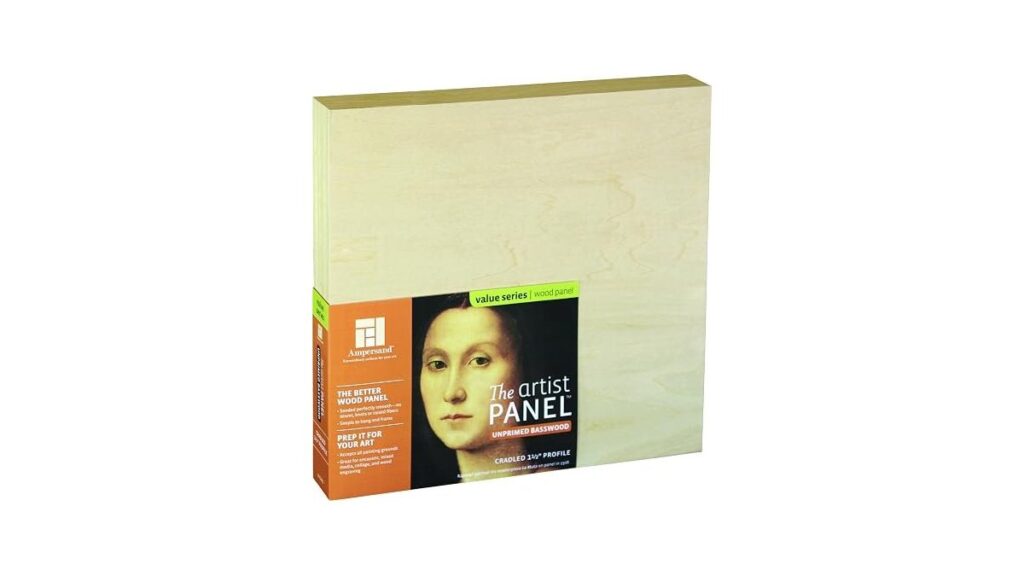
The Ampersand Artist Panel Unprimed Basswood is a raw wood painting panel: a non-flexible basswood top glued to a pinewood cradle, sold bare so you can choose your own ground. The listing we checked is the 4×6-inch size with a 7/8-inch cradle, and it promises a smooth, uniform face free of seams, knots and excess grain.
This Ampersand Artist Panel unprimed basswood review explains what that means for painters, how to prepare the surface properly, where the panel falls short, and which other wood panels are worth comparing, from budget basswood packs to Ampersand’s own birch and Encausticbord.
Quick answer: The Ampersand unprimed basswood panel is a strong choice if you want a premium, smooth, rigid wood surface and are happy to seal and prime it yourself. For larger pours and budget practice, the FROM ONE 4-pack of 12×16 basswood panels is the value alternative. If you prefer birch, Ampersand’s 11×14 Birch Value Pack is the closest like-for-like option, and Encausticbord is the pick if you want a ready-made ground for wax or drawing media.
Our Top Picks at a Glance
- Ampersand Artist Panel Unprimed Basswood, 4×6, 7/8 in — Best for a smooth, knot-free raw wood surface
- FROM ONE 4-Pack 12×16 Basswood Panels — Best budget basswood for pouring and larger work
- Ampersand Birch Wood Panel Value Pack, 11×14, 2-Pack — Best Ampersand alternative for pours and DIY
- Ampersand Woodpanel, 16×20, 7/8 in Cradle — Best larger Ampersand raw wood panel
- U.S. Art Supply Cradled Birch Panels, 1-1/2 in Deep — Best deep gallery profile for frameless display
- Ampersand Encausticbord, 16×20 — Best ready-primed panel for encaustic and drawing
| Product | Best For | Key Spec | Key Strength | Price Tier |
|---|---|---|---|---|
| Ampersand Unprimed Basswood | Smooth raw wood | 4×6 in, 7/8 in cradle | Seam- and knot-free face | $$ |
| FROM ONE Basswood 4-Pack | Pours, practice | 4 x 12×16 in, 3/4 in deep | Four larger panels | $$ |
| Ampersand Birch 2-Pack | Pours, DIY | 2 x 11×14 in, 7/8 in | Rigid birch plywood | $$ |
| Ampersand Woodpanel 16×20 | Larger single works | 16×20 in, 7/8 in cradle | Ampersand build at size | $$ |
| U.S. Art Supply Birch | Gallery display | 1-1/2 in deep cradle, sanded birch | Deep, frameless profile | $$$ |
| Ampersand Encausticbord | Encaustic, drawing | 16×20, 7/8 in, encaustic ground | Ready-made absorbent ground | $$$ |
How We Chose
We have not painted on these panels. This review is based on the Amazon listing details and specifications checked in October 2026, on how well each panel’s wood, construction and size suit common panel-painting uses (oil, acrylic, mixed media, pours and encaustic), and on how widely each product is reviewed by Amazon buyers.
Our criteria:
- Face material and smoothness: basswood and birch both give fine, even surfaces; knots and seams are a defect.
- Cradle depth: 3/4 to 7/8 inch cradles stiffen the panel; deeper cradles display without frames.
- Primed or unprimed: raw panels need prep but give control; primed panels save time.
- Size range: small panels for studies, larger ones for finished work.
- Clarity of listing: clear sizes and materials ranked higher than vague or inconsistent listings.
Ampersand Artist Panel Unprimed Basswood Review
1. Ampersand Artist Panel Unprimed Basswood, 4×6 in, 7/8 in Depth — Best Smooth Raw Wood Surface

Ampersand’s listing describes a premium non-flexible basswood top supported by pinewood cradles, with a smooth, uniform finish free of seams, knots and excess wood grain. That last point is the selling feature. Visible grain and knots telegraph through thin paint layers, and a clean basswood face avoids that.
Because the panel is unprimed, Ampersand positions it as a starting point for any ground: it says it accepts all painting grounds, encaustic, collage, mixed media and wood engraving, and is suitable for mounting canvas and giclee prints. The 4×6-inch size with a 7/8-inch cradle weighs about four ounces, a small, sturdy block that stands on a shelf or hangs without a frame.
Best suited for: painters who want to control their ground (oil primer, acrylic gesso, clay ground or encaustic), and artists who mount prints or canvas onto a rigid backing.
Key features:
- Basswood top on pinewood cradle
- Smooth face, free of seams, knots and excess grain
- 4 x 6 inches, 7/8 inch depth
- Accepts all grounds, encaustic, collage and mixed media
- Suitable for mounting canvas and giclees
Pros:
- Knot-free face means grain will not show through thin paint
- Rigid; will not flex like stretched canvas
- Cradle gives a finished edge for frameless display
- Total control over ground and absorbency
Cons and limitations:
- Must be sealed and primed before most paint
- 4×6 is small; larger sizes are separate purchases
- Higher cost per square inch than budget panels
- Raw wood edges need sealing or painting for a finished look
Buying consideration: Factor in sealer and gesso when comparing cost. If you want to paint the day the panel arrives, a pre-primed panel will suit you better.
How to prepare an unprimed basswood panel
Raw wood contains water-soluble compounds that can migrate into acrylic paint and gesso and leave a yellow-brown stain, a problem conservators call support-induced discoloration. The standard fix is to seal the wood first with a clear acrylic sizing or gel medium, then apply your ground.
A typical sequence: lightly sand the face, wipe off dust, apply one or two coats of sealer, then two to three thin coats of acrylic gesso, sanding lightly between coats for a smooth finish. Seal the sides and back too if you want to reduce the chance of warping from uneven moisture. For oil painting, an oil-compatible ground over the sealer is essential, because oil in direct contact with raw wood is not considered archival.
Leaving the wood visible
Some artists like the warm color of bare basswood and leave parts of it showing. In that case, seal the panel with a clear acrylic medium only. The wood stays visible, paint sits on a protected surface, and you avoid staining. Test a corner first, since clear sealers can deepen the wood’s color slightly.
Mounting prints and canvas
The listing names mounting canvas and giclees as a use. Rigid, flat panels are well suited to this: a properly applied acrylic gel medium bonds paper or canvas to the face, and the cradle gives a clean, finished display edge. Seal the panel before mounting so the wood does not discolor the work from behind.
Limitations
The main limitation is effort. Unprimed panels ask you to prepare them, and that takes a day of drying between coats. The 4×6 size is also restrictive: it is lovely for studies, miniatures and gifts, but you will need a larger panel for anything ambitious.
Wood Panels Worth Comparing
2. FROM ONE 4-Pack 12×16 Basswood Paint Pouring Panels — Best Budget Basswood

FROM ONE gives you four 12×16-inch cradled basswood panels with a 3/4-inch gallery profile. The listing describes a fine sanded finish, warp resistance from the cradle, and says the panels are pre-sanded and surface-prepared.
The listing also claims no priming is required. For acrylic pours, resin and craft work that may be fine; for archival painting, we would still seal and prime raw basswood for the reasons explained above.
Best suited for: paint pouring artists, resin artists and painters who want several larger panels at a modest price tier.
Key features:
- 4 panels, 12 x 16 inches
- Cradled basswood, 3/4 inch profile
- Pre-sanded face
- Listed for acrylic, oil, resin, gouache and mixed media
Pros:
- Four larger panels per pack
- Good value for pours and practice
- Frameless display depth
Cons and limitations:
- No stated knot-free guarantee
- No-prep claim is optimistic for archival work
Buying consideration: Seal before acrylic or oil if the piece matters to you.
3. Ampersand Birch Wood Panel Value Pack, 11×14, 2-Pack — Best Ampersand Alternative

If you like the Ampersand build but want more surface for less per panel, the Birch Value Pack gives two 11×14-inch panels with a rigid birch plywood face and a 7/8-inch cradle. The listing calls them ideal for DIY projects and pours.
Birch plywood has a slightly more visible grain than Ampersand’s premium basswood face, which some painters like and others cover with gesso.
Best suited for: painters who want Ampersand construction at a larger size and lower cost per panel.
Key features:
- 2 panels, 11 x 14 inches
- Rigid birch plywood surface
- 7/8 inch cradle
Pros:
- Same cradle depth as the basswood panel
- Value pack pricing
- Good size for finished work
Cons and limitations:
- Plywood face can show grain
- Unprimed; needs prep for painting
Buying consideration: Choose basswood for the smoothest face; choose this pack for size and value.
4. Ampersand Woodpanel, 16×20 in, 7/8 in Cradle — Best Larger Ampersand Panel

This listing is sparse, stating only the product name, a 16×20-inch size, a 7/8-inch cradle and a weight around two pounds. It is a natural step up from the 4×6 basswood panel when you want an Ampersand raw wood surface for a finished painting.
Because the listing does not specify the face wood or whether it is the same basswood as the Artist Panel, check the product images and packaging description before you buy.
Best suited for: painters who already like Ampersand panels and need a larger single support.
Key features:
- 16 x 20 inches
- 7/8 inch cradle
- Single panel
Pros:
- Larger format for finished work
- Matches the 4×6 panel’s cradle depth
Cons and limitations:
- Listing gives very few details
- Face wood not stated
Buying consideration: Confirm the face material on the product images if a knot-free basswood surface matters to you.
5. U.S. Art Supply Unfinished Cradled Birch Panels — Best Deep Gallery Profile

U.S. Art Supply’s panels use smooth sanded birch faces on solid wood cradles with a 1-1/2-inch gallery depth, which the listing says prevents warping and allows hanging without frames. They are unprimed and ready for primer or gesso.
One caution: the title says 16×20, while the first bullet describes a 2-pack of 16×16 panels. Check the selected size and quantity on the product page before ordering.
Best suited for: artists who want deep, frameless panels for gallery display, pours or mixed media.
Key features:
- Sanded birch face, solid wood cradle
- 1-1/2 inch gallery depth
- Unprimed
- Listed for oil, acrylic, watercolor, encaustic and more
Pros:
- Deep profile looks finished on the wall
- Rigid; will not flex like canvas
- Wide media list
Cons and limitations:
- Listing is inconsistent on size and pack count
- Highest price tier among the raw panels
Buying consideration: Verify size and quantity before purchase, and seal before priming.
6. Ampersand Encausticbord, 16×20, 7/8 in Depth — Best Ready-Primed Panel

Encausticbord is what you buy when you want Ampersand rigidity without doing the ground yourself. The listing describes a heat-resistant encaustic ground that is bright, velvety and highly absorbent, on Ampersand’s warp-resistant Hardbord core sealed with Archiva-Seal, on a cradled frame.
Besides wax, the listing recommends it for charcoal, graphite, colored pencil, PanPastel, ink, markers and collage. It is acid-free and archival per the maker.
Best suited for: encaustic painters and artists who draw or work in dry media on rigid panels.
Key features:
- Encaustic ground on Hardbord core
- 16 x 20 inches, 7/8 inch depth
- Archiva-Seal protection
- Acid-free, archival
Pros:
- Ready to use, no ground prep
- Designed to handle heat and heavy wax layering
- Excellent for drawing media
Cons and limitations:
- Highest price tier here
- Absorbent ground is not a general-purpose oil surface
Buying consideration: If you mainly paint oil or acrylic, a raw panel you prime yourself is usually the better fit.
Buying Guide: How to Choose a Wood Painting Panel
Basswood or birch
Basswood is light, fine-grained and smooth, which is why Ampersand uses it for its premium raw face. Birch plywood is strong and stable but shows more grain. Both work under gesso; basswood is nicer if any wood will stay visible.
Primed or unprimed
Unprimed panels give you control: oil ground, acrylic gesso, clay ground, encaustic or clear sealer. Primed panels save a day of prep. Choose based on how particular you are about your surface.
Cradle depth
A 3/4 to 7/8-inch cradle adds stiffness and a clean edge. A 1-1/2-inch cradle reads as a finished object on the wall. Shallow, flat panels are easier to frame and store.
Size and cost per square inch
A single 4×6 premium panel costs more per square inch than a four-pack of 12×16 basswood. Pay for premium smoothness where it shows, such as miniatures and fine detail, and use value packs for practice and pours.
Sealing for archival work
For anything you plan to keep or sell, seal raw wood before gesso to prevent discoloration, and seal or paint the back and sides to balance moisture. This is true of every raw panel in this list.
Weight and hanging
Cradled panels can hang directly from a wire on the cradle. Larger panels get heavy; the U.S. Art Supply and FROM ONE listings give multi-pound weights, so use suitable wall hardware.
More on Panels and Surfaces
Panels have a long history in painting; our piece on early masters of oil painting on panel explains why rigid supports have lasted so well.
If you are planning a series across several panels, our guide on how to paint a three-panel set covers layout and color continuity that applies equally to wood.
Common Mistakes to Avoid
- Applying acrylic gesso directly to raw wood without a sealer and getting yellow staining later.
- Painting oil straight onto unprimed wood.
- Sealing only the front, which can lead to uneven moisture and warping.
- Skipping light sanding between gesso coats and ending up with a ridged surface.
- Assuming a no-prep claim means a panel is archival as-is.
- Ordering from a listing with conflicting sizes without checking the selected option.
FAQs
Do I need to prime the Ampersand unprimed basswood panel?
For most painting, yes. Seal the wood with a clear acrylic medium first, then apply gesso or an oil ground. If you want the wood to show, seal it and skip the gesso.
Can I use oil paint on unprimed basswood?
Not directly. Oil in contact with raw wood is not considered archival. Seal the panel and apply an oil-compatible ground first.
Is basswood better than birch for painting panels?
Basswood gives a smoother, more uniform face with less visible grain; birch plywood is strong and economical. Under several coats of gesso, the difference is small.
Can I use the Ampersand basswood panel for encaustic?
The listing says it accepts encaustic. Many encaustic painters prefer a ready-made absorbent ground like Encausticbord, which is designed for heat and wax.
Can I mount a print on this panel?
Yes. The listing names mounting canvas and giclees. Seal the panel first and use an acrylic gel medium as adhesive.
Will a cradled panel warp?
Cradles add stiffness and reduce warping. Sealing all sides and keeping the panel away from big humidity swings helps further.
Final Recommendation
The Ampersand Artist Panel Unprimed Basswood earns its premium for one reason: a smooth, knot-free, rigid face that you can prepare exactly the way you like. It suits careful painters, miniaturists, and anyone mounting work, as long as they are willing to seal and prime it.
For pours and practice, the FROM ONE basswood four-pack is much better value. Ampersand’s Birch Value Pack and 16×20 Woodpanel cover larger sizes, U.S. Art Supply’s deep cradles suit gallery display once you confirm the size, and Encausticbord is the clear choice for wax and drawing media.





4 Comments