PaintingProGuide is reader-supported. When you buy through links on this page we may earn an affiliate commission at no extra cost to you.
Plein air painting rewards speed and punishes bulk. You carry everything, the light shifts every few minutes, wind catches anything that behaves like a sail, and a wet painting has to survive the walk back to the car. The best canvas for outdoor painting is usually a flat, rigid canvas panel in a small size such as 8×10, because it is light, slips into a wet carrier and does not flutter on the easel. Small stretched canvases and primed canvas rolls taped to a board fill the gaps when you want a display-ready piece or the lightest possible kit.
Quick answer: For most plein air painters, the Simetufy 8×10 Canvas Boards (12 pack, MDF core) are the most practical choice: rigid, light and sized for a one-session painting. For a larger outdoor study, the ESRICH 12×16 Canvas Panels give more room, and the VViViD double primed canvas roll lets you cut sheets to any size and tape them to a board.
This guide is for oil, acrylic and gouache painters working on location: landscapes, street scenes, coastlines and gardens. It covers surface format, size, weight, wind and transport, then six products matched to different outdoor setups.
Our Top Picks at a Glance
- Simetufy 8×10 Canvas Boards, 12 Pack — Best overall plein air panel
- ESRICH 12×16 Canvas Panels, 3 Pack — Best for larger outdoor studies
- VViViD Double Primed Cotton Canvas Roll, 12 in — Best ultra-light option to cut and tape
- GOTIDEAL 14 Pcs Multi Pack Stretched Canvas — Best stretched canvases in travel sizes
- ESRICH 3 Pack Stretched Canvas Multi Pack — Best small trial of stretched sizes
- Barcelonetta 10 oz Cotton Duck Fabric — Best for making your own primed panels
| Product | Best For | Key Spec | Key Strength | Price Tier |
|---|---|---|---|---|
| Simetufy 8×10 Boards | Everyday plein air | 12 panels, cotton, MDF core | Rigid, wind-proof | $ |
| ESRICH 12×16 Panels | Bigger field studies | 3 panels, cotton, board core | More room, still flat | $ |
| VViViD Canvas Roll | Lightest kit | 12 in x 5 ft, double primed, acid free | Cut to any size | $ |
| GOTIDEAL 14 Pcs | Display-ready field paintings | 4×4, 5×7, 8×10, 11×14 stretched; medium grain | Several sizes | $$ |
| ESRICH 3 Pack | Trying stretched outdoors | 5×7, 8×10, 11×14 stretched | Small commitment | $ |
| Barcelonetta Duck | DIY panels | 10 oz 100% cotton duck, 62 in wide, 1 yard | Make many panels cheaply | $ |
How We Chose
We did not take these surfaces into the field ourselves. The picks are based on the Amazon listing details and specifications checked in October 2026, how well each product’s format, weight and rigidity fit painting outdoors, and how widely each product is reviewed by Amazon buyers. We left out a second raw duck fabric listing because it duplicated the Barcelonetta option.
What we prioritized:
- Rigidity and wind: flat panels do not flex or catch wind like a stretched canvas.
- Weight and thickness: thin panels stack in a backpack and fit wet carriers.
- Size for one session: 6×8 to 12×16 suit the time the light holds.
- Priming: pre-primed surfaces save setup time in the field.
- Format options: rolls and raw fabric for painters who prefer the lightest or cheapest kit.
Best Canvas for Outdoor Painting Reviewed
1. Simetufy 8×10 Canvas Boards, 12 Pack — Best for everyday plein air painting

Simetufy lists 100% cotton, acid-free panels on an MDF core, pre-primed and ready to use. The MDF core is the outdoor advantage: it does not flex when the wind gusts or when you press a loaded brush into the surface, and it holds the panel square in an easel clamp or pochade box.
At 8×10, a panel is big enough to state a landscape clearly and small enough to finish before the shadows move. The listing describes the boards as lightweight and sturdy, and twelve panels cover a long weekend of painting or a season of weekly outings.
Standard 8×10 also matches the most common wet panel carriers and frames, so your field studies can go straight from the carrier into a frame for display.
Best suited for: Plein air painters in oil or acrylic who want a reliable, rigid, standard-size field panel.
Key features:
- 8×10 inch, 12 pack
- 100% cotton, acid-free
- MDF core
- Pre-primed
Pros:
- Does not flex in wind
- Fits standard wet carriers and frames
- Good count for a painting trip
- Ready to use
Cons and limitations:
- MDF is heavier than thin hardboard or paper
- Priming coats not stated
Buying consideration: If weight matters most, take six panels instead of twelve and add a few sheets cut from a canvas roll for quick sketches.
2. ESRICH 12×16 Canvas Panels, 3 Pack — Best for larger outdoor studies

ESRICH describes these panels as pure cotton with a smooth surface, acid-free primer and a sturdy board core that does not easily deform or warp. A 12×16 panel is a step up from the usual field size and suits painters who work broadly with large brushes or who return to the same spot over two or three sessions.
Panels this size still sit well on most field easels and are less of a wind problem than a stretched canvas of the same dimensions.
Best suited for: Experienced plein air painters who work large or revisit a scene over several sessions.
Key features:
- 12×16 inch, 3 pack
- Pure cotton, smooth surface
- Acid-free primer
- Sturdy board core
Pros:
- More room for big compositions
- Flat and rigid
- Low cost per panel
Cons and limitations:
- Needs a larger wet carrier
- Only three panels
- Heavier to carry than small panels
Buying consideration: Check your easel or pochade box maximum panel size before choosing 12×16.
3. VViViD Double Primed Cotton Canvas Roll, 12 in — Best for the lightest outdoor kit

VViViD sells a 12 inch wide, 5 foot roll of acid-free, double-primed cotton canvas with an acrylic-based surface. The listing notes it can be cut or trimmed to any size and is ready to use for oil, acrylic or water-based painting.
For outdoor painters, a roll is the lightest possible surface. Cut sheets at home, tape one to a thin backing board on location, and carry finished studies flat between sheets of parchment. Later, the best can be mounted on panels or stretched.
Best suited for: Hikers, travelers and painters who do many quick studies and want minimal weight.
Key features:
- 12 in x 5 ft roll
- Double primed acrylic-based surface
- Acid free
- Cut to any size
Pros:
- Extremely light
- Choose your own sizes
- Cheap per study
- Easy to store
Cons and limitations:
- Needs a backing board on location
- Studies must be mounted for display
- Can curl if not taped flat
Buying consideration: Tape all four edges with artist tape to a light board; it gives a clean border and stops the sheet from lifting in wind.
4. GOTIDEAL 14 Pcs Multi Pack Stretched Canvas — Best for display-ready field paintings

GOTIDEAL packs 14 stretched canvases: two each of 4×4, 5×7, 8×10 and 11×14, plus four additional 5×7. The cotton has a medium grain that the listing says holds paint without absorbing it, nailed to a wood frame and pre-coated with acid-free acrylic gesso.
Stretched canvas is less ideal outdoors because of bulk and wind, but small sizes are manageable and finish ready to hang. The heavy weighting toward 5×7 suits quick outdoor sketches.
Best suited for: Painters who want small outdoor pieces ready to hang or give away without framing.
Key features:
- 14 canvases in 4 sizes
- Medium grain cotton
- Acid-free acrylic gesso
- Wood frame
Pros:
- Display-ready
- Plenty of small sizes
- Medium grain suits loose plein air work
Cons and limitations:
- Bulkier than panels
- Larger 11×14 sizes catch wind
- Harder to fit into flat wet carriers
Buying consideration: Use corner spacers or pushpins in the frame edges to separate wet stretched canvases on the way home.
5. ESRICH 3 Pack Stretched Canvas Multi Pack — Best for trying stretched canvas outdoors

This ESRICH pack includes one each of 5×7, 8×10 and 11×14 stretched canvas, cotton on a pinewood frame, pre-coated with acid-free acrylic gesso. It is an inexpensive way to see whether you like painting on stretched canvas outdoors before buying more.
Start with the 5×7 on a calm day and work up to the 8×10.
Best suited for: Beginners deciding between panels and stretched canvas for outdoor work.
Key features:
- 3 canvases: 5×7, 8×10, 11×14
- Cotton on pinewood frame
- Acid-free acrylic gesso
Pros:
- Very small commitment
- Three sizes to compare
- Display-ready
Cons and limitations:
- Only one of each size
- Priming weight not stated
Buying consideration: Paint the same scene on a panel and a stretched canvas to see which surface you prefer.
6. Barcelonetta 10 oz Cotton Duck Fabric — Best for making your own primed panels

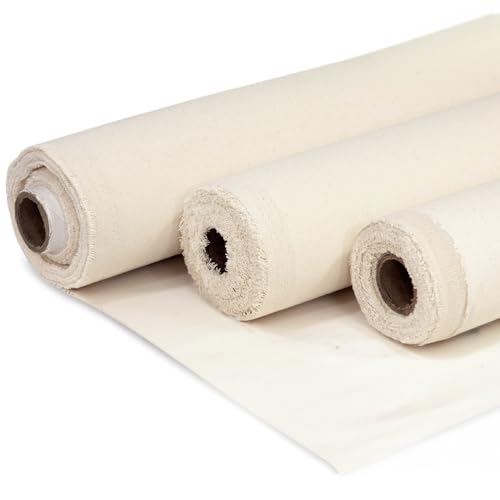
Barcelonetta sells 100% cotton duck fabric, 62 inches wide by the yard, in several weights; the 10 oz option is listed as heavy duty. It is raw fabric, not primed, and the listing is aimed at general arts, crafts and sewing.
For plein air painters who go through many panels, raw duck glued to hardboard or MDF and primed with gesso can be an economical way to make your own field panels in exactly the sizes your carrier holds. It requires time and materials, so it suits committed painters rather than beginners.
Best suited for: Experienced painters who want to make custom-size panels in bulk.
Key features:
- 100% cotton duck
- 10 oz weight option
- 62 inches wide
- Sold by the yard
Pros:
- Make many panels from one yard
- Choose any size
- Heavy weight for durability
Cons and limitations:
- Must be primed before painting
- Requires boards and adhesive
- Not ready to use
Buying consideration: Glue the fabric to board with an acrylic medium, let it dry flat under weight, then apply two or three coats of gesso.
Buying Guide: How to Choose Canvas for Outdoor Painting
Panel, stretched canvas or roll
Panels are the default for plein air: rigid, thin, light and easy to carry wet. Stretched canvas finishes ready to hang but is bulky and catches wind. Rolls and canvas sheets are the lightest but need a backing board. Many painters carry panels for serious studies and a few cut sheets for warm-ups.
Size for the light
Outdoor light changes meaningfully within an hour or two. Small sizes, 6×8 to 9×12, let you capture a single light effect. Larger sizes suit painters who work fast with big brushes or who return at the same time on several days.
Wind and stability
Wind turns a stretched canvas into a sail and can tip an easel. Panels sit lower and flatter. Hang your backpack from the easel center hook for ballast and keep panels small on blustery days.
Weight and how far you walk
If you paint near the car, weight matters less. If you hike, count every ounce: thin panels or canvas sheets, a small palette and a short brush roll.
Priming and surface
Pre-primed surfaces save time. A slightly toned surface, prepared at home, helps you judge values quickly in bright sun. Medium grain suits loose, broken color; smooth surfaces suit fine detail.
Wet transport
Choose sizes that match your wet carrier. Panels slide into grooves; stretched canvases need spacers. Never stack wet oil paintings face to face without separation.
Glare
Sun on a white surface makes paintings look darker than they are. Position the easel so the surface is in shade, or tone it with a mid-value before you go.
Matching the Surface to Your Outdoor Medium
Oil. Oil stays workable for hours, which suits changing light, but it makes transport the main problem. Panels and a slotted carrier are the standard solution. Oil-primed or acrylic-primed panels both work; acrylic gesso is what most pre-primed panels in this list use, and it accepts oil well.
Acrylic. Acrylic dries fast in sun and wind, sometimes too fast. A slightly absorbent surface speeds it further, so a well-primed panel helps. Mist your palette, use a stay-wet palette, or add a retarder to buy time.
Gouache. Gouache dries in minutes and re-wets with water. It works on primed canvas panels, though many gouache painters prefer paper or panels with an absorbent ground. Protect finished gouache from damp on the way home.
Water-mixable oil. Easier cleanup outdoors without solvents, with drying times close to traditional oil. Treat transport the same way.
Plein Air Workflow Tips
Set up with the sun behind or beside you so neither the canvas nor the palette is in direct glare.
Start with a value thumbnail. Two minutes of sketching saves twenty minutes of repainting.
Mass in the big shapes first: sky, land, shadow. Details last, if at all.
Limit your palette to a warm and cool of each primary plus white. Fewer tubes means less weight and more harmony.
Know when to stop. When the light changes significantly, record what you have and finish later from memory and a photo.
Protecting Outdoor Paintings
If a painting will be displayed outdoors, such as a mural panel or garden piece, it needs extra protection beyond normal varnish. Read our guide on how to seal a canvas painting for outdoor display before you hang anything outside. For studio versions of field studies, a grid on the canvas helps transfer the composition accurately, and if a stretched canvas gets punctured on the trail, the ripped canvas repair guide explains the fix.
Common Mistakes to Avoid
- Taking a large stretched canvas out on a windy day.
- Painting in direct sun and finding the painting too light indoors.
- Packing more panels and colors than you can use in one session.
- Stacking wet oil paintings without spacers.
- Choosing panel sizes that do not fit your wet carrier.
- Leaving finished paintings in a hot car.
FAQs
What is the best canvas size for plein air painting?
Most plein air painters use 6×8 to 9×12, with 8×10 being the most common. Larger sizes suit fast painters or multi-session work.
Is canvas board or stretched canvas better outdoors?
Canvas board is usually better: it is rigid, thin, light and does not catch wind. Stretched canvas works on calm days for display-ready pieces.
How do I carry wet paintings home after plein air?
Use a wet panel carrier with grooves for panels, or corner spacers for stretched canvases, and keep them flat and out of heat.
Can I use acrylic paint for outdoor painting?
Yes. Acrylic dries quickly outdoors, which helps transport but shortens blending time. A retarder medium or misting the palette helps.
Should I tone my canvas before plein air painting?
Many painters do. A mid-value tone reduces glare and makes values easier to judge in bright light.
How do I stop my easel from blowing over?
Hang a bag from the center hook, spread the legs wide, use small panels on windy days, and stake the legs on soft ground.
Final Recommendation
Start with the Simetufy 8×10 boards: rigid, light and sized for a single plein air session. Add the ESRICH 12×16 panels if you work larger, and a VViViD canvas roll if you want the lightest possible kit for hikes and travel. Choose the GOTIDEAL or ESRICH stretched multi packs for small, display-ready outdoor pieces, and consider Barcelonetta cotton duck if you are ready to make your own panels in bulk.