
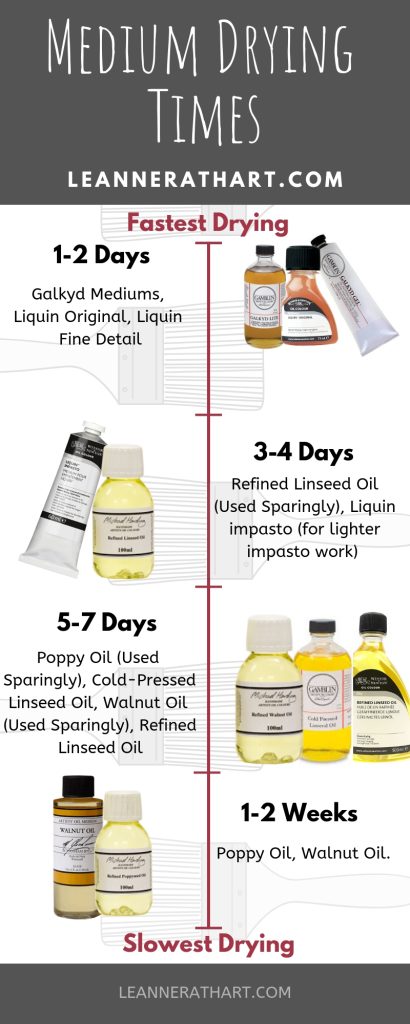
Quick answer: An oil painting with thin to moderate layers is usually dry to the touch in about 2–14 days, depending on the pigments, medium, and room conditions. It can be painted over once touch-dry, is often safe to frame or ship with care after several weeks, and is traditionally ready for final varnish after 6–12 months. Thick impasto can take months to dry through, and the paint film keeps curing for years.
“Dry” means several different things when you ask how long it takes an oil painting to dry. A painting can feel dry on Tuesday and still be soft enough underneath to dent with a fingernail in March. The answer you need depends on what you want to do next: add another layer, sign it, frame it, ship it, or varnish it. This guide breaks the life of an oil painting into stages, gives realistic time ranges for each, and explains the factors that push those ranges shorter or longer.
Oil Paint Does Not Dry Like Water-Based Paint
Watercolor and acrylic dry by evaporation: the water leaves, and the paint is dry. Oil paint dries by oxidation. The drying oil in the paint, usually linseed, absorbs oxygen from the air and gradually links its molecules into a solid, flexible film. Because the oxygen has to reach the paint, the surface dries first and the inside follows slowly. That is why a thick passage can be dry on the surface and soft below for a long time.
Understanding this also explains why some popular tricks fail. A hair dryer or a heater can warm and slightly speed oxidation at the surface, but it cannot pump oxygen into thick paint, and excessive heat can cause wrinkling or uneven drying.
Drying time also shapes how oil paintings are made, sold, and cared for, which is why it comes up so often in our broader guide to oil paintings and their care.
Seasonal and Climate Differences
The same painting can dry at noticeably different speeds depending on the season and where you live. In a warm, bright summer studio with open windows, thin layers may be touch-dry in a couple of days. In a cool, dim winter room, the same layers can take a week or more. Very humid coastal climates can slow drying further, while dry heated air in winter can speed the surface but not the interior.
If you paint year-round, keep a simple log of the date each layer went on and when it became touch-dry. After a few paintings you will have your own realistic timeline for your studio, pigments, and habits, which is more useful than any general chart.
The Five Stages of an Oil Painting Drying
| Stage | What it means | Typical time (thin to moderate layers) | What you can do |
|---|---|---|---|
| 1. Wet / workable | Paint moves freely and blends | Hours to about a day | Blend, wipe out, work wet-on-wet |
| 2. Tacky | Surface is sticky; brushing drags and lifts | Often several hours to a few days | Leave it alone |
| 3. Touch-dry | No paint transfers to a light fingertip touch | About 2–14 days | Paint the next layer, glaze, sign |
| 4. Dry through | Firm throughout; does not dent under gentle pressure | Weeks to a few months | Frame, transport, retouch varnish |
| 5. Cured / varnish-ready | Film has oxidized enough for a final varnish | Traditionally 6–12 months | Apply final varnish |
Thick impasto stretches every stage. A heavy passage may stay tacky for weeks and need a year or more before final varnish.
Different parts of the same canvas also move through these stages at different speeds. A thin sky painted with burnt sienna in the mix can be touch-dry while a thick titanium white cloud next to it is still soft. Always judge readiness by the slowest, thickest area, not by the quickest one, especially before framing, stacking, or varnishing.
What Affects How Long an Oil Painting Takes to Dry
Pigments
Each pigment influences how fast its oil oxidizes. Some metals in pigments act as natural driers, while others slow things down.
| Drying speed | Examples |
|---|---|
| Fast (often 1–3 days touch-dry in thin layers) | Burnt umber, raw umber, burnt sienna, Prussian blue, many earth colors |
| Medium (around 3–6 days) | Ultramarine, yellow ochre, many cadmiums, phthalo colors |
| Slow (often a week or more) | Titanium and zinc white in some oils, alizarin crimson, ivory black, many quinacridones |
These are general tendencies, not guarantees; brands grind pigments in different oils and some add driers. That is why underpaintings are often done in earth colors: they dry quickly and give a sound base for slower layers.
The Oil in the Paint
Linseed oil dries fastest and forms the toughest film. Safflower and poppy oils, often used in whites and pale colors to reduce yellowing, dry more slowly. Walnut oil sits in between. Check the tube or the maker’s chart if drying time matters.
Mediums
Alkyd-based mediums can make thin layers touch-dry in roughly a day. Adding extra linseed oil, especially stand oil, slows drying and can cause wrinkling if overdone. Solvent-thinned lean layers dry relatively quickly because there is less oil per layer.
Layer Thickness
Thickness is the biggest single factor. A thin scrubbed underpainting may be touch-dry overnight, while a palette-knife highlight a quarter-inch thick can take months to firm up throughout.
Ground and Surface
An absorbent ground, such as some acrylic gessoes or traditional chalk grounds, draws oil out of the first layer and can speed surface drying, sometimes leaving it dull. A sealed, less absorbent surface keeps more oil in the paint and may slow early drying slightly.
Environment
- Temperature: warm rooms speed oxidation; cold rooms slow it noticeably.
- Air flow: gentle circulation brings fresh oxygen to the surface.
- Light: paintings tend to dry better in normal daylight than in darkness, and paint drying in the dark can yellow, though it often recovers in light.
- Humidity: very damp conditions can slow drying.
How Long Between Layers?
For most indirect painting, wait until the previous layer is touch-dry before adding the next. Painting over tacky paint drags and lifts it, which muddies color and weakens the bond between layers. In practice:
- Thin, lean underpainting: 1–3 days.
- Middle layers with modest medium: 3–7 days.
- Glazes with an alkyd medium: around 24 hours.
- Glazes with slow oil mediums: several days.
Keep in mind the fat-over-lean rule: each layer should contain slightly more oil than the one below so the painting stays flexible as it cures.
When Can You Frame, Ship, or Sell an Oil Painting?
Framing a painting that is touch-dry is usually fine if the frame does not press on the paint surface and the painting can continue to breathe. Shipping is riskier, because wrapping materials can stick to or imprint soft paint. A common approach is to wait until the painting is dry through, often a few weeks for thin work and longer for heavy paint, then wrap the face in glassine before bubble wrap.
If you sell a painting before final varnishing, let the buyer know it has only retouch varnish, or no varnish, and when a final coat would be appropriate. Paintings depicting complex textures like beaches can include both thin and thick passages; our guide to painting sand and beach scenes in oil discusses building texture in stages so it dries evenly.
When Is an Oil Painting Ready for Varnish?
The traditional guidance for a final picture varnish is to wait six months to a year after the last layer, and longer for thick impasto. Varnishing too early seals the surface while the paint below still needs oxygen and is still moving, which can lead to cracking, cloudiness, or a varnish that bonds partly with the paint and becomes difficult to remove.
A retouch varnish, which is thin and breathable, can be applied once the painting is touch-dry to even out dull areas and provide temporary protection. Some modern varnishes are formulated for earlier final application once the paint is firm; follow the maker’s instructions closely if you use one.
A simple test: press a fingernail gently into the thickest paint at the edge of the painting. If it leaves a mark, the painting is not ready for final varnish.
How to Speed Up Oil Painting Drying Safely
- Paint thinner layers. The most reliable method.
- Use an alkyd medium in moderation for glazes and later layers.
- Choose fast-drying pigments such as earth colors for underpaintings.
- Use alkyd or fast-drying oil paints for parts of the painting where you need speed.
- Keep the room warm and ventilated, roughly 70°F with gentle air movement.
- Dry in indirect daylight rather than a dark closet.
- Use a slightly absorbent ground for the first layer.
Avoid adding household driers or cobalt drier in large amounts. Small, carefully measured amounts of artist-grade siccatives exist, but overuse can make the film brittle and lead to cracking later.
How to Slow Drying When You Want More Working Time
- Use slow-drying pigments or paints made with safflower or poppy oil.
- Add a small amount of a slow-drying medium, such as one with oil of cloves or a dedicated retarding medium; follow the label.
- Store your palette in an airtight container in the freezer between sessions to keep mixed piles fresh for days.
- Paint in a cooler room.
Common Drying Problems
| Problem | Likely cause | What to try |
|---|---|---|
| Still tacky after weeks | Thick paint, excess oil, slow pigment, cold room | Move to a warm, ventilated, well-lit room and be patient |
| Wrinkled surface | Too much oil, thick layer, surface dried before inside | Use less oil next time; scrape and repaint if severe |
| Dull, patchy areas | Sinking in from absorbent ground or lean layers | Oil out or apply retouch varnish |
| Cracking during drying | Lean over fat, fast layer over slow layer | Follow fat-over-lean; use fast-drying underlayers |
| Yellowing | Drying in the dark, excess linseed oil | Expose to daylight; reduce oil in pale colors |
A Realistic Timeline for One Painting
Here is a sample timeline for a 16 x 20 inch landscape painted in three layers with moderate texture:
- Day 1: earth-color underpainting, thin and lean.
- Day 3: block-in of color over the touch-dry underpainting.
- Day 8: details and moderate impasto highlights.
- Day 15–20: touch-dry overall; sign and photograph.
- Week 4–8: dry through in most areas; retouch varnish and frame.
- Month 6–12: final varnish.
Paintings with delicate subjects and slow pigments, such as a pearly seashell in oil painted with lots of white, may take longer at every stage.
FAQs
How long does it take for oil paint to dry on canvas?
Thin layers on canvas are typically touch-dry in about 2–14 days, depending on pigment and medium. Thick layers can take weeks or months, and full curing for final varnish traditionally takes 6–12 months.
How long does oil paint take to dry between layers?
Wait until the previous layer is touch-dry, often 1–7 days for thin to moderate layers, or about a day when using an alkyd medium. Painting into tacky paint can lift it and muddy color.
Can I use a hair dryer to dry an oil painting?
A hair dryer warms the surface but does not dry the paint through, and excess heat can cause wrinkling or uneven drying. Thin layers, alkyd mediums, and a warm, ventilated room are more effective.
How long does oil paint take to dry with linseed oil?
Adding linseed oil generally slows drying slightly and increases flexibility. Thin layers with a little linseed often dry in several days, while generous amounts can lead to slow drying and wrinkling.
How long does acrylic paint take to dry compared to oil?
Acrylic paint usually dries to the touch in minutes to an hour and cures within days. Oil paint takes days to become touch-dry and months to cure fully.
Why is my oil painting still wet after a week?
Slow-drying pigments, thick paint, extra oil or slow mediums, cool temperatures, or a dark room can all keep a painting tacky. Moving it to a warm, ventilated room with indirect daylight usually helps.
Final Thoughts
An oil painting dries in stages, not all at once: touch-dry in days, dry through in weeks, and ready for varnish after months. Plan your layers, pigments, and mediums with those stages in mind and you will avoid most cracking, wrinkling, and sticky surprises. To learn more about oil painting styles, materials, and caring for finished works, browse our oil paintings resource with expert tips and styles.




