
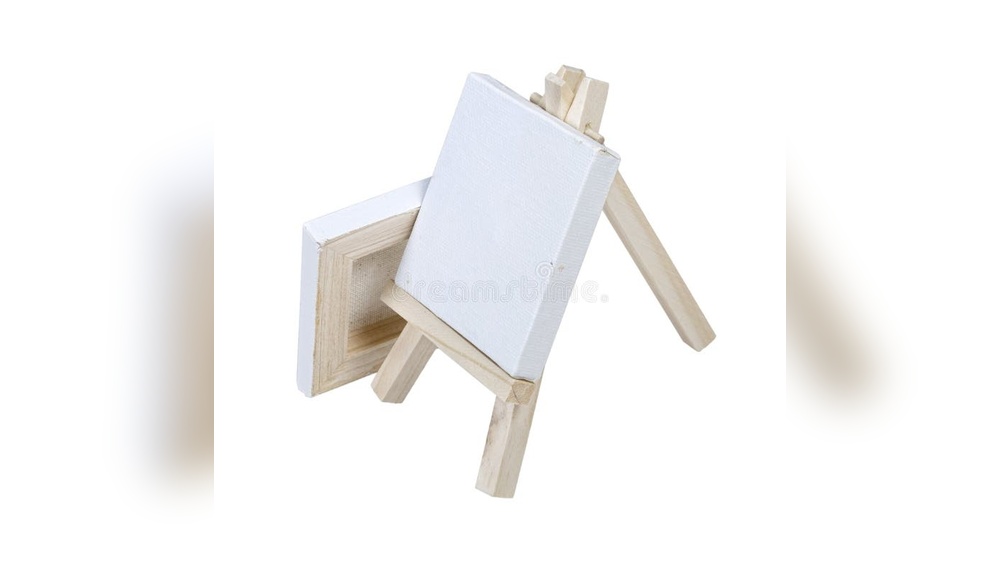
Quick answer: The tool used for holding a canvas while you paint is an easel. Common types include the A-frame (lyre) easel, the sturdier H-frame studio easel, tabletop easels for small work, and portable field or pochade box easels for painting outdoors. Painters also hold canvases with wall mounts, clamps on a drawing board, or simply by laying them flat on a table, especially for fluid paints like watercolor or pours.
Holding a canvas steady sounds trivial until you try painting on one propped against a stack of books. It slides, the angle is wrong, glare hits the surface, and your back starts complaining. The right support keeps the painting stable, puts it at a comfortable height and angle, and lets you step back to judge your work.
This guide explains what is used for holding canvas to paint, from the classic easel types to simple alternatives, and helps you choose based on canvas size, medium, space, and whether you paint indoors or out.
The Easel: The Standard Canvas Holder
An easel is a stand with a lower ledge (tray) that supports the bottom edge of a canvas and an adjustable upper clamp that grips the top. The word comes from the Dutch “ezel,” meaning donkey, a nod to its role as a beast of burden. Easels hold the canvas upright or at an angle, so you can paint at eye level and view the work as it will eventually hang.
Painting upright also helps you see proportions accurately. When a canvas lies flat on a table, you view it at an angle, and shapes near the top appear foreshortened. Many beginners are surprised how distorted their drawing looks once they stand the painting up.
The angle you need depends on your medium. Oil and acrylic are thick enough to paint vertically. Watercolor and fluid gouache can run, so they are often painted flat or at a slight tilt. If you work in gouache on canvas, the surface you choose also affects how much the paint moves; see our guide to canvas suited to gouache painting for options that hold the paint well.
Types of Easels Compared
| Easel type | Best for | Canvas capacity (typical) | Stability | Portability |
|---|---|---|---|---|
| A-frame / lyre | Home studios, beginners | Up to about 30 to 48 in. | Moderate | Folds; fairly light |
| H-frame studio | Large work, heavy pressure | Up to 60 in. or more | High | Heavy; stays put |
| Tabletop | Small canvases, limited space | Up to about 16 to 24 in. | Good for size | Very portable |
| French box / field easel | Plein air, travel | Up to about 24 to 34 in. | Moderate | Folds into a box with storage |
| Pochade box | Small outdoor studies | Small panels, often 6 x 8 to 12 x 16 in. | Good on a tripod | Very portable |
| Tripod / sketch easel | Lightweight outdoor work, display | Small to medium | Lower; wind-sensitive | Very light |
| Convertible / multi-angle | Watercolor and mixed media | Varies | Good | Moderate |
| Crank or counterbalanced studio | Professional studios, very large work | Very large | Very high | Not portable |
A-frame (lyre) easels
Three legs meet at the top, with the canvas resting on an adjustable ledge. They are affordable, fold flat, and fit in corners. The trade-off is stability: pressing hard with a palette knife can make them wobble, and they usually cannot tilt forward.
H-frame easels
Two vertical posts on a rectangular base give a rigid, stable frame. Many tilt forward and backward, and they handle large canvases and vigorous painting. They take up more floor space and are heavy to move.
Tabletop easels
Compact versions of A-frame or H-frame designs that sit on a desk. Good for small paintings, kids, and apartments. Some include a drawer for supplies.
French box and field easels
These combine telescoping legs, a canvas clamp, and a built-in paint box. They set up quickly outdoors and carry supplies in one unit. They can be fiddly to adjust and heavier than other portable options.
Pochade boxes
A small box with a lid that holds a panel and a built-in palette, mounted on a camera tripod. Many plein air painters prefer them for small studies because they are light and quick to set up.
Alternatives to an Easel
You do not need an easel to start painting. Several simple methods work well, especially for certain mediums or tight spaces.
Wall mounting
Hang the canvas on a nail or screw at eye level, or attach it to a wall-mounted board with clips or a ledge. Many artists who paint large work use this method because the wall is completely stable. Protect the wall with a drop cloth or a sheet of hardboard behind the painting.
Drawing board and clamps
Clip a canvas panel or canvas paper to a drawing board with bulldog clips, then rest the board in your lap, on a table, or against a wall. This is especially handy for gouache and watercolor, where you may want to adjust the angle frequently.
Painting flat on a table
Fluid acrylic pours, watercolor washes, and resin work need a flat surface. Raise the canvas on cups or blocks so drips can fall off the edges. A level table prevents paint from pooling to one side.
Table props and book stands
A cookbook stand, a laptop stand, or a slanted board propped on books can hold small canvases at an angle. It is not elegant, but it works for quick studies.
Canvas holders and clamps
Some painters attach a canvas holder bracket or C-clamp to a table edge or shelf. Others use handled canvas grips that screw into stretcher bars, letting you hold a small canvas in one hand while painting with the other.
How to Choose the Right Canvas Holder
1. Consider your canvas size
Check the maximum canvas height an easel can hold. Buy a little more capacity than you need today, since many painters move to larger work over time.
2. Match it to your medium
- Oil and acrylic: Vertical or slightly forward-tilted easels reduce glare and keep dust off.
- Watercolor: Flat or slightly tilted; a convertible or tabletop easel with a horizontal setting works well.
- Gouache: A slight tilt, around 10 to 30 degrees, is common.
- Pastel: A slight forward tilt lets dust fall away from the surface instead of settling on it.
3. Think about space and storage
A-frame and tabletop easels fold for storage; H-frame easels stay set up. Measure your room, including ceiling height if you plan to paint tall canvases.
4. Indoor, outdoor, or both?
For plein air painting, weight and setup speed matter most. A pochade box on a tripod or a lightweight field easel suits frequent travel. Indoors, stability and adjustability come first.
5. Check build quality
Look for solid wood or sturdy aluminum, smooth adjustment knobs, and a canvas clamp that grips firmly without crushing the top edge. Wobbly joints are the most common frustration with budget easels.
Easel Features Worth Paying Attention To
Two easels that look alike in a photo can feel very different in use. These details separate a frustrating stand from one you will use for years:
- Mast height and extension: A mast that extends above the canvas lets the top clamp reach tall paintings. Check both the minimum and maximum canvas heights.
- Tray depth: A deep tray holds thick gallery-wrapped canvases and doubles as a spot for brushes. Shallow trays can let deep canvases tip forward.
- Tilt range: Forward tilt reduces glare and helps pastel dust fall away; backward tilt suits drawing. Flat positions are essential for watercolor.
- Locking mechanisms: Large, easy-to-grip knobs are faster to adjust and less likely to slip than small wing nuts.
- Casters: Lockable wheels on studio easels make it easy to move toward a window or rotate away from glare.
- Finish: Oiled or sealed wood wipes clean more easily than raw wood, which absorbs paint and solvent.
If you split time between small studies and large canvases, you may end up with two holders: a tabletop or pochade box for small work and a floor easel for big pieces. That combination covers most painting needs without one compromise tool.
Setting Up Your Easel for Comfortable Painting
- Height: The center of the canvas should be roughly at eye level, whether sitting or standing.
- Distance: Stand about an arm’s length away, so you can paint with your arm extended and see the whole canvas.
- Lighting: Position light to come from the side opposite your painting hand to avoid shadows from your arm. Avoid glare by tilting the top of the canvas slightly forward.
- Palette position: Keep your palette on the same side as your painting hand, at a comfortable height, to reduce reaching.
- Step back: Leave room behind you to step back several feet and check the painting from a distance.
Holding Canvas While You Prepare It
Holding canvas to paint is different from holding it while you prepare it. When stretching canvas, you use canvas pliers to grip and pull the fabric, and a staple gun to fasten it. When gridding or drawing a composition, it can help to lay the canvas flat on a table first. Our guide on gridding a canvas for painting walks through that layout step before the canvas goes on the easel.
DIY Canvas Holders
If you are on a budget, several homemade options work surprisingly well:
- Cleat on the wall: Screw a horizontal strip of wood to the wall at a comfortable height, and rest the canvas on it with a second strip and clamp at the top.
- Repurposed music stand: Sturdy music stands hold small canvases and panels at adjustable angles.
- Ladder easel: A small stepladder with a board across a step can hold a medium canvas.
- Box lid board: Tape a canvas panel inside a sturdy box lid and prop it at an angle for gouache or watercolor.
Common Mistakes
- Choosing an easel too small for the canvases you actually paint
- Painting with the canvas flat on a table for oil or acrylic, leading to distorted proportions
- Setting the canvas too low, causing neck and back strain
- Over-tightening the top clamp and denting the canvas edge
- Using a light tripod easel outdoors without weighting it in wind
- Placing the easel where your arm casts shadows on the surface
Caring for Your Easel and Canvas
Clean paint drips off the tray and clamps before they harden, particularly with acrylic. Tighten knobs periodically, and oil any metal hinges on field easels. When moving a painting on and off the easel, hold it by the stretcher bars rather than the canvas face. If a painting does get punctured or snagged during handling, our article on fixing a ripped canvas painting explains how to repair it.
FAQs
What is the thing that holds a canvas called?
It is called an easel. Easels come in many styles, including A-frame, H-frame, tabletop, field, and pochade box designs, all of which hold a canvas upright or at an angle while you paint.
Can I paint on canvas without an easel?
Yes. You can hang the canvas on a wall, clip it to a drawing board, prop it at an angle, or paint flat on a table. An easel is more comfortable for long sessions and helps you see proportions accurately.
What type of easel is best for beginners?
An A-frame or tabletop easel is a good starting point because it is affordable, compact, and easy to adjust. Painters who work large or use heavy pressure may prefer a sturdier H-frame easel.
Can gouache be used on canvas?
Yes. Gouache can be used on canvas, especially if the surface is primed with an absorbent ground or a canvas designed for water media. Keep layers fairly thin, since thick gouache can crack on a flexible stretched canvas, and seal the finished piece to protect it from moisture.
What angle should a canvas be for painting?
For oil and acrylic, upright or tilted slightly forward works well and reduces glare. For watercolor, paint flat or at a slight tilt. For gouache, a gentle slope of roughly 10 to 30 degrees is common.
How do I keep my easel stable outdoors?
Spread the legs wide, push leg tips into soft ground, and hang a weight such as a bag of rocks or your backpack from the center hook. Turning the canvas edge into the wind and using a smaller canvas also help.
Next Step
With the right easel or holder, painting becomes more comfortable and your proportions improve almost immediately. The other half of the setup is the surface itself. If you paint with water-based media, take a look at our picks for the best canvases for gouache and pair a steady holder with a surface that works with your paint.




