
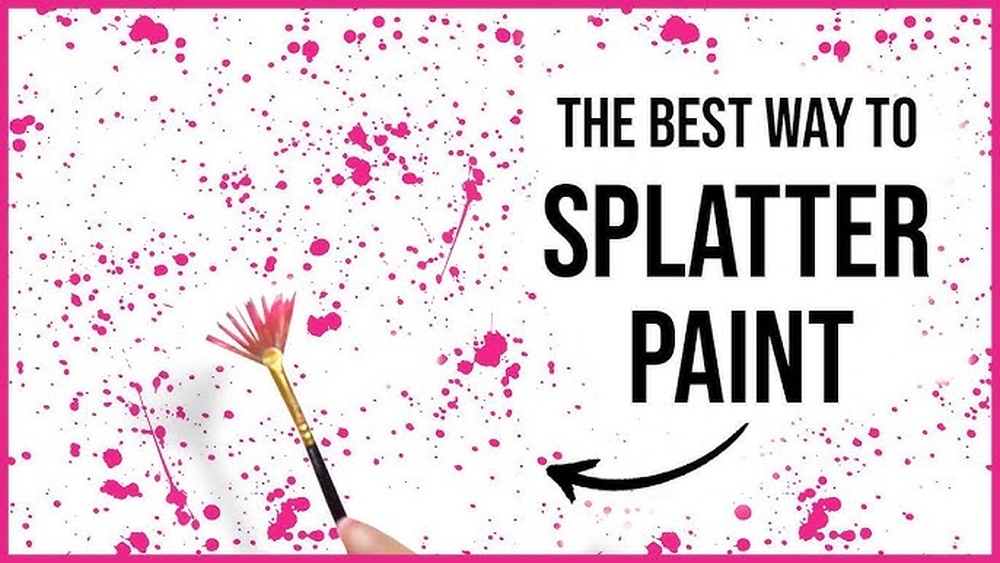
Quick answer: For splatter painting with acrylics, thin the paint with water or a fluid medium until it is about the consistency of whole milk, load a stiff brush or old toothbrush, and flick or tap it over the canvas from 6 to 24 inches away. Thinner paint and more force make finer spray; thicker paint and closer distance make larger drops. Protect the area around you, work in layers from light to dark, and let each layer dry before adding the next.
Splatter painting looks random, but the best examples are anything but. The size of each drop, how far it travels and whether it lands as a crisp dot or a star-shaped burst all depend on a handful of variables you can control: paint thickness, the tool, distance and the motion of your hand.
This guide covers splatter painting with acrylics as a standalone abstract technique and as an accent in other paintings, such as stars in a night sky, spray on a seascape or texture on a rock. You will find setup advice, a breakdown of tools and motions, and fixes for the problems that come up most often.
What Splatter Painting Is (and What It Is Not)
Splatter painting is a technique where paint is flung, flicked, tapped or dripped onto a surface rather than brushed in controlled strokes. The marks it creates range from fine mist to large drops and long trails.
It overlaps with drip painting, the approach associated with Jackson Pollock and other Abstract Expressionists, where paint is poured or dripped from a stick or can in long, continuous movements. Splatter is usually shorter and more percussive: a flick or a tap that sends drops outward in a burst. Many artists combine both.
In representational paintings, splatter is a finishing tool. A few flicks of white can become stars or sea foam, a scatter of brown can suggest speckles on an egg or texture on stone, and colored spatter around a floral can add energy.
Getting the Paint Consistency Right
Consistency is the single biggest factor in how splatter behaves. Acrylic straight from a heavy body tube is too thick to fly; it clings to the brush or lands in heavy blobs.
| Consistency | How to get it | Splatter result |
|---|---|---|
| Ink-thin | Fluid acrylic or acrylic ink, or paint with plenty of water | Fine mist, tiny dots, can run on vertical surfaces |
| Whole milk | Soft body paint thinned roughly 1:1 with water or medium | Controllable mid-size drops, good all-purpose |
| Heavy cream | Fluid acrylic straight, or soft body with a little water | Larger round drops, longer trails when flung |
| Yogurt | Heavy body or soft body with no thinning | Thick blobs that sit raised; hard to throw far |
Thinning with water alone works, but adding a lot of water weakens the acrylic binder, which can leave thin splatters that rub off or look chalky. Many artists use a fluid medium or airbrush medium instead of, or along with, water so the dots stay strong and vivid. Acrylic inks are designed to be fluid already and produce crisp, saturated speckles. Our Daler-Rowney acrylic ink review explains how one such ink behaves.
Pigment strength matters as well. Thinned student paint can look washed out, while artist-grade paint holds color at low concentrations. If you are deciding which paint to buy for splatter work, our comparison of the best acrylic paint brands for vibrant, fluid color is a good starting point.
Set Up Your Space First
Splatter travels farther than most people expect, especially fine mist. A few minutes of preparation saves a lot of cleanup.
- Cover the floor and nearby walls with plastic sheeting, a drop cloth or flattened cardboard. Fine droplets can drift several feet.
- Wear old clothes and gloves. Wet acrylic washes out of fabric, but dried acrylic is very hard to remove.
- Lay the canvas flat on a table or the floor for most splatter work. Flat surfaces keep drops round. A vertical canvas makes drops run into drips, which can be intentional.
- Mask areas you want clean with painter’s tape, paper or low-tack masking film. This is how artists keep a figure crisp while splattering the background.
- Test on scrap paper each time you change paint or tools.
If you are working outdoors, wind will carry mist sideways, so choose a still day or work in a garage with the door open for ventilation.
Tools for Splatter Painting With Acrylics
Almost anything that holds paint can splatter it. Each tool produces a different signature.
| Tool | Motion | Mark |
|---|---|---|
| Old toothbrush | Drag thumb or a palette knife across bristles | Fine, even speckle; great for stars and texture |
| Stiff bristle brush | Flick the wrist or tap the handle on a stick | Mixed drop sizes in a directional burst |
| Large soft round brush | Tap the ferrule against your finger or a brush handle | Larger, round drops in a controlled area |
| Fan brush | Flick or tap | Scattered, slightly elongated drops |
| Stir stick or palette knife | Fling or drip | Long trails and lines |
| Squeeze bottle or pipette | Squeeze sharply | Bold drops and lines, very controllable placement |
| Spray bottle with thin paint | Spritz | Fine mist; adjust nozzle for droplet size |
Keep a dedicated set of splatter brushes. The flicking and tapping motion is hard on bristles, and paint tends to dry inside the ferrule.
Choosing a Surface for Splatter Work
The surface changes how drops land. Smooth, primed panels and canvas boards keep splatters crisp and round, because the paint sits on top instead of soaking in. Textured canvas breaks larger drops into slightly irregular shapes, which can look more organic. Heavy watercolor or mixed-media paper absorbs some water from thin paint, so dots may spread a little at the edges.
For large abstract pieces, a stretched canvas laid flat on sawhorses or a table lets you walk around all four sides. For practice, a pad of canvas paper is inexpensive and lets you test dozens of tool and consistency combinations before committing to a finished piece.
How to Do Splatter Painting With Acrylics: Step by Step
Step 1: Prepare the Background
Splatter usually sits on top of something. For an abstract piece, paint a base layer or gradient and let it dry. For a galaxy or night sky, paint the dark background first. Dry backgrounds keep splatters crisp; wet backgrounds make them soften and bleed, which can be useful for atmospheric effects.
Step 2: Choose a Palette and Order
Decide on three to five colors and the order you will apply them. A reliable approach is light to dark for most abstracts, then finishing with a few bright accents. For star fields, do the opposite: dark background, then light splatter.
Step 3: Mix the Paint
Mix each color in a separate cup to your chosen consistency. Stir well so there are no clumps, which create unexpected blobs.
Step 4: Test the Motion
On scrap paper, try your chosen tool at different distances. Note how drop size changes. A typical range is 6 inches for tight control and 18 to 24 inches for broader, finer coverage, but your paint and tool will change this.
Step 5: Apply the First Layer
Load the brush, remove excess on the rim of the cup so it does not drip on the way to the canvas, and splatter with deliberate motions. Rotate around the canvas or turn it to vary the direction of the bursts. Directional splatter tends to look more dynamic than splatter that radiates evenly.
Step 6: Let It Dry, Then Layer
Thin acrylic splatters dry in minutes, larger drops in perhaps 15 to 30 minutes. Letting each layer dry before adding the next keeps colors distinct. If you want colors to merge, add the next layer while the first is still wet.
Step 7: Add Accents and Edit
Finish with a small number of large drops or a contrasting color to create focal points. Step back often. If an area feels crowded, you can paint over it with the background color and re-splatter.
Step 8: Protect the Finished Piece
Once fully dry, varnish to unify the sheen and protect the surface. Fine splatters can sit slightly raised, so a spray varnish in light coats is often easier than brushing.
Controlling Splatter: What Changes What
| Variable | Change | Effect |
|---|---|---|
| Paint thickness | Thinner | Smaller drops, more mist, farther travel |
| Distance | Farther | Wider spread, smaller marks |
| Force | Harder flick or tap | Finer spray and more satellite droplets |
| Brush load | More paint | Bigger drops and more of them |
| Angle | Lower angle to canvas | Elongated, comet-shaped marks |
| Surface | Wet vs dry | Soft bleeds vs crisp edges |
Creative Splatter Techniques to Try
Galaxy and Star Fields
Paint a dark blend of navy, purple and black. Once dry, use a toothbrush with thinned white paint to create a fine star field. Add a few larger stars by tapping a small round brush. A light spritz of water before splattering softens some stars into a hazy glow.
Masked Silhouettes
Cut a shape from paper or masking film, such as a leaf, a letter or a figure, and place it on the canvas. Splatter around it, then remove the mask once the paint has set to reveal a clean silhouette. You can also splatter inside a stencil for the reverse effect.
Drip and Splatter Combinations
Tilt the canvas upright after splattering so some drops run into vertical drips. Lay it flat again to stop them. This creates a contrast between dots and lines.
Splatter With Water Drops
Splatter clean water onto wet paint. Each drop pushes pigment outward, leaving pale rings known as blooms. This works best with thin, still-wet layers.
Metallic and Iridescent Accents
A final layer of metallic gold, silver or copper splatter catches light and adds a finished look. Use it sparingly so it reads as an accent.
Common Splatter Painting Problems
Paint Comes Out in Big Blobs
The paint is too thick or the brush is overloaded. Thin it and wipe excess off the brush before each flick.
Splatter Looks Uniform and Boring
Vary drop size, direction and density. Cluster splatter in some areas and leave others nearly empty. Contrast creates interest.
Colors Turn Muddy
Layers were applied while previous ones were wet, or too many colors overlapped. Let layers dry and limit the palette.
Splatters Look Dull When Dry
Heavily diluted paint can lose vibrancy and dry matte. Use a medium instead of only water, choose higher-pigment paint, or varnish with gloss to restore depth.
Splatters Rub Off
The binder was diluted too much. Mix in an acrylic medium so the paint forms a proper film, and seal with varnish.
Splatter Painting With Kids and Groups
Splatter is a popular group and children’s activity because it needs little skill to produce satisfying results. Choose washable or student-grade acrylic or tempera for young kids, work outdoors or in a fully covered area, and provide smocks. Pre-mixing paint into squeeze bottles reduces spills and gives children better control than flicking brushes. Note that standard acrylic is permanent on fabric once dry, so act quickly on spills.
Related Reading
FAQs
What is the best paint consistency for acrylic splatter painting?
Around the consistency of whole milk works for most purposes. Thinner paint makes finer mist, and thicker paint makes larger drops. Test on scrap paper first.
Can I use heavy body acrylics for splatter painting?
Yes, but you need to thin them substantially with water or a fluid medium. Fluid acrylics and acrylic inks are easier because they are already at a splatter-friendly consistency.
How do I splatter paint without making a mess?
Cover a wide area around your canvas, use a cardboard box as a spray booth for small pieces, wear old clothes, and control drop size by keeping paint slightly thicker and working closer to the surface.
What can I use instead of a toothbrush for fine splatter?
A stiff stencil brush, a fan brush, or a small bristle brush tapped against a handle will create fine speckles. A spray bottle with thinned paint gives mist.
Does splatter painting work on paper?
Yes. Use heavier paper such as mixed-media or watercolor paper so it does not buckle with wet paint, and tape the edges down.
Should I varnish a splatter painting?
Varnishing is recommended. It evens out the sheen between thick and thin areas, deepens color and protects fine splatters from rubbing off.
Final Thoughts
Splatter painting rewards experimentation, but it is not purely luck. Control the consistency, choose a tool that matches the mark you want, test your distance and work in layers. Once those basics are second nature, you can use splatter as a full abstract style or as a few precise flicks that bring another painting to life.
Because thinned paint reveals weak pigment quickly, the paint you choose shows more in splatter than in almost any other technique. To compare fluid and soft body options that stay bright when diluted, see our guide to top-rated acrylic paints for every budget.




