Atelier Interactive acrylics stay wetter longer, blend like oils, and reactivate with control.
If you have ever fought acrylics that dry mid-stroke, you know the pain. Edges lock. Blends break. Glazes streak. Atelier’s “interactive” open behavior solves that. I can keep paint open longer, soften patches hours later, or lock layers when I’m ready. In this Atelier open acrylic paint review, I break down real-world performance, color strength, and drying control. I also compare sets and star single colors so you can pick what fits your studio, plein air kit, or class bag. Let’s get your blends smooth, your edges clean, and your time on canvas less stressful.

Chroma Atelier Interactive Acryl 80ml…
Atelier Interactive Acrylics allow the artist control over the drying speed Drying time can be extended and dry colors can be reactivated Colors are smooth and buttery with a velvety…

Chroma Atelier Interactive Acryl 20ml…
Atelier Interactive Acrylics allow the artist control over the drying speed Drying time can be extended and dry colors can be reactivated Colors are smooth and buttery with a velvety…

Chroma Atelier Interactive Acrylic Plein…
Atelier Interactive Acrylics allow the artist control over the drying speed Drying time can be extended and dry colors can be reactivated Colors are smooth and buttery with a velvety…
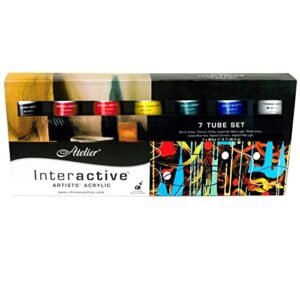
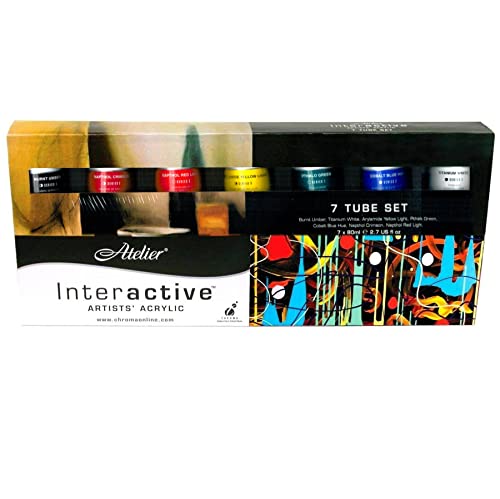
Atelier Interactive Acrylic 80ml Set, 7 Tubes

This is the sweet spot starter if you want big tubes and serious mileage. The 80ml size lets you paint larger, work alla prima, and practice glazing without rationing every squeeze. Colors are balanced for mixing, so you can hit most subjects without hunting odd pigments. I find the open behavior ideal for long blends on skies, skin, and subtle gradients.
Atelier’s interactive formula is the star. Mist with water or use Unlocking Formula to reopen touch-dry passages and keep blending. You can slow or speed drying with mediums, then commit when ready. Pigment load is strong, with a satin-matte sheen that photographs well. In this Atelier open acrylic paint review, this set delivers the best value-to-volume for most painters.
Pros:
- 80ml tubes offer excellent value and long painting sessions
- Interactive formula reopens with water or Unlocking Formula for smooth blends
- Balanced palette supports landscapes, portraits, and still life
- High pigment load with reliable lightfastness for finished work
- Lower color shift from wet to dry than many acrylics
- Great for oil painters switching to acrylics due to similar working time
- Satin finish reduces glare and scans nicely
Cons:
- Only seven colors, so you will mix more to reach niche hues
- Extended open time can slow layering if you rush
- Requires a short learning curve to master reactivation control
My Recommendation
If you want fewer paint runs to the store and more time painting, this is it. The 80ml Atelier Interactive set is best for studio painters who blend a lot, oil-to-acrylic switchers, and anyone who wants forgiving open time. In practice, I build soft transitions, glaze thinly, then lock layers before detailing. For the Atelier open acrylic paint review, this is my pick for most buyers who want depth, control, and value.
| Best for | Why |
|---|---|
| Large canvas painters | 80ml tubes handle coverage and mixing without constant resupply |
| Oil painters switching | Open time and reactivation echo oil’s blend-friendly workflow |
| Blenders and glazers | Interactive formula allows soft edges and layered depth with control |
Atelier Interactive Acrylic 20ml Set, 12 Tubes

Want more colors without a big spend? The 20ml 12-tube set gives a flexible palette in compact sizes. It is great for color studies, workshops, or testing Atelier’s open behavior before you commit to big tubes. Mixing is clean and predictable, and the paint stays responsive longer than standard acrylics.
In this Atelier open acrylic paint review, I rate this set as the best entry for students and hobbyists who value choice. It leans practical with hues that cover warm and cool primaries and essential earths. Small tubes make it easy to carry or store. If you like to explore palettes and push color harmony, this is a smart fit.
Pros:
- Broad color range in an affordable starter set
- Compact 20ml tubes are ideal for travel and classes
- Interactive formula aids blending and glazing practice
- Great for testing color mixes before buying larger sizes
- Consistent satin finish suits study panels and finished work
- Lower paint waste when you squeeze only what you need
Cons:
- 20ml tubes run out faster on bigger canvases
- A few hues may be mixes rather than single pigments
- Not the best value per milliliter
My Recommendation
I suggest this for students, workshop goers, and color-curious artists. You get enough variety to learn mixing and build a voice without overspending. The open time reduces stress while you practice edges and values. For the Atelier open acrylic paint review, this is the smartest low-risk way to try the system and see how it elevates your process.
| Best for | Why |
|---|---|
| Beginners and students | More colors, simple learning curve, and budget-friendly tubes |
| Travel and workshops | Lightweight kit with versatile hues for demos and studies |
| Palette explorers | Test many mixes and find keepers before buying big tubes |
Atelier Interactive Plein Air Set, 12x20ml + Mediums
Plein air asks a lot from paint. You need time to blend clouds, but the surface must be tack-free before you pack up. This set adds mediums with the 12x20ml tubes so you can fine-tune open time outdoors. I like a mist bottle plus Unlocking Formula for tricky passages as the light changes.
Colors cover key warms and cools, so you can hit greens, skies, warm light, and cool shadows. The interactive behavior helps when wind dries edges too fast or humid air stalls drying. In my Atelier open acrylic paint review, this ensemble feels purpose-built for on-location work where control and speed matter. It is also an excellent class kit.
Pros:
- Includes mediums to manage drying in changing outdoor conditions
- Interactive paint supports fast corrections as light shifts
- Portable 20ml tubes keep the kit light
- Versatile palette tailored for landscapes
- Dries to a touch-safe satin that packs better than oils
- Great for workshops focused on plein air technique
Cons:
- 20ml tubes can empty fast on large panels
- Weather still affects working time; practice your rhythm
- Set layout may vary; check exact mediums included
My Recommendation
If you chase sunsets or paint city light, pick this one. It gives you time to blend and correct without oil’s long cure or solvent fuss. The mediums let you adapt on the fly. In this Atelier open acrylic paint review, the plein air set stands out for mobile painters who want flexible control and clean pack-up.
| Best for | Why |
|---|---|
| Plein air painters | Mediums and open paint suit fast changes and quick fixes |
| Traveling artists | Compact tubes and reliable drying for safe transport |
| Workshop students | Complete palette plus control tools to learn quickly |
Atelier Interactive 80ml Indian Red Oxide

Indian Red Oxide is a studio workhorse. It is earthy, opaque, and stable, often built on PR101. I use it to tone canvases, anchor portraits, and lay warm shadows in landscapes. In Atelier Interactive, it levels well and stays blendable longer, which is perfect for nuanced halftones and glazes.
Coverage is strong, so you need less paint to hide white. Mixed with Ultramarine, it builds deep neutrals and strong shadow violets. Mixed into yellows, it warms ochres without chalk. In this Atelier open acrylic paint review, Indian Red Oxide earns praise as a foundation color that behaves predictably and lasts in the 80ml size.
Pros:
- Opaque coverage for fast ground and block-ins
- Excellent lightfastness for archival work
- Warm, earthy undertone suits portraits and landscapes
- Interactive blending allows smoother transitions in shadow zones
- Pairs well with Ultramarine to make natural neutrals
- 80ml tube offers long-term value
Cons:
- Can mute mixes if overused
- Thicker films may extend dry-to-recoat time
- Matte look can require a varnish to enrich depth
My Recommendation
Pick this if you do portraits, earth palettes, or want a reliable ground. It gives form to skin, rock, brick, and bark with minimal fuss. Keep a mist bottle handy to maintain open edges, then lock layers with medium. For my Atelier open acrylic paint review, this single color is a must-own anchor hue.
| Best for | Why |
|---|---|
| Portrait underpaintings | Warm opacity maps values without glare |
| Landscape structure | Builds believable earth tones and warm shadows fast |
| Ground and toning | Strong coverage reduces white glare and speeds decisions |
Atelier Interactive 80ml French Ultramarine Blue

French Ultramarine (often PB29) is a warm blue with classic mixing power. It makes beautiful violets with magentas and rich neutrals with earth reds. I reach for it in skies, water, and deep shadows. In Atelier Interactive, it blends into seamless gradients that standard acrylics clip too soon.
It has good tinting strength but remains easy to control. Add small hits of white to get clean periwinkles without chalk when you glaze back. Pair it with Indian Red Oxide for rock, dusk, and skin shadows. In this Atelier open acrylic paint review, Ultramarine is a hero color that rewards both beginners and pros.
Pros:
- Excellent mixing range for skies, seas, and violets
- Interactive blendability for soft gradients
- Strong but controllable tinting strength
- Good lightfastness for display pieces
- Pairs well with earths for natural neutrals
- 80ml tube supports large skies and marine scenes
Cons:
- Can dry slightly darker; plan your values
- May look chalky if flooded with Titanium White
- Warm bias can muddy greens if overmixed with yellow
My Recommendation
Get this if you paint skies or want one blue that does a lot. It makes quick, clean violets and believable sea greens with a warm tilt. Use glazes to keep light in the mix. Within the Atelier open acrylic paint review, French Ultramarine stands as a core mixing blue in any kit.
| Best for | Why |
|---|---|
| Skies and seascapes | Warm blue builds natural gradients and distant haze |
| Violet mixes | Combines with magenta for luminous violets |
| Shadow neutrals | With earth reds, it makes deep, natural darks |
FAQs Of Atelier open acrylic paint review
What makes Atelier Interactive different from normal acrylics?
They stay workable longer and can be reactivated with water or Unlocking Formula. You control open time instead of racing the clock.
Can I reopen paint after it feels dry?
Yes. Lightly mist or use Unlocking Formula to soften touch-dry layers and blend again. Seal when you are ready to move on.
How do these compare to Golden Open Acrylics?
Golden Open have long inherent open time but dry slower overall. Atelier dries closer to regular acrylics yet reopens on demand.
Are Atelier Interactive paints lightfast and non-toxic?
They conform to artist safety standards and use pigments rated for strong lightfastness in most colors. Check each label for exact rating.
Can I mix Atelier Interactive with other acrylic brands?
Yes. They mix with most acrylics and mediums. Note that adding fast-drying paints will shorten open time.
Final Verdict: Which Should You Buy?
The Atelier Interactive 80ml 7-tube set is the best buy for most. It balances open time, pigment strength, and value. The big tubes support real practice and finished work.
This Atelier open acrylic paint review shows how interactive control eases blends and boosts results. Pick a set, add a mist bottle, and enjoy stress-free sessions.