PaintingProGuide is reader-supported. When you buy through links on this page we may earn an affiliate commission at no extra cost to you.
Wood is a wonderful surface for painting, but it is less forgiving than canvas. It has grain that shows every stroke, edges that catch drips, and a thirst that pulls water out of paint. The best brush for painting on wood depends on what you are making: a smooth base coat on a sign, chalk paint on an upcycled side table, a hand-painted design on a wooden ornament, or a protective varnish over the top.
This guide focuses on craft and furniture projects, the kind of wood painting that happens on a workbench or kitchen table. We compare six brush options for coverage, edges, chalk paint and sealing, based on their Amazon listings. We also explain which artist brushes to add for the decorative details that turn a plain piece into a finished one.
Quick answer: For most wood craft and furniture projects, the Bates 6-Pack Flat and Angled Paint Brushes are the best brush for painting on wood: three flats and three angled brushes from 1 to 2.5 inches, with bristles the listing says hold more paint for fewer streaks. For chalk paint and wax on furniture, choose the Mister Rui Chalk Wax Paint Brush set. For the smoothest streak-free base coats and sealers on small pieces, add a pack of Bates 2-inch foam brushes.
Our Top Picks at a Glance
- Bates Paint Brushes, 6 Pack (Flat and Angled) — Best overall brush set for painting on wood
- Pro Grade 5-Piece Paint Brush Set — Best for edges and tight corners on furniture
- Mister Rui Chalk Wax Paint Brush, 3 Pcs — Best for chalk paint, wax and stenciling
- Bates Foam Paint Brushes, 2 Inch, 16 Pack — Best for smooth base coats and sealers
- Genixart 3 Inch Double Thick Chip Brush — Best wide brush for big panels, gesso and sealer
- Newkita Set of 3 Chip Paint Brushes — Best disposable brushes for primer and glue
| Product | Best For | Key Spec | Key Strength | Price Tier |
|---|---|---|---|---|
| Bates 6-Pack | All-round wood crafts and furniture | 1–2 in flat, 1.5–2.5 in angled | Flat and angled in one set | $ |
| Pro Grade 5-Piece | Edges, trim, cabinets | 1–2.5 in incl. 2 in angle stubby | Stubby for tight spaces | $ |
| Mister Rui Chalk Wax 3 Pcs | Chalk paint, wax, stencils | Pointed, round, flat; hog bristle | Designed for chalk paint | $ |
| Bates Foam 2 in | Base coats, varnish | 16 x 2 in foam | Streak-free flat coats | $ |
| Genixart 3 in Chip | Large panels, gesso, sealer | 3 in double thick synthetic | Wide coverage | $ |
| Newkita Chip 3-Pack | Primer, glue, rough work | 3 sizes, synthetic | Cheap enough to toss | $ |
How We Chose
Our picks are based on the Amazon listing details and specifications checked in October 2026, how well each brush’s shape, size and bristle suit painting wooden crafts and furniture, and how widely each product is reviewed by Amazon buyers. We have not used these brushes on our own projects; the performance notes below reflect what each listing states and well-known principles of painting wood.
- Brush shape: flats for coverage, angled brushes for edges, round brushes for chalk paint and wax
- Bristle type: synthetic for water-based paints, natural for oil-based finishes and wax
- Width range suited to craft-scale and furniture-scale work
- How securely bristles are held, since shed bristles ruin a smooth finish
- Compatibility with acrylic, chalk paint, stain and varnish
- Price per brush, especially for jobs like primer and glue that wear brushes out
We left out a 4-inch deck stain brush from the same results, as it is designed for decks rather than craft or furniture work.
Best Brushes for Painting on Wood Reviewed
1. Bates Paint Brushes, 6 Pack (Flat and Angled) — Best for all-round wood projects

Bates’s 6-pack gives you both brush shapes you need for wood: three flats (1, 1.5 and 2 inch) and three angled brushes (1.5, 2 and 2.5 inch). Flats lay down even coats on the face of a board; angled brushes cut clean lines along edges and into corners.
The listing describes sturdy natural bristles designed to hold more paint for a smoother finish with fewer streaks, lightweight wooden handles, and use with both oil-based paints and latex stains. Natural bristles are traditionally favored for oil-based finishes; for water-based acrylic and chalk paint, a synthetic or blended brush often holds its shape better, so keep that in mind for your main paint.
Best suited for: Furniture flips, wooden signs, shelves and boxes where you need both coverage and clean edges.
Key features:
- 3 flat brushes: 1, 1.5, 2 in
- 3 angled brushes: 1.5, 2, 2.5 in
- Natural bristles per listing
- Lightweight treated wood handles
- For oil-based paints and latex stains
Pros:
- Six sizes in two shapes
- Low price tier for a full set
- Reusable and easy to clean
- Good for stain and paint
Cons and limitations:
- Natural bristle can splay in water-based paint
- Not designed for fine decorative detail
- Budget brushes may shed a few bristles at first
Buying consideration: Comb or flick the bristles before first use to remove loose hairs before they reach your finish.
2. Pro Grade 5-Piece Paint Brush Set — Best for edges and tight corners on furniture
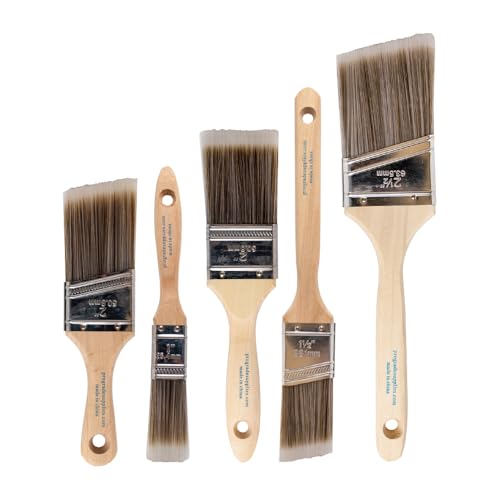
Pro Grade’s set includes a 1-inch flat, 1.5-inch angle, 2-inch flat, 2-inch angle stubby and 2.5-inch angle brush. The short-handled angle stubby is the one to notice: the listing says it is designed for tight cabinet interiors, inside corners and detailed trim where a long handle gets in the way.
The listing highlights precision adhesive bonding to keep bristles locked in place and a coated steel ferrule, and names furniture, shelving and wood surfaces, along with primers, stains, varnishes and polyurethane, as suitable uses. For painting the inside of a cabinet, drawer fronts or the rails of a chair, that stubby brush is genuinely handy.
Best suited for: Furniture painters dealing with drawers, cabinet interiors, chair rails and inside corners.
Key features:
- 5 brushes: 1 in flat, 1.5 in angle, 2 in flat, 2 in angle stubby, 2.5 in angle
- Adhesive-bonded bristles per listing
- Coated steel ferrule
- SRT filament bristles
- For primers, stains, varnishes and polyurethane
Pros:
- Includes the short angle stubby
- Designed to minimize bristle loss
- Mix of flats and angles
- Low price tier
Cons and limitations:
- Marketed mainly for walls and trim
- Larger sizes are more than most crafts need
- No round or detail brushes
Buying consideration: Keep the stubby for inside corners and drawers; it reaches where longer brushes will not.
3. Mister Rui Chalk Wax Paint Brush (3 Pcs) — Best for chalk paint, wax and stenciling

Chalk paint behaves differently from regular acrylic: it is thick, matte and often applied in a looser, textured way. Round and pointed brushes with dense natural bristle are traditional for it. Mister Rui’s set includes one pointed, one round and one flat brush, all with natural hog bristles, beechwood handles and stainless steel ferrules.
The listing says the brushes work with chalk paint, oil-based paint, all-in-one paint, water-based paints, wax and milk paint, and that they can be used for stenciling. The flat is for waxing large areas; the pointed tip handles detailed edges and corners. Each has a hole and lanyard for hanging to dry.
Best suited for: Chalk-painted furniture, waxing, distressing and stenciled designs.
Key features:
- 3 brushes: pointed, round, flat
- Natural hog bristles
- Beechwood handles
- Stainless steel ferrules
- For chalk paint, wax, milk paint, stenciling
Pros:
- Purpose-built for chalk paint and wax
- High paint absorption per listing
- Three useful shapes
- Easy to hang dry
Cons and limitations:
- Need combing before first use to remove loose bristles
- Not ideal for very smooth, modern finishes
- Dedicated wax brushes should not be used for paint afterward
Buying consideration: Keep one brush for wax only; wax residue in a paint brush can cause adhesion problems.
4. Bates Foam Paint Brushes, 2 Inch (16 Pack) — Best for smooth base coats and sealers
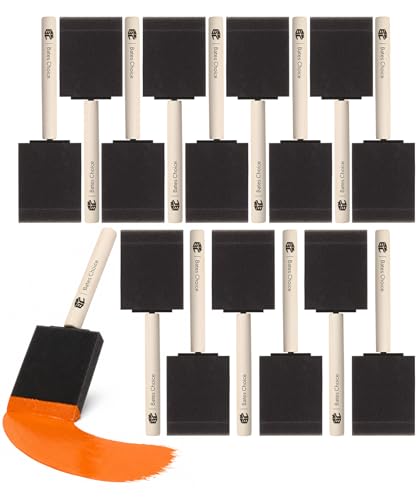
For a perfectly smooth base coat on a wooden sign, plaque or craft cutout, a foam brush is often the best tool. It has no bristles to leave lines and no hairs to shed. Bates sells 16 two-inch foam brushes with foam tips securely glued to wooden handles, according to the listing.
The listing says the foam covers surfaces evenly with fewer strokes and the absorbent cells reduce dripping, and lists wood among the recommended surfaces. Foam brushes are also excellent for water-based varnish and decoupage medium on small pieces.
Best suited for: Smooth base coats, water-based varnish and decoupage on small wooden crafts.
Key features:
- 16 foam brushes, 2 in
- Absorbent foam cells
- Foam glued securely to wood handles
- For paint, varnish, stain, glue
- Surfaces include wood
Pros:
- No brush marks or shed bristles
- Cheap enough to dedicate one per product
- Good for sealers
- Low price tier
Cons and limitations:
- Cannot create texture or crisp detail
- Foam can tear on rough, unsanded wood
- Not for strong solvents
Buying consideration: Sand the wood smooth first; foam brushes perform best on prepared surfaces.
5. Genixart 3 Inch Double Thick Chip Paint Brush — Best for big panels, gesso and sealer

For larger wooden surfaces such as a tabletop, a big sign blank or a wood panel you are preparing for painting, a 3-inch brush saves time. Genixart’s double-thick chip brush uses soft synthetic bristles mixed with tapered nylon filaments, which the listing says give good paint pickup.
It lists water- and oil-based stains, paints and sealers, polyurethane, resin, gesso and glue among compatible products. That makes it a good choice for applying gesso to a wood panel before acrylic painting, or for brushing on a clear coat at the end.
Best suited for: Gesso on wood panels, clear coats on tabletops and large sign blanks.
Key features:
- 3 in wide
- Soft synthetic bristles with tapered nylon
- Sanded wooden handle
- For stains, paints, sealers, gesso, glue
- Washes with water or solvent depending on product
Pros:
- Wide coverage
- Synthetic bristles suit water-based products
- Versatile for prep and finish coats
- Low price tier
Cons and limitations:
- Too large for small crafts
- Single brush
- Chip-style brushes are not built for fine finishing
Buying consideration: Use long, light strokes along the grain to keep gesso and sealer even.
6. Newkita Set of 3 Chip Paint Brushes — Best for primer, glue and rough work

Some jobs ruin brushes: primer, wood glue, gesso and rough first coats. Newkita’s three chip brushes are inexpensive enough to treat as semi-disposable. The listing says they work with most paints, stains, varnishes, acrylics and gesso, and that the smallest can double as an acrylic painting brush.
The bristles are synthetic and the brushes clean with soap and water while wet. The listing also advises brushing them with your fingers before use to remove loose bristles, which is good practice for any budget brush.
Best suited for: Primer, glue, gesso and test coats where you do not want to risk a good brush.
Key features:
- 3 chip brushes in different sizes
- Synthetic bristles
- Wooden handles
- Wash while wet with soap and water
- For paint, stain, varnish, acrylic, gesso
Pros:
- Lowest price tier
- Fine for messy prep work
- Three sizes
- Easy to replace
Cons and limitations:
- May shed more than better brushes
- Not for final coats
- Basic construction
Buying consideration: Keep a few in your kit just for glue and primer, and save your good brushes for color.
Buying Guide: How to Choose a Brush for Painting on Wood
The best brush for painting on wood starts with matching the brush to the paint and the job.
Match bristle to paint
Synthetic bristles, such as nylon and polyester, hold their shape in water-based paints like acrylic, latex and most chalk paints. Natural bristles work well with oil-based paints, stains and wax. Using natural bristle in water-based paint can make it limp and splayed.
Choose the right shape
Flat brushes cover broad areas. Angled brushes cut in along edges and into corners. Round chalk brushes suit thick chalk paint and wax. Foam brushes leave smooth, mark-free coats. Most wood projects need at least a flat and an angled brush.
Size for the project
Small crafts and ornaments need 1-inch brushes or smaller. Signs and boxes suit 1.5 to 2 inches. Tabletops and large panels go faster with 2.5 to 3 inches. Using a brush that is too small leaves visible lap marks.
Bristle retention
Nothing spoils a finish like bristles stuck in paint. Look for brushes described as having bonded or securely set bristles, and always flick or comb a new brush before use.
Prepare the wood
Brushes perform best on sanded, clean wood. Sand with the grain, remove dust with a tack cloth, and consider a primer or gesso on raw wood so paint does not soak in unevenly.
Plan for sealing
Use a clean brush or foam brush for the final varnish or sealer. Residue from a paint brush can cloud a clear coat.
Adding Decorative Details to Wood
House-style brushes handle coverage, but decorative painting on wood, such as lettering, flowers, dots and fine lines, calls for artist brushes. Our guide on what size brush to use for detail acrylic work will help you choose rounds and liners for small designs. For delicate lines and lettering, learn how to use a liner brush for detail work, and for mandala-style patterns, see how to paint dots with a round brush.
Common Mistakes to Avoid
- Painting raw wood without sanding or priming, which leads to blotchy color
- Brushing against the grain, which highlights every stroke
- Using natural-bristle brushes in water-based paint and wondering why they flop
- Overloading the brush and leaving drips along edges
- Using the same brush for wax and then paint, which can cause adhesion problems
- Skipping the final sealer on pieces that will be handled often
- Applying thick coats instead of two or three thin ones
FAQs
What kind of brush is best for painting wood?
For water-based paints like acrylic and chalk paint, a synthetic flat or angled brush is a good all-round choice. Use foam brushes for smooth coats on small pieces and natural bristle for oil-based finishes and wax.
How do I avoid brush marks when painting wood?
Sand smoothly, use thin coats, brush with the grain, and avoid going back over paint that has begun to dry. A foam brush helps on small flat surfaces.
Do I need a special brush for chalk paint?
Not strictly, but round or oval brushes with dense bristles hold thick chalk paint well and suit the textured look many people want. Dedicated wax brushes help with the finishing step.
Can I use foam brushes on wood?
Yes. Foam brushes are excellent for smooth base coats and water-based varnish on sanded wood. They can tear on rough, unsanded surfaces.
What brush should I use to varnish a wooden craft?
A clean foam brush or a soft synthetic flat works well for water-based varnish. Use thin coats and let each dry fully.
What brushes do I need for painting designs on wood?
Use artist rounds and liner brushes for details, lettering and fine lines, after laying the base coat with a flat or foam brush.
Final Recommendation
For most wood crafts and furniture projects, the Bates 6-Pack of flat and angled brushes is the best brush set for painting on wood, giving you coverage and edge control in six sizes. The Pro Grade 5-Piece set adds a handy angle stubby for drawers and inside corners, and the Mister Rui chalk and wax brushes are the right choice for chalk-painted furniture.
For flawless base coats and sealers on small pieces, add Bates 2-inch foam brushes. Use the Genixart 3-inch chip brush for gesso and clear coats on large panels, and keep a cheap Newkita chip set for glue and primer.