PaintingProGuide is reader-supported. When you buy through links on this page we may earn an affiliate commission at no extra cost to you.
Mixed media asks a surface to do several jobs at once. A single piece might combine acrylic paint, collage paper glued with gel medium, modeling paste, ink, pastel, stamps and stitching. Each of those adds weight, moisture or pressure, and some need a surface that will not flex or dent. The best canvas for mixed media is therefore a rigid, well-primed support for heavy layering and collage, such as a gessoed hardboard panel or MDF-core canvas board, plus stretched canvas for lighter pieces you want to hang without framing, and a heavy mixed-media paper pad for experiments and studies. Which one is right depends on how heavily you layer.
Quick answer: For heavy layering, collage and texture, the Ampersand Gessobord 9×12 panel is the top pick: a wood hardboard panel primed with thicker-than-usual acrylic gesso, listed for oils, acrylics and mixed media, and rigid enough for palette knife work. For mixed-media pieces you want to hang, the Bianyo 8-pack of 9×12 stretched canvas is triple primed on heavy-duty pine frames. For experiments and studies, a Canson XL Mix Media pad is an inexpensive way to test combinations.
What Mixed Media Demands From a Surface
Rigidity
Collage, modeling paste and heavy gel layers can crack on a flexible surface. Rigid panels and boards stay flat as layers build and do not flex when you press down to burnish paper.
Moisture tolerance
Wet media, glue and mediums soak supports. Paper-core boards can warp; hardboard, MDF and stretched canvas handle moisture better.
Tooth and priming
A gessoed surface with some tooth accepts paint, pencil, pastel and ink. Very smooth surfaces suit fine detail and transfers; textured surfaces suit dry media.
Pressure and impact
Stamping, carving into paste and sanding back layers can dent stretched canvas. Panels resist pressure.
Weight of added materials
Heavy embellishments, found objects and thick texture add weight. Stretched canvas can sag; panels carry weight better.
Display
Stretched canvas hangs on its frame; panels and boards usually need framing or a cradle.
Our Top Picks at a Glance
- Ampersand Gessobord, 9×12, 1/8″ Flat Panel — Best overall surface for mixed media
- Bianyo 9×12 Stretched Canvas, 8 Pack — Best stretched canvas for mixed media
- FIXSMITH Stretched Canvas, 11×14, 8 Pack — Best larger stretched canvas pack
- Canson XL Mix Media Pad, 9×12 — Best paper for studies and experiments
- PHOENIX 24-Pack Canvas Panels, 4 Sizes — Best boards for light collage and drawing
- ESRICH 3-Pack Stretched Canvas, Mixed Sizes — Best small stretched trial pack
- ESRICH 5 Pack 8×10 Canvas Boards — Best budget boards for practice
| Product | Best For | Key Spec | Key Strength | Price Tier |
|---|---|---|---|---|
| Ampersand Gessobord | Heavy layers, collage, texture | 9×12 hardboard, 1/8″ flat, thick acrylic gesso | Rigid, bright white | $ |
| Bianyo 9×12 Stretched | Hangable mixed media | 8 x 9×12, 100% cotton, triple primed, heavy-duty pine | Mixed media listed | $$ |
| FIXSMITH 11×14 Stretched | Larger hangable pieces | 8 x 11×14, cotton, 8 oz triple gesso, pinewood, 5/8″ | Larger size | $$ |
| Canson XL Mix Media | Studies, journals | 9×12 mixed media paper pad, perforated | Inexpensive testing | $$ |
| PHOENIX 24 Panels | Light collage, drawing | 6 each 5×7–11×14, cotton, 8 oz gesso | Size variety | $$ |
| ESRICH 3 Stretched | Trial pieces | 11×14, 8×10, 5×7, pinewood, acid-free gesso | Three sizes | $ |
| ESRICH 5 Boards | Budget practice | 5 x 8×10, cotton, board core | Lowest cost | $ |
How We Chose
We chose these surfaces from the Amazon listing details and specifications checked in October 2026, by how well each product’s rigidity, priming and format suit layering paint, collage, texture and dry media, and by how widely each product is reviewed by Amazon buyers. We have not created mixed-media work on these surfaces. Where a listing warns against certain techniques, we pass that on.
- Rigidity for collage and texture.
- Priming quality for paint, ink and dry media.
- Moisture tolerance for glue and wet media.
- Format: panels, stretched canvas and paper for different needs.
- Stated limitations, such as warnings about heavy texture.
Best Canvas for Mixed Media Reviewed
1. Ampersand Gessobord, 9×12, 1/8″ Flat Panel — Best for heavy layers, collage and texture

Ampersand’s Gessobord is a wood hardboard panel primed with an acrylic gesso that the listing describes as thicker than most brands. It is sold for oils, acrylics and mixed media, and for fine brushwork, palette knife painting, glazing and layering. The listing says the bright white finish has absorbency that will not dull colors.
A rigid hardboard panel is the most forgiving mixed-media support. You can burnish collage paper with a bone folder, trowel on modeling paste, carve into it, sand back layers and stamp without denting the surface. The smooth gesso also takes image transfers and fine pen work well.
Ampersand is a long-established panel maker, and Gessobord is one of its core products. The 1/8 inch flat profile frames easily.
Best suited for: Mixed-media artists who layer heavily, collage and build texture.
Key features:
- 9×12 hardboard panel
- 1/8″ flat profile
- Thick acrylic gesso
- For oils, acrylics and mixed media
Pros:
- Rigid under pressure
- Smooth for transfers and detail
- Bright white ground
- Established panel brand
Cons and limitations:
- Single panel per listing
- Higher price per piece
- Needs a frame for hanging
Buying consideration: Seal the back with a coat of gesso or acrylic if you use a lot of wet media, to keep the panel balanced.
2. Bianyo 9×12 Stretched Canvas, 8 Pack — Best for hangable mixed media

Bianyo’s eight-pack of 9×12 stretched canvases uses 100 percent cotton that is triple primed and acid-free, on a heavy-duty pine frame that the listing says resists warping. It names acrylic, oil, watercolor and mixed media.
Stretched canvas is the right choice for mixed-media pieces that should hang without frames. Keep heavy texture and collage moderate, or support the back while you work so the canvas does not dent.
A 9×12 size suits small mixed-media pieces and series.
Best suited for: Mixed-media artists making wall-ready pieces with moderate layering.
Key features:
- 8 stretched canvases, 9×12
- 100% cotton
- Triple primed, acid-free
- Heavy-duty pine frame
- Mixed media listed
Pros:
- Hangs without frame
- Mixed media named
- Good pack size
Cons and limitations:
- Flexes under heavy pressure
Buying consideration: Slip a piece of cardboard behind the canvas when burnishing collage.
3. FIXSMITH Stretched Canvas, 11×14, 8 Pack — Best for larger hangable pieces

FIXSMITH’s 11×14 canvases are 100 percent cotton that has not been rinsed with alkaline chemicals, according to the listing, triple primed with 8 oz of acid-free gesso and stretched on pinewood bars with a 5/8 inch profile.
An 11×14 gives more room for layered compositions and is a standard frame size if you decide to frame later.
Best suited for: Mixed-media artists wanting larger stretched canvases.
Key features:
- 8 canvases, 11×14
- 100% cotton
- 8 oz triple gesso
- Pinewood bars
- 5/8″ profile
Pros:
- Standard frame size
- Well primed
- Good value
Cons and limitations:
- Flexible under heavy texture
- Standard profile
Buying consideration: Paint the edges if you plan to hang the pieces unframed.
4. Canson XL Mix Media Pad, 9×12 — Best for studies and experiments

Canson’s XL Mix Media pad is a 9×12 pad of mixed-media paper with perforated pages, made in France according to the listing. Detailed specifications such as paper weight are not provided in the listing data we checked.
Paper is the cheapest way to test how materials interact: whether a glue wrinkles a collage paper, how ink sits over acrylic, or how pastel behaves over gesso. Many artists also use mixed-media pads for art journaling.
Mixed-media paper is heavier than drawing paper and tolerates light wet media, but heavy washes can still buckle it.
Best suited for: Artists testing combinations, journaling and sketching ideas.
Key features:
- 9×12 pad
- Mixed-media paper
- Perforated pages
Pros:
- Low cost per sheet
- Good for tests
- Portable
Cons and limitations:
- Not canvas
- Weight not stated in listing data
Buying consideration: Tape sheets to a board before wet work to limit buckling.
5. PHOENIX 24-Pack Canvas Panels, 4 Sizes — Best for light collage and drawing
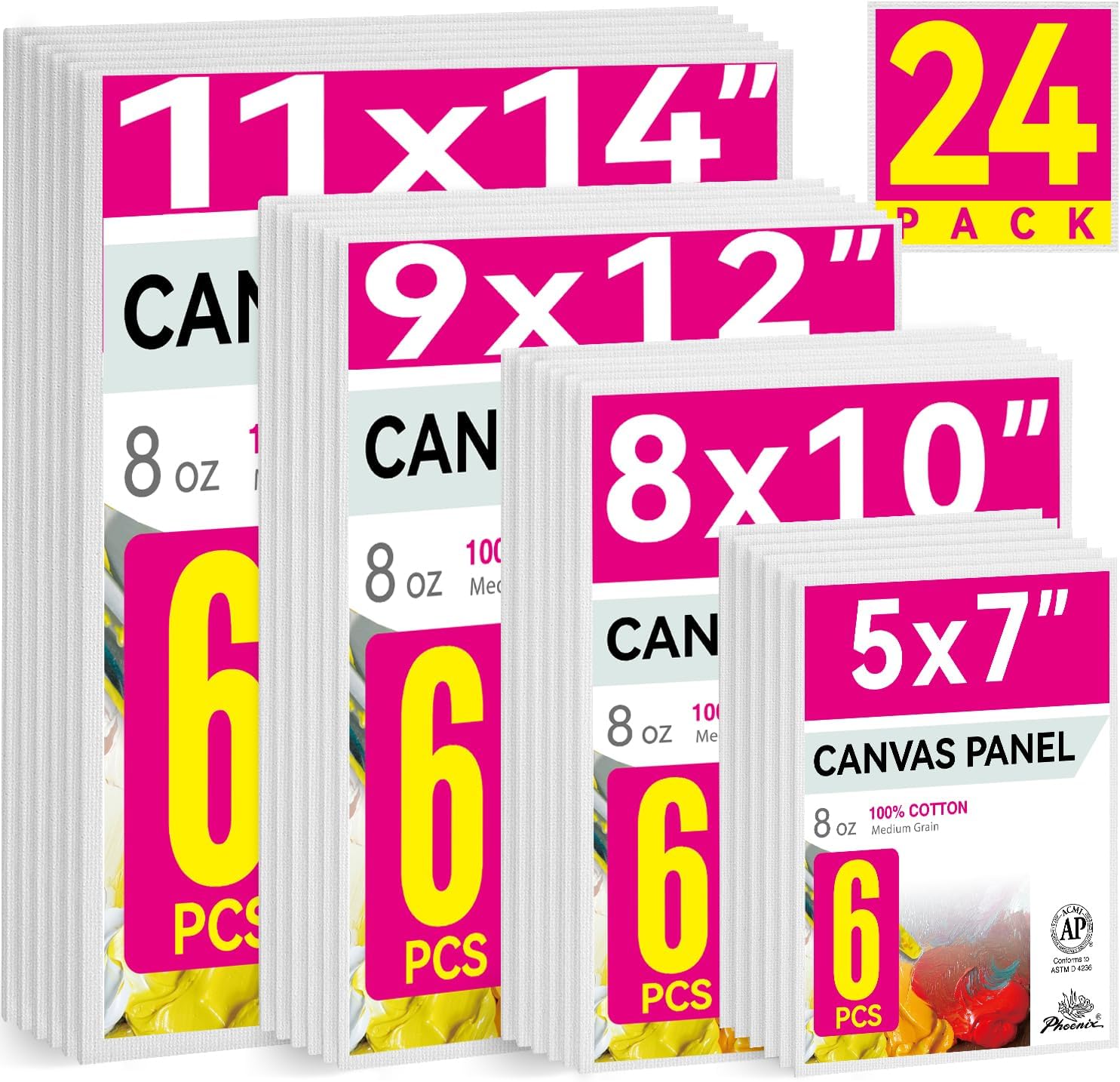
PHOENIX’s 24-pack includes six panels each at 5×7, 8×10, 9×12 and 11×14, with hand-stretched 100 percent cotton glued to board and pre-primed with 8 oz of acid-free gesso. The listing notes the panels are not designed for acrylic pouring or heavy texture painting, and highlights collages, keepsake crafting and paint parties.
That makes these panels best for lighter mixed media: drawing, ink, thin paint, paper collage and stamping. Their warning is useful guidance; keep heavy paste and pours on hardboard panels instead.
Best suited for: Lighter mixed media, collage and drawing over paint.
Key features:
- 24 panels in 4 sizes
- 100% cotton on board
- 8 oz acid-free gesso
Pros:
- Four sizes
- Good value
- Collage listed
Cons and limitations:
- Not for pours or heavy texture
Buying consideration: Use thin layers of gel medium when collaging to avoid warping the board.
6. ESRICH 3-Pack Stretched Canvas, Mixed Sizes — Best for small trial pieces

ESRICH’s three-pack includes stretched canvases at 11×14, 8×10 and 5×7 on pinewood frames, pre-coated with acid-free acrylic gesso.
Three sizes is a low-risk way to try mixed media on stretched canvas before buying a larger pack.
Best suited for: Beginners trying mixed media on canvas.
Key features:
- 3 canvases: 11×14, 8×10, 5×7
- Pinewood frames
- Acid-free gesso
Pros:
- Very low cost
- Three sizes
Cons and limitations:
- Priming coats not specified
Buying consideration: Add gesso if you plan to use dry media like pastel or pencil.
7. ESRICH 5 Pack 8×10 Canvas Boards — Best for budget practice

ESRICH’s boards are pure cotton with a non-toxic, acid-free primer over a sturdy board core.
Inexpensive boards are good for practicing techniques like image transfer, stenciling and collage before using better panels.
Best suited for: Practicing techniques on a budget.
Key features:
- 5 boards, 8×10
- Pure cotton
- Acid-free primer
Pros:
- Lowest cost
- Rigid enough for light collage
Cons and limitations:
- Core type not stated
Buying consideration: Note which techniques work and repeat them on better panels.
Choosing a Surface by Technique
| Technique | Best Surface | Why |
|---|---|---|
| Heavy collage and burnishing | Hardboard panel | No flex under pressure |
| Modeling paste and texture | Hardboard or MDF panel | Prevents cracking |
| Image transfers | Smooth gessoed panel | Even contact for transfers |
| Light collage and drawing | Canvas boards | Inexpensive and flat |
| Wall-ready pieces | Stretched canvas | Hangs without frame |
| Testing and journaling | Mixed-media paper | Low cost per sheet |
Preparing a Surface for Mixed Media
- Lightly sand the gessoed surface for better adhesion of collage and paint.
- Add a coat of gesso, or clear gesso if you want to keep a colored ground, for extra tooth.
- Apply a thin, even layer of gel medium under collage pieces and another over them to seal.
- Let each layer dry before adding the next, especially pastes.
- Seal dry media like pastel or pencil with a fixative or a brushed medium before painting over them.
- Finish with a varnish compatible with all the layers.
Building Layers That Last
Mixed-media pieces fail most often at the bond between layers. A few habits help. Use acrylic mediums rather than craft glue for collage, since they stay flexible and compatible with acrylic paint. Avoid putting water-based layers over oily ones, such as acrylic over oil pastel, because they may not bond. Work from flexible to less flexible layers, and keep heavy pastes on rigid supports. Use acid-free papers where possible so collage elements do not yellow. Finally, let the full piece cure for several days before varnishing.
Mixed Media Project Ideas by Surface
On a hardboard panel
Textured landscapes with modeling paste mountains, collaged vintage maps under glazes of acrylic, or image transfers of photographs combined with paint and pencil.
On stretched canvas
Abstract pieces combining acrylic, tissue paper and oil pastel scribbles, or botanical collages with pressed paper flowers sealed in matte medium.
On canvas boards
Small series of stenciled and stamped compositions, or practice panels for trying new mediums before using them on larger work.
On mixed-media paper
Art journal spreads, color studies, technique swatches and quick experiments with ink, watercolor and collage.
Buying Guide: How to Choose Canvas for Mixed Media
Match rigidity to layering
Heavy collage and texture need panels; light layering works on boards or stretched canvas. If you are unsure how heavily you will layer, start with a rigid panel; it handles every technique.
Check priming
Thick, quality gesso accepts many media; add your own for more tooth. Clear gesso adds tooth without hiding a colored or collaged layer underneath.
Consider moisture
Wet media and glue can warp thin boards; seal backs or use hardboard. Balanced coating on front and back keeps panels flat.
Plan display
Stretched canvas hangs directly; panels and boards need framing, which can add significantly to the final cost.
Mix formats
Use paper for tests, boards for practice and panels or canvas for finished work. This tiered approach keeps costs down while you experiment and saves your best surfaces for pieces that are working.
Read limitations
Some panels are not designed for heavy texture or pours; follow the maker’s guidance.
Related Canvas Guides
Plan compositions with our guide to gridding a canvas, repair damage with tips for fixing a ripped canvas, and explore layered series with multi-canvas wall art projects.
Common Mistakes to Avoid
- Applying heavy modeling paste to flexible stretched canvas.
- Using craft glue instead of acrylic medium for collage.
- Painting acrylic over oil pastel.
- Ignoring a maker’s warning about texture or pouring.
- Varnishing before every layer has cured.
- Collaging with non-archival papers like newsprint and expecting them not to yellow.
- Trapping air bubbles under collage paper; smooth from the center outward with a brayer or card.
FAQs
What is the best surface for mixed media?
A rigid gessoed panel for heavy layering; stretched canvas for lighter pieces; mixed-media paper for tests.
Can I do mixed media on stretched canvas?
Yes, with moderate layers. Support the back when burnishing collage or pressing hard.
Is gessobord good for collage?
Yes. Rigid hardboard panels are ideal for collage, paste and image transfers.
What glue should I use for collage on canvas?
Acrylic gel or matte medium, which stays flexible and bonds with acrylic paint.
Do I need to seal mixed media art?
A final varnish protects the surface and unifies sheen; seal dry media layers as you go.
Can I use canvas boards for mixed media?
Yes, for lighter collage and drawing; avoid heavy pours or paste on paper-core boards.
Final Recommendation
For heavy mixed-media layering, the Ampersand Gessobord panel is the most reliable surface. Choose Bianyo or FIXSMITH stretched canvases for pieces you want to hang, and the Canson XL pad for studies and journaling. PHOENIX panels suit lighter collage and drawing within their stated limits, while the ESRICH three-pack and five-pack are low-cost ways to practice techniques.