

PaintingProGuide is reader-supported. When you buy through links on this page we may earn an affiliate commission at no extra cost to you.
Buying canvas by the roll is how oil painters get odd sizes, very large formats and a lower cost per painting than pre-stretched canvas. The trade-off is that you take over the jobs a factory used to do: cutting, stretching, sometimes extra priming. So the best oil painting canvas rolls are the ones whose weight, priming and width match how you work, not just the longest roll for the money.
This comparison covers six primed cotton rolls on Amazon, from a narrow 12-ounce triple-primed roll for studies up to a 48-inch double-primed roll for big canvases, plus a linen-beige toned option that skips the white ground many oil painters tone over anyway. Each review notes the facts that matter for oil: fabric weight, number of gesso coats, width and what you will need to do before painting.
Quick answer: For oil painters who want the heaviest primed surface here, the U.S. Art Supply 12-ounce triple-primed roll (12 inches by 18 feet) is the best choice for studies and narrow formats. For larger work, the PHOENIX 36-inch triple gesso-primed roll gives you 11-ounce, medium-grain cotton across a width that fits most easel paintings. If you paint big, the Kinlop 48-inch by 20-foot double-primed roll is the widest option.
Our Top Picks at a Glance
- U.S. Art Supply 12 oz Triple Primed Roll, 12 in x 18 ft — Best overall surface weight for oil
- PHOENIX 36 in x 6 yd Triple Primed Roll — Best for standard easel sizes
- Kinlop 48 in x 20 ft Double Primed Roll — Best for large-format paintings
- Kinlop 36 in x 20 ft Double Primed, Linen Beige — Best toned ground for oil painters
- DPDIAN 36 in x 20 ft Primed Cotton Roll — Best length-for-width value
- Kinlop 12 in x 30 ft Double Primed Roll — Best budget roll for small studies
| Product | Best For | Key Spec | Key Strength | Price Tier |
|---|---|---|---|---|
| U.S. Art Supply 12 oz | Studies, strips, panels | 12 in x 18 ft; 12 oz; triple primed | Heaviest fabric listed here | $$ |
| PHOENIX 36 in | Standard easel paintings | 36 in x 18 ft; 11 oz; triple primed | Medium grain, wide width | $$$ |
| Kinlop 48 in White | Large canvases | 48 in x 20 ft; double primed | Widest roll in this guide | $$$ |
| Kinlop 36 in Beige | Toned-ground oil painting | 36 in x 20 ft; double primed | Warm mid-tone surface | $$ |
| DPDIAN 36 in | Volume of medium canvases | 36 in x 20 ft; primed cotton blend | Long roll at a mid tier | $$ |
| Kinlop 12 in x 30 ft | Many small studies | 12 in x 30 ft; double primed | Longest narrow roll | $$ |
How We Chose
We selected these rolls from Amazon listing details and specifications checked in October 2026, weighing how each roll’s width, length, fabric weight and priming suit oil painting, and how widely each product is reviewed by Amazon buyers. We have not stretched or painted on these rolls ourselves. Advice on priming and stretching reflects standard oil painting practice.
- Fabric weight — heavier canvas (11–12 oz and up) stretches tighter and resists sagging under oil layers.
- Priming — triple-primed surfaces are usually ready to paint; double-primed may benefit from another coat for oils.
- Width — the roll must be wider than your painting plus about 2–3 inches per side for wrapping.
- Ground color — white for luminous color, toned for faster value work.
- Grain — medium grain suits most oil styles; very fine detail benefits from smoother surfaces.
Best Oil Painting Canvas Rolls Reviewed
1. U.S. Art Supply 12 oz Triple Primed Canvas Roll, 12 in x 18 ft — Best for a heavy, ready-to-paint surface

U.S. Art Supply lists this roll as pure cotton with a medium grain and a 12-ounce finished weight, primed three times with acid-free gesso for a bright white surface. The listing says the canvas holds paint without absorbing it, which is what you want for oil: a sealed ground prevents oil from sinking into raw fibers.
The 12-inch width limits what you can make, but it suits studies, plein air pieces, narrow vertical formats and canvas glued to panels. Heavy weight in a narrow roll is a good match for small paintings that you want to feel substantial.
Best suited for: Oil painters making studies, small finished works and canvas-on-panel boards who want a heavy, ready ground.
Key features:
- 12 in wide x 18 ft (6 yards) long
- 12 oz finished weight, pure cotton, medium grain
- Triple-primed with acid-free gesso
- Suitable for oil, acrylic and other media
Pros:
- Heaviest fabric weight listed in this guide
- Triple priming is generally oil-ready
- Lower tier for a heavy roll
Cons and limitations:
- Only 12 inches wide
- Small canvases need to be cut and stretched one at a time
- Acrylic gesso, not traditional oil ground
Buying consideration: For canvas-on-panel studies, glue pieces of this roll to MDF or hardboard with acrylic medium. You get a heavy cotton feel without stretcher bars.
2. PHOENIX 36 in x 6 yd Triple Primed Canvas Roll — Best for standard easel sizes

PHOENIX makes this roll from 100% cotton with an 11-ounce, heavy-duty, triple gesso-primed medium-grain surface. At 36 inches wide and 18 feet long it can produce many common canvas sizes, from 16 x 20 up to 30 x 40 inches once you allow for wrapping.
The listing says the priming prevents pigment penetration and improves color saturation and brushstroke clarity, and notes AP and CE certifications. It is designed for stretching, stapling, tacking or wrapping.
Best suited for: Oil painters who regularly work in the 16 x 20 to 30 x 40 inch range.
Key features:
- 36 in wide x 6 yards (18 ft) long
- 11 oz, 100% cotton, medium grain
- Triple gesso-primed
- AP and CE certified
Pros:
- Wide enough for most easel paintings
- Triple priming for oil
- Medium grain suits most styles
Cons and limitations:
- Highest price tier in this guide
- Shorter roll than some 20-foot options
- Not wide enough for very large canvases
Buying consideration: Plan your cuts on paper before cutting. Two 30 x 40 inch canvases side by side will not fit a 36-inch roll once wrap allowance is added; lay them end to end.
3. Kinlop 48 in x 20 ft Double Primed Canvas Roll, White — Best for large-format paintings

At 48 inches wide by 20 feet, this is the roll to choose for big work. Kinlop describes it as mainly cotton, double primed, and suitable for oil, acrylic, gouache and watercolor. The listing notes you can flatten the roll with a light iron after it arrives, and cut it to any shape.
Double priming is a good base, but many oil painters add one more coat of acrylic gesso to wide canvases before painting, especially if they work with thin, oily layers.
Best suited for: Painters making canvases over 36 inches wide, triptychs and large commissions.
Key features:
- 48 in wide x 20 ft long
- Double-primed, mainly cotton
- Flattens with a light iron per the listing
- Cuts to custom sizes
Pros:
- Widest roll in this guide
- Long 20-foot length
- Mid-to-high tier for the area
Cons and limitations:
- Fabric weight not stated
- “Mainly cotton” rather than 100% cotton
- Double priming may need an extra coat for oils
Buying consideration: Large canvases sag more. Use sturdy stretcher bars with a center brace for anything over about 36 inches on a side.
4. Kinlop 36 in x 20 ft Double Primed Canvas Roll, Linen Beige — Best for a toned oil ground
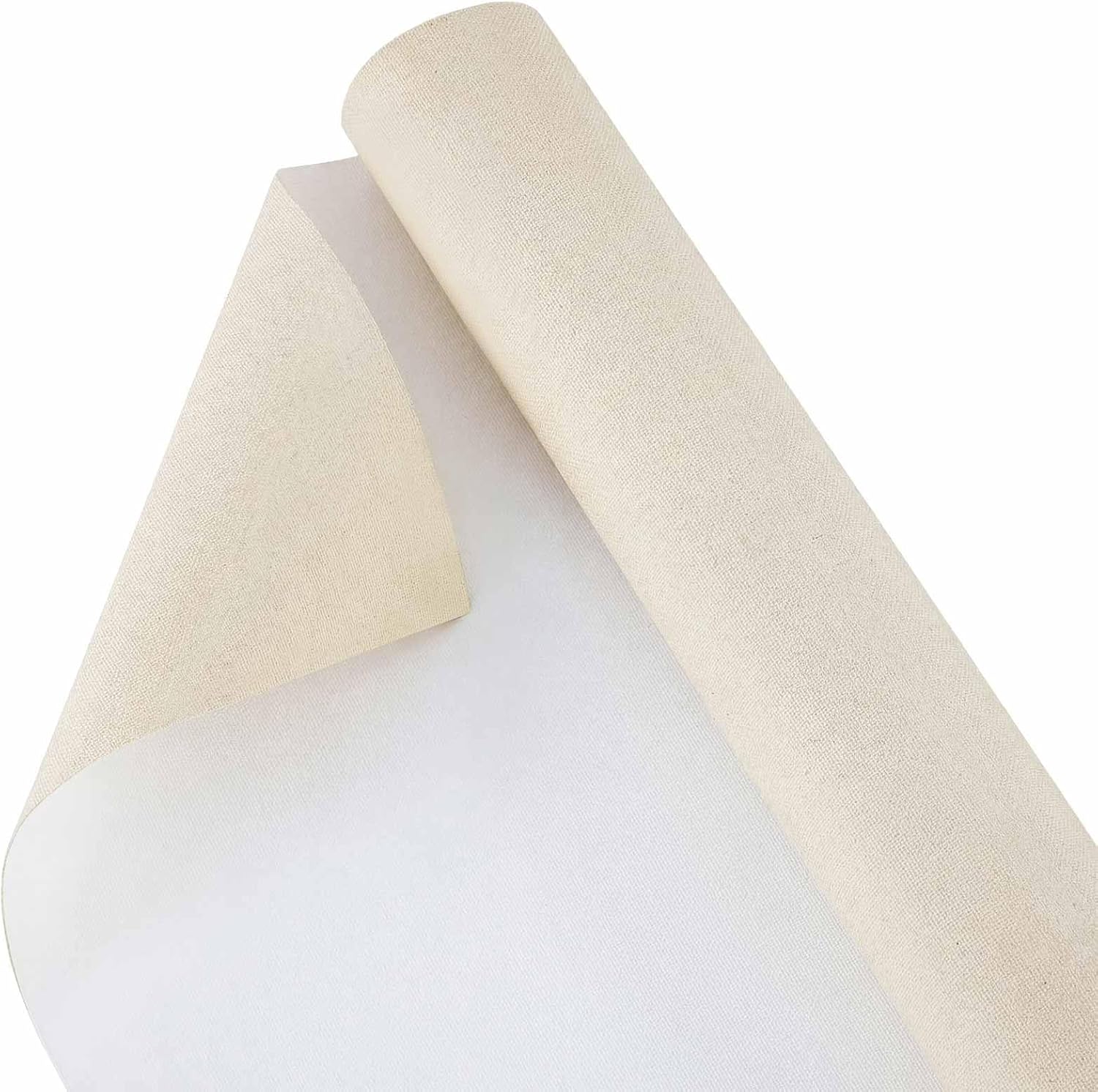
Many oil painters tone a white canvas before they begin, because judging values against stark white is difficult. This roll arrives in a linen-beige primed color, giving you a warm mid-light ground from the start. The specifications otherwise match Kinlop’s white rolls: double primed, mainly cotton, 36 inches by 20 feet.
A toned ground also lets small gaps between brushstrokes read as a harmonious warm color rather than a white speck.
Best suited for: Alla prima and portrait painters, and anyone who already tones canvases before oil painting.
Key features:
- 36 in wide x 20 ft long
- Linen-beige primed surface
- Double-primed, mainly cotton
- Cut-to-size and stretchable
Pros:
- Skips the toning step
- Warm ground helps with value judgments
- Long roll
Cons and limitations:
- Not ideal for luminous high-key work that relies on white
- Fabric weight not stated
- Beige color is fixed
Buying consideration: If you work in glazes and want light to bounce off a white ground, choose one of the white rolls instead.
5. DPDIAN 36 in x 20 ft Primed Cotton Canvas Roll — Best for long rolls at a mid tier

DPDIAN offers 36 inches by 20 feet (6.66 yards) of primed canvas, describing the material as a high-density cotton blend with a tight, uniform weave. The listing names oil, acrylic, watercolor, tempera and gouache as compatible, and says the roll ships around a rigid paper core to prevent creases.
The tight weave is useful if you prefer a smoother texture than a medium grain.
Best suited for: Painters who want a long 36-inch roll at a lower tier and prefer a tighter weave.
Key features:
- 36 in wide x 20 ft long
- High-density cotton blend, tight weave
- Primed; compatible with oil and acrylic
- Shipped on a rigid core
Pros:
- More length for the price than many 36-inch rolls
- Tight weave suits detailed work
- Crease-resistant packaging
Cons and limitations:
- Cotton blend rather than pure cotton
- Number of primer coats not specified
- Weight not specified
Buying consideration: Test a small piece first. If oil sinks in and leaves dull patches, add a coat or two of gesso before stretching the rest.
6. Kinlop 12 in x 30 ft Double Primed Canvas Roll, White — Best for lots of small studies
Thirty feet of 12-inch canvas is a great deal of study material: enough for dozens of small oil sketches cut to 8 x 10 or smaller and taped to a board. It is double primed, mainly cotton, and can be flattened with a light iron per the listing.
Painters who do daily small studies often tape canvas to a board instead of stretching it, then mount the best ones later.
Best suited for: Students, daily painters and anyone practicing oil technique without spending much per painting.
Key features:
- 12 in wide x 30 ft long
- Double-primed, mainly cotton
- Cut to any size
- Suitable for oil, acrylic, gouache
Pros:
- Longest roll here
- Low tier
- Ideal for unstretched studies
Cons and limitations:
- Narrow
- Weight not stated
- May need extra gesso for heavy oil use
Buying consideration: Tape studies to a rigid board with artist tape, paint, and store flat between sheets of glassine once dry.
How to Prepare a Roll Canvas for Oil Painting
- Unroll and flatten. Let the canvas relax flat overnight. Kinlop suggests a light iron on the back for creases.
- Measure with wrap allowance. Add at least 2 to 3 inches per side beyond your stretcher size so the canvas wraps the bars and can be stapled on the back.
- Cut square. Use a metal ruler and sharp scissors or a utility knife along the weave.
- Stretch from the center. Staple the middle of each side first, then work outward in pairs, pulling evenly to avoid diagonal ripples.
- Fold the corners. Neat hospital or envelope folds keep corners flat.
- Check the ground. If the surface is absorbent, add a coat of gesso and let it dry before oil painting.
Buying Guide: How to Choose an Oil Painting Canvas Roll
Fabric weight
Canvas weight is often given in ounces per square yard. Heavier fabric stays tight on the stretcher and stands up to thick paint and palette knife work. Lightweight canvas is cheaper but more prone to sagging on large formats.
Primed versus unprimed
Oil paint must not touch raw canvas, because oil rots the fibers over time. Primed rolls are faster. Triple-primed surfaces are usually ready; double-primed rolls benefit from one extra coat if you paint thinly.
Width
Your roll width limits your maximum canvas size. Subtract wrap allowance from both sides: a 36-inch roll realistically gives about a 30-inch-wide painting.
Cotton or blend
Pure cotton is the standard for most student and professional canvas. Blends can be stable but behave differently when stretched. Linen (not included in these picks) is the traditional premium choice for oils.
Texture
Medium grain is a versatile all-rounder. Fine or tight weaves suit detailed realism; rough textures suit expressive impasto.
Ground color
White grounds make glazes glow. Toned grounds help you judge values quickly. You can tone white canvas yourself with a thin wash of burnt sienna or a gray.
Next Steps for Oil Painters
New to working on canvas? Start with our guide on how to oil paint on canvas, then learn how to blend oil paint on canvas for smooth transitions. If you are working to a deadline, see our tips on how to speed-dry oil paint on canvas.
Common Mistakes to Avoid
- Cutting exactly to stretcher size. You need extra fabric to wrap and staple.
- Stretching one side at a time. It pulls the weave out of square; alternate opposite sides.
- Painting oils on a thin or patchy ground. Add gesso so oil cannot reach the fibers.
- Folding rolls. Creases can crack primer. Keep canvas rolled with the primed side out.
- Using weak bars on large canvases. Add cross braces to prevent warping.
- Ignoring humidity. Canvas tightens and loosens with moisture; restretch or key out if it sags.
FAQs
Can I use acrylic-primed canvas for oil painting?
Yes. Most modern canvas, including all of these rolls, is primed with acrylic gesso, which is widely used under oil paint. The key is that the ground fully seals the fibers.
Is a canvas roll cheaper than pre-stretched canvas?
Per square foot, usually yes, especially for large or custom sizes. You will need stretcher bars, a staple gun and canvas pliers, so the savings grow the more you paint.
What weight canvas is best for oil painting?
Heavier is generally better for oil, with 10–12 oz cotton a common choice. Heavier canvas holds tension and supports thick layers without sagging.
Do I need to gesso a pre-primed canvas roll?
Not always. Triple-primed rolls are typically ready. If a test patch absorbs oil quickly or looks patchy, add one or two coats of gesso.
Can I paint on canvas without stretching it?
Yes. Many painters tape canvas to a board for studies, or glue it to panels. Stretch or mount it later for display.
How should I store a canvas roll?
Keep it rolled on its core with the primed side facing out, in a dry place away from heat. Rolling primed side in can crack the ground.
Final Recommendation
Choose by format first. For small studies and canvas panels, the heavy U.S. Art Supply 12 oz roll is the best surface, while the Kinlop 12 in x 30 ft roll is the budget pick for volume. For standard easel sizes, the triple-primed PHOENIX 36-inch roll is the safest oil surface, and the DPDIAN 36-inch roll gives more length for less. Large-format painters should go with the Kinlop 48-inch roll, and painters who tone every canvas can skip a step with the Kinlop linen-beige roll.




