

PaintingProGuide is reader-supported. When you buy through links on this page we may earn an affiliate commission at no extra cost to you.
Portraits ask more of a canvas than almost any other subject. Skin is built from subtle shifts of value and temperature, soft edges and thin glazes, and a coarse weave fights all of that: the texture shows through cheeks, breaks up delicate transitions and makes fine features like eyelids and lips harder to render. The best oil painting canvases for portraits have a fine, even weave (fine linen is the classic choice), a well-sealed ground that does not drink oil, and a rigid or tightly stretched surface that will not bounce while you place small, precise strokes.
That does not mean every portrait needs expensive linen. Smooth cotton canvas is perfectly good for studies and practice, and many portraitists sand extra gesso into cotton to tame the weave. This guide covers fine linen for finished work, cotton for studies, and the sizes that suit head, bust and figure portraits.
Quick answer: For finished portraits, the PHOENIX 16×20 Belgian linen canvas (2 pack) is the standout: fine-weave linen, triple primed to a nearly toothless surface that the listing describes as ideal for portraits and smooth skin tones. For oil-primed linen on a rigid panel, the Centurion Deluxe oil-primed linen panels are 11 oz linen on MDF. For practice heads, the FIXSMITH 11×14 cotton 8-pack keeps studies affordable.
Our Top Picks at a Glance
- PHOENIX Linen Canvas 16×20, 2 Pack (fine texture) — Best overall canvas for oil portraits
- Centurion Deluxe Oil Primed Linen Panels 11×14, 3 Pack — Best oil-primed linen panels
- PHOENIX Stretched Canvas 18×24, 5 Pack — Best cotton canvas for life-size heads
- FIXSMITH Stretched Canvas 11×14, 8 Pack — Best for portrait studies
- ESRICH Stretched Canvas 24×36, 2 Pack — Best for half-figure portraits
- KEFF Canvas Boards, 24 Pack — Best for quick sketches and color studies
| Product | Best For | Key Spec | Key Strength | Price Tier |
|---|---|---|---|---|
| PHOENIX Linen 16×20 | Finished portraits | Belgian linen, 10 oz, fine weave, triple primed | Nearly toothless surface | $$$ |
| Centurion Linen Panels | Oil-primed rigid surface | 11×14, 11 oz oil-primed linen on 3mm MDF | Archival, travel-friendly | $$ |
| PHOENIX 18×24 Cotton | Life-size heads | 5 pack, 8 oz triple gesso, medium texture | Good value at larger size | $$$ |
| FIXSMITH 11×14 | Studies | 8 pack, cotton, 8 oz triple gesso | Affordable practice | $$ |
| ESRICH 24×36 | Half-figure | 2 pack, cotton, 8 oz primed, cross bar | Large format | $$ |
| KEFF 24 Boards | Sketches | 5×7 to 11×14, triple primed | Many small surfaces | $$ |
How We Chose
We have not painted portraits on these exact canvases. The picks are based on the Amazon listing details and specifications checked in October 2026, how well each canvas’s fiber, weave, priming and size suit portrait painting in oil, and how widely each product is reviewed by Amazon buyers. A multi-pack of small stretched canvases was left out because its largest size is too small for most portraits.
- Weave: fine, even texture that does not interfere with skin rendering.
- Fiber: linen for archival finished work; cotton for studies.
- Priming: well-sealed oil or acrylic grounds, with stated weight or coats.
- Size: formats that suit heads, busts and half-figures.
- Support: stretched canvas for display, rigid panels for detail and travel.
Best Oil Painting Canvases for Portraits Reviewed
1. PHOENIX Linen Canvas 16×20, 2 Pack — Best for finished oil portraits

PHOENIX describes this as 100% Belgian linen with a fine, archival-quality weave, triple primed with high-quality acrylic gesso for a nearly toothless surface. The listing specifically calls it ideal for portraits and realism, saying the fine weave eliminates distracting texture for smooth skin tones, fine glazing and delicate blending. The linen weight is 10 oz, and the ground is acid-free.
Linen is stronger and less prone to slackening with humidity changes than cotton, which is why it has long been preferred for finished oil paintings. A fine weave lets small brush marks and glazes sit cleanly on the surface.
At 16×20 inches, it suits a head-and-shoulders portrait at slightly under life size.
Best suited for: Portrait painters creating finished, archival oil portraits and commissions.
Key features:
- 100% Belgian linen, 10 oz
- Fine, archival weave
- Triple primed acrylic gesso, nearly toothless
- 16×20 in, 2 pack
Pros:
- Made for portraits and realism
- Smooth for skin and glazing
- Linen durability
- Acid-free ground
Cons and limitations:
- Highest price tier here
- Very smooth surfaces show every brush mark
- Only two canvases
Buying consideration: Tone the surface with a thin warm gray before painting; a nearly toothless ground benefits from a light, even tone to grip the first layers.
2. Centurion Deluxe Oil Primed Linen Panels 11×14, 3 Pack — Best for oil-primed linen on a rigid panel

Centurion’s panels are acid-free, archival linen, 11 oz, oil primed with what the listing calls exclusive OP enhanced oil priming, mounted on 3mm (1/8 inch) MDF, with a medium texture. They are aimed at oil and alkyd painters, professional artists and commissioned work.
Oil priming gives a slightly slicker, less absorbent surface than acrylic gesso, which many portrait painters prefer for the way paint glides and blends. A rigid MDF backing means no bounce while you paint fine features.
The listing notes the panels take a quarter of the space of a standard 3/4 inch stretched canvas, which helps storage and travel.
Best suited for: Oil portraitists who prefer oil-primed linen and a rigid surface, including portrait sittings away from the studio.
Key features:
- 11×14 in, 3 pack
- 11 oz linen, oil primed
- Mounted on 3mm MDF
- Archival, acid-free
Pros:
- Oil-primed ground
- Rigid for fine detail
- Compact for travel
- Archival materials
Cons and limitations:
- Oil-primed surfaces are for oil and alkyd only
- Medium texture, not the finest
- Smaller size
Buying consideration: Do not use acrylic on oil-primed linen; acrylic will not adhere properly to an oil ground.
3. PHOENIX Stretched Canvas 18×24, 5 Pack — Best for life-size heads in cotton

PHOENIX’s 18×24 cotton canvases are 100% natural cotton with medium texture, triple primed with 8 oz gesso, on pinewood stretchers with mortise and tenon joints, per the listing. The listing notes every other canvas is vacuum packed.
An 18×24 canvas fits a life-size head and shoulders, a common portrait format. Five canvases at this size give room for several portrait attempts without the cost of linen.
Medium texture is more noticeable than fine linen; extra gesso and sanding can smooth it.
Best suited for: Portrait painters practicing life-size heads, and those who want value at a larger size.
Key features:
- 18×24 in, 5 pack
- 100% cotton, medium texture
- 8 oz triple gesso
- Pinewood stretchers, mortise and tenon
Pros:
- Life-size head format
- Good value per canvas
- Sturdy joinery
- Stated gesso weight
Cons and limitations:
- Medium texture shows in thin passages
- Cotton less stable than linen
- Vacuum packing may need tension check
Buying consideration: Apply two thin coats of acrylic gesso and sand between them for a smoother portrait surface.
4. FIXSMITH Stretched Canvas 11×14, 8 Pack — Best for portrait studies

FIXSMITH’s 11×14 canvases are 100% cotton on pinewood bars, triple primed with 8 oz acid-free acrylic gesso, per the listing, with a 5/8 inch profile.
Portrait skill comes from many studies: heads in different lighting, color temperature exercises and quick alla prima sketches. Eight affordable canvases make that practice easier to commit to.
An 11×14 suits a smaller-than-life head study.
Best suited for: Portrait students and painters doing regular head studies.
Key features:
- 11×14 in, 8 pack
- 100% cotton
- Triple primed, 8 oz acid-free gesso
- 5/8 in profile
Pros:
- Affordable practice
- Stated priming
- Good study size
- Easy to frame
Cons and limitations:
- Cotton weave visible in thin glazes
- Thin profile
- Not archival linen
Buying consideration: Paint a series of studies under the same light to track progress over weeks.
5. ESRICH Stretched Canvas 24×36, 2 Pack — Best for half-figure portraits
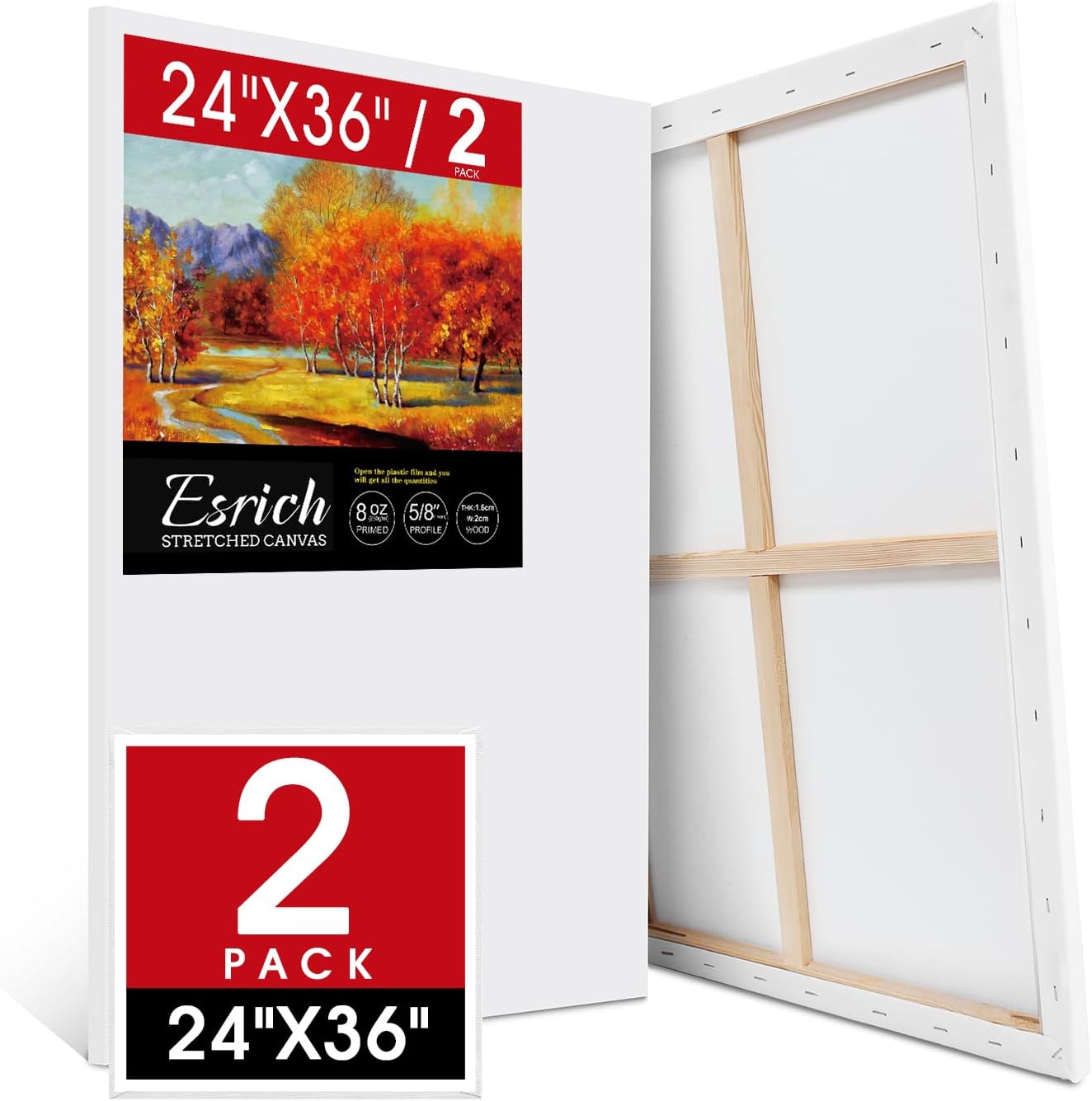
ESRICH’s 24×36 canvases are cotton, pre-coated with acid-free acrylic gesso at an 8 oz primed weight, nailed to a 5/8 inch pinewood frame with an extra cross bar for steadiness, per the listing.
A 24×36 canvas suits half-figure portraits, double portraits and portraits with environment. The cross bar helps prevent twisting at this size.
At this scale, cotton’s cost advantage over linen is significant.
Best suited for: Painters tackling larger portrait compositions.
Key features:
- 24×36 in, 2 pack
- Cotton, 8 oz primed
- Acid-free acrylic gesso
- Pinewood frame with cross bar
Pros:
- Large format at good value
- Cross bar for stability
- Stated primed weight
- Two canvases
Cons and limitations:
- 5/8 in profile is thin for this size
- Cotton texture
- Not linen
Buying consideration: Plan the composition with thumbnails first; large portraits magnify proportion errors.
6. KEFF Canvas Boards, 24 Pack — Best for quick sketches and color studies

KEFF’s pack includes six each of 5×7, 8×10, 9×12 and 11×14 canvas boards, 100% cotton, with smooth, triple-primed surfaces, per the listing.
Small boards are ideal for portrait warm-ups: 20-minute value sketches, eye and mouth studies, and skin tone color mixing tests. A smooth surface suits detail at small scale.
Twenty-four boards supports a daily sketch habit.
Best suited for: Portrait painters who want lots of small surfaces for daily studies.
Key features:
- 24 boards: 6 each of 5×7, 8×10, 9×12, 11×14
- 100% cotton
- Triple primed, smooth
- Flat panels
Pros:
- Many surfaces
- Smooth for small detail
- Low commitment
- Easy storage
Cons and limitations:
- Too small for finished portraits
- Board core may warp if soaked
- Primer weight not stated
Buying consideration: Use the 5x7s for feature studies (eyes, noses, mouths) and the 11x14s for full head sketches.
Linen vs Cotton for Portraits
Linen fibers are longer and stronger than cotton, and linen canvas is less affected by humidity, so it stays tighter over time. Fine linen weaves give a refined surface that suits portrait detail. It is more expensive and traditionally preferred for finished, archival work.
Cotton is affordable and easy to stretch, with a more uniform but sometimes coarser texture. It is excellent for studies and practice and, with extra gesso and sanding, can be made smooth enough for detailed portraits.
Oil-Primed vs Acrylic-Primed
Oil-primed canvas has a slightly less absorbent, smoother feel that many portraitists like for blending. It can only be used with oil (and alkyd). Acrylic-primed (gesso) canvas is more common, works with oil and acrylic, and dries faster during manufacture. Both are suitable for oil portraits.
How Surface Texture Changes a Portrait
Very smooth (panels, fine linen, sanded gesso). Ideal for highly finished, photographic realism and delicate glazes. Every brushstroke shows, so it rewards controlled, careful handling. Skin can be rendered with almost invisible transitions.
Fine to medium weave. The most versatile surface for portraits. The weave catches a little paint, which adds life to brushwork while still allowing soft blending. Many painters consider this the sweet spot.
Medium to coarse weave. Better suited to expressive, painterly portraits with visible strokes and broken color, often painted alla prima. Fine features need more paint to cover the texture, and thin glazes can look uneven.
Think about the look you want before choosing. A loose, gestural portrait can lose its energy on a glass-smooth panel, and a meticulous realist portrait can fight a coarse cotton weave. Testing one study on each surface is the quickest way to find your preference.
Portrait Canvas Sizes Guide
| Portrait type | Common canvas sizes |
|---|---|
| Head study (smaller than life) | 8×10, 9×12, 11×14 |
| Head and shoulders (near life size) | 16×20, 18×24 |
| Bust with hands | 20×24, 24×30 |
| Half-figure | 24×36, 30×40 |
| Full figure | 36×48 and larger |
Painting slightly under life size is a common choice for heads, because painting larger than life can look unsettling. Leave more space in front of the face than behind it, in the direction the sitter is looking, and avoid placing the eyes exactly in the vertical center of the canvas; slightly above center usually feels more natural.
Buying Guide: How to Choose Canvas for Oil Portraits
Prioritize a fine weave
Fine linen or a well-sanded cotton surface gives cleaner skin transitions.
Check the priming
Look for stated coats or gesso weight. A well-sealed ground prevents sinking and dull patches in skin tones.
Choose rigid or stretched
Panels are rigid and good for detail and travel; stretched canvas is traditional for display and framing.
Match size to the composition
Use the size chart above, and leave space around the head for breathing room.
Buy studies in bulk, finals in quality
Practice on cotton; reserve linen for finished portraits and commissions. Many portrait painters reserve linen for commissions because of its strength and long-term stability.
Preparing a Canvas for Portrait Painting
Add one or two thin coats of gesso to acrylic-primed cotton and sand lightly between coats for a smoother surface. Tone the canvas with a thin, warm mid-tone to judge skin values more easily. Transfer or draw your design with thinned paint. For general technique, our guides on how to oil paint on canvas and how to blend oil paint on canvas are useful companions. If you need layers to dry faster between portrait sessions, see how to speed dry oil paint on canvas.
Common Mistakes to Avoid
- Using coarse canvas for detailed faces. Texture breaks up subtle transitions.
- Painting acrylic on oil-primed canvas. It will not adhere.
- Painting larger than life. It can look unnatural for heads.
- Skipping toning. Pure white makes skin values hard to judge.
- Using linen for every study. Practice on cotton to save money.
- Ignoring canvas tension. Slack canvas bounces and makes fine strokes harder.
FAQs
What canvas is best for oil portraits?
Fine-weave linen is the traditional choice for finished portraits. Smooth, well-primed cotton or panels work well for studies.
Is linen better than cotton for portraits?
Linen is stronger and more stable, and fine linen gives a refined surface. Cotton is fine for practice and can be smoothed with extra gesso.
What size canvas should I use for a portrait?
Head studies suit 8×10 to 11×14; near life-size head and shoulders suit 16×20 or 18×24; half-figures suit 24×36 or larger.
Should I use oil-primed or acrylic-primed canvas for portraits?
Both work for oil. Oil-primed feels smoother for blending but is oil-only; acrylic-primed is more versatile.
How do I make a canvas smoother for portraits?
Apply thin coats of gesso and sand lightly between coats. Repeat until the weave is as smooth as you want.
Are canvas panels good for portraits?
Yes. Rigid panels are excellent for detailed work, studies and painting from life away from the studio.
Final Recommendation
For finished oil portraits, the PHOENIX fine-weave Belgian linen 16×20 is the best choice in our data, described specifically for portraits and smooth skin tones. Painters who prefer oil-primed linen and a rigid surface should choose Centurion’s 11×14 panels.
For practice, FIXSMITH 11x14s and KEFF’s multi-size boards keep studies affordable, PHOENIX 18×24 cotton is the value pick for life-size heads, and ESRICH 24×36 suits larger half-figure compositions.




