

PaintingProGuide is reader-supported. When you buy through links on this page we may earn an affiliate commission at no extra cost to you.
Poster paint is the bright, opaque, matte paint most of us remember from school: thick enough to cover poster board in one coat, easy to mix, and in kids’ versions washable from skin and most clothing. In the US it is usually sold as washable tempera or “classic” kids’ paint. The best poster paints for kids give strong, even coverage for posters, signs and school projects, come in bottles large enough for big sheets, and carry clear non-toxic labeling.
This guide compares five poster and tempera paints on Amazon, from AP-certified classroom tempera in 8 oz bottles to a 42-color kit with brushes and a bucket, a bulk 8-color pack, Crayola’s washable project paint and a toddler-friendly finger paint set. It also covers how to paint a poster that looks sharp, which surfaces work best and how to stop poster paint from cracking.
Quick answer: For most families and classrooms, Colorations Washable Tempera is the best poster paint for kids: six 8 oz bottles of opaque color that the listing says will not chip, flake or crack when dry, AP-certified non-toxic, paraben-free and free of common allergens such as latex, gluten and nuts. For more colors plus tools, the TMOL 42-color washable tempera kit includes brushes, palettes and a foldable bucket. On a budget, the Cra-Z-Art 8-color bulk pack gives you 4 oz bottles of the essential colors, including white and black.
Poster Paint vs Other Kids’ Paints
| Paint | Coverage | Finish | Cleanup | Best for |
|---|---|---|---|---|
| Poster paint / washable tempera | Opaque | Matte | Easy (washable versions) | Posters, signs, school projects |
| Watercolor | Translucent | Soft | Easy | Illustrations on watercolor paper |
| Finger paint | Opaque, thick | Matte | Easy | Toddler sensory play |
| Acrylic | Opaque | Matte to gloss | Permanent once dry | Rocks, wood, lasting projects |
Our Top Picks at a Glance
- Colorations Washable Tempera (6 x 8 oz) — Best overall poster paint
- TMOL 42-Color Washable Tempera Kit — Best complete kit with tools
- Cra-Z-Art Washable Classic Paint Bulk Pack (8 x 4 oz) — Best budget bulk pack
- Crayola Washable Project Paint (6 ct) — Best small set for school projects
- EXTRIC 12-Pack Washable Tempera Finger Paints — Best for toddlers
| Product | Best For | Key Spec | Key Strength | Price Tier |
|---|---|---|---|---|
| Colorations Tempera | Classrooms and posters | 6 x 8 oz; AP seal; paraben-free | Will not chip or crack per listing | $$ |
| TMOL 42 Kit | Lots of colors plus tools | 42 colors; brushes, palettes, bucket | Labeled, transparent bottles | $$ |
| Cra-Z-Art Bulk 8 | Budget essentials | 8 x 4 oz incl. white and black | Made in USA, washable | $ |
| Crayola Project Paint | Small projects | 6 x 2 oz; resealable caps | Trusted washable formula | $ |
| EXTRIC Finger Paints | Toddlers | 12 x 2 oz tempera finger paints | Hands and feet safe per listing | $$ |
How We Chose
We chose these paints from Amazon listing details and specifications checked in October 2026, judging opacity, washability, safety labeling, bottle size and value, and considering how widely each product is reviewed by Amazon buyers. We have not used these paints with children ourselves. Technique tips reflect common classroom and craft practice.
- Opacity for one-coat coverage on poster board.
- Washability for skin and clothes.
- Safety labeling: AP seal, ASTM D4236, allergen information.
- Bottle size for big sheets and groups.
- Color range including white and black for mixing.
Best Poster Paints for Kids Reviewed
1. Colorations Washable Tempera Paint (6 x 8 oz) — Best for classrooms and big posters
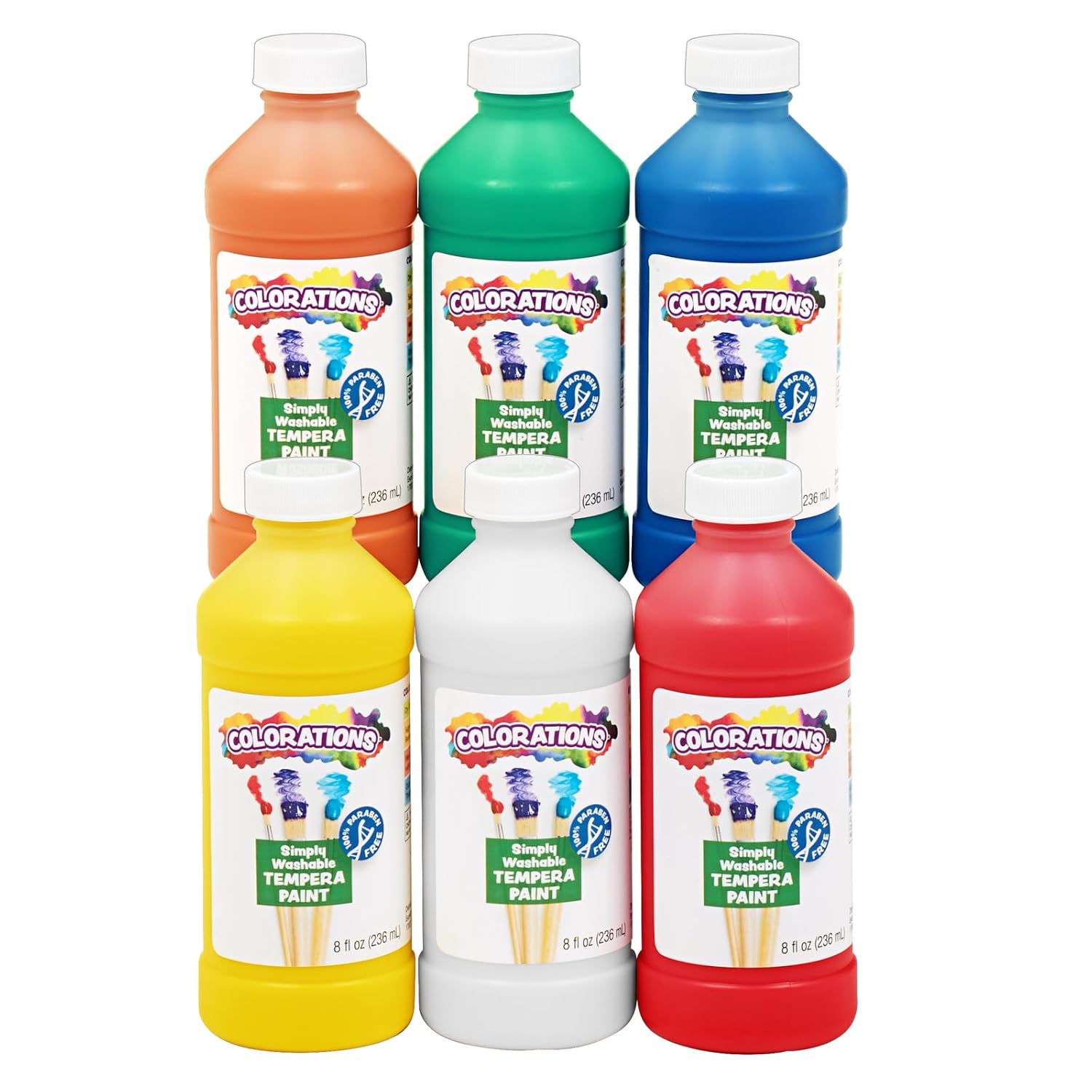
Colorations’ washable tempera comes in six 8 oz bottles: blue, green, orange, red, white and yellow. The listing says the colors are vivid and opaque and will not chip, flake or crack when dry, which is the most common complaint about cheap poster paint.
It is AP-certified non-toxic, meets ASTM D4236, is paraben-free, and the listing states it does not include latex, dairy, casein, egg, gluten, peanut, tree nuts or soy. It is made in the USA.
It works on paper, canvas, wood, cardboard, cardstock and papier-mâché, with brushes, rollers or sponges, indoors and out.
Best suited for: Teachers, parents and anyone making posters, signs and large projects.
Key features:
- 6 colors, 8 oz each, including white
- AP seal; ASTM D4236; paraben-free
- Allergen-free formula per listing
- Opaque; will not chip, flake or crack per listing
Pros:
- Large bottles
- Detailed safety information
- Covers well in one coat
Cons and limitations:
- Only six colors; mix the rest
- No black included
- Mid tier
Buying consideration: Mix secondary colors in small cups with lids so you can keep them for the next session.
2. TMOL 42-Color Washable Tempera Kit — Best for lots of colors plus tools

TMOL’s washable tempera kit offers 42 colors in transparent, labeled squeeze bottles with aluminum-sealed flip-top caps, plus brushes, palettes and a foldable bucket (a 12-color version is also offered). The listing describes rich, bold colors with good coverage on paper, cardboard and wood.
It says the paint washes from skin, clothes and surfaces with soap and water, and is certified non-toxic; it mentions finger painting for ages 6 and up.
Transparent bottles help kids learn color names and see when a color is running low.
Best suited for: Families and art clubs wanting many colors and tools in one box.
Key features:
- 42 washable tempera colors
- Transparent labeled bottles with flip-top caps
- Brushes, palettes and foldable bucket
- Certified non-toxic
Pros:
- Huge color range
- Tools included
- Easy-to-identify bottles
Cons and limitations:
- Small bottles for big posters
- Highest tier here
- Many bottles to store
Buying consideration: For big posters, buy a larger bottle of the background color separately.
3. Cra-Z-Art Washable Classic Paint Bulk Pack (8 x 4 oz) — Best for budget essentials

Cra-Z-Art’s bulk pack contains eight 4 oz bottles in red, orange, yellow, green, blue, purple, white and black. The listing describes the paint as washable, non-toxic and made in the USA.
Including both white and black means kids can lighten and darken colors, which makes the eight colors go much further.
It is an Amazon-exclusive bundle.
Best suited for: Budget-minded families and parties.
Key features:
- 8 colors, 4 oz each
- Includes white and black
- Washable, non-toxic
- Made in USA
Pros:
- Low tier
- Essential colors
- Good bottle size
Cons and limitations:
- Gloss finish per details, unusual for poster paint
- No brushes
- Fewer colors
Buying consideration: Use white to make pastel versions of each color for softer poster backgrounds.
4. Crayola Washable Project Paint (6 ct) — Best for small school projects

Crayola’s project paint includes six 2 oz bottles in yellow, green, yellow orange, red orange, fuchsia, teal and blue violet. It is washable from skin and most washable clothing, blends to create more hues and has resealable caps. It is labeled for ages 3 and up.
Smaller bottles suit occasional school projects without leftover paint drying out.
It is the lowest-cost option here.
Best suited for: Occasional school projects and younger kids.
Key features:
- 6 colors, 2 oz each
- Washable
- Resealable caps
- Ages 3+
Pros:
- Lowest tier
- Trusted brand
- Easy storage
Cons and limitations:
- Small bottles
- No white or black listed
- No brushes
Buying consideration: Buy white separately if you need to lighten colors for poster lettering.
5. EXTRIC 12-Pack Washable Tempera Finger Paints (2 oz) — Best for toddlers

EXTRIC’s 12 colors in 2 oz bottles are formulated as washable tempera finger paint. The listing says it rinses from skin, clothes, tables and walls with soap and water, is non-toxic and water-based, and is designed for little hands and feet, naming toddlers aged 1 to 3.
It works on paper, wood and canvas and can double as poster paint for older siblings.
Always supervise very young children with any paint.
Best suited for: Toddlers and preschoolers, handprint and footprint art.
Key features:
- 12 colors, 2 oz each
- Washable tempera finger paint
- Non-toxic, water-based
- For hands and feet per listing
Pros:
- Designed for the youngest painters
- Washable from many surfaces
- 12 colors
Cons and limitations:
- Small bottles
- Finger-paint consistency may be thick for brushes
- Mid tier
Buying consideration: Use glossy finger-paint paper or poster board; regular paper tears under wet hands.
How to Paint a Poster That Looks Sharp
- Plan in pencil. Lightly sketch the layout and lettering on the poster board.
- Paint the background first with a large flat brush or a sponge roller.
- Let it dry completely before adding anything on top.
- Paint large shapes next, then smaller details.
- Letter last with a medium round brush, or outline letters in marker and fill with paint.
- Keep paint layers thin; thick tempera can crack as it dries.
- Dry flat so paint does not run.
Best Surfaces for Poster Paint
| Surface | Result | Tip |
|---|---|---|
| Poster board | Bright, flat color | The classic choice; paint on the matte side |
| Heavy paper or cardstock | Good coverage | Tape edges to limit curling |
| Cardboard | Great for signs and models | Prime brown cardboard with white for brighter colors |
| Papier-mâché | Opaque coverage | Let papier-mâché dry fully first |
| Plastic or glossy surfaces | Poor; may flake | Use acrylic instead |
Mixing Colors With Poster Paint
Poster paint is one of the best ways for kids to learn color mixing because it is opaque and dries close to its wet color. A simple mixing lesson needs only red, yellow, blue, white and black:
- Secondary colors: red + yellow = orange, yellow + blue = green, blue + red = purple.
- Tints: add a little color to white (not the other way round) to make pastels.
- Shades: add a tiny amount of black, or the color’s opposite, to darken.
- Browns: mix all three primaries, or orange with a little blue.
- Skin tones: start with white plus a little orange or yellow ochre-style mix, then adjust with red and brown.
Mix in cups, muffin tins or on paper plates, and keep a “mixing brush” separate from painting brushes so the main colors stay clean.
Lettering Tips for Posters
- Draw a light pencil baseline and cap line so letters stay the same height.
- Sketch letters in pencil first and check spacing from across the room.
- Choose a color with strong contrast against the background, such as dark on light.
- Paint the letter outlines with a small round brush, then fill with a slightly larger brush.
- For crisp edges, outline dry letters with a black or white paint marker.
Classroom and Group Setup
For groups, pour poster paint into small lidded cups or muffin tins shared between two to four children, with one brush per color. Put the large bottles out of reach so refills go through an adult. Lay posters on tables covered with kraft paper, and set up a drying line or rack before the activity starts. Washable tempera makes group cleanup manageable: sponge tables, collect brushes in a soapy bucket, and send smocks home or into the wash.
School Projects and Science Fair Boards
Poster paint shines on project boards, maps, timelines and model backgrounds. Paint large color areas on the board before gluing on printed text and photos, since glue does not stick well to wet paint and paint does not cover printed paper neatly. Keep paint layers thin on trifold boards so they can still fold without cracking, and let everything dry overnight before transporting the project to school.
Kid Projects That Suit Poster Paint
Poster paint is perfect for bold, simple images like our easy ladybug painting and easy dinosaur painting. For rocks, which handle and weather more, acrylic lasts longer, as in our painted rock critters tutorial.
Cleaning Up Poster Paint
Washable tempera is designed to make cleanup easy, but timing still matters. Rinse brushes in water as soon as the session ends, then wash them with a little soap and reshape the bristles. Wipe tables with a damp sponge while paint is still soft; dried tempera usually lifts with warm water but may need a little scrubbing on porous surfaces. For clothing, rinse the back of the fabric under cool water to push paint out, then launder as normal. Avoid hot water on fresh stains, which can set some pigments. Check any carpet or upholstery spill quickly with a damp cloth, blotting rather than rubbing.
How Long Does Poster Paint Last?
Sealed bottles of tempera keep well for a long time at room temperature. Once opened, keep caps clean and tightly closed so the paint does not thicken. Tempera is water-based and can occasionally spoil if contaminated with dirty water or brushes, which shows up as an unusual sour smell; discard paint if that happens. Pouring out only what you need, rather than dipping brushes straight into bottles, is the best way to keep paint fresh.
Buying Guide: How to Choose Poster Paint for Kids
Opacity
Good poster paint covers in one coat; cheaper paint may need two.
Washability
Choose washable formulas for younger kids and classrooms.
Safety labels
Look for the AP seal or ASTM D4236, and check allergen information if needed.
Bottle size
Large posters and classrooms need 4 to 8 oz bottles.
White and black
Sets that include them allow kids to mix tints and shades.
Matte finish
Poster paint is prized for its flat, glare-free look, which photographs well for school displays and reads clearly from a distance. If a paint is described as glossy, expect a slight shine; that is fine for decorations but less ideal for presentation boards under bright lights.
Crack resistance
Paints described as not chipping or cracking hold up better on finished posters.
Common Mistakes to Avoid
- Painting thick layers. Tempera can crack.
- Rolling posters while wet. Let them dry flat first.
- Using poster paint on plastic. It flakes.
- Leaving caps open. Tempera thickens and can spoil.
- Skipping a pencil plan. Lettering ends up crowded.
- Mixing colors in the bottle. Mix in a cup or palette.
FAQs
What is poster paint?
Poster paint is an opaque, matte, water-based paint similar to tempera, used for posters, signs and school projects. Kids’ versions are often washable.
Is poster paint the same as tempera?
In the US they are closely related and often used interchangeably. Both are opaque, water-based and usually washable in kids’ formulas.
Is poster paint washable?
Kids’ formulas like Colorations, Crayola and Cra-Z-Art are labeled washable from skin and most clothing. Rinse promptly for best results.
Why does my poster paint crack?
It was applied too thickly or on a flexible surface. Paint thinner layers and use sturdy poster board.
Can poster paint be used on wood?
Yes, for indoor projects. For outdoor or handled items, acrylic lasts longer.
How do I store poster paint?
Close caps tightly and store at room temperature. Discard paint that develops an unusual smell.
Final Recommendation
For posters, signs and classrooms, choose Colorations Washable Tempera for coverage and detailed safety labeling. Get the TMOL 42-color kit for maximum variety and tools, the Cra-Z-Art bulk pack for budget essentials with white and black, Crayola Project Paint for occasional school projects, and EXTRIC finger paints for toddlers.





One Comment