PaintingProGuide is reader-supported. When you buy through links on this page we may earn an affiliate commission at no extra cost to you.
Wood DIY projects sit on a spectrum. At one end are craft projects that need no saw at all: painting a wood slice, decorating a plain box, wood burning a sign. At the other end are real woodworking builds such as shelves, step stools and benches. Most people start in the middle with small, square projects that teach measuring, cutting, joining and finishing, then branch out. This guide lays out beginner-friendly ideas at each level, covers the woods and finishes that work best for painted pieces, and reviews six books that make learning easier.
Quick answer: For a complete beginner, a painted wood slice or a simple box is the easiest first wood DIY project, and a cutting board, planter or wall shelf is the best first build. If you want one book to learn from, The Complete Book of Woodworking covers skills, tools and 40+ projects with more than 1,200 photos. For quick weekend ideas, Family Handyman 100 Weekend Projects is the larger idea bank, and Build Stuff with Wood keeps things to basic tools.
Wood DIY Projects by Skill Level
No-saw craft projects
- Painted wood slices: landscapes, florals, pet portraits or names on rounds cut from a branch. Seal with varnish.
- Decorated wooden boxes: unfinished craft boxes painted, stenciled or decoupaged.
- Wood burned signs and coasters: a pyrography pen outlines a design, then watercolor or acrylic adds color.
- Peg dolls and ornaments: small turned shapes painted as people, animals or holiday figures.
- Painted wooden spoons: handles dipped or color-blocked for a kitchen display (keep paint off the eating end).
First builds with basic tools
- Simple wall shelf: one board and two brackets, or a box shelf with four sides.
- Planter box: five boards screwed together, with drainage holes.
- Cutting board: a single hardwood board shaped and oiled; good practice for sanding.
- Picture frame: four mitered pieces, or simpler butt joints with a painted finish.
- Tool tote or caddy: two ends, a base, two sides and a dowel handle.
Next-step projects
- Step stool: introduces angled cuts and load-bearing joints.
- Bookcase: long, square carcass construction.
- Bench: a weekend build for a hallway or garden.
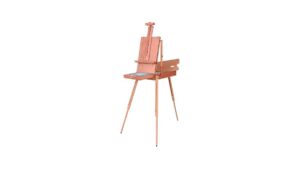
- Tabletop easel: a hinged frame with an adjustable ledge, ideal for painters.
- Pallet furniture: reclaimed wood for rustic shelves, signs and planters.
Choosing Wood for Painted Projects
Wood choice matters most when you plan to paint. Some woods take paint smoothly; others need extra prep.
- Pine: cheap, soft and easy to cut. Knots can bleed sap through paint, so use a stain-blocking primer.
- Poplar: smooth, tight grain and the classic choice for painted furniture.
- Basswood: very fine grain, ideal for carving, wood burning and detailed painting.
- Birch plywood: flat, stable sheets for boxes, signs and shelves. Exposed edges need filling or edge banding.
- MDF: perfectly smooth faces for painting, but edges soak up paint and it does not like moisture.
- Reclaimed pallet wood: characterful but rough. Check for the HT stamp (heat treated) and avoid pallets marked MB (methyl bromide).
How to Paint Wood So It Looks Finished
- Sand: start at 120 grit and finish at 180 or 220. Remove all dust with a tack cloth.
- Fill: use wood filler for holes and gaps, then sand flush.
- Prime: a coat of primer or gesso seals the grain, blocks knots and gives paint an even surface.
- Paint: two thin coats beat one thick coat. Lightly sand between coats with very fine paper for a smooth finish.
- Detail: add designs with acrylic craft paint, paint markers or stencils.
- Seal: water-based polyurethane or acrylic varnish protects the paint. Use exterior-rated finishes outside.
For no-build projects, a wood slice is the perfect practice surface. Our step-by-step on DIY painted wood slice art covers sealing the bark and choosing paints, and our guide to painting wood burned crafts shows how to add color without hiding the burned lines.
Essential Tools for Wood DIY Projects
- Measuring and marking: tape measure, combination or speed square, pencil.
- Cutting: a handsaw and miter box for small projects; a circular saw or miter saw for larger builds; a jigsaw for curves.
- Drilling and driving: a cordless drill/driver with bits.
- Clamping: at least two bar clamps.
- Sanding: a random orbital sander saves hours, but a sanding block works.
- Safety: eye and hearing protection and a dust mask.
A First Build, Step by Step: Painted Box Shelf
A box shelf is a single open-fronted box that hangs on the wall. It teaches square cuts, glue-and-screw joints, filling, painting and hanging, and it is useful the moment it is done.
- Cut four pieces from a 1×6 pine or poplar board: two at 18 inches for the top and bottom, two at about 10-1/2 inches for the sides.
- Sand all faces and edges to 180 grit before assembly; it is easier now than inside the box.
- Glue the end of each side piece, place it between the top and bottom, and clamp it square.
- Pre-drill and drive two screws through the top and bottom into each side.
- Fill the screw holes, let the filler dry and sand flush.
- Prime, then paint the outside one color and the inside a contrasting color for a modern look.
- Seal with water-based varnish and hang with two keyhole hangers or a French cleat screwed into studs.
Once you have built one, the same method makes cubbies, a nightstand box or a stacked shelving unit. Change the lengths, keep the technique.
Painted design ideas for wood projects
- Color-blocked interiors on shelves and boxes
- Stenciled patterns on drawer fronts and box lids
- Hand-lettered quotes on reclaimed boards
- Botanical illustrations on wood slices and coasters
- Ombre stripes across a set of planter boxes
Joinery for beginners
Screws and glue together make strong, simple joints. Pocket-hole jigs hide screws for a cleaner look. Dowels and biscuits align parts precisely. Traditional joinery like dovetails and mortise-and-tenon can wait until you have a few projects behind you.
Our Top Picks at a Glance
- The Complete Book of Woodworking (Landauer) — Best all-in-one beginner reference
- 100 Weekend Projects Anyone Can Do (Family Handyman) — Best large idea bank
- Build Stuff with Wood (Asa Christiana) — Best for basic-tool projects
- Easy Woodworking Projects for Adults with No Experience — Best photo-led beginner plans
- Essential Guide to Wood Pallet Projects — Best pallet furniture and decor book
- Wood Pallet DIY Projects (Fox Chapel) — Best for community and garden pallet builds
| Product | Best For | Key Spec | Key Strength | Price Tier |
|---|---|---|---|---|
| The Complete Book of Woodworking | Learning skills | 40+ projects, 1,200+ photos, carpentry basics | Skills, tools and plans in one book | $$ |
| 100 Weekend Projects Anyone Can Do | Project ideas | Hardcover, 100 projects | Furniture, storage, outdoor | $$ |
| Build Stuff with Wood | Basic tools only | Paperback, Christiana and Offerman | Low tool investment | $$ |
| Easy Woodworking Projects for Adults | No-experience beginners | Photos and measured diagrams | Step-by-step plans | $$ |
| Essential Guide to Wood Pallet Projects | Pallet furniture and decor | 40 DIY designs | Reclaimed-wood ideas | $$ |
| Wood Pallet DIY Projects | Home and garden pallet builds | 20 building projects | Reclaimed wood for useful items | $$ |
How We Chose
We selected these books from Amazon listing details checked in October 2026. Each was assessed on how well its stated scope suits beginners starting wood DIY projects: whether it teaches skills or mainly provides plans, the tools it assumes, the type of projects it covers, and how widely it is reviewed by Amazon buyers. We have not built from these books; descriptions rely on their titles and subtitles. A Kindle-only pallet title in the same search was left out in favor of print books you can keep on the bench.
- Teaching depth: skills and techniques, not just plans.
- Tool assumptions: basic hand and power tools versus a full shop.
- Project range: indoor, outdoor, furniture, decor.
- Visual instruction: photos and diagrams.
Best Books for Wood DIY Projects Reviewed
1. The Complete Book of Woodworking (Landauer) — Best for Learning Skills

Tom Carpenter and Mark Johanson’s book bills itself as a step-by-step guide to essential woodworking skills, techniques, tools and tips, with 40+ easy-to-follow projects and plans, more than 1,200 photos and carpentry basics.
That combination of skill instruction and projects makes it the best single book for someone starting from zero. The photo count matters: woodworking is far easier to learn from pictures than from text.
Best suited for: Complete beginners who want one comprehensive reference.
Key features:
- Paperback, Landauer
- 40+ projects and plans
- 1,200+ photos
- Skills, tools, techniques and carpentry basics
Pros:
- Teaches skills as well as projects
- Heavily illustrated
- Long-term reference value
Cons and limitations:
- Comprehensive scope can feel dense
- Some projects assume power tools
- Mid price tier
Buying consideration: Read the tools and techniques chapters first, then pick a project that uses only what you own.
2. 100 Weekend Projects Anyone Can Do — Best for a Large Idea Bank

The Family Handyman editors collected 100 easy DIY projects for furniture, storage, outdoor spaces and more. Weekend scope is the sweet spot for most hobbyists: big enough to be satisfying, small enough to finish.
Family Handyman is a long-running home-improvement brand, and this hardcover is a durable book to keep in the shop.
Best suited for: Hobbyists who want a steady supply of practical projects.
Key features:
- Hardcover
- 100 projects
- Furniture, storage, outdoor spaces
Pros:
- Largest project count here
- Practical, home-focused builds
- Durable hardcover
Cons and limitations:
- Less skill instruction than a dedicated guide
- Some projects are home improvement rather than woodworking
- Mid price tier
Buying consideration: Use it alongside a skills book; it supplies ideas, while a guide teaches technique.
3. Build Stuff with Wood — Best for Basic-Tool Projects

Asa Christiana’s book, with Nick Offerman, is subtitled “Make Awesome Projects with Basic Tools.” It is designed for people who do not have, or do not want, a full workshop.
Keeping the tool list short lowers the cost of getting started and lets you focus on technique.
Best suited for: Beginners with limited tools, space or budget.
Key features:
- Paperback
- Projects with basic tools
- Asa Christiana and Nick Offerman
Pros:
- Low tool investment
- Approachable for apartment dwellers
- Practical projects
Cons and limitations:
- Fewer projects than idea-bank books
- Mid price tier
- Limited listing detail on contents
Buying consideration: Read the tool section before buying anything; you may already own most of what it needs.
4. Easy Woodworking Projects for Adults with No Experience — Best for Photo-Led Beginner Plans

Ethan Carter’s book promises step-by-step plans with real photos and measured diagrams for every build, taking readers from first cut to projects they will be proud to share.
Measured diagrams remove guesswork, which is the biggest hurdle in early builds.
Best suited for: Adults with no experience who learn best from photos and diagrams.
Key features:
- Paperback
- Step-by-step plans
- Real photos and measured diagrams
Pros:
- Written for absolute beginners
- Visual, measured instructions
- Clear progression
Cons and limitations:
- Newer title with less track record
- Fewer projects than larger books
- Mid price tier
Buying consideration: Build each project exactly to the diagram the first time, then experiment.
5. Essential Guide to Wood Pallet Projects — Best for Pallet Furniture and Decor

Danny Darke and Samantha Hartman’s guide offers 40 DIY designs for furniture, decor and more from pallet wood. Pallets are free or cheap, and their weathered look takes stains and painted lettering well.
Pallet wood needs extra prep: pulling nails, checking treatment stamps and sanding rough faces. A dedicated guide helps.
Best suited for: Budget builders who like rustic, reclaimed style.
Key features:
- Paperback
- 40 DIY designs
- Furniture and decor from pallets
Pros:
- Free or low-cost raw material
- Good range of furniture and decor
- Rustic finish suits painted signs
Cons and limitations:
- Pallet prep takes time
- Reclaimed wood varies in quality
- Mid price tier
Buying consideration: Use only heat-treated (HT) pallets and avoid any marked MB.
6. Wood Pallet DIY Projects (Fox Chapel) — Best for Home and Garden Pallet Builds

Stephen and Diane Fitzberger’s book offers 20 building projects “to enrich your home, your heart and your community,” making one-of-a-kind useful items for home and garden from reclaimed wood.
Its community angle suits group builds, such as garden beds for a school or benches for a shared space.
Best suited for: Builders interested in useful home, garden and community projects from pallets.
Key features:
- Paperback, Fox Chapel
- 20 building projects
- Home and garden focus
Pros:
- Useful, practical builds
- Community-minded projects
- Reclaimed materials
Cons and limitations:
- Fewer projects than the 40-design guide
- Pallet prep required
- Mid price tier
Buying consideration: Choose this one if your plans lean toward garden and community builds; choose the 40-design guide for furniture and decor.
Buying Guide: How to Choose Wood DIY Projects and Resources
Start with your tools
List the tools you own, then pick projects and books that match. Buying tools for a single project is expensive; building skills with what you have is not.
Skills book or plan book
A skills book teaches technique and lasts for years. A plan book supplies ideas. Most beginners benefit from one of each.
Painted or stained finish
Decide early. Painted projects can use cheaper wood like pine and MDF; stained pieces need attractive grain.
Space and dust
Sanding and sawing create dust. Small craft projects suit an apartment; larger builds need a garage, balcony or outdoor space.
Project size
Small projects give quick wins and build confidence. Save furniture for when you can cut square and drive screws straight.
New or reclaimed wood
New lumber is predictable. Reclaimed and pallet wood is cheap and characterful but takes more prep and checking.
Common Mistakes to Avoid
- Measuring once and cutting, then measuring again; measure twice before every cut.
- Skipping primer on pine, so knots bleed through the paint.
- Applying thick paint coats that drip and take days to cure.
- Using pallets without checking the treatment stamp.
- Not pre-drilling near board ends, which splits the wood.
- Working without eye protection and a dust mask.
FAQs
What is the easiest wood DIY project for beginners?
A painted wood slice or a decorated craft box needs no cutting at all. For a first build, a simple wall shelf, planter box or cutting board teaches basic skills with little risk.
What wood is best for painted projects?
Poplar and birch plywood take paint very smoothly. Pine is cheaper but needs a stain-blocking primer over knots. MDF has perfect faces but edges need sealing.
Do I need power tools for wood projects?
Not for small projects. A handsaw, miter box, drill and sandpaper go a long way. Power tools save time on larger builds.
How do I paint wood without brush marks?
Sand smooth, prime, apply thin coats with a quality brush or foam roller, and lightly sand between coats. Paint additives that slow drying also help paint level out.
Is pallet wood safe for DIY projects?
Pallets stamped HT (heat treated) are generally considered suitable for DIY. Avoid pallets marked MB, which were treated with methyl bromide, and any with chemical spills or stains.
How should I seal painted wood?
Use a water-based polyurethane or acrylic varnish indoors, and an exterior-rated clear coat outside. Apply two or three thin coats for durability.
Final Recommendation
Begin with a no-saw craft piece to practice painting and finishing, then build a simple shelf or planter. To learn the full skill set, The Complete Book of Woodworking is the best single reference, with Family Handyman 100 Weekend Projects as a large idea bank. Choose Build Stuff with Wood if you have limited tools, Easy Woodworking Projects for Adults for photo-led plans, and either pallet book if reclaimed, rustic builds appeal.