PaintingProGuide is reader-supported. When you buy through links on this page we may earn an affiliate commission at no extra cost to you.
Most adults who say “I’m not creative” can remember the moment they decided it. Often it was a well-meaning comment about a purple sky or a lopsided house. Encouraging creativity in kids through painting is mostly about avoiding those moments and replacing them with the opposite: time, open materials, curiosity about their choices and a lot of permission to make a mess.
This guide covers the parenting and teaching habits that make the biggest difference, what to say when a child shows you a painting, how to set up a space that invites experimenting, and painting activities that build original thinking. At the end, we review seven books for parents, teachers and kids, including two written specifically about process art.
Quick answer: Focus on the process, not the product: offer open-ended materials, describe what you see instead of praising, and let kids make their own choices. For parents and teachers, Art Workshop for Children is the best guide to process art. For kids who want to explore on their own, Art Lab for Kids: Express Yourself offers 52 projects about finding a personal voice, and Izzy Paints is a picture book that shows young children what inspiration looks like.
Process Art vs Product Art
Product art has a target: a paper-plate lion that should look like the example. Process art has no example. The child gets materials and an invitation, and the result is whatever happens. Both have a place, but creativity grows mostly in process art, because that is where children make real decisions.
| Product-focused | Process-focused | |
|---|---|---|
| Starting point | A finished sample to copy | Materials and an open question |
| Who decides | The adult | The child |
| Success | Looks like the model | The child explored and chose |
| Typical result | Twenty identical crafts | Twenty different paintings |
| Skill built | Following directions | Original thinking, problem-solving |
Step-by-step lessons are still valuable for building technique. A good balance is roughly one guided project for every two or three open sessions.
What to Say When a Child Shows You a Painting
Praise like “That’s beautiful!” feels kind, but it teaches kids to paint for approval. Descriptive, curious responses teach them to look at their own work.
- Describe: “You used a lot of blue at the top and tiny dots at the bottom.”
- Ask about process: “How did you make this rough texture?”
- Ask about intention: “Tell me about this part.” Not “What is it?”, which assumes it must be something.
- Notice effort: “You kept working on that corner for a long time.”
- Invite reflection: “What would you try next time?”
And avoid correcting choices. A green sun is a decision, not a mistake.
Set Up a Space That Invites Experimenting
Make materials visible and reachable
Children use what they can see. Keep paper, brushes and a small set of paints on a low shelf or in a clear bin. If every painting session needs an adult to unlock a cupboard, painting becomes rare.
Offer open-ended tools
Beyond brushes, include sponges, cotton swabs, forks, bubble wrap, string, leaves and cardboard scraps. New tools lead to new marks, and new marks lead to new ideas.
Rotate rather than add
Too many choices overwhelm. Swap tools and colors every week or two so there is always something fresh without clutter.
Protect the space, not the child
A wipeable floor mat and table cover mean you do not have to say “careful!” every minute. Kids explore more when the adults are relaxed.
Display work without ranking it
A clothesline with clips or a fridge gallery that changes weekly shows that every painting matters. Let the child choose what goes up.
Painting Activities That Build Original Thinking
- Mystery tools. Put out five unusual painting tools and ask, “What marks can you make?”
- Finish the scribble. An adult draws one random line; the child turns it into anything.
- Paint to music. Play contrasting songs and paint how each one feels.
- Big paper day. Tape a large sheet to the floor or wall and paint with the whole arm.
- Color limits. Only two colors plus white. Constraints spark invention.
- Story painting. Paint a picture, then tell the story of what is happening in it.
- Collaborative painting. Pass a painting around a family table, each person adding one thing.
- Paint the invisible. Wind, a smell, a dream, a feeling. There is no wrong answer.
For subject-based practice in between, our step-by-step guides to painting a ladybug and painting a dinosaur give kids a quick confidence win.
Encouraging Creativity at Different Ages
Toddlers and preschoolers
Exploration is the whole point. Expect color mixing into brown, paint on hands and paintings finished in two minutes. Offer thick paint, big brushes and plenty of paper.
Ages 5 to 8
Kids start wanting their work to look “right.” This is where descriptive feedback matters most. Mix open sessions with simple technique lessons so frustration does not win.
Ages 9 to 12
Older kids become self-critical. Introduce artists who break rules, sketchbooks for private experimenting and longer projects with real choices about subject and style.
A Simple Weekly Creative Rhythm
Creativity responds to rhythm more than to big events. A predictable routine tells children that painting is a normal part of life, not a special occasion that needs an adult’s permission. Here is a lightweight structure that works for most families:
- Two open sessions a week. Materials out, no prompt or a one-word invitation such as “stormy” or “tiny.” Twenty to forty minutes.
- One guided project a week. A technique or subject lesson from a book, done together.
- One outdoor or found-surface session a month. Paint leaves, cardboard boxes or stones. Our guide to making painted rock critters is a favorite outdoor option.
- A monthly gallery walk. Lay out the month’s paintings on the floor and let the child talk about which ones they like and why.
The gallery walk is the quiet secret. Kids start noticing their own patterns, such as favorite colors or recurring subjects, and those patterns are the beginning of a personal style. Keep a dated folder or photograph each painting so you can look back at the end of the year together.
Our Top Picks at a Glance
- Art Workshop for Children — Best guide to process art for parents and teachers
- Art Lab for Kids: Express Yourself — Best for kids finding their own voice
- Paint Lab for Kids — Best year-long painting project book
- More Than Painting — Best for preschool and kindergarten educators
- Izzy Paints — Best picture book about inspiration
- How to Paint with Acrylics: An Art Book for Kids — Best budget technique book for kids
- Painting with Bob Ross for Kids — Best for confidence-building guided lessons
| Product | Best For | Key Spec | Key Strength | Price Tier |
|---|---|---|---|---|
| Art Workshop for Children | Parents, teachers | 25+ process art experiences | Fosters original thinking | $$ |
| Art Lab for Kids: Express Yourself | Ages roughly 8+ | 52 projects across media | Focus on personal voice | $ |
| Paint Lab for Kids | Weekly painting | 52 painting and mixed-media projects | Painting depth | $$ |
| More Than Painting | Preschool-K educators | Exploring art in early years | Early childhood focus | $ |
| Izzy Paints | Ages 4-8 | Hardcover picture book | Story about inspiration | $ |
| How to Paint with Acrylics | Kids learning technique | Acrylic book for kids | Lowest price tier | $ |
| Painting with Bob Ross for Kids | Guided lessons | Simple licensed lessons | Quick confidence wins | $ |
How We Chose
We chose these titles from Amazon listings checked in October 2026 based on what each book states it covers, who it is written for, the balance between open-ended and guided activities, and how widely each title is reviewed by Amazon buyers. Because book listings carry limited detail, we describe each one only from its title, author and format.
- Clear audience: parent or teacher, or child.
- Emphasis on creativity and original thinking, not only copying.
- Age suitability.
- Usefulness over months, not a single afternoon.
Best Books for Encouraging Creativity Through Painting Reviewed
1. Art Workshop for Children — Best for a process art guide for adults

Barbara Rucci and Betsy McKenna wrote this guide on how to foster original thinking with more than 25 process art experiences. It speaks directly to the approach described above: materials and invitations, not templates.
For parents who want to understand why process art works and how to set it up, it is the most on-topic book here.
Best suited for: Parents, homeschoolers, art teachers and early-years educators.
Key features:
- More than 25 process art experiences
- Focus on original thinking
- Paperback
Pros:
- Directly addresses creativity
- Usable with mixed ages
- Mid price tier
Cons and limitations:
- Written for adults to facilitate
- Not a painting-only book
Buying consideration: Read the introduction first; the philosophy is as useful as the activities.
2. Art Lab for Kids: Express Yourself — Best for kids finding their own voice

Susan Schwake’s Express Yourself volume offers 52 creative adventures to find your voice through drawing, painting, mixed media and sculpture. The subtitle signals the creative angle: these projects ask kids to express something personal.
It is a good fit for tweens who have outgrown simple crafts and want their art to say something.
Best suited for: Kids roughly 8 to 12 and teachers working with older elementary students.
Key features:
- 52 projects
- Drawing, painting, mixed media, sculpture
- Paperback, volume 19 of the series
Pros:
- Strong self-expression focus
- Variety of media
- Low price tier
Cons and limitations:
- Painting is one medium among several
- Supplies not included
Buying consideration: Pairs well with a sketchbook the child keeps private.
3. Paint Lab for Kids — Best for a year of weekly painting

Stephanie Corfee’s Paint Lab for Kids presents 52 creative adventures in painting and mixed media for budding artists of all ages. Weekly projects give structure without killing spontaneity.
Use the projects as starting points and encourage kids to change the instructions whenever they have a better idea.
Best suited for: Families who want a painting habit with variety.
Key features:
- 52 painting and mixed-media projects
- All ages
- Paperback
Pros:
- Painting-focused
- Reusable for siblings
- Year-long structure
Cons and limitations:
- Highest price tier among these books in our listing check
- Materials sourced separately
Buying consideration: Treat each project as an invitation rather than a recipe.
4. More Than Painting — Best for preschool and kindergarten educators

Sally Moomaw and Brenda Hieronymus focus on exploring the wonders of art in preschool and kindergarten. Early childhood is when creative confidence is formed, so a book aimed specifically at that age is valuable.
It suits teachers and parents of 3 to 6-year-olds who want to go beyond basic easel painting.
Best suited for: Preschool teachers, daycare staff and parents of young children.
Key features:
- Preschool and kindergarten focus
- Art exploration beyond painting
- Paperback
Pros:
- Age-specific guidance
- Low price tier
- Educator perspective
Cons and limitations:
- Less useful for older kids
- Written for adults
Buying consideration: Ideal for classrooms planning a year of art centers.
5. Izzy Paints — Best for a picture book about inspiration

Tim Miller’s hardcover picture book is described as a playful story about inspiration, creativity and art for ages 4 to 8. Stories help children understand that ideas come from somewhere and that every artist gets stuck sometimes.
Read it before a painting session and ask what inspires your child.
Best suited for: Ages 4 to 8 and a pre-painting read-aloud.
Key features:
- Hardcover picture book
- Ages 4 to 8
- Story about inspiration
Pros:
- Builds motivation
- Low price tier
- Great conversation starter
Cons and limitations:
- Not an instruction book
- Short read
Buying consideration: Pair it with one open-ended painting invitation right after reading.
6. How to Paint with Acrylics: An Art Book for Kids — Best for budget technique building

Rockridge Press’s book teaches acrylic painting to kids. Technique and creativity are not opposites: once kids know how to blend, layer and mix, they have more ways to express ideas.
It is the least expensive book in this list.
Best suited for: Kids who are ready for acrylic and want to learn how.
Key features:
- Acrylic-specific
- Written for kids
- Paperback
Pros:
- Lowest price tier
- Builds real skills
- Clear focus
Cons and limitations:
- Acrylic needs supervision and cleanup care
- Less open-ended
Buying consideration: Use a technique from the book in a free painting the same week.
7. Painting with Bob Ross for Kids — Best for confidence-building guided lessons
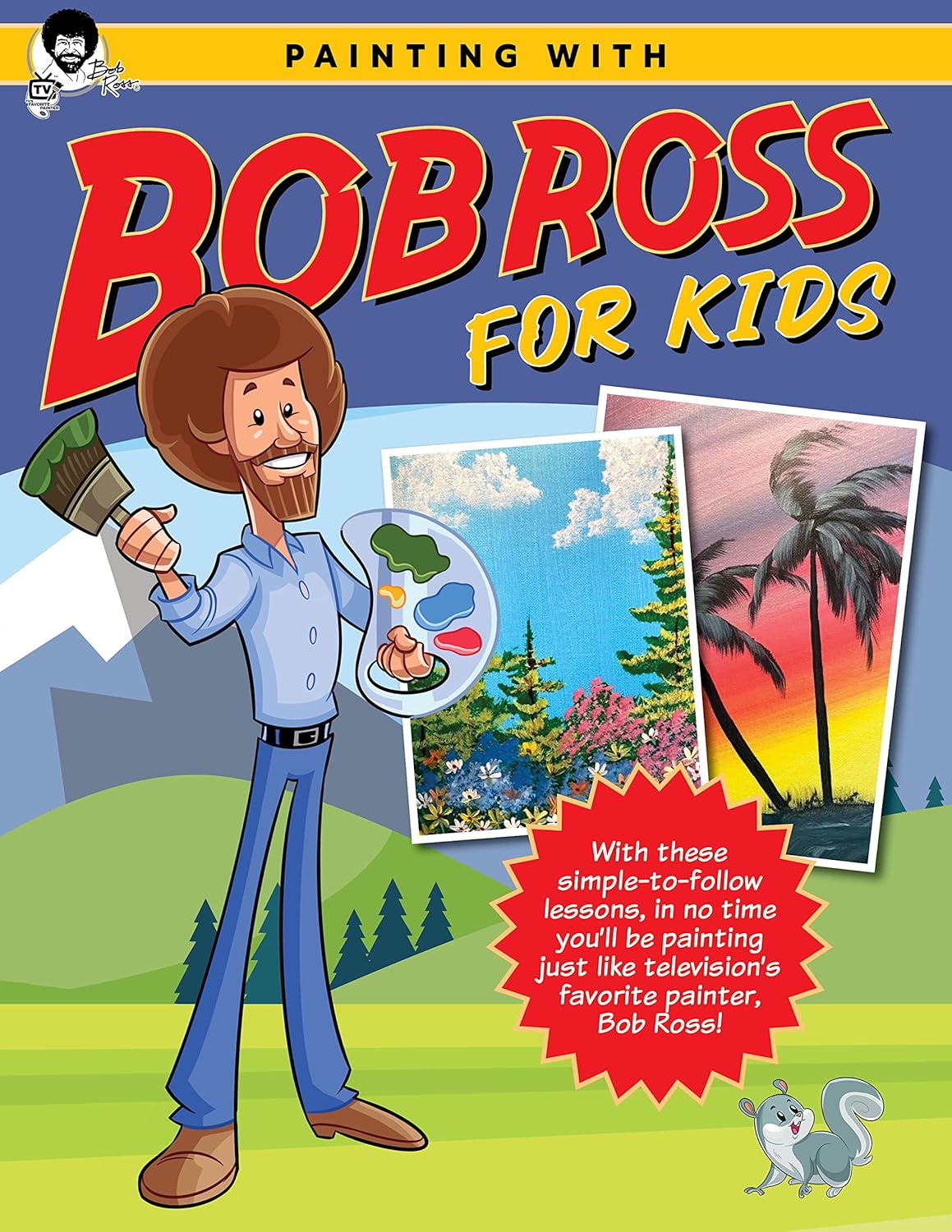
This licensed Bob Ross book promises simple lessons that let kids paint like the famous television painter. Bob Ross’s “happy accidents” idea is itself a lesson in creative resilience.
A guided landscape that turns out well gives a hesitant child confidence to experiment next time.
Best suited for: Hesitant kids who need a win before they will experiment.
Key features:
- Simple step-by-step lessons
- Landscape focus
- Paperback
Pros:
- Confidence builder
- Low price tier
- Fun shared activity
Cons and limitations:
- Guided, not open-ended
- Narrow subject range
Buying consideration: Follow each guided painting with an open session using the same colors.
Buying Guide: Choosing Books That Build Creative Confidence
Know who will read it
Adult-facing books like Art Workshop for Children teach you how to facilitate. Kid-facing books like Express Yourself put the child in charge.
Look for open-ended language
Titles mentioning process, original thinking or expression tend to support creativity better than “make this craft” books.
Balance with technique
One technique book helps kids feel capable. Capability fuels experimentation.
Match the age
Early childhood books focus on exploration; older-kid books focus on voice and choices.
Consider read-aloud stories
Picture books about artists normalize mistakes and inspiration.
Think about reuse
Books with dozens of projects serve multiple children and years.
Common Mistakes to Avoid
- Showing a finished example first. It sets a target that limits imagination.
- Asking “What is it?” Ask “Tell me about it” instead.
- Fixing their work. Your brush stays on your paper.
- Rushing cleanup. Announce a five-minute warning so children can finish.
- Comparing siblings. Every painting is its own thing.
- Only buying kits. Kits are product art. Keep plain paper and paint on hand for open sessions.
FAQs
How do I encourage my child to be creative with painting?
Offer open-ended materials, give time without a target result, describe their work instead of praising it, and let them make their own choices about color and subject.
What is process art?
Process art focuses on exploring materials and making choices rather than producing a specific result. There is no sample to copy, so every child’s piece is different.
Should I praise my child’s paintings?
Descriptive feedback works better than general praise. Saying what you notice, such as colors, textures and effort, teaches kids to look at their own work.
At what age should kids start painting?
Many children start exploring washable finger paint around age 1 to 2 with supervision. Creativity benefits from early, frequent, low-pressure experiences.
Are step-by-step painting lessons bad for creativity?
No. Guided lessons build skills and confidence. Balance them with open sessions where the child decides everything.
How do I help a frustrated child who says their painting is bad?
Acknowledge the feeling, ask what they would like to change, and remind them that artists often paint the same thing many times. Offer a fresh sheet without making it a big deal.
Final Recommendation
Creativity grows from habits more than products, so start with your space and your words. If you want one book to guide you as a parent or teacher, choose Art Workshop for Children. For preschool settings, More Than Painting is the better fit. Kids who want to direct their own projects will get the most from Art Lab for Kids: Express Yourself or Paint Lab for Kids, and Izzy Paints is a lovely way to start the conversation with younger children. Add a technique book like How to Paint with Acrylics or the Bob Ross lessons when a child needs a confidence boost, then hand the brush back and let them lead.