Cacti are almost made for beginner painters. Their bodies are simple geometric forms, their colors sit in a narrow band of greens and blues, and their spines and flowers give you just enough detail to make the piece feel finished. If you want to learn how to paint a cactus for wall art DIY style, you can produce something worth hanging in a single afternoon.
Below you will find a full walkthrough for a saguaro or barrel-cactus canvas, plus pot and desert-background options, mixing recipes, and the mistakes that most often make cactus paintings look flat.
Quick answer: Paint a cactus wall art piece by laying down a simple background, sketching the cactus as rounded columns or a ball, and filling it with a blue-green base. Add vertical ribs with a darker green on the shadow side and a lighter green on the lit side, then paint spines last with a fine liner brush in cream or white. A small pink or yellow flower and a terracotta pot finish the design.
Why Cactus Paintings Work So Well as Decor
Cactus art fits several popular interior styles at once: Southwestern, boho, Scandinavian minimal, and mid-century modern. A single potted cactus on a pale ground suits a small bathroom or office nook, while a tall saguaro against a sunset sky can anchor a living room wall.
From a painting standpoint, cacti forgive imprecision. No two plants are identical, so a lopsided arm or uneven rib reads as character. What does need care is contrast. A cactus painted in one flat green will look like a sticker; the ribs and shading are what make it feel round.
Materials You Will Need
- Surface: Primed stretched canvas, 11 x 14 or 16 x 20 inches for a first piece. Canvas panels work for framed art.
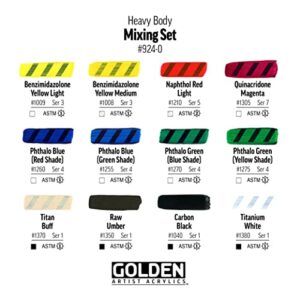
- Acrylic colors: Titanium white, phthalo green or sap green, ultramarine or phthalo blue, cadmium yellow (or hue), yellow ochre, burnt sienna, quinacridone magenta or a pink, and a red-orange for terracotta.
- Brushes: 1-inch flat, size 8 flat or filbert, size 4 round, size 0 or 10/0 liner.
- Other: Pencil, eraser, palette, water jars, paper towels, painter’s tape, and acrylic varnish.
Because cactus greens depend on subtle shifts in blue and yellow, pigment strength matters. Thin craft acrylics can turn chalky when mixed with white. For guidance on paints that keep their color on canvas, see our comparison of acrylic paints suited to wall art.
Pick Your Cactus Type
| Cactus | Basic Shape | Difficulty | Signature Detail |
|---|---|---|---|
| Barrel cactus | Sphere or squat cylinder | Easy | Curved ribs that meet at the top |
| Saguaro | Tall column with upturned arms | Easy to moderate | Long vertical ribs, iconic silhouette |
| Prickly pear | Stacked flat ovals (pads) | Easy | Dotted spine clusters, fruit on top |
| Bunny ear cactus | Small paired ovals | Easy | Soft polka-dot spines, playful look |
| Cereus or column cluster | Several thin columns | Moderate | Varied heights, overlapping forms |
A barrel cactus in a pot is the gentlest start because the round form teaches you how ribs wrap around a shape. Saguaros are great for landscape pieces with sky and hills.
How to Paint a Cactus for Wall Art: Step by Step
These steps describe a potted barrel cactus on a soft background, with notes for saguaro variations at the end.
- Tape the edges (optional). If you plan to frame or want a crisp white border, tape about half an inch around the canvas edge with painter’s tape.
- Paint the background. Choose a color that contrasts with green. Warm options like blush pink (white plus a touch of magenta and yellow ochre), sand, or peach make cacti pop. Apply two coats with the 1-inch flat, letting the first dry about 30 minutes.
- Sketch the composition. Draw the pot first as a simple trapezoid in the lower third of the canvas. Then draw the cactus body as a circle or oval sitting slightly inside the pot rim. Leave space above for a flower.
- Paint the pot. Mix terracotta from burnt sienna, a little red-orange, and white. Fill the pot with the size 8 flat. While still wet, add a darker band under the rim and a lighter streak on the lit side to round it.
- Base coat the cactus. Mix a blue-green: about 2 parts green, 1 part blue, and 1 part white. Fill the whole cactus shape. Two thin coats give better coverage than one thick one.
- Map the ribs. When the base is dry, lightly pencil in curved lines that start at the top center and bend outward and down, like the segments of a peeled orange. Space them about half an inch to an inch apart on a small canvas.
- Shade the ribs. Mix a darker green by adding more blue and a hint of burnt sienna to your base. Paint along one side of each rib line with the size 4 round, then soften the inner edge with a damp brush so it fades into the base color.
- Highlight the ribs. Mix base green with white and a little yellow. Paint a thin line along the opposite side of each rib, on the side facing your light source. Add a broader highlight on the side of the whole cactus that faces the light.
- Add spines. Thin cream or white paint with water until fluid. Using the liner brush, paint small starbursts of three to five short lines along each rib ridge. Keep them tiny and vary their direction slightly.
- Paint a flower. On top, paint a small pink or yellow bloom with four to six petals using the round brush. Add a darker center and a few light touches on petal tips.
- Ground the pot. Paint a soft shadow under the pot using the background color mixed with a little blue or umber. This stops the pot from looking like it floats.
- Finish. Remove the tape while the last layer is slightly damp to avoid peeling dried paint. Allow at least 24 hours of curing before varnishing.
Saguaro Variation
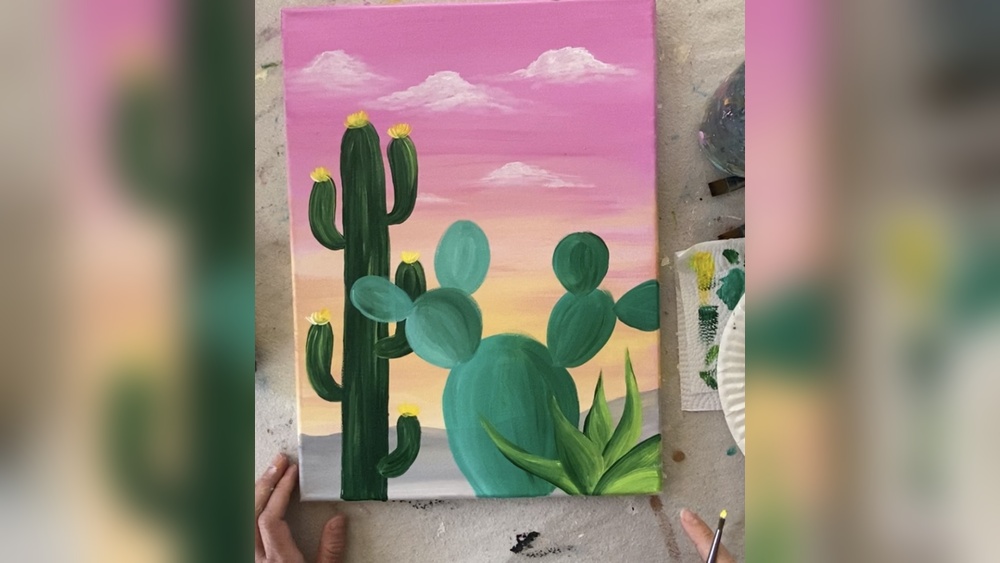
For a saguaro, paint a sky gradient first, blending yellow-orange at the horizon into pink and then purple or blue at the top. Add distant mesas as flat, cool purple shapes. Paint the saguaro as one tall column with arms that bend up at right angles, rounded at every end. Ribs run vertically, and the whole silhouette can be painted darker if you want a sunset backlit effect.
Mixing Realistic Cactus Greens
Cacti are rarely the bright grass green of a tube. They often lean toward gray-blue or olive, partly because many species have a waxy coating that scatters light. A few mixes to try:
- Dusty blue-green: green + blue + white + a speck of the background pink. The pink grays it down naturally.
- Olive cactus: green + yellow ochre + a little burnt sienna.
- Deep shadow green: green + ultramarine + burnt sienna. Avoid black, which can make greens look dirty.
- Sunlit edge: base green + white + cadmium yellow.
Mix each color in a quantity big enough to finish the cactus. Remixing halfway through rarely matches exactly.
DIY Large Canvas Art Ideas for Beginners Using Cacti
Cacti scale up beautifully. If you want to fill a big wall, consider these ideas.
- Single oversized saguaro: On a 24 x 36 inch vertical canvas, let one saguaro rise from bottom edge to about two-thirds height against a gradient sky.
- Cactus garden row: On a long horizontal canvas, paint five or six different potted cacti in a row, each in a differently colored pot.
- Triptych: Three matching canvases with a barrel cactus, prickly pear, and bunny ear cactus, unified by one background color.
- Desert landscape: Layer sky, distant mountains, middle-ground hills, and several saguaros of decreasing size to create depth.
When working large, step back every 15 minutes or so. Problems with proportion and contrast are hard to see from arm’s length.
Background Ideas That Complement Cacti
| Background | Mood | Pairs Well With |
|---|---|---|
| Blush pink | Soft, boho | Blue-green cactus, white pot |
| Terracotta or rust | Warm, Southwestern | Olive cactus, cream spines |
| Off-white | Minimal, Scandinavian | Any cactus, black or charcoal pot |
| Sunset gradient | Dramatic, landscape | Dark saguaro silhouette |
| Navy | Bold, modern | Light sage cactus, gold or mustard pot |
Common Mistakes When Painting Cacti
Ribs drawn as straight lines. Ribs follow the curve of the body. On a round cactus, they bow outward in the middle. Straight ribs make the form look flat.
Spines too large or too many. Heavy spines overpower the shape. Keep them small and spaced, and use slightly off-white rather than pure white on light backgrounds.
Pot and cactus the same value. If your cactus and pot are equally dark or equally light, they merge. Make one noticeably lighter than the other.
No light direction. Decide where light comes from before shading. Every highlight should face that direction, and every shadow should face away.
Muddy greens. Overmixing complements like red into green can turn the color brown. Add muting colors in very small amounts and test on the palette first.
Painting Prickly Pear Pads and Fruit
Prickly pear is a nice second project because it swaps ribs for flat, overlapping pads. Paint each pad as a slightly lopsided oval, starting with the largest pad at the base and stacking smaller ones at angles on its upper edge. Pads that sit behind others should be a little darker and cooler, which pushes them back in space.
Instead of linear spines, prickly pear has small clusters scattered across each pad. Dot them in a loose diagonal grid with the tip of a round brush, using a pale cream, then add a tiny darker dot beside each one for shadow. The fruit, called tunas, sit along the top rims as small egg shapes. Paint them magenta or deep red-violet, with a lighter pink highlight on the lit side and a narrow green base where they attach.
Keep the pad edges slightly lighter than their centers. That subtle rim of light suggests thickness and makes the flat shapes feel solid rather than cut from paper.
Tips for Kids and Group Painting Sessions
Cactus painting is popular at parties and classrooms because the shapes are easy to pre-draw. For younger painters, sketch the outline in advance and let them fill in color with larger brushes. Use cotton swabs to dab dot-style spines, which is easier than a liner brush. Choose a bright, cheerful background such as turquoise or yellow.
For adults, a guided sip-and-paint style session works well with a three-cactus composition: each person gets the same template but chooses their own pot colors.
Sealing and Displaying Your Cactus Art
Once fully cured, brush on two thin coats of acrylic varnish. Satin is a good default for cactus art because it gives a slight glow to greens without heavy glare. If you painted the canvas edges in the background color, you can hang it frameless for a clean gallery-wrap look.
Cactus pieces pair naturally with other simple natural motifs. A coastal or ocean-themed series using the same color logic is another option; the seahorse wall art tutorial uses similar layering if you want a matching style for a bathroom.
Related Reading
FAQs
What is the easiest cactus to paint for beginners?
A barrel cactus or bunny ear cactus is usually easiest. Both are made from simple rounded shapes, need only a few ribs or dots, and still look recognizable even if the proportions are a bit off.
How do I make my cactus painting look 3D?
Choose one light direction, then paint a darker green on the shadow side of each rib and the whole body, and a lighter green on the lit side. Soften the transition between them and add a cast shadow under the pot.
What color background goes best with a green cactus?
Warm colors such as blush pink, peach, terracotta, or sand contrast well with cool green. Pale neutrals are safe for minimal decor, while navy or charcoal creates a bold modern look.
Can I paint cactus wall art with acrylic on wood?
Yes. Sand the wood smooth, seal it with a primer or a coat of gesso to prevent the grain from soaking up paint, then follow the same steps. Finish with varnish to protect the surface.
What are good art supplies for DIY cactus painting?
A primed canvas, acrylics in white, green, blue, yellow, burnt sienna, and a pink, plus a flat brush, a round brush, and a fine liner brush handle every step. A liner brush is the one tool that makes the biggest difference for spines.
Next Step
A cactus canvas is a quick win: simple shapes, clear shading, and a few satisfying details. Once you have one finished, try a saguaro landscape or a three-pot series to fill a larger wall.
Paint quality is what keeps those blue-greens clean and the spines crisp. Before your next project, browse our guide to the top craft and acrylic paints for decor canvases and choose a set that suits how often you paint.