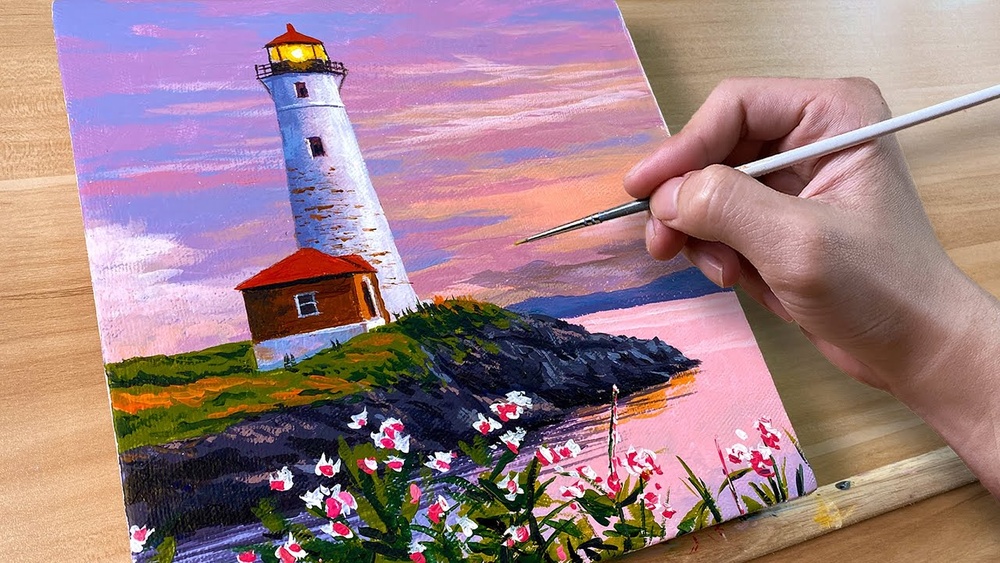
Are you ready to create a stunning acrylic painting that captures the charm and strength of a lighthouse? Painting a lighthouse can bring a sense of calm and inspiration to your artwork.
Whether you’re a beginner or looking to improve your skills, this guide will help you step-by-step. You’ll discover simple techniques to bring your lighthouse to life with vibrant colors and bold brushstrokes. Keep reading, and by the end, you’ll have the confidence to create your own beautiful lighthouse painting.
Let’s get started!
Materials Needed
Gathering the right materials makes painting a lighthouse in acrylic easier and more fun. Having the proper supplies helps you create clear lines and bright colors. It also makes the painting process smooth and enjoyable. Below is a list of materials needed to start your acrylic lighthouse painting.
Essential Acrylic Supplies
- Acrylic paints in primary colors plus white and black
- Various brushes: flat, round, and detail brushes
- Canvas or acrylic paper for your painting surface
- Palette for mixing colors
- Cup of water to rinse brushes
- Paper towels or cloth for drying brushes
- Easel or flat surface to hold your canvas
Optional Tools For Details
- Fine-tip brushes for small details
- Palette knives to create texture
- Masking tape to create sharp edges
- Pencil for sketching the lighthouse outline
- Ruler to measure straight lines
- Spray bottle for keeping paint moist

Credit: www.youtube.com
Choosing Your Lighthouse Scene
Choosing the right scene for your lighthouse painting sets the tone for your artwork. It helps you focus on details and colors. The scene you pick will guide your brush strokes and style.
Think about the feeling you want your painting to give. Calm and peaceful? Stormy and dramatic? Each scene tells a story through light, sky, and water. Picking a scene you connect with makes painting more fun and personal.
Selecting A Reference Image
Start by finding a clear picture of a lighthouse. Photos with good lighting and simple backgrounds work best. Choose images that show the lighthouse clearly from different angles.
Use your own photos or free online images. Avoid blurry or dark pictures. A good reference helps you copy shapes and colors well. It also inspires your painting style.
Deciding On Composition And Perspective
Think about where to place the lighthouse on your canvas. Center it for focus or off to the side for balance. The composition affects how viewers see your painting.
Try different perspectives. A view from below makes the lighthouse look tall and strong. A view from the side shows its length and surroundings. Choose a perspective that matches your idea.
Keep the background simple or add details like waves or birds. These choices create mood and interest. Plan your scene before painting to avoid changes later.
Setting Up Your Workspace
Setting up your workspace is the first step in painting a lighthouse with acrylics. A good workspace helps keep you focused and creative. It also makes the painting process smoother and more enjoyable. Organize your materials and prepare your canvas before you start painting.
Preparing Your Canvas
Choose a clean, flat surface for your canvas. Wipe it gently to remove dust or dirt. Use a light layer of gesso to prime the canvas. This helps the paint stick better. Let the gesso dry completely before painting. Choose the right size for your lighthouse painting. A larger canvas gives more room for detail.
Organizing Paints And Brushes
Arrange your acrylic paints in order of color. Keep the colors you use most often close by. Use a palette to mix your paints easily. Place brushes in a jar with water to keep them clean. Sort brushes by size and shape for easy access. Make sure your workspace has good light. This helps you see colors and details clearly.
Sketching The Lighthouse Outline
Sketching the lighthouse outline is the first step in painting your acrylic artwork. It sets the foundation for the entire painting. A clear sketch helps guide your brush strokes and keeps proportions correct.
Start with light pencil lines. This way, you can erase and adjust as needed. Focus on the main shapes before adding details. This makes the process simple and manageable.
Basic Shapes And Proportions
Begin by drawing simple shapes that form the lighthouse. Use rectangles or cylinders for the tower. Circles or ovals work well for the top light area.
Measure the height and width carefully. Keep the proportions balanced so the lighthouse looks realistic. Use a ruler or your pencil to compare sizes. Mark the base, middle, and top sections clearly.
Adding Key Details
Once the main shapes are in place, add important features. Sketch the windows and doors with small rectangles. Draw the railing around the light area using thin lines.
Include the light itself, often shown as a small circle or dome. Add lines for bricks or panels if you want texture. Keep details simple but clear to avoid clutter.
Painting The Background
Painting the background sets the mood for your lighthouse acrylic artwork. It creates the scene and supports the main subject. A well-crafted background brings depth and life to the painting. Start with simple shapes and colors. Build layers slowly to avoid mistakes. Keep the background soft to keep focus on the lighthouse.
Creating The Sky And Water
Begin with the sky. Use light blue or soft gray tones. These colors give a calm feel. Paint wide, horizontal strokes to mimic the sky’s vastness. For water, use darker blues or greens. Horizontal strokes work well here too. Add hints of white for reflections or waves. Keep the edges soft to blend sky and water smoothly.
Blending Techniques For Smooth Transitions
Blending helps join colors without harsh lines. Use a clean, dry brush to blend wet paint gently. Work quickly before the paint dries. A soft sponge or cloth can also smooth transitions. Blend colors where sky meets water carefully. This makes the scene look natural and peaceful. Avoid over-blending, which can blur details.

Credit: paintbasket.com
Building The Lighthouse Base Colors
Building the base colors of your lighthouse painting sets the stage for the entire artwork. These early layers create depth and bring the structure to life. Starting strong makes the later details easier and more vibrant. Focus on simple shapes and broad strokes. This foundation helps guide the final touches and highlights.
Applying Base Layers
Begin by covering the lighthouse shape with a thin layer of paint. Use a medium brush for smooth, even strokes. Avoid thick paint at this stage. Thin layers dry faster and allow changes later. Paint the main body of the lighthouse first. Let the paint dry before adding more layers. This helps build color gradually and avoids muddiness.
Choosing Color Palette
Pick colors that match the mood and setting of your lighthouse. White or light grey often works well for the tower. Use red or orange for the roof or stripes. Blues and greens can represent the sea and sky nearby. Keep your palette simple, with three to five colors. This keeps the painting clear and easy to follow. Test your colors on paper before using them on canvas.
Adding Shadows And Highlights
Adding shadows and highlights makes your lighthouse painting look real and alive. It shows where light hits and where it hides. This creates a strong sense of shape and space. Shadows and highlights help your painting stand out.
Use them carefully to guide the viewer’s eye. They bring out the textures of the lighthouse walls and the surrounding sky. Shadows add mystery and depth, while highlights add brightness and focus.
Defining Light Source
First, decide the light source direction. This means choosing where the light comes from in your painting. The light source affects where shadows and highlights fall on the lighthouse. It could be sunlight from the left or a soft glow from the right.
Keep this consistent throughout the painting. Shadows always fall opposite the light. Highlights appear where the light hits strongest. Mark the brightest parts with lighter paint. Use darker paint on the sides away from light.
Enhancing Depth And Dimension
Shadows add depth by showing parts that recede or curve. Paint shadows under ledges, windows, and cracks to create texture. Use soft edges for gentle curves and sharp edges for hard corners.
Highlights bring out raised areas and details. Add small strokes of white or light color on edges facing the light. Blend them softly into mid-tones for a natural look.
Vary shadow darkness and highlight brightness. This contrast gives your lighthouse a strong 3D effect. It helps the building feel solid, not flat.
Detailing Architectural Features
Detailing architectural features brings your lighthouse painting to life. It adds depth and realism. Small details like windows, doors, and textures create a strong visual impact. Focus on these elements carefully to make your acrylic painting stand out. Use fine brushes and the right colors for best results.
Painting Windows And Doors
Start with the windows and doors after the base colors dry. Use a small brush for clean lines. Paint window frames in a contrasting color to highlight them. Add a little white or light gray to suggest glass reflections. For doors, include shadows to give a 3D look. Simple shapes work best for a realistic feel. Avoid too many details; keep it neat and clear.
Texturing Walls And Roof
Walls and roofs need texture to look natural. Use a dry brush to add roughness on the lighthouse walls. Mix light and dark shades of the base color for depth. Dab the brush lightly to create a stone or brick effect. For the roof, use short strokes to mimic tiles or shingles. Adding texture makes your painting more interesting and believable. Take your time and build layers slowly.
Finishing Touches
Finishing touches bring your lighthouse painting to life. This stage adds depth and realism. It helps the scene feel complete and natural. Focus on small details and subtle effects. These make the artwork stand out and feel vibrant.
Adding Reflections And Surroundings
Reflections on water add realism to your painting. Use soft, horizontal strokes to show water’s surface. Mirror the lighthouse’s colors lightly below it. Include waves or ripples with gentle brushwork. Paint nearby elements like rocks, grass, or sky. These surroundings create a believable environment. Keep colors softer and less detailed for background parts. This draws attention to the lighthouse itself.
Final Adjustments And Corrections
Step back and view your painting from a distance. Notice areas that need brighter highlights or darker shadows. Use a small brush for precise corrections. Fix any uneven lines or shapes. Blend harsh edges to soften transitions. Check the overall balance of colors and contrast. Make subtle changes to unify the composition. These final tweaks enhance the painting’s harmony and impact.
Sealing And Preserving Your Painting
Sealing and preserving your acrylic lighthouse painting protects it from dust, moisture, and fading. It helps keep colors bright and details sharp for years. Proper sealing also adds a professional finish to your artwork.
Choosing The Right Varnish
Select a varnish made specifically for acrylic paints. Glossy varnish gives a shiny look, while matte varnish offers a dull finish. Satin varnish falls between glossy and matte. Pick the one that fits your style and room lighting.
Use a spray varnish for even coverage without brush marks. Brush-on varnish works well for small areas or touch-ups. Always test varnish on a scrap painting to check the effect before applying it to your lighthouse.
Proper Drying And Storage
Let your painting dry fully before sealing. This can take several days depending on paint thickness and humidity. Avoid rushing this step to prevent trapping moisture under the varnish.
Store paintings flat or upright in a cool, dry place. Keep them away from direct sunlight and heat sources. Use clean, dry materials to cover your painting during storage to avoid dust or scratches.
Credit: stepbysteppainting.net
Frequently Asked Questions
What Materials Do I Need For Lighthouse Acrylic Painting?
You need acrylic paints, brushes, canvas, palette, water cup, and paper towels. Optional items include pencils and masking tape for sketching and clean edges.
How Do I Start Painting A Lighthouse In Acrylics?
Begin with a light pencil sketch of the lighthouse. Paint the background first, then add the lighthouse details layer by layer.
What Techniques Work Best For Acrylic Lighthouse Painting?
Use layering to build depth. Dry brushing adds texture, and blending helps create smooth sky and water transitions.
How Can I Paint Realistic Light Effects On The Lighthouse?
Use bright white or yellow paint for the light. Add soft glow around it with a dry brush or glazing technique.
Conclusion
Painting a lighthouse with acrylics can be fun and relaxing. Start with simple shapes and add details step by step. Use bright colors to make the lighthouse stand out. Remember to paint the sky and water for a full scene.
Take your time and enjoy each brushstroke. Practice helps you improve your skills every time. Your unique painting tells a story of the sea and light. Keep exploring new ideas and colors for your art. Painting can bring joy and calm to your day.