Quick answer: To remove paint from canvas, act on how dry it is and what it is. Wet acrylic or oil lifts with a palette knife and a rag (water for acrylic, odorless mineral spirits for oil). Dry acrylic softens with isopropyl alcohol and gentle scrubbing, while dry oil usually has to be scraped, lightly sanded, or simply covered with gesso. Gouache and watercolor rewet with plain water.
Every painter eventually stares at a section of canvas and wants it gone. Maybe a figure went wrong, a color turned muddy, or you bought a thrift-store painting just for the stretcher. The good news is that you can remove paint from canvas in most situations, but the right method depends almost entirely on two facts: which medium you used and how long it has been drying.
This guide walks through each scenario in order, from a mistake you made five minutes ago to a decades-old oil painting you want to reclaim. You will also find a decision table, a safety checklist, and the mistakes that most often tear or stain a canvas during the process.
First, Identify What You Are Removing
Before you reach for any solvent, figure out the paint type. Using the wrong remover wastes time at best and at worst smears pigment deeper into the weave.
- Acrylic: Dries to a flexible, slightly rubbery plastic film. A cured film does not rewet with water. It often has a satin or slightly glossy sheen.
- Oil: Dries slowly by oxidation, not evaporation. Fresh oil stays tacky for days; thick passages can stay soft underneath for weeks. It smells of linseed oil or solvent and has a buttery depth.
- Gouache and watercolor: Matte, chalky, and water-soluble even after drying. Rub a damp cotton swab in a corner; if color comes up easily, it is a water-based medium.
- Unknown (thrift paintings): Test in a corner with water first, then isopropyl alcohol, then mineral spirits. Whichever softens the paint tells you what you have.
Also check the surface itself. Primed cotton or linen behaves differently from a canvas panel. A stretched canvas flexes when you press it, which makes heavy scraping risky. A panel has a rigid board behind it, so it tolerates firmer pressure and light sanding. The ground matters as well: absorbent grounds release water-based paint easily, while slick acrylic primers hold onto it. If you often rework passages, our guide to canvas surfaces that suit gouache compares how different primings behave.
How to Remove Paint from Canvas: Method by Paint Type and Dryness
Use this table to choose a starting point. Always begin with the gentlest option and escalate only if needed.
| Paint and condition | Best first method | Escalation | Realistic outcome |
|---|---|---|---|
| Wet acrylic (minutes old) | Palette knife, then damp rag | Baby wipe or soapy water | Near-complete removal; faint stain possible |
| Dry acrylic (hours to weeks) | Isopropyl alcohol (70–91%) on a rag | Soft brush scrub, repeat applications | Partial to good; ghost image common |
| Fully cured acrylic (months+) | Light sanding, then gesso | Alcohol for thin areas only | Surface reset rather than true removal |
| Wet oil | Palette knife scrape | Rag with odorless mineral spirits | Good; tonal stain usually remains |
| Tacky or semi-dry oil | Scrape with knife held low | Solvent-dampened rag, light pressure | Fair; thick paint lifts better than thin |
| Fully dry oil (months+) | Scrape ridges, sand lightly | Oil ground or oil-compatible primer over it | Removal is rarely practical; cover instead |
| Gouache or watercolor | Clean damp sponge | Repeat with fresh water, blot | Very good on absorbent grounds |
Removing Wet Acrylic Paint
Speed matters most here. Acrylic forms a skin within minutes in a dry room and becomes water-resistant as the film coalesces.
- Scrape off the bulk. Hold a palette knife nearly flat and lift the paint off in one direction. Do not push it sideways across clean canvas.
- Wipe with a damp, lint-free rag. Fold it so you use a clean face for each pass. Blot rather than rub to avoid driving pigment into the weave.
- Use mild soap for stubborn spots. A drop of dish soap in water helps break the binder before it sets.
- Let the area dry fully before deciding whether it needs a thin coat of gesso to hide any tint.
Strong staining pigments such as phthalo blue, phthalo green, and quinacridone magenta tend to leave a tint even when you move fast. Earth colors and titanium white usually come up cleaner.
How to Get Dry Acrylic Paint Off Canvas
Once acrylic has dried, water alone will not budge it. Isopropyl (rubbing) alcohol is the usual workhorse because it softens the acrylic polymer film enough to lift it.
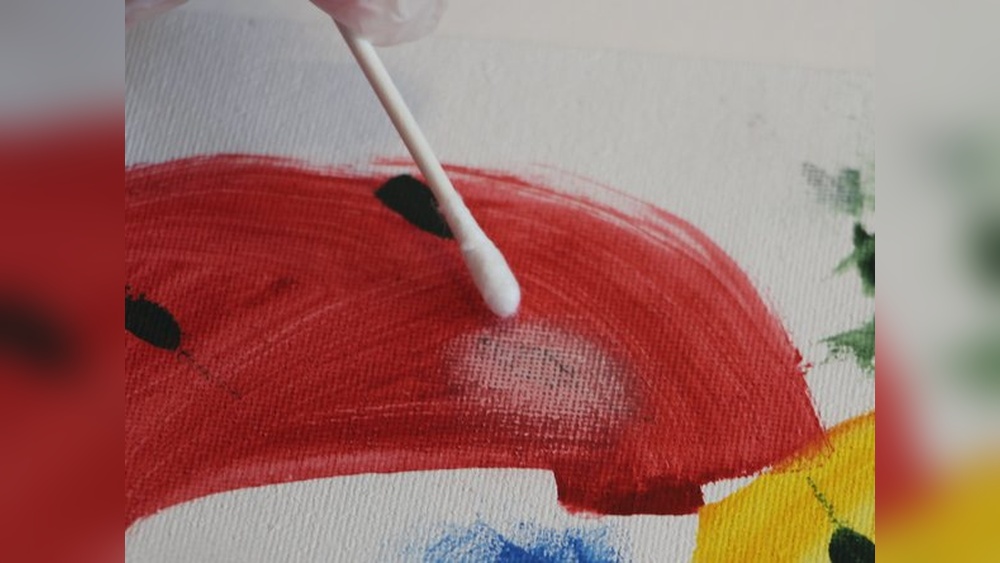
- Test a corner. Apply alcohol on a cotton swab and wait about a minute. If the color transfers to the swab, the method will work.
- Saturate a small section. Lay an alcohol-soaked rag over an area about the size of your palm for two to five minutes. Covering it with plastic wrap slows evaporation.
- Wipe and gently scrub. Use a rag or a soft nylon brush in small circles. The paint should go gummy and transfer.
- Repeat in layers. Thick paint comes off one layer at a time. Expect three or more rounds for heavy passages.
- Finish with a damp rag to remove alcohol residue, then let the canvas dry for at least a day.
Higher-concentration alcohol (91% or 99%) works faster but also evaporates faster. Some painters use acetone for small, stubborn spots, but it is harsh, can attack certain primers, and is highly flammable. Treat it as a last resort and use it only with good ventilation.
Know where to stop. Alcohol can also soften the acrylic gesso underneath, since most modern gesso is itself an acrylic dispersion. If you see bare fabric appearing, you have gone too far. The goal is to flatten and lighten the area, not reach raw cotton.
Removing Oil Paint from Canvas
Oil paint offers a longer window than acrylic because it dries by reacting with oxygen. That slow cure is a gift when you want to wipe something out.
Wet and tacky oil
The traditional studio technique is simple scraping. Hold a palette knife at a low angle and lift the paint off. What remains is a thin stain that many painters actually welcome, since it gives a toned base to repaint over.
For a cleaner reset, follow the scrape with a rag lightly dampened in odorless mineral spirits. Use very little solvent. Flooding the canvas can loosen the ground and carry pigment sideways. Another old method, called “tonking,” presses a sheet of newsprint onto the wet area and peels it away to lift excess oil and paint.
Fully dried oil
Cured oil paint is a tough, cross-linked film. Solvents like mineral spirits do little to it, and stronger strippers are designed for wood and metal, not flexible fabric. Trying to fully strip dried oil from stretched canvas usually ends with a damaged ground or a torn surface.
The practical approach is to flatten and cover:
- Scrape off raised ridges and impasto with a sharp knife or a single-edge razor held low.
- Sand lightly with fine sandpaper (around 220 grit) on a panel, or very gently on a stretched canvas supported from behind with a board.
- Wipe away dust, then apply an oil-compatible ground. Acrylic gesso over old oil paint can fail to bond well, so many painters choose an oil ground or follow the primer maker’s guidance.
Gouache and Watercolor on Canvas
Water-based media like gouache and watercolor are the easiest to remove because the binder (gum arabic) stays soluble. Gouache on canvas is popular for exactly this reason: you can lift and correct passages long after they dry.
- Wet a clean sponge or flat brush and wring it out well.
- Stroke over the area to rewet the paint.
- Blot immediately with a paper towel.
- Rinse the sponge and repeat until the area is as light as you need.
How well this works depends on the ground. An absorbent ground releases gouache cleanly, while a slick acrylic-primed surface can make color slide around rather than lift. If you plan to work in gouache and rework a lot, choose your surface with lifting in mind rather than discovering the problem halfway through a painting.
Painting Over Instead of Removing
Often the best way to deal with unwanted paint is not removal at all. Painters have reused canvases for centuries, and X-ray studies of historic works regularly reveal earlier compositions underneath.
Covering is the right call when:
- The paint is fully cured oil or thick acrylic.
- Texture is minimal or can be sanded down.
- The canvas fabric and stretcher are still sound.
For acrylic surfaces, two or three thin coats of acrylic gesso usually hide the old image. Sand lightly between coats for a smoother finish. If heavy texture is unavoidable, you can work it into the new piece; our article on painting a textured background covers ways to make raised areas look intentional.
Removing Paint from Canvas Fabric (Shoes, Bags, Clothing)
Some readers searching this topic mean canvas sneakers or tote bags rather than art canvas. The principles overlap, but fabric is unprimed, so paint soaks deeper.
- Wet acrylic: Rinse under cold water from the back of the fabric to push paint out, then wash with detergent.
- Dried acrylic: Dab with isopropyl alcohol, scrub with an old toothbrush, rinse, and repeat. Test colored fabric first for dye bleed.
- Oil paint: Blot with a little mineral spirits on a cloth, then pre-treat with dish soap and wash.
Complete removal from fabric is not guaranteed, especially once paint has fully cured into the fibers.
Safety and Ventilation Checklist
Solvents are the main hazard in this job. A few habits prevent most problems:
- Work near an open window or with a fan pulling air outside.
- Wear nitrile gloves; alcohol and mineral spirits dry and irritate skin.
- Keep solvents away from flames and heaters. Isopropyl alcohol and acetone are highly flammable.
- Oily rags can self-heat as linseed oil oxidizes. Lay them flat to dry outdoors or store them in water in a sealed metal container before disposal.
- Never pour solvent down the drain. Let pigment settle, decant the clear solvent for reuse, and take sludge to a household hazardous waste site.
- Wear a dust mask when sanding, since some pigments contain heavy metals.
Common Mistakes That Damage the Canvas
Scraping a stretched canvas without support
Pressure on an unsupported stretched canvas makes it bow inward, and a knife edge can slice the fabric. Slip a piece of cardboard or a scrap board between the canvas and the stretcher bars before scraping. If you do tear it, a patch can still save it; see how to fix a ripped canvas painting.
Over-wetting the surface
Soaking the canvas with water or solvent can loosen the ground, cause sagging, and leave tide-line stains. Use damp, not dripping, rags.
Rubbing instead of lifting
Circular scrubbing spreads pigment into clean areas. Lift in one direction and change to a fresh section of cloth often.
Expecting a pure white result
Some staining is normal, especially with transparent, high-tint pigments. Plan to finish with gesso or a toned ground rather than chasing perfect white.
Tips by Situation
- Small mistake in a nearly finished painting: Remove only that spot with a cotton swab and the right solvent, then repaint. Mask the edges with low-tack tape.
- Whole composition you dislike: If it is acrylic, sand lightly and gesso over it. If oil, scrape and use an oil-compatible ground.
- Thrift-store painting for reuse: Check that it is a painted original rather than a print on canvas. Prints often have a coating that resists new paint, so scuff and prime thoroughly.
- Student practice canvas: Keep a dedicated “wipe-out” canvas for oils; scraping it each session builds up a pleasant toned surface.
FAQs
Can you remove dried acrylic paint from canvas completely?
Usually not completely. Isopropyl alcohol can lift a lot of dried acrylic, but it also softens acrylic gesso underneath, so most people stop once the area is flat and light, then re-prime. A faint ghost image is common, particularly with staining pigments.
Does vinegar remove paint from canvas?
Warm vinegar can help soften some dried water-based paints on hard surfaces, but on art canvas it is far less effective than isopropyl alcohol for acrylic or mineral spirits for oil. It also leaves moisture in the fabric, which can loosen the ground.
Is it better to remove paint or paint over it?
For fully cured oil or thick acrylic, painting over is usually the better choice. Removal risks damaging the ground and fabric, while a few coats of the right primer give you a sound new surface with far less effort.
Will rubbing alcohol damage the canvas?
Alcohol does not harm the cotton or linen fibers, but it can soften acrylic primer and leave patches thinner than the surrounding ground. Work in small sections, avoid soaking, and re-prime any area where the weave shows through.
How do I get oil paint off canvas without solvents?
Scrape wet paint off with a palette knife, then blot with newsprint to pull out remaining oil. For residue, a little vegetable or safflower oil on a rag loosens fresh paint, followed by mild soap and water. This works only while the paint is still wet.
Can gouache be removed after it dries?
Yes. Gouache stays water-soluble indefinitely, so a damp sponge or brush followed by blotting will lift it. Removal is cleanest on absorbent grounds and harder on slick, non-absorbent primers.
Next Step
Once you have cleared or covered the area, the surface underneath decides how well your next layer behaves. If you keep reworking water-based paint, a ground that releases and accepts color evenly saves a lot of frustration. Before your next project, look over our roundup of gouache-friendly canvas options and what sets them apart, so the next correction is a simple wipe instead of a repair job.